



In October, the Japan National Tourism Office (JNTO) held a media briefing to continue introducing the incredible opportunities that the Tohoku region in the north of Japan offers to those looking for adventure vacations. As with our last report, it became clear that not only is the region a great place to get away from the city, but also that much of the wonders to be discovered there are yet to be encountered by visitors from abroad.
One aspect of Tohoku’s appeal highlighted was that of the Matagi people, a minority people living in the region. Randy Wagenheim of Pacific Bridge Media and Consulting was eager to highlight the myriad appeals of visiting Akita-prefecture to meet the Matagi, and Jasper Soh of AkitaInu Tourism elaborated on why, for anyone looking for a way to get back to nature like never before, this is an unmissable prospect.
Who Are The Matagi?

Matagi are known as a hunting people, who live in the northern-most areas of Honshu, but are best known for their settlements in Akita prefecture in Tohoku. They have been known as skilled hunters since ancient times, and legend has it that, after fighting a terrible monster during the reign of Emperor Seiwa (858–876), the Matagi were given special permission to hunt any beast on any mountain in Japan.
Despite some similarities in beliefs, possibly through cultural exchange over the centuries, Matagi are distinct from the native Ainu people of Hokkaido.
However, in modern times, the Matagi’s culture and associated skills have dwindled. The main causes are the rapid changes in society. These include the shift from subsistence to commercial hunting, the decrease in and aging of rural populations in Japan and the subsequent collapse in village economies, and the effects of changing values, in part due to modern education. The rise of firearms has played a small role in the fading of traditional Matagi skills, but not as much as one might think.
However, they still remain close to their land, and maintain their ancient beliefs. But what are those beliefs?
Matagi Beliefs
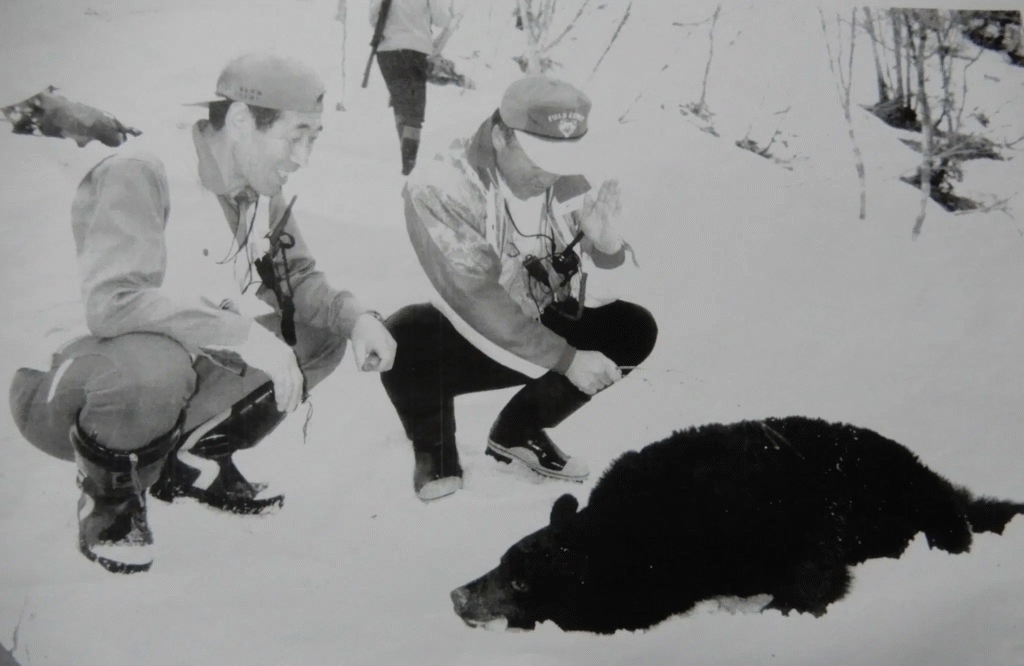
While the Matagi are sometimes thought of as being somewhat equivalent to Indigenous people of North America, they are not a specific ethnic identity. Instead, it is more fair to say that they are a group of Japanese people with particular skillsets and beliefs that set them somewhat apart from other Honshu dwellers. As an example, Matagi hold particular reverence for bears. Called kuma elsewhere in Japan, in the Matagi language, bears are known as itazu.
Bear have historically been hunted by Matagi people, but their prowess in tracking and killing the animals is not something that is considered to be worthy of boasting about among the Matagi. Instead, every successful hunt is considered to be the providence of mountain Gods, and that due respect needs to be shown: to the Gods, to the mountain, and to the animal itself. As such, every part of the animal is used for food and other purposes, including making medicines.
The Matagi also offer up stonefish, known as okoze in Japan, to the Goddess of the Mountains. The legend is that the Goddess is fiercely jealous, and dislikes pretty gifts, as she doesn’t want her beuaty to be compared to anything else. As such, she delights in being gifted ugly dried okoze.
These beliefs, held for centuries among the Matagi people, continue to this day. Not only is it inspiring that this culture has remained, but there is also a lot that visitors can learn from the Matagi. Let’s explore a few.
Defending The Border Between Nature And Man
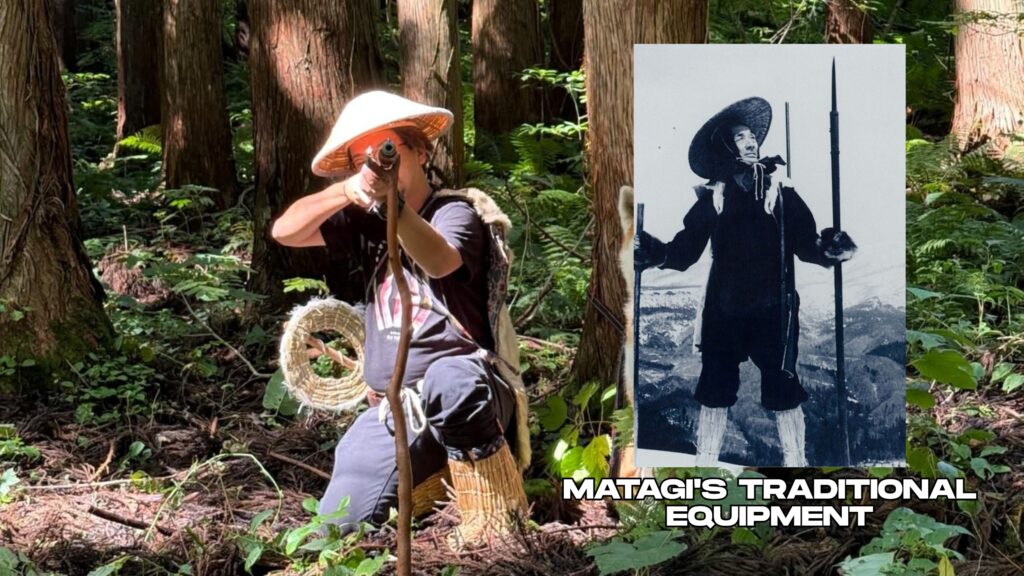
As mentioned, the number of Matagi has declined as Japan has modernized. However, the way of life of the Matagi remains as relevant today as ever. Firstly, as mentioned, the Matagi use every part of every animal that is hunted, which not only demonstrates the gratitude required to be shown, but is also a highly sustainable practice.
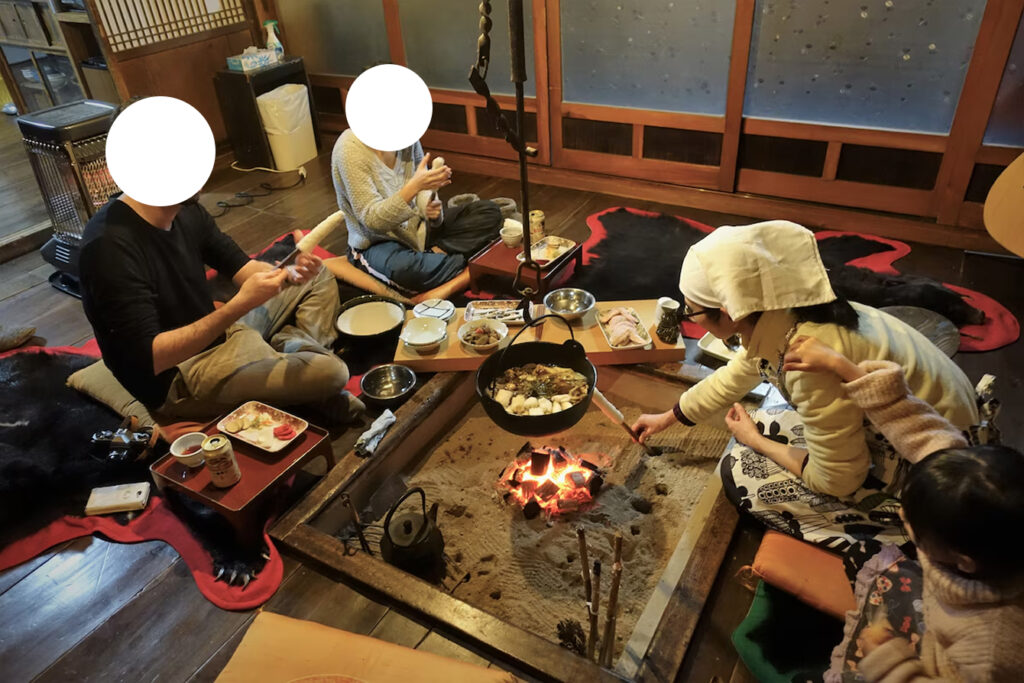
Additionally, Matagi make use of local vegetables and fruits. With the Akita region often too cold for rice farming to be relied on, the nearby fauna and flora are the basis for all Matagi cuisine. And here, too, sustainability is key to the Matagi way of life. It is the Matagi way that, if one comes across five mushrooms, only two should be picked, ensuring that the remaining three can reproduce and leave more for future generations.
Additionally, the way of the Matagi has become more important in recent years for safety reasons. As Japan’s efforts for wildlife conservation continue to be successful, and human civilization spreads outwards ever more, encounters between bears and other animals and humans become more common, and so more dangerous.
It is in the place that the Matagi make their home, satoyama — the boundary between the world of humans and the world of nature — that their skills not only help them sustain their way of life, but protect others from potentially deadly encounters with wild animals who, for one reason or another, are compelled to move towards human dwellings.
What To Do When Visiting The Matagi
AkitaInu Tourism is a destination management organization that arranges sustainable tours in the Akita prefecture, one of the most beautiful parts of Tohoku. They have helped a number of people to arrange tours in the region that can introduce visitors to the Matagi way of life, and the Matagi people.
In one example of a five-day itinerary that they have crafted, visitors can not only stay two nights at a Matagi lodge, but also go hiking along the Yasunotaki Falls, through a local forest, along a stream, and up an ancient Matagi trail. You can also go foraging for vegetables, which will be used in a traditional Matagi dinner, as well as making your own tools — including chopsticks.
Visitors can also see Tohoku’s samurai residences, visit traditional blacksmiths, and explore a soy sauce brewery, and enjoy a dip in an acidic onsen known for its restorative properties.
Why Visitors Love To Stay With The Matagi
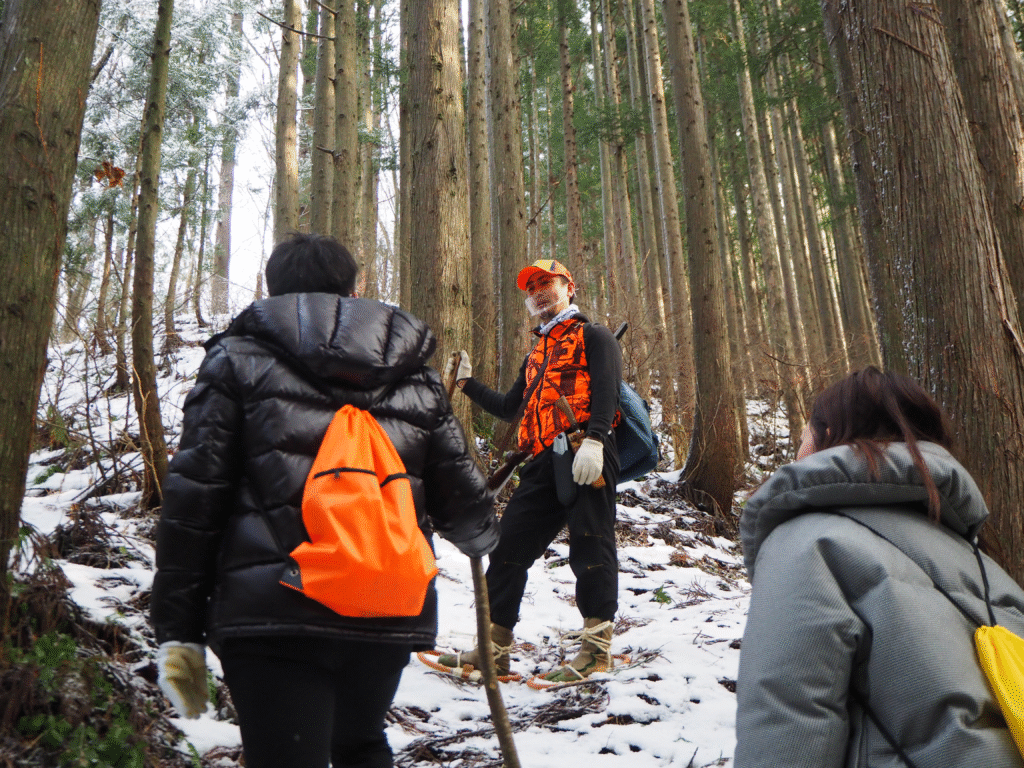
In today’s increasingly atomized and isolating world, fueled by technology, visitors appreciate a chance to get back to nature, engage in old-fashioned ways of living, and take part in exhilarating exercise. Young people especially see the Matagi as a symbol of hope, with the spirituality and environmental sustainability of their way of life coming as a sharp and welcome contrast to life in the big city.
From taking part in a range of outdoor activities to learning the still-surviving centuries-old traditions and sustainable practices, a visit to the Matagi of Akita prefecture is a getaway like no other. Whether you want to learn about a small Japanese culture, develop skills that can help you on a trip to any forest, or just get away from your smartphone for a few days, there is little to recommend above a trip to Akita to discover an ancient way of life that has never been more relevant.