


Pop culture is not just a reflection of or reaction to the culture around it, but it can also influence the world around us. There are small ways, in the way that “a Nintendo” has become a byword for any video game console, or how “Pokemon” was once a byword for any anime with monsters in it (sorry Digimon).
Beyond this, though, there are more substantive influences: following the 2014 coup d’état in Thailand, the three-fingered salute from The Hunger Games became a symbol of defiance that spread throughout the world: and it is starting to happen again with a symbol from Japan: the flag of the crew of the hit manga and anime One Piece.
The Straw Hats Jolly Roger has become a symbol of resistance for countries in south Asia. But why is this? What does it mean? What are some examples? Join me on the Going Merry, and we’ll set sail for the answers!
The Flag That Crossed From Anime to the Streets
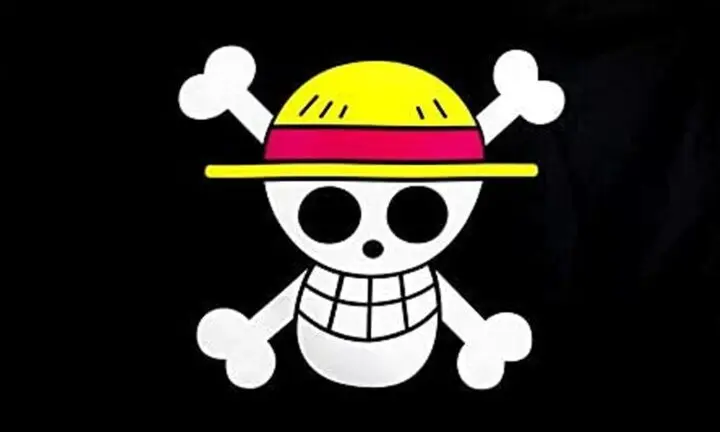
The Straw Hats Jolly Roger is the symbol of the central characters of One Piece, the Straw Hats. Captained by Luffy D. Monkey, their fearless leader, they sail the seas seeking the titular One Piece, the most incredible treasure in the world, to achieve their dreams.
Merchandise, as with many anime, began to be produced as soon as the anime became popular — which didn’t take long. In addition to video games, toys, and playing cards, many people expressed that they too were Straw Hats in spirit through clothes and accessories. Whether they wore a bandana, like Zoro, short shorts and a white t-shirt like Nami, or even Luffy’s iconic straw hat itself, no matter your favorite character, anyone could unite between the flag that united them all.
There are a ton of different anime with iconic merch, clothing, and symbols, though? So why does this one resonate so much today? In short…
Why One Piece?
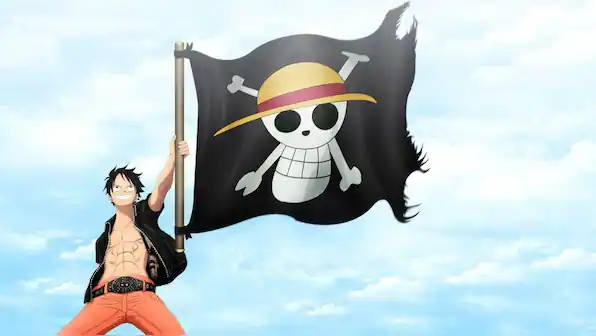
At it’s heart of hearts, the story of One Piece is one of freedom, what it takes to find it, and how the struggle towards it feels. Luffy, set on becoming the King of the Pirates, recruits his crew by appealing to their desires to fulfill their own dreams, their own way. Nami doesn’t want to work for the Arlong Pirates: she wants to draw a map of the world. Sanji doesn’t want to sear steak for Zeff: he wants to cook in the legendary All Blue. Zoro doesn’t just want to be a pirate hunter: he wants to be the world’s greatest swordsman.
It is this hunger to control your life, and live your dreams the way that you want, that has spread through the young people of Indonesia, Nepal, and the Philippines, where manga — and especially One Piece — is extremely popular.
The passion of Luffy and the other Straw Hats has transcended the pages of manga, the glow of the television, and the flicker of the cinema screen, to become a symbol of resistance among young people who want lives as free as a pirate on the open sea. Here are a few examples.
Indonesia: Anger on Motorbikes, Cars, and Streets
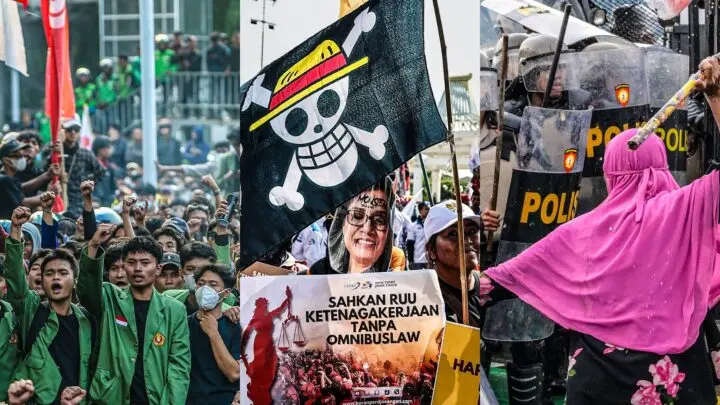
Let’s begin in Indonesia. Following the ascension of Prabowo Subianto to the presidency almost a year ago, frustration over economic and political inequity has been accelerating. This came to a head with a protest over lawmakers receiving a monthly housing allowance of roughly $3000 per month: over ten times the average monthly wage for working people.
Protests were made up of workers, trade unionists, and students: students who are familiar with, and fans of, One Piece. During Indonesia’s Independence Day in August, hundreds of people flew the flag high. One protestor, Kemas Muhammad Firdaus, waving the banner himself, told Reuters:
“Many Indonesians are hoisting the One Piece flag because they want the government to listen to them,” and explained that it was “a symbol of warning for the government, so they have to look at their people.”
Nepal: Draped Over Parliament’s Golden Gates
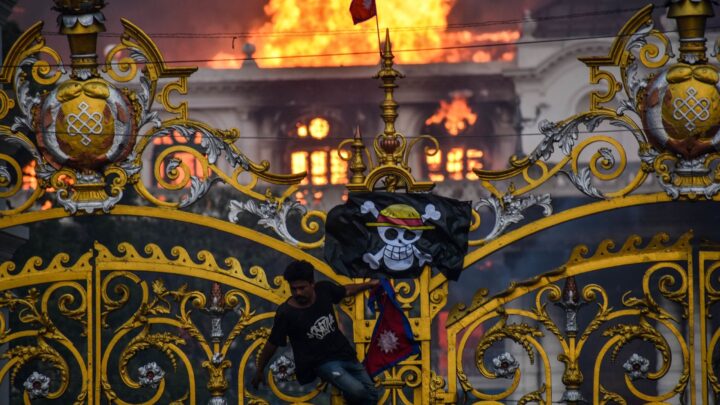
In Nepal, similar divides between the elite and the populace spurred protests. With youth unemployment soaring, Gen Z citizens at first took to the internet to voice their displeasure as the children of lawmakers consistently seemed to find high-paying work. After a crackdown on social media, with nowhere else to vent, the fury at the unfairness broke out into the streets.
This culminated in protestors outside parliament being assaulted with tear gas and even live rounds by the police. Subsequently, the people decided that the gloves were off, and after days of unrest, Singha Durbar, which houses the Nepalese parliament, was aflame. Atop the palace’s now superfluous gates was raised the standard of the Straw Hats.
Protest organizer Bikhyat Khatri told CNN that, ““A lot of youths in Nepal love anime. We wanted the movement to feel like a Gen Z movement, so the slogans and symbols used during the protest were linked with things that Gen Z youths could relate to. [This flag] “symbolizes aggression and determination to push anything that comes in its way.””
Philippines: A Banner Against Corruption
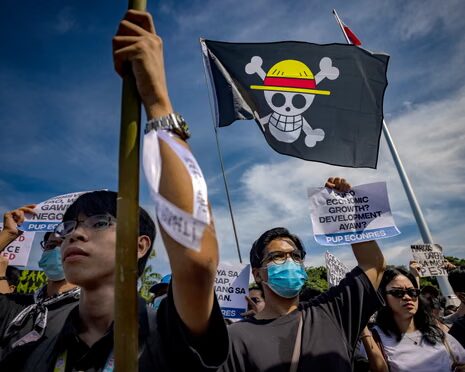
A similar story is unfolding in the Philippines. Following a scandal of corruption that saw billions of dollars misused in flooding control projects, people took to the streets and were — as if to add insult to injury — attacked with water cannons.
All through this chaos, which is (at time of writing) by no means finished, the Straw Hat Jolly Roger flew defiantly — after all, what fear do pirates have of a little water?
Eugero Vincent Liberato, a new graduate, explained to the Guardian the appeal of the flag from a Japanese comic book, not only to people across the world, but especially to those who were bravely undergoing struggles against their governments in south Asia, and across the world.
“We see the flag as a symbol of liberation against oppression … that we should always fight for the future we deserve,” he said. ““Even though we have different languages and cultures, we speak the same language of oppression.”
All movements have had their slogans and symbols. In the 1800s, it was a call from Karl Marx to the working class that “you have nothing to lose but your chains!” In the 1900s, Dr. Martin Luther King Jr. spoke for millions when he gave his “I have a dream” address to the nation. And in the 2020s, spreading across the world is the Straw Hats Jolly Roger, and the central mantra of One Piece: “Never Give Up.”