



The best taxi apps in Japan are GO, DiDi, S.RIDE, 和 Uber Japan. Most travelers and foreign residents should download GO first, since it has strong coverage in major cities and makes booking a taxi easy with upfront estimates and cashless payment. If GO is slow in your area, try DiDi as a backup. Staying mainly in Tokyo? S.RIDE is also worth having.
Recommended Taxi Apps in Japan

There are several taxi apps available in Japan, each offering unique features and coverage areas. Here are some of the most reliable and widely used options.
GO
GO is one of the most popular taxi-hailing apps in Japan, and covers major cities like Tokyo, Osaka, and Kyoto. The app allows users to book a taxi in advance or request an immediate ride. It also provides upfront fare estimates, meaning there will be no surprises at the ride’s end. Additionally, GO allows for multiple payment options, including:
- Credit and debit cards (Visa, MasterCard, JCB, AMEX, Diners Club)
- Cash
- Mobile payment services (PayPay, LINE Pay, Rakuten Pay, Apple Pay, Google Pay)
- IC Cards (Suica, PASMO)
DiDi

First launched in China, DiDi has expanded into the Japanese market, primarily serving urban areas. The app offers multilingual support, making it an excellent choice for expats and visitors whose Japanese level is limited. Users can select cashless payment options and receive estimated fares before confirming a ride. Payment methods include:
- Credit and debit cards (Visa, MasterCard, JCB, AMEX, Diners Club)
- Cash
- Mobile payment services (Apple Pay, Google Pay, PayPay, LINE Pay, WeChat Pay)
- IC Cards (Suica, PASMO)
S.RIDE

S.RIDE is another reliable taxi app, especially in the Tokyo metropolitan area. The app is known for its simple swipe-based booking system and seamless payment integration. S.RIDE supports various payment methods, including:
- Credit and debit cards (Visa, MasterCard, JCB, AMEX, Diners Club)
- Mobile payment services (Apple Pay, Google Pay, PayPay, LINE Pay)
- IC Cards (Suica, PASMO)
Uber Japan

While Uber is widely used globally, its presence in Japan is limited compared to local taxi apps. However, Uber operates in some major cities, including Tokyo, Osaka, and Kyoto. Unlike standard Uber services in other countries, Uber Japan primarily works with licensed taxi companies rather than independent drivers. Payment methods include:
- Credit and debit cards (Visa, MasterCard, JCB, AMEX, Diners Club)
- Cash (in select locations)
- Mobile payment services (Apple Pay, Google Pay, PayPay, LINE Pay)
- IC Cards (Suica, PASMO)
Booking vs. Hailing a Taxi
If you are in a busy area, such as a train station or shopping district, availability may vary depending on demand. In Japan, it is also common to hail a taxi by raising your hand while standing near a curb. This method is often effective, especially in busy areas or when taxis are readily available.
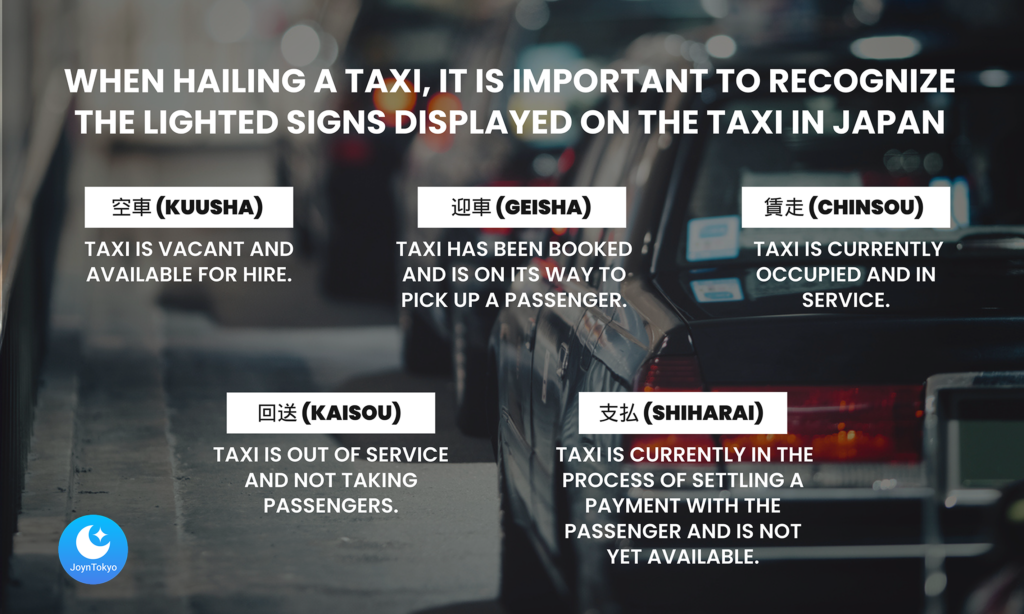
When hailing a taxi, it is important to recognize the lighted signs displayed on the taxi:
- 空車 (Kuusha) – This means the taxi is vacant and available for hire.
- 迎車 (Geisha) – This indicates that the taxi has been booked and is on its way to pick up a passenger.
- 賃走 (Chinsou) – This means the taxi is currently occupied and in service.
- 回送 (Kaisou) – This means the taxi is out of service and not taking passengers.
- 支払 (Shiharai) – This means the taxi is currently in the process of settling a payment with the passenger and is not yet available.

In my experience with taxis in Japan, I hail taxis around 90% of the time either at a train station, as it is common in Japan for taxis to waiting outside, or from a curb.
Which Taxi App Should You Download?
If you only download one app, pick GO.
If you want a backup, add DiDi.
If you’re mostly in Tokyo, add S.RIDE too.
And if you already use Uber everywhere, Uber Japan is fine, just don’t expect the same rideshare experience you’d get in other countries.