


Learning and language is easier when you have the right tools, and Japanese is no exception. As someone who’s studied and lived in Japan for several years, I’ve had the opportunity to test and compare the most popular Japanese learning apps, and I’ll detail my experiences to you now, based on real-life usefulness, user experience, and JLPT-level support.
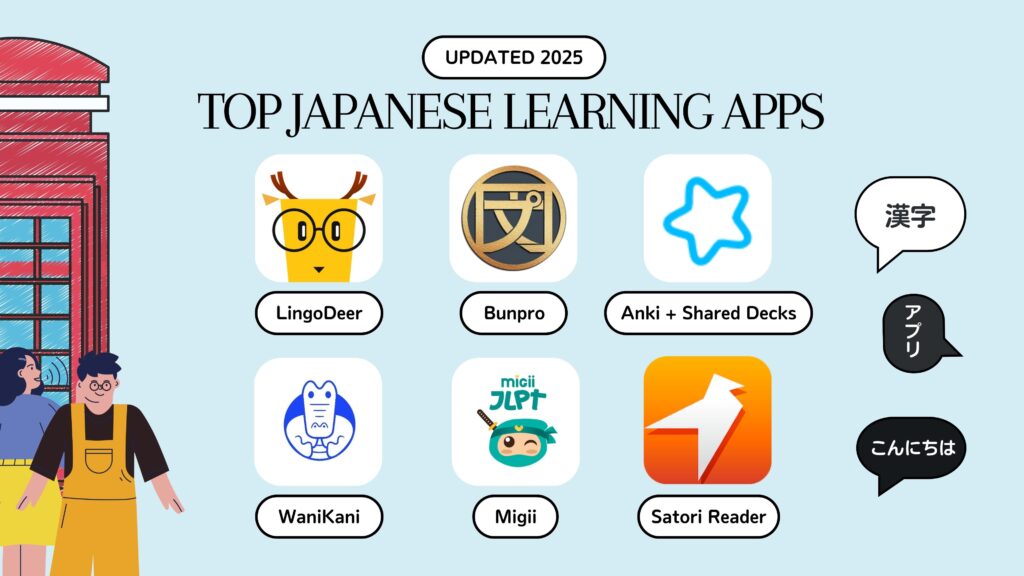
Apps To Choose by Use Case
| Use Case | App | Why |
|---|---|---|
| Beginner | LingoDeer | Structured grammar, guided lessons |
| Grammar | Bunpro | JLPT-aligned grammar spaced recognition |
| Vocabulary | Anki | Extensive vocabulary and spaced repetition |
| Kanji | WaniKani | Radical-based kanji mnemonics |
| JLPT Prep | Migii | Realistic JLPT mock tests & metrics |
| Reading | Satori Reader | Teaching small grammar points through reading |
Top Apps To Learn Japanese – Comparison Table
| App | 最适合 | JLPT Ceiling | Price (Monthly) | Offline Use | N-Score (Avg) | Instructor Verdict |
|---|---|---|---|---|---|---|
| LingoDeer | Beginners | N4 | $14.99 | Yes | 8.7 | Great foundation |
| Bunpro | Grammar | N1 | $6.99 | Partial | 9.1 | Unmatched for grammar |
| WaniKani | Kanji | N1 | $9 | No | 8.4 | Excellent kanji builder |
| Migii | JLPT Prep | N1 | $4.99 | Yes | 8.2 | Best for mock testing |
| Anki | Vocabulary | N1 | Free | Yes | 9.3 | Must-have flashcard system |
| Satori Reader | Immersion | N2 | $9 | Yes | 8.5 | Best for reading |
LingoDeer
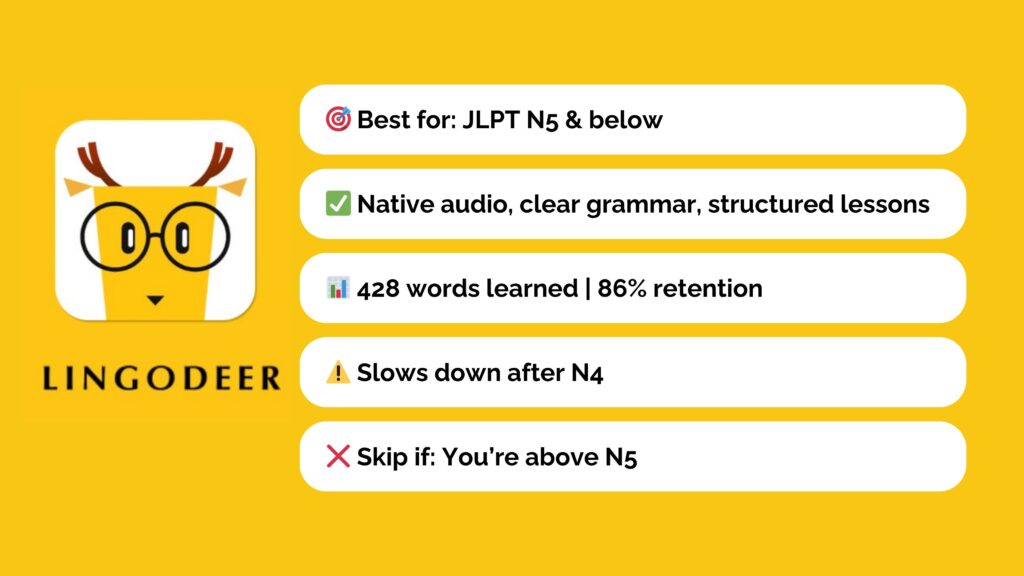
- Verdict: In my view, this app is still the best guided start to learning Japanese
- Pros: It has native audio, detailed grammar notes, and structured learning levels
- Cons: Learning progression slows after N4
- Data:
- Average words learned: 6 to 7 per lesson
- Retention: 86% (7-day average)
- Best for: Beginners
- Skip if: You’ve already passed JLPT N5
Bunpro
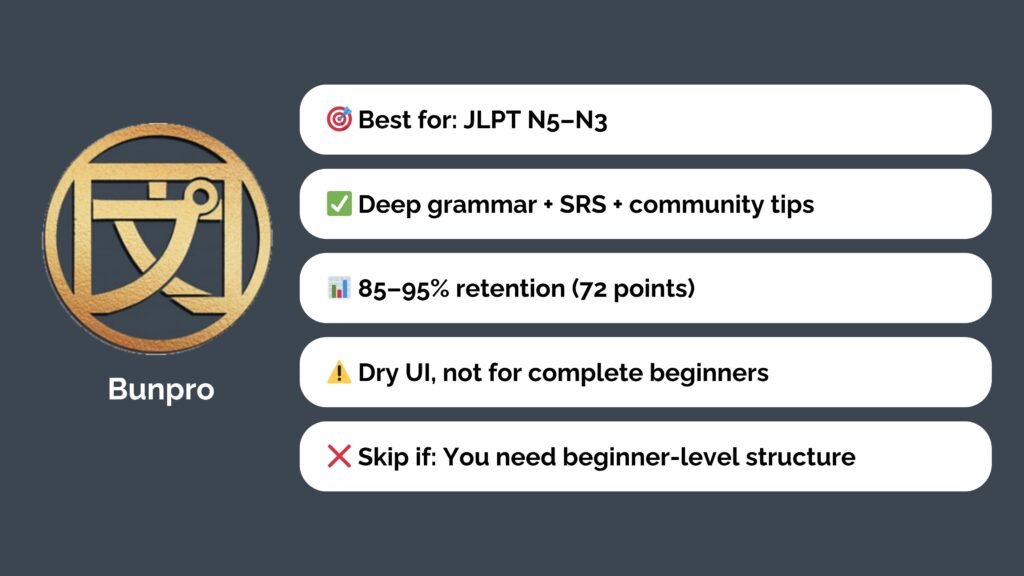
- Verdict: Grammar-focused spaced recognition system learning (SRS) built for JLPT test-takers
- Pros: Gives detailed sentence breakdowns, and the community notes help clarify issues
- Cons: Some UI friction and a dry, un-engaging interface
- Data:
- N5 to N3 grammar points reviewed: 72
- Retention: 85% to 95% (user reported)
- Best for: JLPT-focused learners
- Skip if: You need beginner-level structure
WaniKani
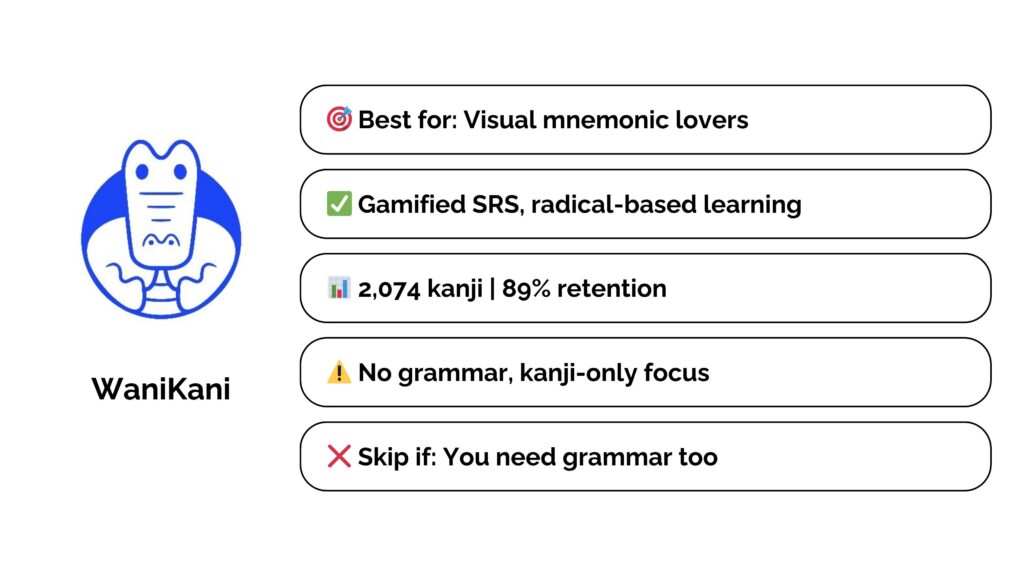
- Verdict: Fun but intense kanji memorization tool
- Pros: Radical-based learning and gamified SRS, to hold the learner’s attention
- Cons: Limited outside kanji, no grammar
- Data:
- Kanji on offer: 2074
- Average retention rate: 89% (user reported)
- Best for: Visual mnemonics learners
- Skip if: You want grammar in one place
Migii
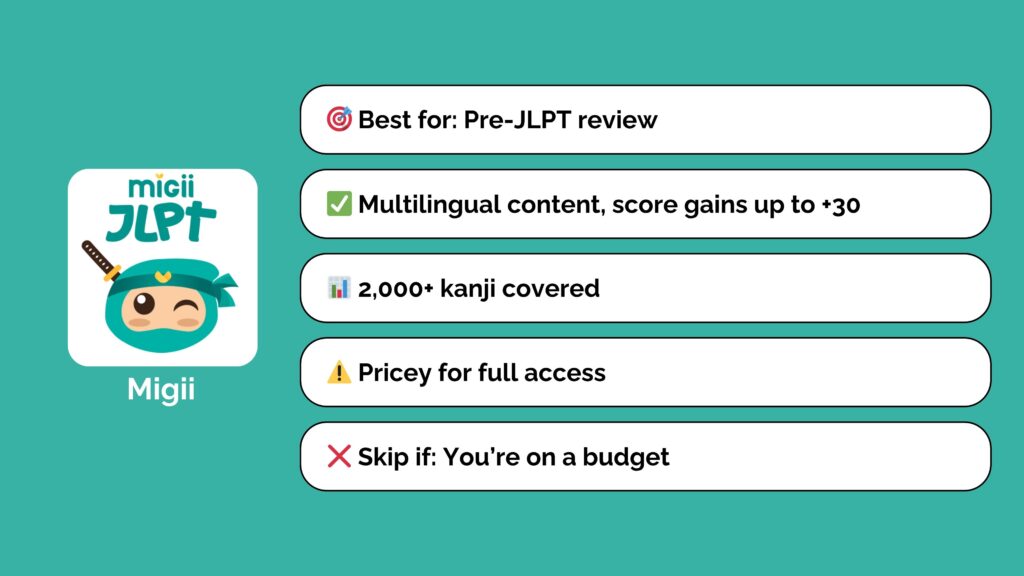
- Verdict: Excellent for brushing up before the JLPT
- Pros: Extensive materials in various languages
- Cons: Relatively expensive for full suite of materials
- Data:
- Kanji learned: 2000+
- Improvements: JLPT scores boosted by up to 30 points
- Skip if: You’re seeking an app friendlier on your wallet

This app is recommended for anyone looking to get a boost before the JLPT exam, as it contains previous year exams.
Anki
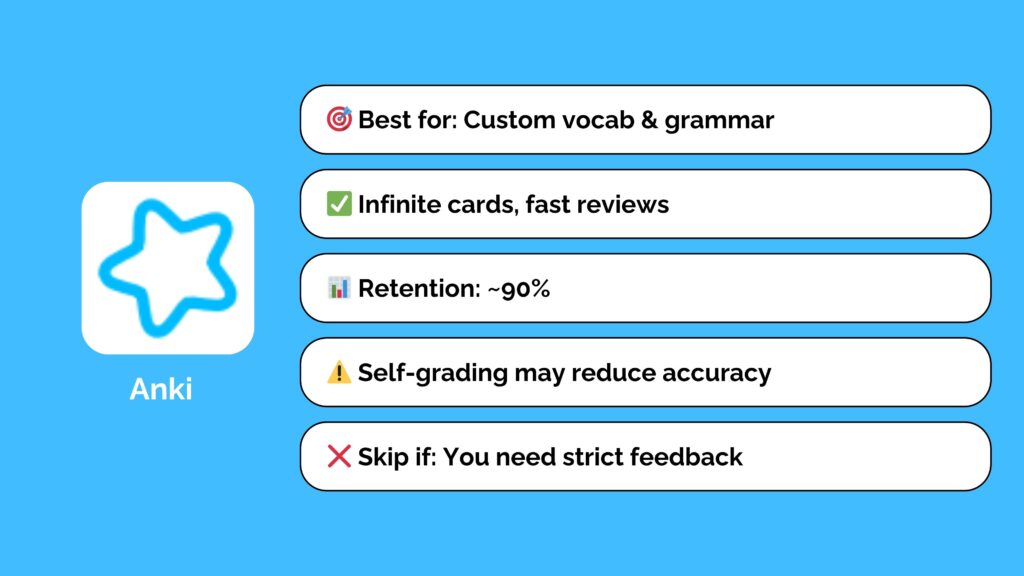
- Verdict: Highly customizable for specific learning outcomes
- Pros: Customizable flashcards, as well as a surprisingly fast reviews of content
- Cons: Self-grading in reviews makes it easier to cheat yourself
- Data:
- Flash cards available: Hypothetically infinite
- Retention: Roughly 90% (user reported)
- Best for: Those looking to learn specific vocabulary or grammar
- Skip if: You require the discipline of an external grader
Satori Reader
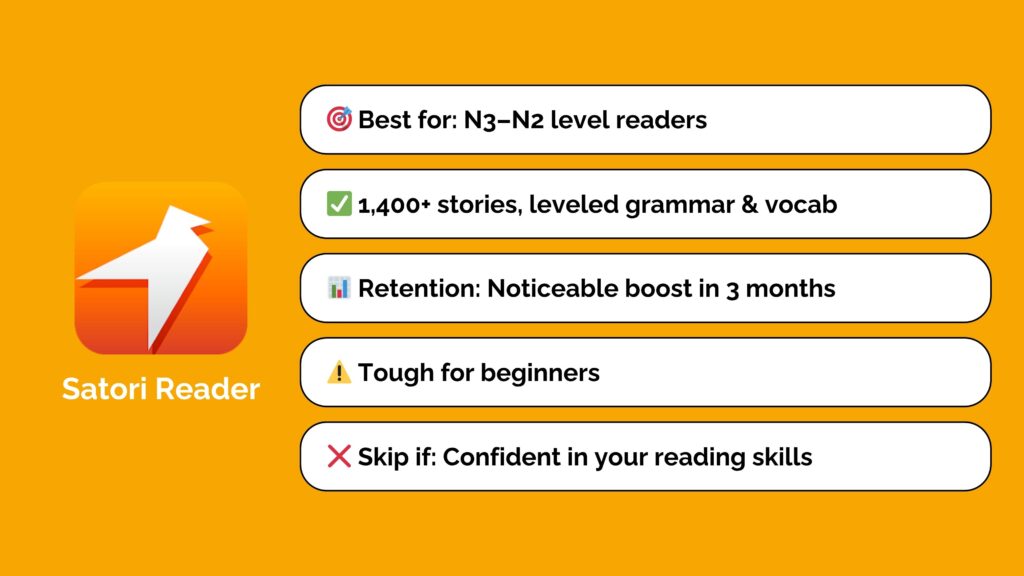
- Verdict: The premier app when it comes to improving reading comprehension
- Pros: Extensive list of reading material to improve grammar and vocabulary, grouped by difficulty
- Cons: Not as accessible for those with a sub-N3 knowledge of Japanese
- Data:
- Reading “episodes” available: 1,400
- Retention: Big improvement in just 3 months (user reported)
- Best for: Intermediate readers looking to improve
- Skip if: You are confident in your reading skills
Can I reach fluency using just apps?
Yes and no. While you will be able to learn the vocabulary, grammar, and kanji through app learning, to the point that you may be able to read and write efficiently, there is no substitute for actually speaking to Japanese people. Of course, you cannot progress in conversations or immersive learning without some background, so apps will still be essential for most people who want to become fluent.
Notable Mention
TabiTalk
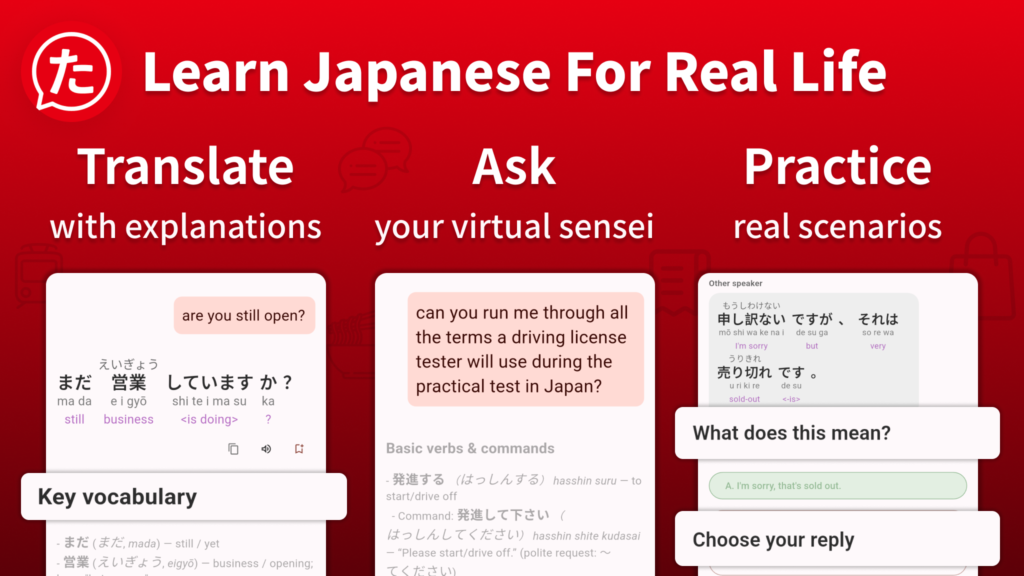
Another new app that focuses on the essentials of day-to-day life in Japan is TabiTalk. Rather than go through the rigamarole of grammar, synonyms, and stroke-order, it instead prioritizes things that people need in everyday life: asking if you can sit next to someone, buying a train ticket, and ordering food. TabiTalk is a top tip for those new to Tokyo.
Which app is best for learning kanji?
In my experience, WaniKani is the best app for taking on the daunting task of learning kanji. While it can be a little intense, the gamified nature means it’s always compelling to come back and keep practicing. While it is not especially useful outside of kanji use, when it comes to learning Chinese characters, it’s unrivalled.
What’s the best free Japanese learning app?
Anki, which is a free app, is especially good for customized flashcards, and so customized learning. This means that no matter what your level, you will be able to tailor your study to your own needs.
Can I pass JLPT N5 without classes?
It is possible to pass the JLPT N5 without classes: I did so myself. However, N5, as the simplest and easiest test, still requires hours of learning, even if that is incidental, by talking to friends or reading manga. I would recommend that you do some study for it anyway: it will be good practice for N4 and above, when study will be essential.
Recommended Textbooks To Learn Japanese
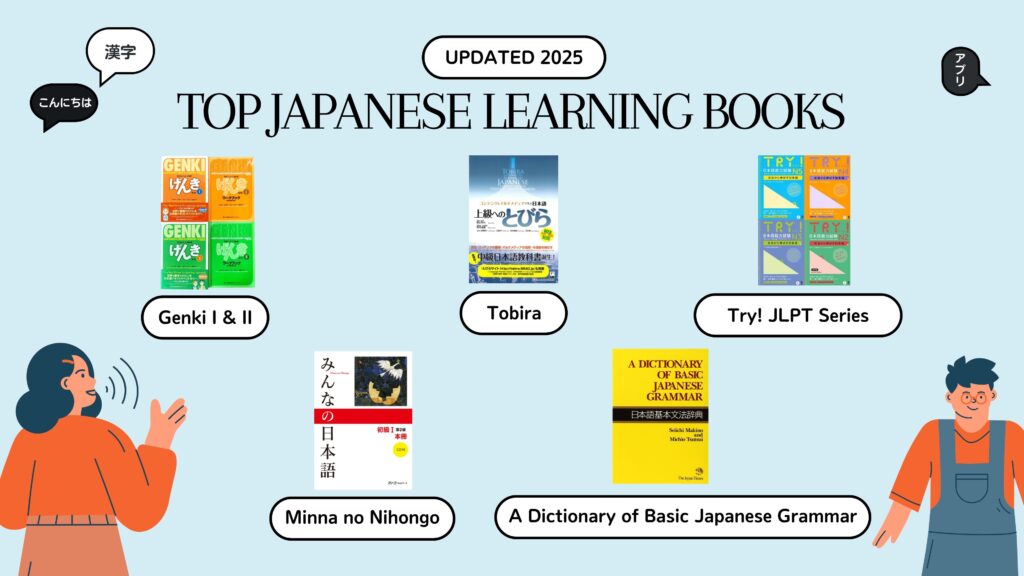
Apps are not the only way to learn Japanese, of course. People have been learning with books for centuries, and there are a number that you can rely on when your phone is low on battery.
更多信息

| Textbook | 最适合 | JLPT Level Target | Why It’s Effective | Price (USD) |
|---|---|---|---|---|
| Genki I & II | Complete Beginners | N5–N4 | Step-by-step structure, exercises + audio | ~$60 each |
| Tobira: Gateway to Advanced Japanese | Intermediate learners | N3–N2 | Focuses on real-world reading + grammar | ~$65 |
| Try! JLPT Series | JLPT test prep | N5 to N1 | Mirrors JLPT format, practical examples | ~$30 each |
| Minna no Nihongo | Classroom-style learners | N5–N4 | Immersive Japanese-only format with grammar notes | ~$45 (main book) |
| A Dictionary of Basic Japanese Grammar | Grammar reference | N5–N2 | Clear explanations + example sentences | ~$40 |