


日本的新年节,新年传统

托比亚斯-沃特斯

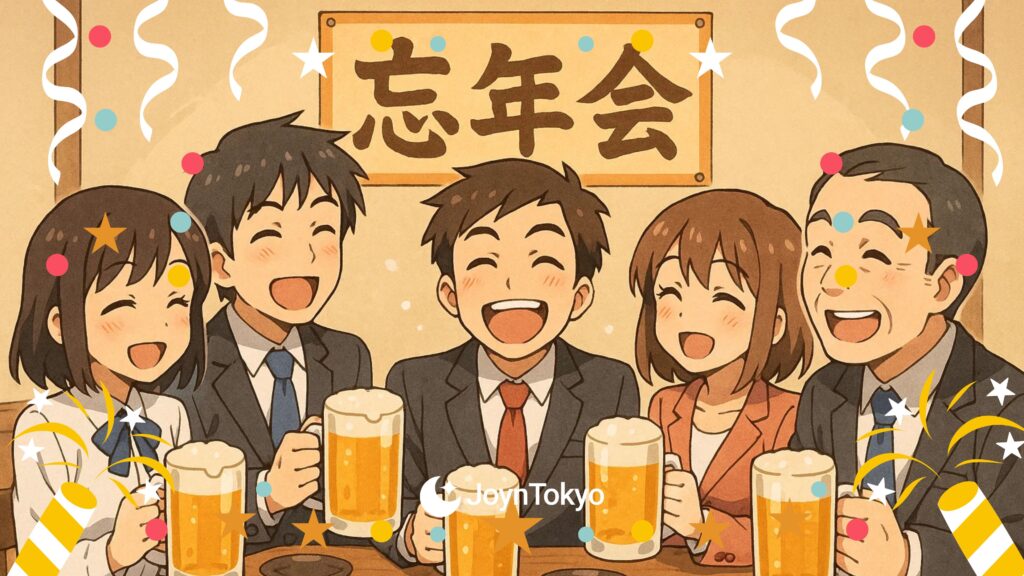
As we approach the end of 2025, our thoughts inevitably turn to 2026, the New Year, and the promise that it holds. We’ve previously discussed Bonenkai, the phenomena of bidding the previous year farewell with friends and colleagues with end-of-year parties.

You may be aware, however, that there is an equivalent for looking forward, rather than looking back, and that is: Shinnenkai. So what is it, and… what is the difference, given that they are often held so closely together?

What Shinnenkai Means

Shinnenkai meaning

Written “新年会” in Japanese, it literally means “New Year meeting,” and is more or less what it sounds like. This is a party to celebrate the year ahead, and make promises to one another about working hard and doing one’s best to make it a success.

However, there are a few things that differentiate this from Bonenkai. Firstly, Shinnenkai are typically done only with one’s colleagues, rather than being an event that can be arranged with friends, as well. The reasons for this will become clearer below.

Why Shinnenkai Matters in Japanese Culture

shinnenkai in japanese culture
消息来源 Japão em Foco

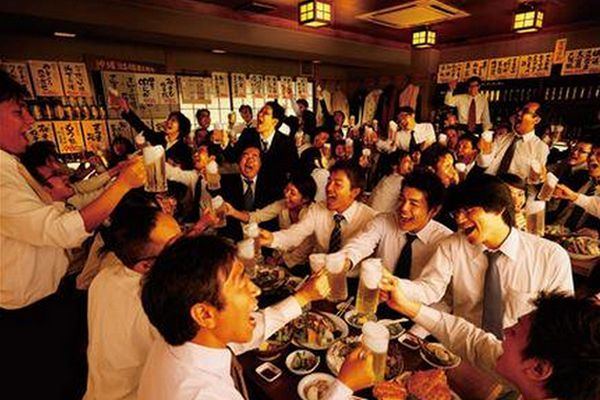
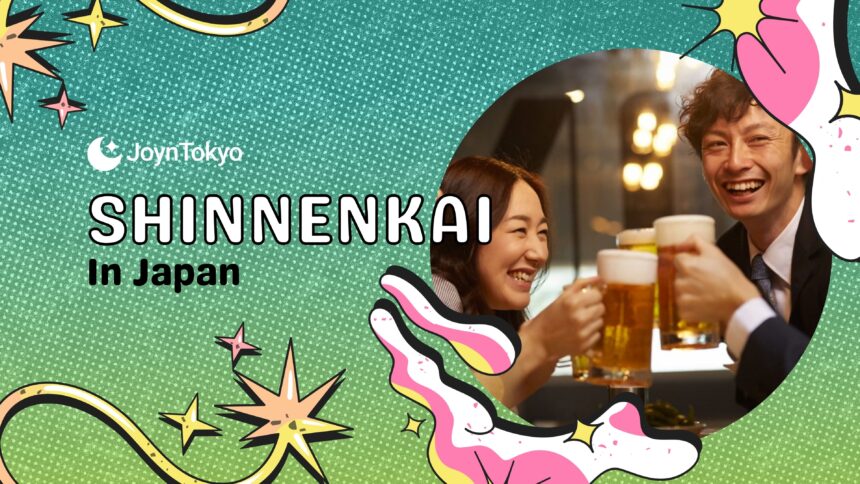
Shinnenkai is, much like Bonenkai, a party organized by one’s company (or team, in larger companies) to either visit an izakaya, restuarant, or — if your office has the space — an events room for food and drink together.

However, there are a few things to be noted. These usually happen after the three days of the New Year’s national holidays (after all, nobody is at work). As such, they come fairly soon after celebrations with family, which will come after celebrations for Bonenkai with your work and friends. So, with so much drinking and eating in the recent past, as well as higher year-end expenses, only colleagues tend to celebrate Shinnenkai, since your company is paying for it!

What Happens at a Typical Shinnenkai

typical shinnenkai events

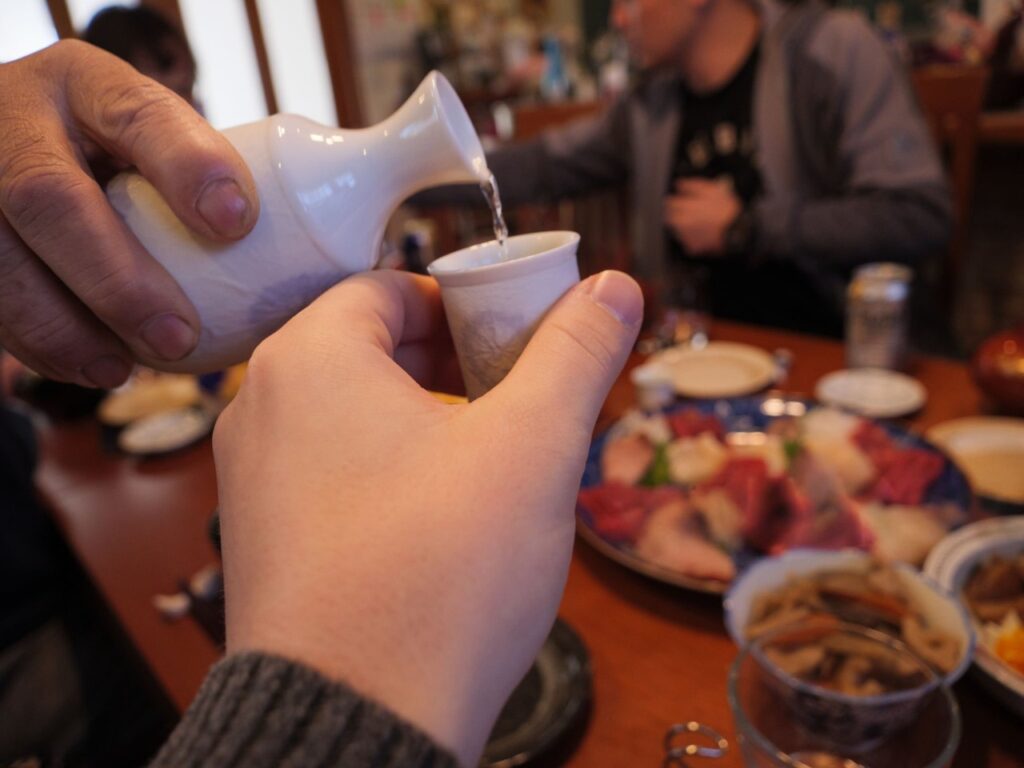
In some ways, the Shinnenkai is superficially similar to Bonenkai. You are drinking and feasting on the company’s dime, and can relax after a long day at work. Beer will usually be flowing, and delicious food ready to be eaten.

However, these parties — while certainly not boring — tend to be a little more low-key than Bonenkai are. This is partly because… a lot of people are partied out. If you went really hard at New Year’s, you may still have a hangover (known in Japanese as 二日酔い/futsukayoi, literally “two days drunk”).

Another big difference is that, while this is not a formal occasion, it doesn’t have the same level of egalitarianism and looseness of Bonenkai. As such, don’t expect your bosses to be quite so on your level, and keep any complaining about difficulties more guarded than your previous party. Shinnenkai is more about getting hype for the year ahead.

But don’t worry: even if there are more forward-looking and motivational speeches from the higher-ups than in Bonenkai, this is still a social event among colleagues. It’s a good time to catch up over what you’ve been up to over the New Year holidays, and talk about what you’re looking forward to this year — if you have a soon to be adult child, for example, a top time to discuss the upcoming 成年日!

So there we have it: a New Year, but not necessarily a new concept! If you’re a party animal, then it’s a fantastic time to have a drink or two on the house. If you are more of a wallflower… well, at least it’s only once a year!

分享本文
托比亚斯从事编辑和作家工作已有十余年,最初在伦敦一家法律出版社工作,2019 年移居东京。 搬到日本首都后,他担任过助理翻译,撰写或编辑过各种主题的文章,包括汽车、医药、电子游戏、经济、葡萄酒、教育和旅游。他甚至还评论过日本推出的第一款 CBD 啤酒! 业余时间,他喜欢看电影、玩电子游戏、唱卡拉 OK 和去当地的公共澡堂洗澡。他最喜欢的神奇宝贝是神狐,最喜欢的食物是咖喱。他从不谈论 2008 年金融危机如何影响了现代世界的一切。.