


People who went to Japan five years ago will tell you cash is king. People who went last month will tell you they barely touched a note. Both are telling the truth, they just had different trips.
The honest answer for 2026 is this: Japan has changed significantly. Most major establishments in cities now accept cards. But “most” is not “all,” and the exceptions are not trivial, they tend to be exactly the places many visitors most want to go. The small ramen shop down the alley. The temple stamp book. The onsen town ryokan in the mountains. The yakitori stall at the festival.
We will give you a clear, current picture of where each payment method works, how much cash to actually carry, and how to set yourself up so that money is never a source of stress during your time in Japan.
Is Japan Still a Cash-Based Society?
Short answer: less than it was, more than you might expect.
How Common Is Cash Usage in Japan Today?
Japan was, for a long time, one of the most cash-dependent developed economies in the world. That reputation lingered long after reality began shifting. The change has been genuine and accelerating, but it has not been uniform.
Chain restaurants, convenience stores, department stores, major hotels, tourist attractions, and transit systems in cities have largely moved to multi-payment acceptance. One traveller who visited seven times over eight years noted that cash accounted for more than 50% of their spending on early trips; by their most recent visit, that figure had dropped to 10–15%. A Japan resident who ran a deliberate experiment went six full months without using a single yen in cash, paying entirely by card and mobile payment everywhere they went.
And yet: a resident in Nagoya reports that around 30% of the restaurants and shops they regularly visit remain cash-only. A traveller whose favourite tonkatsu restaurant in Tokyo has never accepted cards still visits it regularly, cash in hand. Another finds that their temple visits, local bakeries, and market runs consistently require yen notes. Both the “Japan is now cashless” narrative and the “cash is king” narrative are real, they just describe different slices of the country’s commercial landscape.
Why Does Cash Remain Popular in Japan?
Several factors sustain cash use in Japan more than in comparable economies:
- Small business resistance to card fees. Credit card processing fees of 3–5% represent a meaningful margin impact for small operators. Many independent restaurants, bars, and shops have made a deliberate choice not to absorb this cost.
- Cultural familiarity and trust. Japan is one of the world’s safest countries for carrying cash. Theft is rare enough that walking around with ¥50,000 in your wallet is entirely normal. The cultural anxiety about losing cash that exists in many other countries is largely absent.
- Generational patterns. Older business owners and customers alike are more comfortable with cash transactions, and many small businesses are owner-operated by people who have no particular incentive to change.
- Government systems. Revenue stamps for official documents, some ward office payments, and certain visa-related administrative fees remain cash-only by design.
Managing your finances as a longer-term resident in Japan? Our guides to 在日本开立银行账户 和 日本最适合外国人的银行 cover the full picture, from the documentation process to choosing the right institution for your long-term needs.
How Has Japan Changed After COVID and the Olympics?
Two events accelerated Japan’s cashless transition more than any policy alone could have. The COVID-19 pandemic created hygiene-based motivation for contactless payment adoption across the service industry. The 2020 Tokyo Olympics (held in 2021) came with an explicit government push to expand card and digital payment acceptance at venues, transport, and tourist-facing businesses throughout the country.
Chain restaurants, convenience stores, supermarkets, and tourist-area businesses that were card-resistant before COVID generally are not anymore. The shift has been structural, not temporary. What remains cash-heavy is the long tail of independent, family-run, off-the-tourist-trail establishments, and the cultural experiences that define Japan for many visitors.
How Widely Are Credit Cards Accepted in Japan?
Where You Can Easily Use Credit Cards
As of 2026, card acceptance is reliable across a broad and practical range of establishments:
| 类别 | Card Acceptance |
| Convenience stores (7-Eleven, FamilyMart, Lawson) | Universal |
| Supermarkets (most chains) | Very common |
| Department stores (depāto) | Universal |
| Major hotel chains | Universal |
| Shinkansen and express train tickets | Yes (at most machines) |
| Tourist attractions (major) | Very common |
| Chain restaurants (Yoshinoya, Matsuya, Sushiro, etc.) | Very common |
| Taxis (urban, major companies) | Increasingly common |
| Pharmacies and drugstore chains | 常见问题 |
| International brands and flagship stores | Universal |
This covers the majority of spending for visitors who stick to well-known chains and major tourist corridors. If your Japan trip looks like Shinkansen + chain restaurants + department store shopping + major temples, you could probably manage most of it with a card.
Are Foreign Credit Cards Widely Accepted?
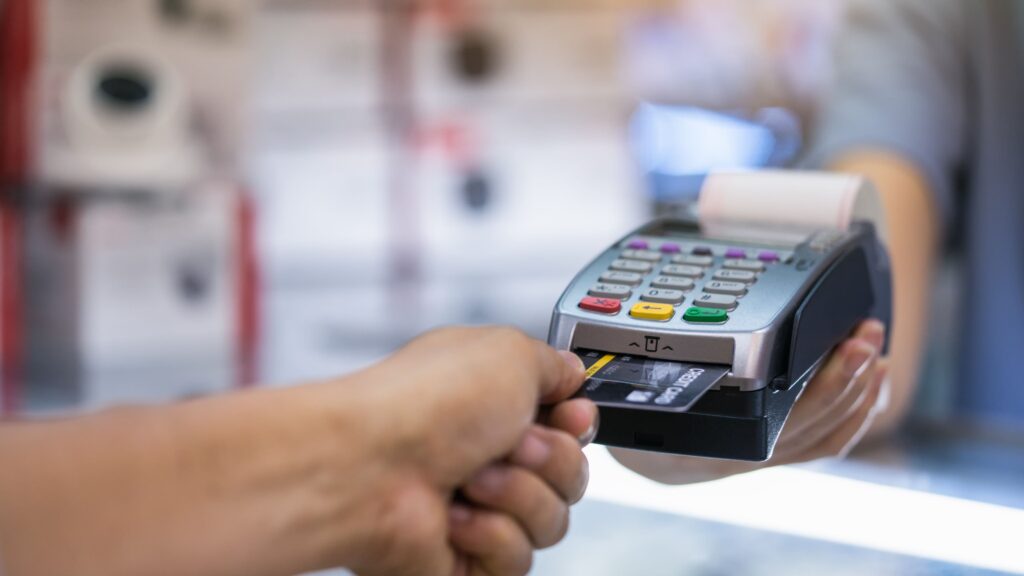
Yes, with caveats. Visa and Mastercard are the most widely accepted foreign cards. American Express is accepted at hotels, department stores, and larger restaurants but has significantly lower acceptance at smaller establishments. Some travelers report occasional declines on foreign cards even where payment terminals exist — a technical compatibility issue rather than a policy refusal. Having a backup card from a different network, or cash, resolves this immediately.
One important prompt to watch for: when a Japanese payment terminal asks whether you want to pay in yen or your home currency, always choose yen. The dynamic currency conversion option, paying in your home currency at the terminal, applies the merchant’s exchange rate, which is consistently worse than your bank’s rate. Choose yen every single time.
For deeper financial insights and a clear picture of local pricing, our guides to the 东京的生活成本 和 日本工资 cover the full commercial landscape, from daily expenses to long-term financial planning.
What Problems Can People Face When Using Cards?
A few specific friction points worth knowing:
- “Cash only” signs are not always posted at the door. You may discover a restaurant is cash-only after finishing your meal. This is not a disaster — there is usually a convenience store with an ATM nearby, but it is avoidable with a small cash reserve.
- Ticket machines at smaller stations may be cash-only, particularly on local and regional lines outside major cities.
- Clinics and small medical facilities frequently do not accept cards. If you need minor medical attention, cash is the safer assumption.
- Some ryokan and traditional accommodation in rural areas are cash-only, sometimes disclosed only at check-in.
- Card declines happen occasionally on foreign cards at smaller terminals. Japan’s payment infrastructure has improved but is not perfectly standardised across all equipment.
What Are the Best Cashless Payment Methods in Japan?
How Do IC Cards Like Suica and PASMO Work?
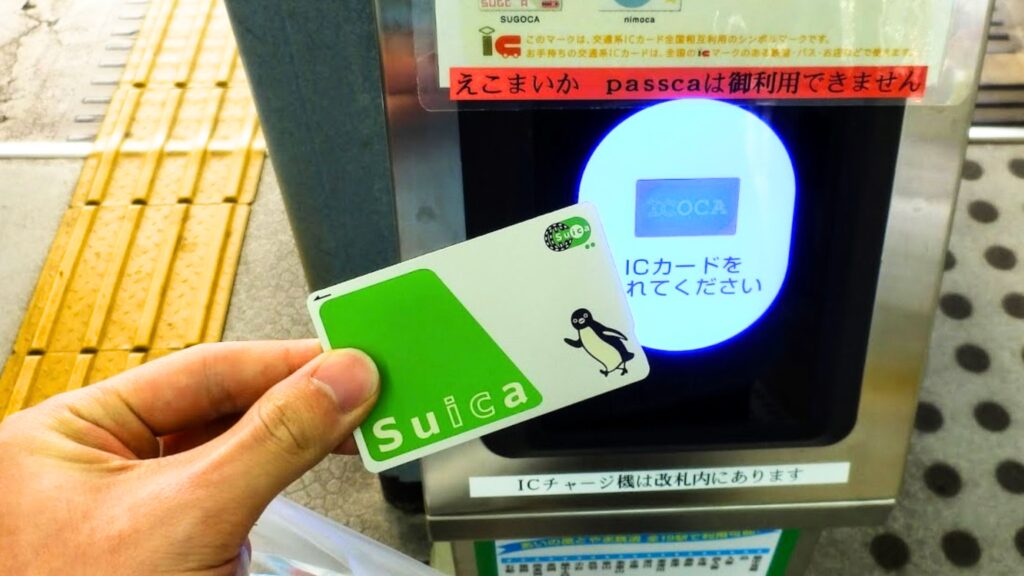
IC cards: 水卡 (issued by JR East), PASMO (Tokyo metro area), ICOCA (Kansai), and regional equivalents — are prepaid contactless cards primarily designed for transit. You tap in, tap out, and the fare is deducted automatically. No fumbling with coins or ticket machines at busy stations.
Beyond transit, IC cards are accepted at most convenience stores, many vending machines, some restaurants, and an increasing range of retail outlets. For daily urban mobility, a Suica or PASMO covers an enormous proportion of your spending with zero friction.
The physical card is purchased at station machines for ¥500 (refundable deposit), topped up with cash. The key limitation: reloading a physical IC card requires cash. The machines at stations do not accept foreign credit cards in most cases.
The alternative — and significant upgrade — for iPhone users: adding Suica directly to Apple Wallet. This allows you to top up using Apple Pay with a foreign credit card, eliminating the cash dependency entirely. Multiple travellers describe this as the cleanest payment setup available in Japan. Android users outside Japan currently cannot access this feature due to licensing restrictions on the relevant NFC standard.
Can You Use Mobile Payments Like Apple Pay in Japan?
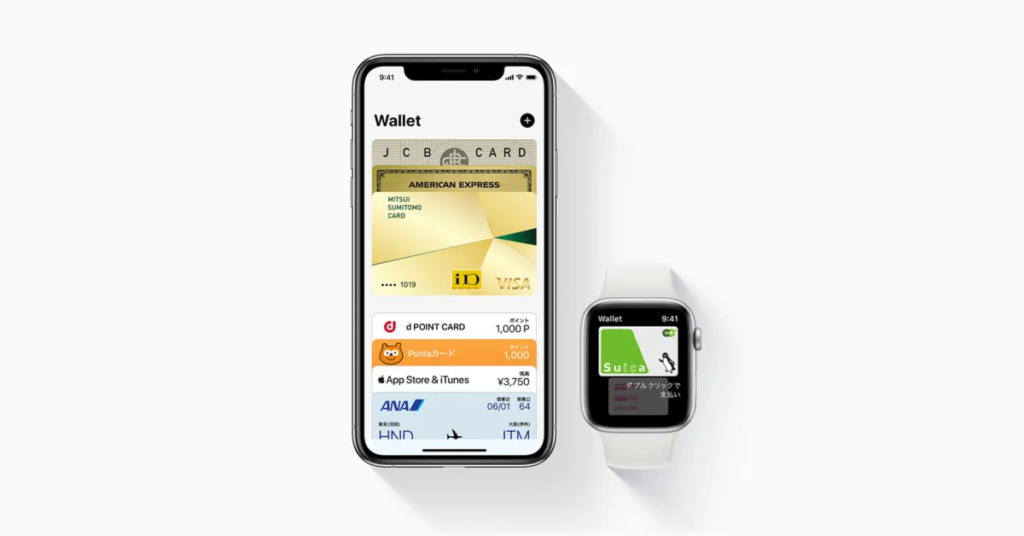
Apple Pay with a foreign card works at any terminal displaying the contactless payment symbol, which covers most major chains and many smaller establishments. It is fast, widely accepted in urban areas, and eliminates the need to carry a physical card for many transactions.
Google Pay is technically functional at some terminals but has documented inconsistencies with foreign-issued cards in Japan. If you are on Android, a physical card remains more reliable than Google Pay for most situations.
One practical note: some establishments accept Apple Pay generally but require a Japanese card specifically for certain payment methods. When in doubt, have your physical card as a backup.
What Is the Role of QR Payments Like PayPay?
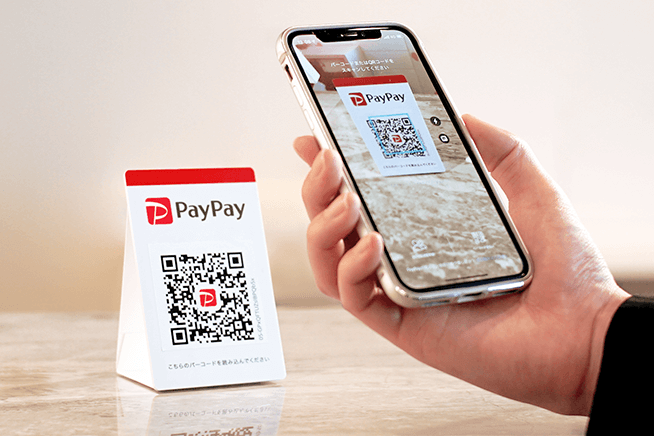
PayPay is Japan’s dominant QR code payment app with tens of millions of users and the widest QR acceptance network in the country. You will see PayPay logos at convenience stores, restaurants, izakayas, and small shops that do not accept standard credit cards.
The limitation for visitors: PayPay requires a Japanese phone number and, for full functionality, a Japanese bank account or credit card. Maybe for a short-term visitor, setting up PayPay is typically not practical. It is more relevant for long-term residents.
The QR payment category also includes LINE Pay, d Payment, and au Pay, all similarly restricted to Japanese-resident accounts. These are significant for understanding the Japanese payment landscape but not immediately relevant for most foreign visitors.
When Do You Actually Need Cash in Japan?
This is the practical core of the question. The following situations consistently require cash, regardless of how card-friendly your trip looks overall.
Why Are Small Restaurants Often Cash-Only?
Independent restaurants: ramen shops, family-run izakayas, neighbourhood curry houses, set-meal (teishoku) diners, and hole-in-the-wall sushi counters, are the highest-risk category for card refusal. These are often precisely the places that define authentic Japanese food experiences and that food-focused travellers most want to visit.
The economics are simple: a small restaurant running on thin margins cannot absorb a 3–5% card processing fee per transaction. Many also use older point-of-sale systems that pre-date the cashless shift. Some have chosen not to update, either by preference or because the perceived benefit does not justify the operational change.
The rule of thumb from experienced Japan travellers: if the restaurant looks like it was decorated in the 1970s and has a handwritten menu on the wall, assume cash-only until told otherwise.
Some ramen restaurants use a ticket machine (kenbaiki — 券売機) at the entrance, where you select and pay for your meal before sitting. These machines are often cash-only, though newer installations increasingly accept IC cards and some accept contactless payment.
Do Temples and Shrines Require Cash?
Almost universally, yes. Admission fees, offering boxes, 戈树因 (御朱印) stamp book services, and charm (大森) purchases at temples and shrines across Japan are cash-only. This is not going to change; it is a deliberate cultural and spiritual choice, not a business oversight.
Goshuin, the hand-written, stamped calligraphy records of temple and shrine visits, cost ¥300–¥500 each, require a dedicated goshuinchō (stamp book), and are a highlight for many visitors. Coins and small notes are the expected payment. One traveller who prioritised 戈树因 collection across a two-week trip identified this as one of their largest cash expenses — and one of the most worthwhile.
Carrying ¥500–¥1,000 in coins and small notes specifically for temple and shrine visits is practical and respectful.
For more insights into cultural experiences that require careful planning, our guides to 日本温泉规则, 日本隐藏的旅游景点, cover the essentials for a meaningful trip.
Are Street Food and Local Markets Cash-Only?
Street food stalls (衙内), festival vendors, morning markets, flea markets (nomi no ichi), and local shopping arcades vary, but cash remains the dominant payment method. Some progressive vendors have adopted QR or contactless payment, particularly in major cities and at organized food festivals. These are still the exceptions.
The categories where cash is safest to assume:
- Festival (祭礼) food stalls: almost always cash
- Covered shopping arcades (shōtengai) in smaller cities are mixed, often cash
- Morning markets at tourist destinations, frequently cash
- Flea markets: almost always cash
- Gashapon (砂锅) capsule toy machines, coin-operated, no exceptions
Gashapon machines deserve special mention. They accept only ¥100 coins, cost ¥200–¥500 per turn, and are genuinely irresistible to most visitors. Carrying ¥1,000–¥2,000 in ¥100 coins specifically for gashapon is both practical and quietly essential.
Do Ticket Machines and Vending Machines Require Coins?
Vending machines in Japan, and there are approximately 4 million of them, accept coins, notes, IC cards, and increasingly contactless payment. Coins are never wrong at a vending machine.
Transit ticket machines at smaller and regional stations are often cash-only. At major stations, machines typically accept IC cards and some accept credit cards. The Shinkansen reservation machines accept credit cards. But if you are buying a local train ticket at a rural station, assume cash.
Coin laundry, coin lockers at train stations, and some parking machines are cash or coin-only. Keep ¥100 coins available throughout your trip, they are one of Japan’s most practically useful denominations.
How Much Cash Should You Carry in Japan?
There is no universal answer, but a practical framework based on consistently reported traveller experience:
| Trip Style | Recommended Daily Cash Reserve |
| Major cities only, chain restaurants, tourist sites | ¥3,000–¥5,000 |
| Mix of chains and independent restaurants, temple visits | ¥5,000–¥10,000 |
| Rural areas, small towns, traditional experiences | ¥10,000–¥20,000 |
| Festival attendance, markets, goshuin collection | ¥10,000-¥15,000 |
These figures assume you are using a card for hotels, transport (via IC card or credit card), and chain establishments. They represent cash for the gaps — small restaurants, temples, street food, vending machines, and emergencies.
How Much Cash Do You Need for a Two-Week Trip?
Reported figures from travellers who tracked their spending vary widely, reflecting the genuine diversity of Japan trip styles:
- City-focused, card-first approach: ¥20,000–¥40,000 total (roughly $130–$270 USD)
- Mixed urban and rural itinerary: ¥40,000–¥80,000 total
- Rural-heavy, traditional experiences: ¥80,000–¥120,000 or more
A practical starting point: withdraw ¥30,000 at the airport or first convenience store ATM. Top up as needed. This approach is consistently recommended over large pre-trip currency exchanges. The 7-Eleven ATM rate is reliable and the logistics are simpler than exchanging large amounts before departure.
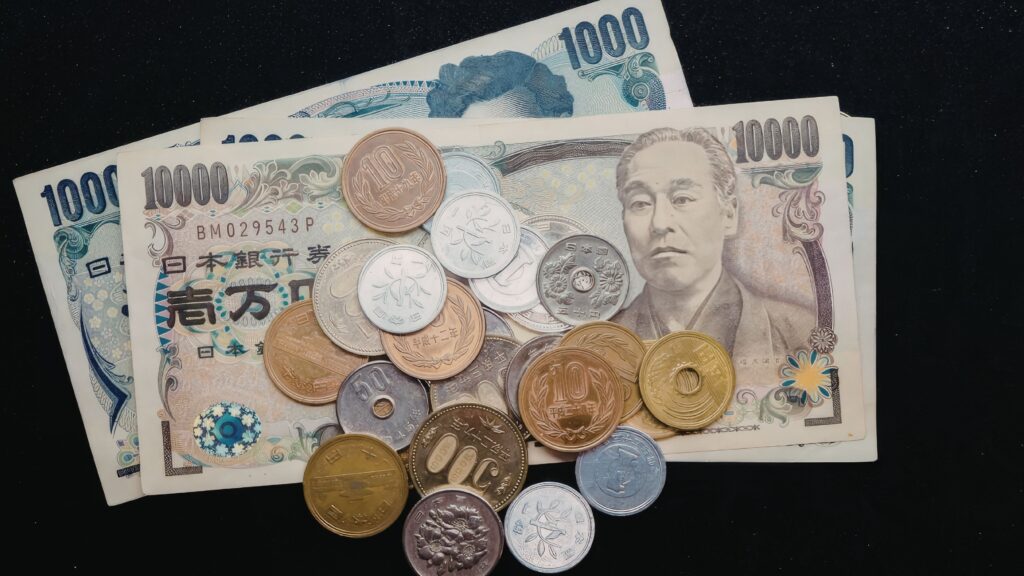
Coin management matters more than people expect. Japan’s coin denominations include ¥500, ¥100, ¥50, ¥10, ¥5, and ¥1. Transactions generate coins fast. Carrying a small coin purse using coins first at convenience stores, vending machines, and bus fares keeps your wallet manageable and your coin balance useful rather than accumulating as a heavy, awkward pile at the bottom of your bag.
Is It Safe to Carry Cash in Japan?
Yes. Japan’s low crime rate is not a travel-brochure exaggeration. Theft from tourists is rare. Pickpocketing is far less common than in most major European tourist destinations. Japanese residents routinely carry ¥30,000–¥60,000 in cash without concern. Lost wallets are frequently returned intact.
This does not mean carelessness is advisable. Standard precautions apply. But the anxiety about carrying meaningful amounts of cash that is entirely reasonable in many travel destinations is genuinely not necessary in Japan.
If you are building your life here more broadly, our 移居日本终极指南 covers the full picture, from arrival logistics to long-term financial planning.
What Are the Pros and Cons of Cash vs Card in Japan?
Advantages of Using Cash
- Works everywhere — no network issues, no compatibility questions, no card declines
- Essential for the specific experiences that define authentic Japan: small restaurants, temples, markets, street food
- Helps with budgeting — visible spending limits impulsive decisions
- Required for IC card top-up (physical cards), coin-operated machines, and government services
- Culturally appropriate in traditional settings
Disadvantages of Using Cash
- Requires ATM planning — running out mid-day in a rural area is a genuine inconvenience
- No rewards points or cashback
- Exchange rate risk if converting large amounts before travel
- Coin accumulation becomes a management task over a longer trip
- Inconvenient for large transactions (hotels, electronics)
Advantages of Using Cards
- Rewards points accumulate on significant Japan trip spending
- No coin management
- Eliminates currency exchange logistics for most spending
- Safer for large purchases — limited fraud liability
- Apple Pay Suica removes all cash dependency for transit
Disadvantages of Using Cards
- Not accepted at a meaningful minority of restaurants, temples, markets, and small businesses
- Dynamic currency conversion trap catches unprepared travellers
- Occasional technical declines on foreign cards at smaller terminals
- Does not work for coin-operated machines, gashapon, or IC card top-up on physical cards
Where Can You Withdraw Cash in Japan?
Are ATMs Easy to Find for Tourists?
Yes — provided you know which ones to use. Not all ATMs in Japan accept foreign cards. Bank ATMs at smaller regional banks frequently do not. Post office ATMs (日本邮政银行) accept most foreign cards during opening hours but are not available 24/7.
The reliable options for foreign card holders are convenience store ATMs — available 24 hours, English interface, and widely distributed throughout the country.
Why Are 7-Eleven ATMs the Most Reliable?
7-Eleven’s ATM network (operated by Seven Bank) is consistently the most recommended by foreign travellers and long-term residents alike. Reasons:
- Accepts virtually all foreign Visa, Mastercard, and Maestro cards
- English language interface available
- Available 24/7
- Minimum withdrawal of ¥10,000 (approximately $65–70 USD depending on exchange rate)
- Seven Bank’s own fee of ¥110–¥220 per transaction (varies by time of day)
- Your home bank may charge an additional international withdrawal fee
The combined fee per ¥10,000 withdrawal is typically ¥220–¥330 from the ATM side, plus whatever your bank charges. On a withdrawal equivalent to $100 USD, this represents a fee rate of roughly 2–3%. Acceptable for convenience. Minimisable by making fewer, larger withdrawals rather than many small ones.
Can You Use ATMs at FamilyMart and Lawson?
Yes. FamilyMart (E-net ATM network) and Lawson (Lawson ATM network) also accept foreign cards and offer English interfaces. Several travellers report better luck at FamilyMart than at Lawson for specific card types — experience varies. 7-Eleven remains the most consistently reliable option for unfamiliar situations.
Japan Post Bank ATMs at post offices are another reliable option during business hours and accept a wide range of foreign cards.
What Fees Should You Expect When Withdrawing Cash?
| ATM Network | Typical ATM Fee | Foreign Card Acceptance | 小时数 |
| Seven Bank (7-Eleven) | ¥110–¥220 | 优秀 | 24/7 |
| E-net (FamilyMart) | ¥110–¥220 | Very good | 24/7 |
| Lawson ATM | ¥110–¥220 | 良好 | 24/7 |
| 日本邮政银行 | ¥110 | Very good | Business hours |
| Regional bank ATMs | 视情况而定 | Often limited | Business hours |
Always choose to withdraw in yen, not your home currency, when prompted. The ATM’s offered exchange rate for your home currency is always worse than your bank’s interbank rate. Choose yen. Always.
Should You Exchange Money Before Coming to Japan?
Is It Better to Exchange Currency Before Arrival?
For most travellers, no, and this is an area where practice has shifted considerably. The conventional advice to exchange currency at your home bank before departure was reasonable when ATM access in Japan was less reliable for foreign cards. It is now outdated for most situations.
The 7-Eleven ATM rate reflects the interbank exchange rate with a small fixed fee. Currency exchange offices — at airports, hotels, and dedicated exchange shops — typically apply a rate spread of 3–5% above the interbank rate in addition to any fees. Over the course of a trip, this difference on a total cash spend of ¥50,000–¥100,000 is meaningful but not dramatic (roughly ¥1,500–¥5,000).
The case for pre-trip exchange: if the exchange rate is unusually favourable and you have high confidence about your cash budget. If you hold a Wise or Revolut account, you can lock in a rate when it is favourable and spend from that balance in Japan with very competitive rates and low fees.
Do Exchange Rates Really Matter for Travellers?
On typical cash spending of $200–$400 USD equivalent, the difference between a good and poor exchange rate is $6–$20. This matters somewhat but is not a trip-defining figure. What matters more is avoiding the worst options: airport exchange counters with 5–8% spreads, hotel exchange services, and dynamic currency conversion at payment terminals.
The rate fixation common in online travel communities slightly overstates the practical impact for most travellers. A reasonable rate from a 7-Eleven ATM with your bank’s standard international fee is fine. Optimising beyond that yields diminishing returns relative to the time invested.
What Is the Smartest Strategy for Getting Yen?
In order of practical priority:
- A credit card with no foreign transaction fees for all card-accepted purchases
- Apple Pay with Suica (iPhone users) for transit and convenience stores — loaded with your no-fee credit card
- 7-Eleven ATM withdrawals with a debit card that minimises international fees (Charles Schwab’s checking account reimburses all ATM fees globally; Wise and Revolut offer competitive rates)
- Small initial withdrawal on arrival (¥20,000–¥30,000) topped up as needed throughout the trip
Pre-trip currency exchange at your home bank is the least efficient option on this list for most travellers.
Can You Travel Japan Completely Cashless?
Is It Possible to Rely Only on Cards in Major Cities?
Technically, yes, with careful curation of where you eat, shop, and visit. In Tokyo and Osaka specifically, a determined cashless traveller who eats only at chain restaurants, shops only at major retail outlets, visits only card-accepting attractions, and uses Apple Pay Suica for transit could complete a trip without touching a yen note.
Multiple residents report doing exactly this for extended periods. The experiment works.
What Risks Do You Face Without Carrying Cash?
The risks are real and specific:
- The cash-only restaurant discovery mid-meal. Solvable but disruptive — requires leaving to find an ATM, explaining the situation, and returning.
- Temple visit without cash. You can still visit, but 戈树因 services, admission at smaller temples, and offering boxes are inaccessible.
- Rural emergencies. A medical clinic, a rural taxi, a small-town pharmacy, a traditional accommodation — all potentially cash-only with no ATM nearby.
- Ticket machine failure. When a card-accepting machine is out of service, the backup is cash.
The cashless-only approach trades a small but real risk of inconvenience for the convenience of not carrying cash. Most experienced travellers conclude that ¥10,000–¥20,000 in your wallet is cheap insurance against all of these scenarios.
How Do Locals and Long-Term Residents Pay?
The pattern among residents is instructive: primary use of cards and mobile payment for predictable, regular spending; cash maintained for the irregular situations that require it.
Residents who live in major urban centres and shop primarily at chain establishments may visit an ATM once a month or less. Residents in smaller cities or who frequent independent restaurants and traditional establishments use cash more regularly, sometimes daily. A long-term resident in Nagoya estimates 30% of their regular transactions require cash. A Tokyo resident in a modern neighbourhood estimates closer to 5–10%.
The variation reflects neighbourhood, lifestyle, and personal preference as much as city size. Japan’s cashless transition is real but uneven, and residents navigate that unevenness as a matter of routine.
What Is the Best Payment Strategy in Japan?
Should You Use a Mix of Cash and Card?
Yes. This is the practical consensus from travellers who have thought carefully about it. The specific balance depends on your itinerary:
| Itinerary Type | Recommended Cash Proportion |
| Major cities, tourist trail, chain restaurants | 15–20% of total spending |
| Mix of cities and rural areas | 25–35% |
| Rural-heavy, traditional accommodation, local dining | 40–50% |
| Festival season or market-focused travel | 35–45% |
What Is the Safest and Most Convenient Setup?
The optimal setup for most foreigners coming to Japan in 2026:
Step 1 — Before departure:
- Obtain a credit card with zero foreign transaction fees (if you don’t already have one)
- Download and set up Apple Pay if you have an iPhone (Android users: plan for a physical IC card)
- Note your bank’s international ATM fee policy
Step 2 — On arrival:
- Go directly to the nearest 7-Eleven ATM and withdraw ¥20,000–¥30,000
- Add Suica to Apple Wallet and load ¥3,000–¥5,000 (iPhone users)
- Or purchase a physical Suica or PASMO at a station machine (¥500 deposit + initial load in cash)
Step 3 — During the trip:
- Pay by card or Apple Pay wherever accepted
- Use IC card for all transit and convenience store purchases
- Reserve cash for small restaurants, temples, markets, and vending machines
- Top up at 7-Eleven ATMs as needed — do not wait until your wallet is empty
- Keep ¥100 coins accessible for gashapon, vending machines, and coin lockers
Step 4 — Departure:
- Spend remaining coins at vending machines, convenience stores, or transit top-ups
- Remaining notes can be exchanged at the airport (small amounts) or saved for a return trip
What Mistakes Should You Avoid?
- Accepting dynamic currency conversion at terminals. Always pay in yen.
- Exchanging large amounts of currency at airport exchange counters. The rate spread is punishing.
- Assuming card acceptance without checking. For restaurants specifically, a quick glance at the entrance for card logos — or a brief question to staff — prevents mid-meal surprises.
- Letting your cash run out without a nearby ATM. Top up before you need to, not when you need to.
- Ignoring coin management. A pocket full of heavy Japanese coins is avoidable if you use them regularly for small transactions.
- Not carrying any cash at all. The cashless-only approach works until it doesn’t — and when it doesn’t, it’s always at an inconvenient moment.
Top 7 Situations Where Cash Is Still King in Japan
#1 Small Local Restaurants and Ramen Shops
The single most common cash-only encounter for visitors. Independent restaurants — ramen, soba, tonkatsu, yakitori, curry, set-meal diners — are the most likely places to need cash. Some use ticket machines that are cash-only. Others simply do not have payment terminals. Always carry enough cash to cover a meal before entering a small restaurant. The discovery that a place is cash-only is much better made before you order than after.
#2 Temples, Shrines, and Cultural Experiences
Admission, offering boxes, 戈树因 stamps, 大森 charms, and ceremony participation fees are almost universally cash-only. Budget ¥500–¥2,000 per significant temple or shrine visit, with extra for 戈树因 if you plan to collect stamps. A dedicated small wallet or envelope for temple cash keeps things organised and appropriately respectful.
#3 Street Food and Markets
Festival stalls, morning markets, flea markets, covered shopping arcade vendors, and street food sellers are predominantly cash-based. Some progressive vendors in major cities have adopted QR or contactless payment — these are the exception rather than the rule. Assume cash for any outdoor or street food context.
#4 Vending Machines and Gachapon
Four million vending machines. Millions of gashapon capsule machines. Coins — specifically ¥100 coins — are the universal currency for both. Modern vending machines increasingly accept IC cards and contactless payment, but the gashapon machine has not changed: it is ¥100 coins only, full stop. Maintain a coin reserve. Use it at convenience stores and vending machines before it becomes a heavy, jingly problem.
#5 Rural Areas and Small Towns
The cashless infrastructure that makes Tokyo manageable does not extend uniformly to the countryside. Rural ryokans, small-town restaurants, mountain hut refreshment stands, regional buses, and local taxi services are all more likely to be cash-only than their urban equivalents. Double your cash reserves before leaving a city for a rural itinerary. ATMs in small towns may be limited to post office hours.
#6 Cash-Only Ticket Machines
Local and regional train ticket machines, some bus ticket machines, coin lockers at smaller stations, and some attraction entrance kiosks are cash-only or accept only IC cards loaded with cash. Know which payment modes your transport requires before you need it — particularly on day trips to smaller towns where ATM access may be limited.
#7 Emergencies and Backup Situations
Cards fail. ATMs decline foreign cards for opaque technical reasons. Payment terminals go offline. Your phone battery dies at the moment you need to present Apple Pay. None of these is common. All of them happen occasionally. Cash in your wallet is the universal fallback that requires no network, no battery, no compatibility, and no explanation. Keep some. Not a fortune but some.
最终想法
Use cards for volume. Cash for access.
In terms of total spending on a typical Japan trip, cards and mobile payments will likely cover 70–85% of transactions for visitors in major cities. That includes hotels, transit, chain restaurants, convenience stores, and shopping. The efficiency and rewards points make cards the sensible default wherever they are accepted.
But the 15–30% that requires cash is not negligible. It covers many of the most memorable parts of a Japan trip: the neighbourhood restaurant that has been in the same family for forty years, the temple stamp collected at the top of a mountain path, the ramen eaten standing at a counter in a side street, the gashapon toy that becomes a trip souvenir.
What Is the Smartest Approach for a Stress-Free Trip?
Three rules that cover almost every situation:
Rule 1: Never let your cash fall below ¥5,000 when you are away from a city centre. Top up before you need to, not when you are desperate. 7-Eleven ATMs are everywhere in cities and common enough in larger towns.
Rule 2: Choose yen every time — at payment terminals, at ATMs, everywhere you are given the option between yen and your home currency.
Rule 3: Set up Apple Pay Suica before you land if you have an iPhone. It eliminates one of the most persistent cash requirements — IC card top-up — and makes transit throughout Japan genuinely seamless.
Japan in 2026 is not the cash-only country it was a decade ago. But it is not cashless either. It is a country in an intelligent, uneven transition — where the right answer is not one payment method or the other, but the confidence to use both at the right time.
The ¥20,000 in your wallet and the no-fee credit card in the same pocket is not a compromise. It is the correct setup.
更多信息