

How often are you really yourself? What I mean is, do you act the same way around your friends as you do around your parents? How about between your siblings and your boss or professor? While some might consider changing who you appear to be based on who you are talking to to be “two-faced,” it is practiced by almost everyone at some point or another.
In Japan, the phenomenon is known as “honne and tatemae.” You may have even heard it yourself — perhaps in a moment of openness, someone might have said, “this is my honne.” But what do these terms mean? How are they expressed? And how should you navigate this phenomena? We’re going to let all pretence fall away and give you the scoop.
What Do Honne and Tatemae Mean?
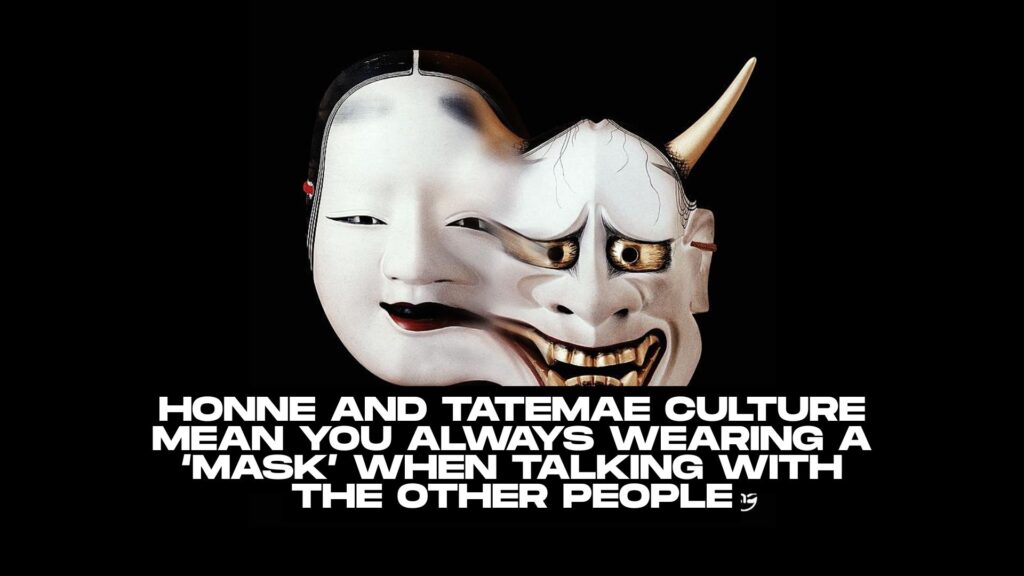
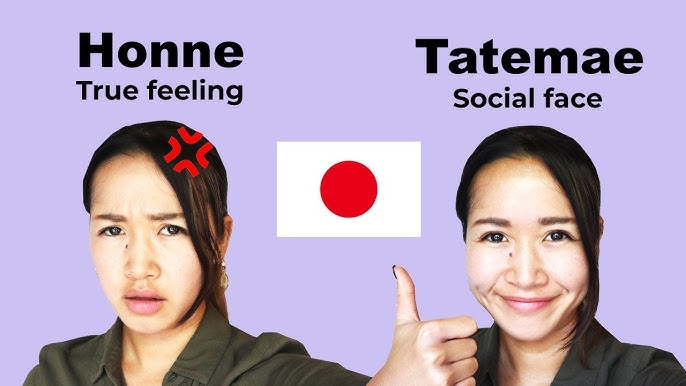
The two opposite but inevitably intertwined concepts essentially boil down to the difference between one’s public presentation and one’s private presentation.
“Honne” is written in kanji as 本音, and literally means “true sound.” This is not the same as one’s internal life, but is instead the unrestrained self, that is typically only expressed to friends and loved ones. You probably don’t go to work and geek out about video games to your employer, for example, as it is unprofessional. On the other hand you probably would gush about how much you love Hollow Knight: Silk Song to your friends or lover.
“Tatemae” is the opposite. Written “建前,” it literally means “facade,” and is the face one puts on when one is around those they are not close with, or need to act in a manner that is “respectable.” This doesn’t always have to be in an official capacity: I’m sure many of our beloved readers can recall moments when they have been fighting with someone close to them, only for both of you to immediately sweeten up when a third party approaches.
These should be kept distinct from the Jungian concept of the persona and the shadow. While they may seem related, as the persona is the public version of one’s self, the shadow is instead part of the subconscious, rather than something consciously expressed in from of certain people.
Why Honne and Tatemae Matter in Japanese Culture
Japanese culture highly values harmony. This can be a good thing: many people who visit Japan are amazed at how readily people get along, and how rare acts of anger or violence occur, even in large cities like Tokyo. On the other hand, it can sometimes be flattening to one’s individuality: the Japanese expression “the nail that sticks out is hammered down” is infamous across the world as something to be concerned about, not admired.
And while everyone experiences this in some form or another, it is this pressure to conform that makes the idea of the tatemae, and its opposite honne, quite pronounced in Japan. Let’s take a look at some examples!
Everyday Examples of Honne and Tatemae
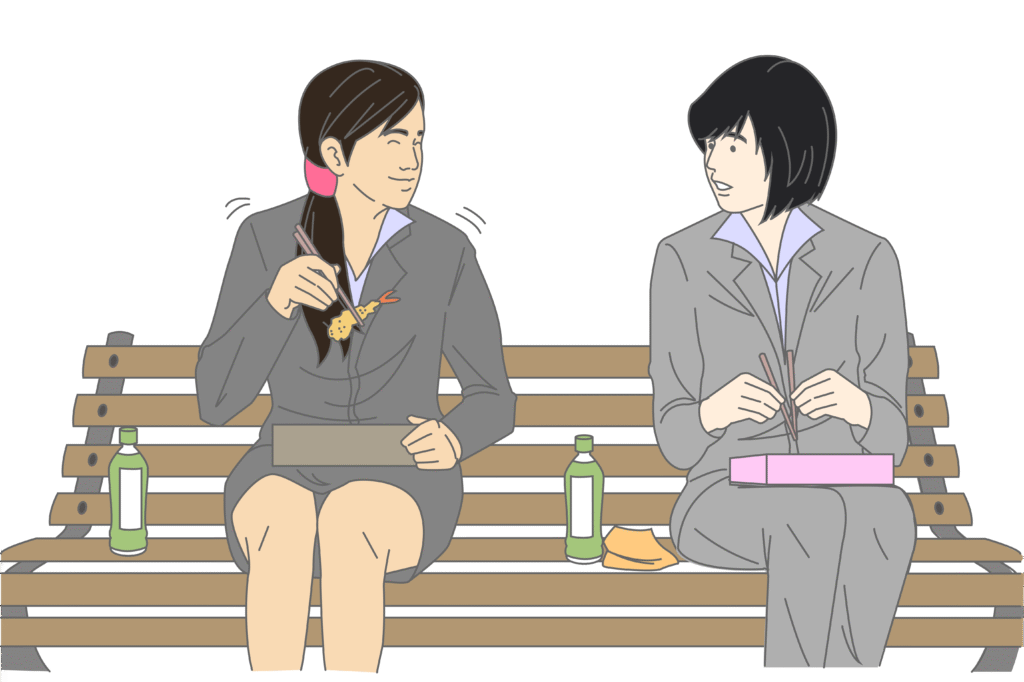
The classic example of tatemae vs. honne is in the workplace. While at work, it is natural to behave professionally and do one’s best not to ruffle feathers in any culture. However, in Japan, the respect for hierarchy means that it is typical to not to question one’s superiors. As such, many will — with a happy tatemae go along with their boss’ requests, no matter how unreasonable.
After work, at the bar with colleagues, is the time for the honne to come out as you down your fourth beer and complain to a sympathetic ear that you know the company’s plan isn’t being executed correctly, but you have to grin and bear it. The alternative is that you become known as a troublemaker, a problem in Japanese companies.
A more simple example might be when someone compliments a foreigner’s Japanese with “Nihongo jouzu ne!” (日本語上手ね!), which literally means “isn’t your Japanese good!”. However, it is almost an unwritten rule among those who have been in Japan or studied Japanese for a long time that this is mere politeness: if someone is genuinely impressed by your Japanese, they will ask how long you have lived in Japan — and if they’re really impressed, they won’t say anything at all.
Honne and Tatemae in Relationships
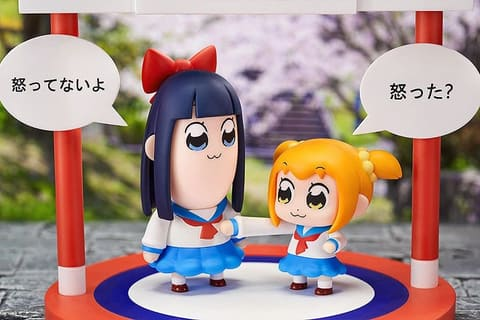
If you thought things get any easier in relationships, then I’m afraid you have yet to internalize the lessons of this article, so let’s dig in a little more.
I’m sure you’ve heard the expression, “it’s not you, it’s me,” and know that the real meaning is “it’s you, it’s totally you, how could it be anything but you?”. The same sentiment applies in Japanese, though for the uninitiated it can be a little harder to discern.
Some are easy, such as “okkotenai yo” (怒ってないよ): “I’m not mad,” meaning “I’m pretty mad.” Others can be more subtle, such as “suteki na resutoran wo mitsuketa” (素敵なレストランを見つけた): “I found a cool restaurant,” which is “I really want to go to this restaurant.”
A less easy one to discern is, “mata anata ni renraku suru” (またあなたに連絡する): “I’ll call you again.” Nine times out of ten, no they won’t.
Navigating Honne and Tatemae as a Foreigner
As we’ve discussed, a lot of this is pretty universal, so some things don’t need to be explicitly taught. However, you should be aware that in professional settings, things can be a little more sensitive than they are in the west. When your boss makes a silly decision, or directly contradicts something they said earlier, “really?” is not the appropriate response. Instead, a hearty “yes, sir” followed by a moaning session with your coworkers.
However, it can also be used to your advantage. I’m sure you’ve heard of the “gaijin card,” a phenomena where foreigners can get away with things in Japan that a Japanese person couldn’t. We DO NOT recommend using a “gaijin card” to get out of problems, as this can exacerbate issues.
That said, it has not been unknown for Japanese people to let little rules slide politely, their tatemae telling you things are fine, while their honne might be cursing you. You might get away with something, but remember; you are an ambassador of your country. So be on your best behavior.
And that’s all we have to say about honne and tatemae — or at least, all we are willing to discuss publicly. Hopefully this has taught you at least the basics of this universal concept that is nonetheless vital to understand in Japan. And if it hasn’t? Keep your criticisms to yourself!