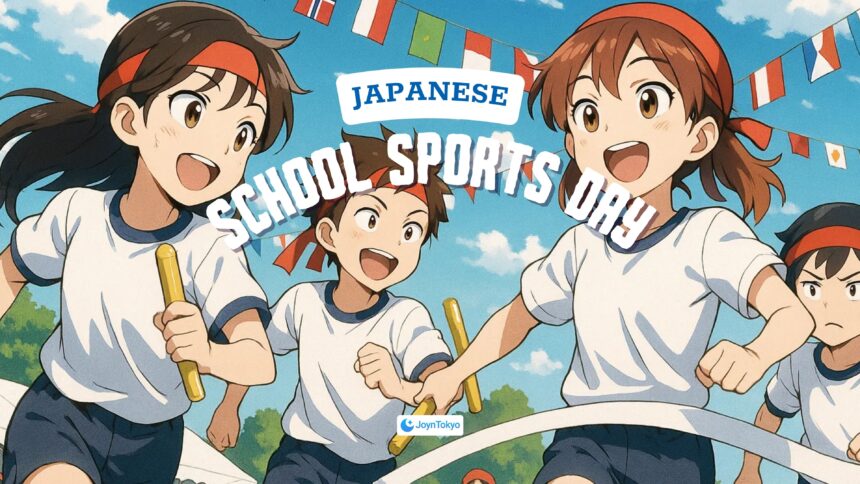

If you visit a Japanese school in the fall or spring, you will likely encounter a massive, coordinated spectacle known as Undokai. Far more than a simple physical education class, this event involves weeks of preparation, elaborate choreography, and participation from the entire community.
For expatriates living in Japan or culture enthusiasts, understanding Undokai offers a fascinating window into Japanese society. It highlights values of cooperation, discipline, and community spirit that extend well beyond the playground. This guide covers the history, events, and cultural significance of Japan’s unique sports festival.
What Is Undokai?
The term Undokai (or Undoukai) translates literally to “sports gathering” or “exercise meeting.” It is a traditional sports festival held annually by schools ranging from kindergarten through high school, and even by some companies and local communities.
While Western sports days often focus on individual athletic prowess, Undokai emphasizes group effort. Students are typically divided into two competing teams – Red (aka-gumi) and White (shiro-gumi) – to compete for points across various events.
A Brief History
The tradition dates back to the Meiji period, a time when Japan was rapidly modernizing and adopting Western educational practices. Historical records suggest the first Undokai was held in March 1873 at the Naval Academy in Tokyo, introduced by English naval instructor Archibald Douglas. Over time, it evolved from a military training exercise into a staple of the Japanese school curriculum, designed to foster physical health and collaborative spirit.
Typical Events and Activities
Undokai lasts for an entire day, usually starting early in the morning. While specific activities vary by school and region, several traditional events appear almost universally.
Opening Ceremony and Radio Taiso
The day begins with a formal opening ceremony involving speeches from the principal and student representatives. This is followed by Radio Taiso (radio calisthenics), a synchronized warm-up routine performed to piano music. This routine is a cultural touchstone in Japan, familiar to nearly every citizen.
Collaborative Games
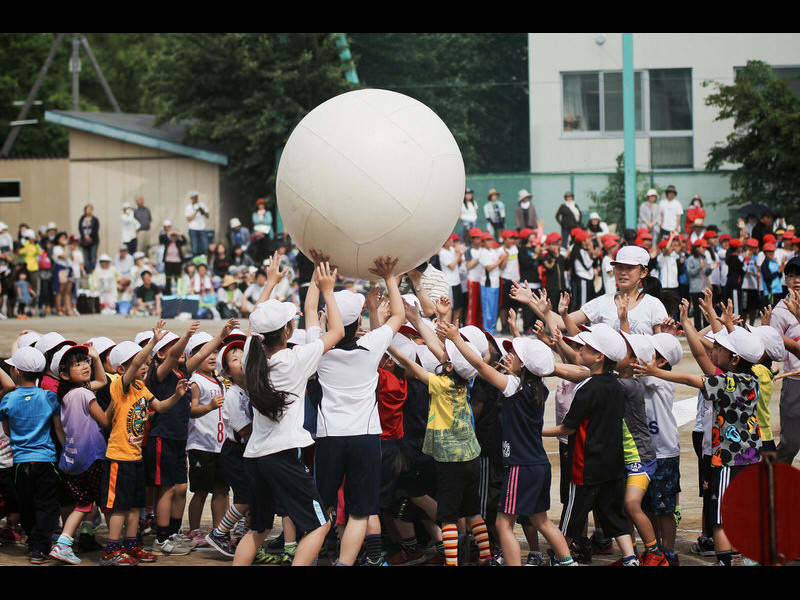
The core events are often team-based games rather than individual sprints:
- Tama-ire (Beanbag Toss): Teams race to throw small beanbags into a basket mounted on a high pole. It requires coordination and speed, as the team with the most bags in the basket wins.
- Tsunahiki (Tug-of-War): A classic test of strength where the entire Red or White team pulls against the other.
- O-dama Korogashi (Giant Ball Roll): Students work in pairs or groups to roll a massive ball through a course or over the heads of the crowd.
- Mukade Kyoso (Centipede Race): Groups of students tie their ankles to a long rope or wooden planks and must walk in perfect unison to move forward without falling.
Performance Arts
In addition to athletics, students perform practiced routines. Kumitaiso (gymnastic formation) involves students using their bodies to build pyramids and towers, demonstrating balance and trust. Many schools also feature traditional folk dances or modern cheerleading routines.
The Cultural Significance
While points are tallied and a winning color is declared at the closing ceremony, the true goal of Undokai is education. The event reinforces the concept of gambaru – persisting and doing one’s best.
The preparation leading up to the day is just as important as the event itself. Students spend weeks practicing drills, painting flags, and organizing cheer squads. This process teaches discipline, teamwork, and the importance of contributing to the collective goal rather than seeking individual glory.
What to Expect as a Spectator
If you are attending an Undokai as a parent or guest, preparation is key to enjoying the experience.
The Bento Culture
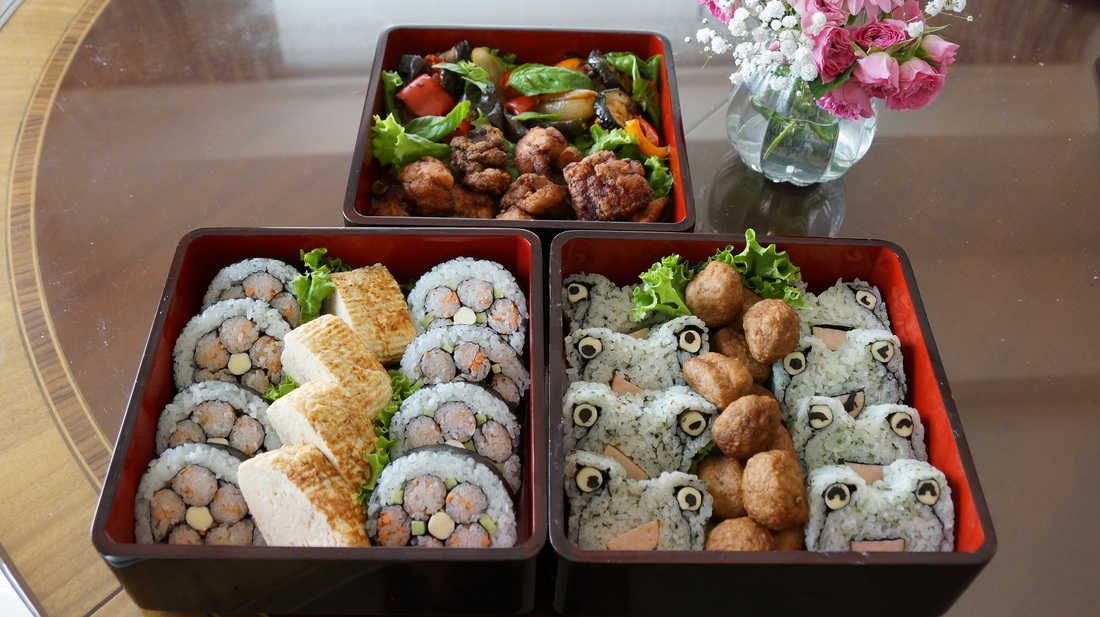
Lunch is a central part of the event. Unlike a standard school day where students eat in classrooms, Undokai is often a picnic-style event. Families prepare elaborate bento boxes filled with fried chicken (karaage), rice balls (onigiri), and sausages. It is a time for socialization among parents and teachers.
Practical Tips for Attendees
- Arrive Early: Families often arrive hours before the start time to secure a viewing spot with tarps or picnic mats.
- Sun Protection: As the event takes place outdoors for several hours, hats and sunscreen are essential.
- Photography: Parents are generally permitted to take photos, but it is important to follow school rules regarding tripods and designated shooting areas.
- Cleanup: In line with Japanese custom, attendees are expected to take all their trash home with them. The school grounds are left spotless after the event, often cleaned by the students and parents themselves.
Conclusion
Undokai is a vibrant display of Japanese culture that combines athleticism with community spirit. It serves as a reminder that in Japanese society, the process of working together is often just as significant as the result. Whether you are participating or watching from the sidelines, the energy and dedication on display make it a memorable experience.