


White Day is a Japanese holiday celebrated on March 14th where men give gifts to women who gave them chocolates on Valentine’s Day one month earlier. It serves as a reciprocal counterpart to Valentine’s Day, creating a two part gift giving tradition unique to Japan and several other East Asian countries.
更多信息
The Origin of White Day

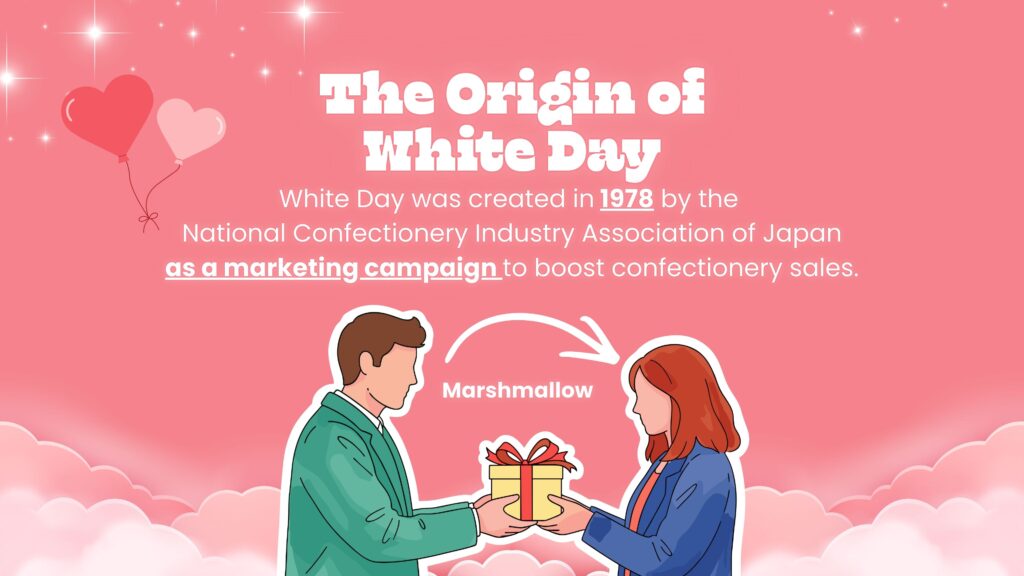
White Day was created in 1978 by the National Confectionery Industry Association of Japan as a marketing campaign to boost confectionery sales. The holiday was originally called “Marshmallow Day” and was intended to encourage men to give marshmallows to women. The name later changed to “White Day” to encompass a broader range of white-colored gifts and sweets.
How White Day Works

The tradition follows a specific pattern:
Valentine’s Day (February 14): Women give chocolate to men. This includes two types:
- Giri-choco (obligation chocolate) given to colleagues, classmates, or acquaintances
- Honmei-choco (true feeling chocolate) given to romantic interests
White Day (March 14): Men reciprocate by giving return gifts to the women who gave them chocolate.
Traditional White Day Gifts

Common gifts include:
- White chocolate – The most traditional choice
- Marshmallows – A nod to the holiday’s original name
- Cookies and candies – Often white or pastel-colored
- Jewelry – For romantic partners
- Lingerie – For romantic relationships
- Other gifts – Handbags, accessories, or flowers
The “Three Times Rule”
An unwritten social guideline suggests that men should give gifts worth approximately three times the value of what they received on Valentine’s Day. This expectation, known as sanbai gaeshi (triple return), adds pressure to the gift-giving but is not strictly enforced in modern practice.
White Day Today
While White Day originated as a commercial holiday, it has become an established part of Japanese culture. The tradition is also celebrated throughout South Korea, Taiwan, and China. In recent years, the rigid gender roles have relaxed somewhat, with some couples choosing to exchange gifts more equally or creatively reinterpreting the tradition.
The holiday generates significant retail revenue in Japan, with department stores and confectionery shops offering special White Day products and promotions throughout February and March.