


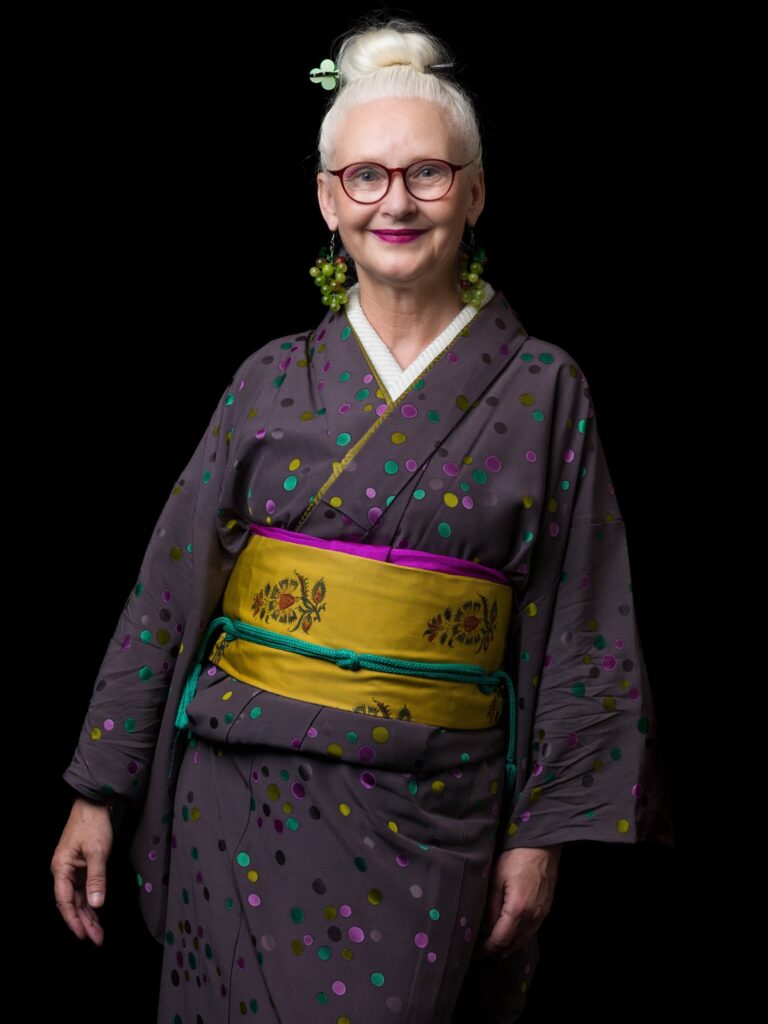
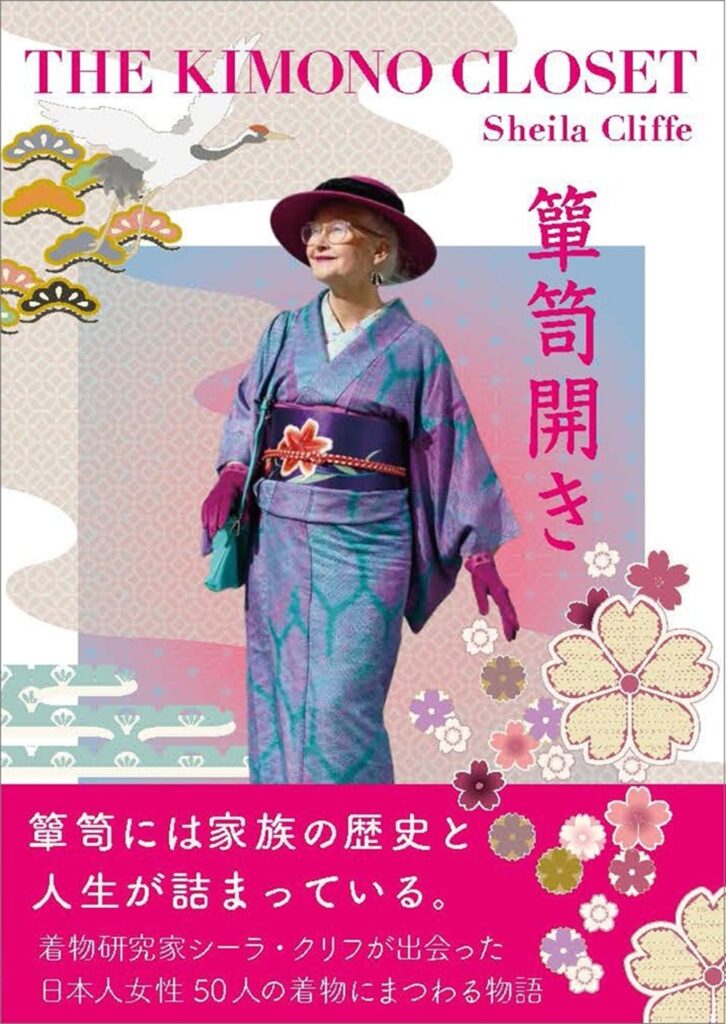
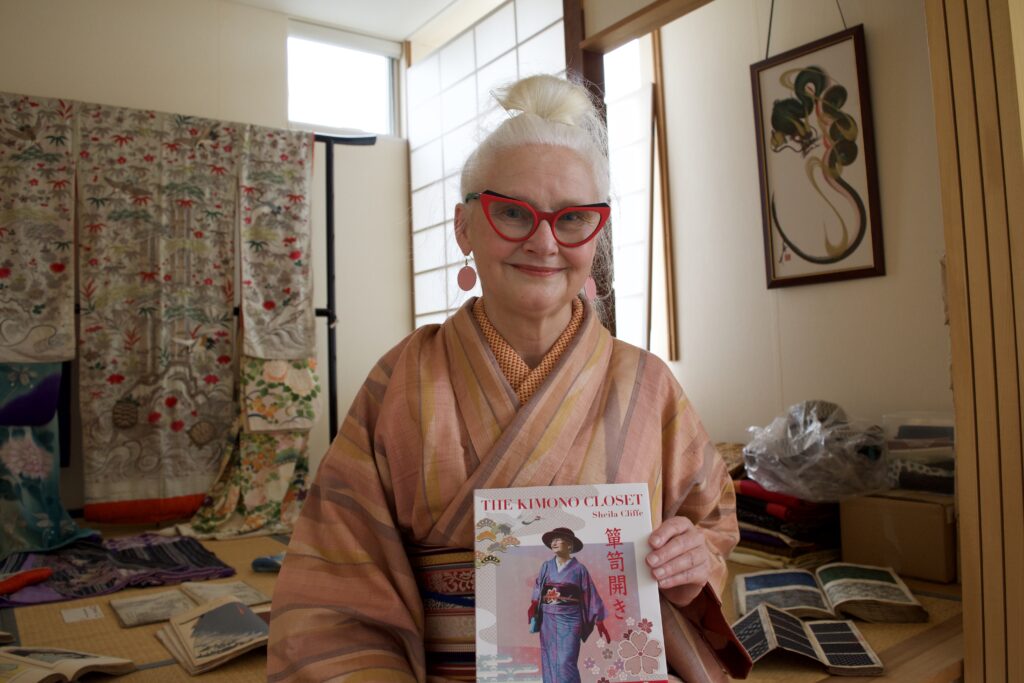
Sheila Cliffe is a longtime kimono researcher and the author of Kimono Style. In her new book, The Kimono Closet, she looks beyond kimono as fashion or art objects and instead explores their deeper place in family life, memory, and identity. She spoke with JoynTokyo to give us an exclusive look at the new book, the research behind it, and the lasting legacy of kimono.
A Different Kind of Kimono Book
Can you introduce your new book?
This is my fifth book about kimono. I originally intended to write only one, but I kept finding new angles I wanted to explore. Recently, kimono has been getting a great deal of attention through exhibitions, especially outside Japan. But I wasn’t interested only in kimono as textiles or art objects. I wanted to know what they mean to Japanese people, and why they continue to matter even when they are not worn every day.
In many families, kimono are still kept even if nobody uses them. People often feel they cannot simply throw them away. That suggested to me that kimono represent something more, and I wanted to examine that.
Inside the Research
Did writing this book expose a different side of your expertise?
Yes, I think so. My earlier books were much more style-based. They focused on fashion, visual culture, and the creative outer aspects of kimono. I still think that side is wonderful, but this book is about something else. It looks at what kimono mean within people’s lives.
I was partly inspired by Daniel Miller’s The Comfort of Things, as well as wardrobe studies, and by the way clothing, especially women’s clothing, is tied to family rituals, expectations, memory, and identity.
What was the biggest challenge in making the book?
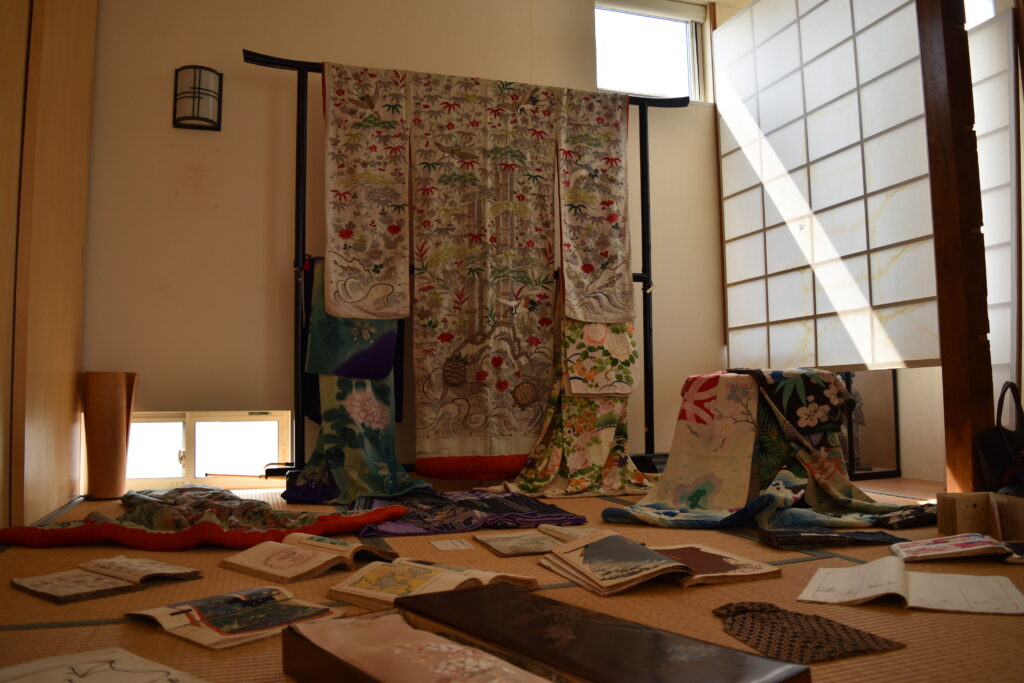
The first challenge was finding people who were willing to open their homes, and sometimes even their bedrooms or storage spaces, to be photographed and interviewed. I needed fifty people across five different age groups, so that alone took a lot of work. My assistant had a lot of contacts, which helped enormously.
The other big challenge was deciding what to do with all the material once we had it. We collected far more information than I had first expected. I thought it would be a fairly straightforward book, but it turned into a much larger research project. A great deal of work went into organizing that information and turning it into something readable, with graphics and visual material that could support the stories without overwhelming them.
开始 您自己的日本之旅 专家指导
大多数人从未到过日本,因为起步阶段令人困惑和疲惫。签证路线错误。低估了预算。因困惑而浪费了几个月的时间。.
为您在日本的新生活提供个性化支持。.
预约免费咨询✓ 500 多次预订 ✓ 会讲英语的搬迁支持专家
The Stories Hidden in Cloth
Was there one story in particular that changed your perspective on people’s relationships with kimono?
I don’t think there was just one, but there was one woman who stayed with me. She had very few possessions, but she kept her mother’s kimono carefully stored away. She was busy with work and daily life, and she didn’t spend much time looking at them, but they were still there. They were almost like an embodiment of her connection to her mother. I found that incredibly moving.
But kimono are not always purely welcome objects. For some women, they also carry pressure or obligation. One woman in the book talked about receiving a kimono from her grandparents for a tea ceremony when she was young. Instead of feeling like a gift, it became tied to expectations about behavior, womanhood, and how she should present herself. That was striking too.
The Weight of Inheritance
Kimono have existed in recognizably similar form for a very long time. In your opinion, what makes them timeless?
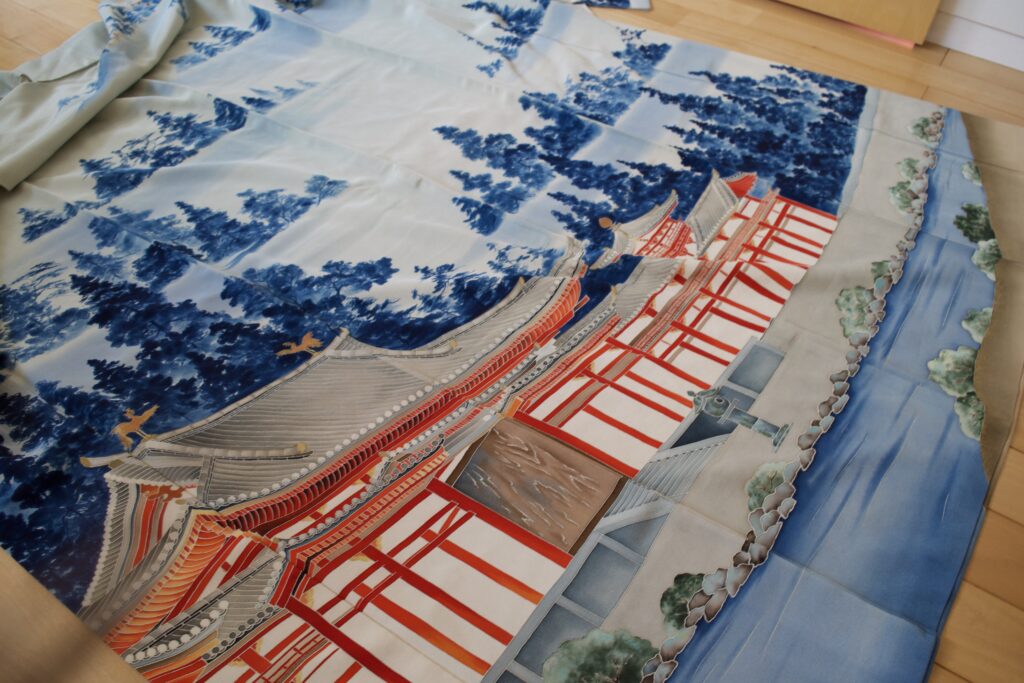
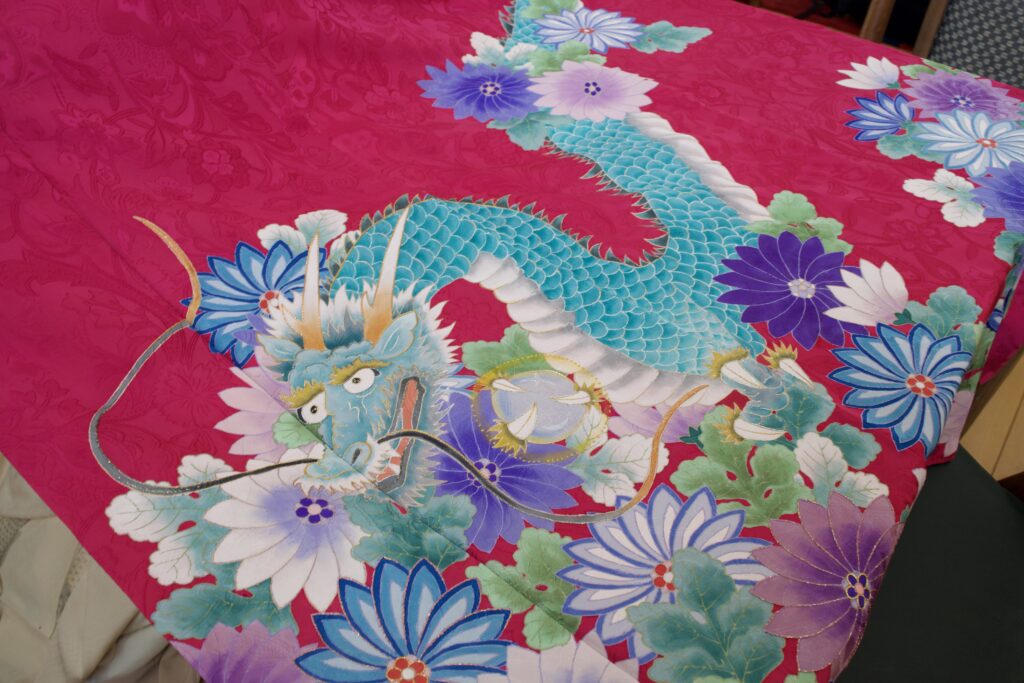
One reason is that the basic construction doesn’t really change. Because the overall structure stays stable, kimono do not go in and out of style in the same way many other forms of clothing do. At the same time, they can be paired with different accessories, so older garments can still be worn in new ways.
A lot of younger people are also proud to inherit pieces from their grandmothers, which gives kimono a living continuity. It’s not just about the textile itself. It’s about the story behind it and what clothing means to people. Sometimes that meaning is warm and intimate, and sometimes it’s also about control, expectation, or social pressure.
What the Book Leaves With Us
What do you hope readers take away from the book?
I wanted to show the full range of women’s relationships with kimono: affection, inheritance, duty, memory, practicality, and even frustration. Kimono sit at an interesting intersection of women’s history, family history, and material culture.
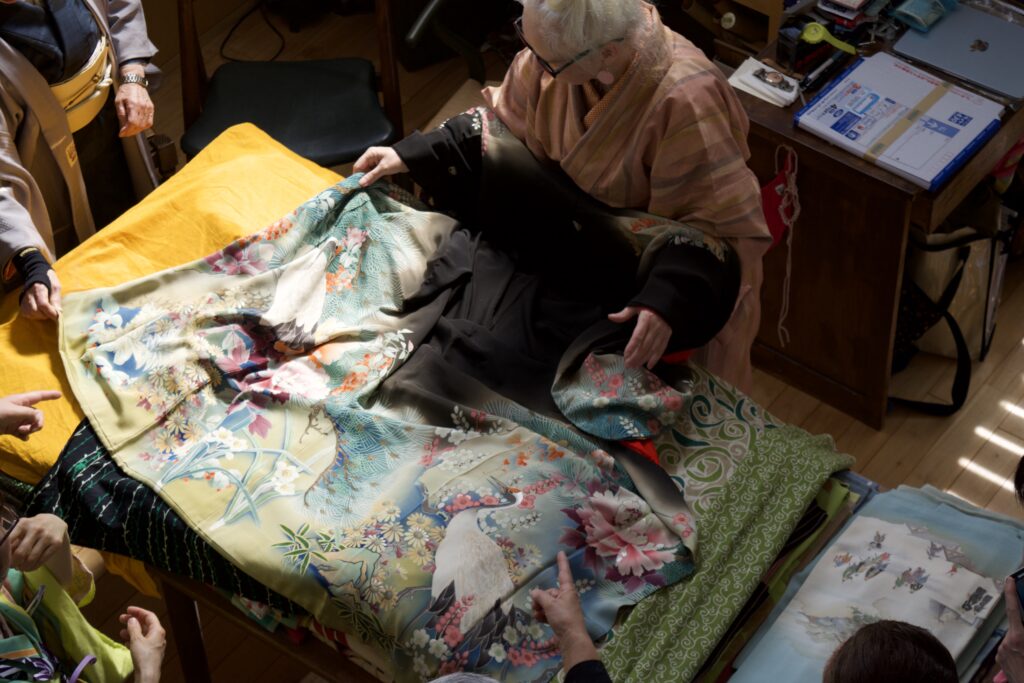
Often, they are kept in very private spaces in the home, and people do not necessarily talk about them openly. But once you look closely at those garments and the spaces where they are stored, you begin to see family history and unspoken history too.
I think anyone interested in women’s history over the last few generations, or in the history of family life and clothing, would find something in this book.
For readers who are interested in kimono but don’t really know where to begin, what would you recommend?
I’d suggest starting with museums and recycled kimono shops, just to get a sense of the shape, the textiles, and the techniques. There are also many online resources now. You can learn about the history, the construction, and even how to dress yourself from videos. Dressing women’s kimono, especially, can be fairly complicated, so those resources really help.
Upcoming Talks and Events
Are there events coming up, or places online where people can find you?
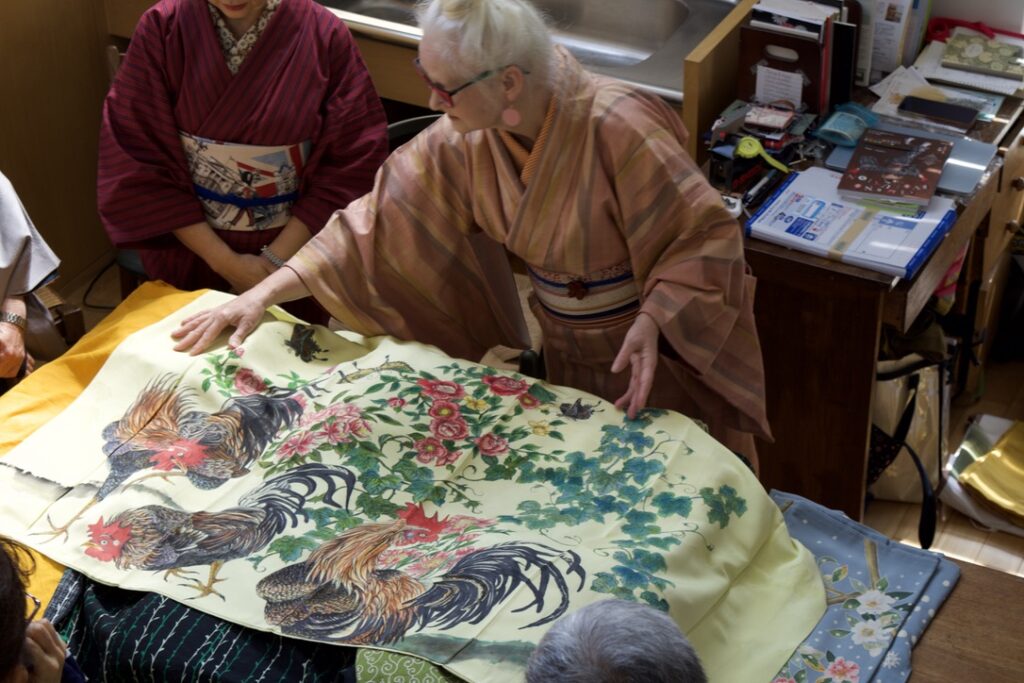
Yes, people can usually find me on Instagram (@Kimonosheila). I also have events connected to the book launch coming up in April, including appearances where I’ll be speaking and signing copies.
With The Kimono Closet, Cliffe invites readers to see kimono not simply as garments, but as vessels of memory, inheritance, identity, and emotion. In doing so, she opens a more intimate conversation about women’s lives, family histories, and the stories quietly stored away at home.
更多信息