
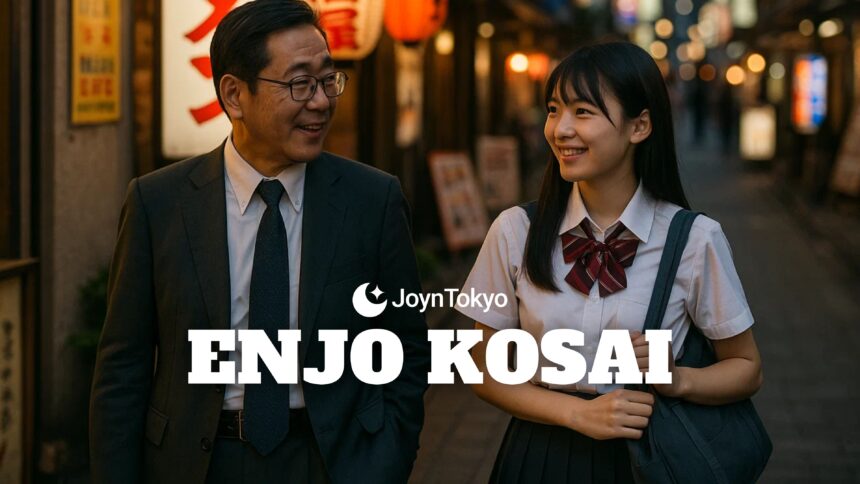


Enjo kosai (援助交際), often translated as “compensated dating,” remains one of Japan’s most hotly-debated social phenomena. While often portrayed as relationships between schoolgirls and older men exchanging companionship for money or gifts, the reality is far more complex.
The Origins and Meaning of Enjo Kosai

The term enjo kosai literally means “assistance relationship.” It first emerged in the 1990s during Japan’s economic boom, when some young women — especially high school students — sought financial or material support through dating older men. Though controversial, many early participants viewed it as a way to navigate the pressures of consumerism and social expectation.
In its broadest sense, enjo kosai describes relationships where one party (usually a man) provides money or gifts in exchange for companionship or, in some cases, sexual favors. However, not all such relationships involve sex; many consisted solely of meals, shopping, or casual meetings. The term became infamous after a series of media scandals in the late 1990s, transforming it into a symbol of Japan’s anxieties about youth, morality, and consumer culture.
Media Depictions of Enjo Kosai

During the 1990s, Japanese media heavily sensationalized enjo kosai, often equating it with “schoolgirl prostitution.” Dramas, tabloids, and manga depicted teenage girls meeting businessmen in areas like Shibuya, fueling public fear and fascination. These portrayals framed the issue as a moral crisis and painted young women as either victims of consumerism or symbols of declining morals.
Some scholars and feminists later criticized these depictions as overly simplistic. They argued that enjo kosai could also represent acts of agency, where young women used the system to assert independence within a patriarchal society.
Start Your Own Japan Journey With Expert Guidance
Most people never make it to Japan because the start is confusing and tiring. Wrong visa route. Underestimated budget. Months lost to confusion.
Get personalized support for your new life in Japan.
Book Your FREE Consultation✓ 500+ Bookings ✓ English-speaking Relocation Support Experts
Social Perceptions and Public Attitudes on Enjo Kosai
Public opinion on enjo kosai has long been divided. In the 1990s, many viewed it as a social problem reflecting moral decay or family breakdown. Others saw it as a symptom of deeper economic pressures and changing gender expectations.
Legal Framework and Government Regulation of Enjo Kosai
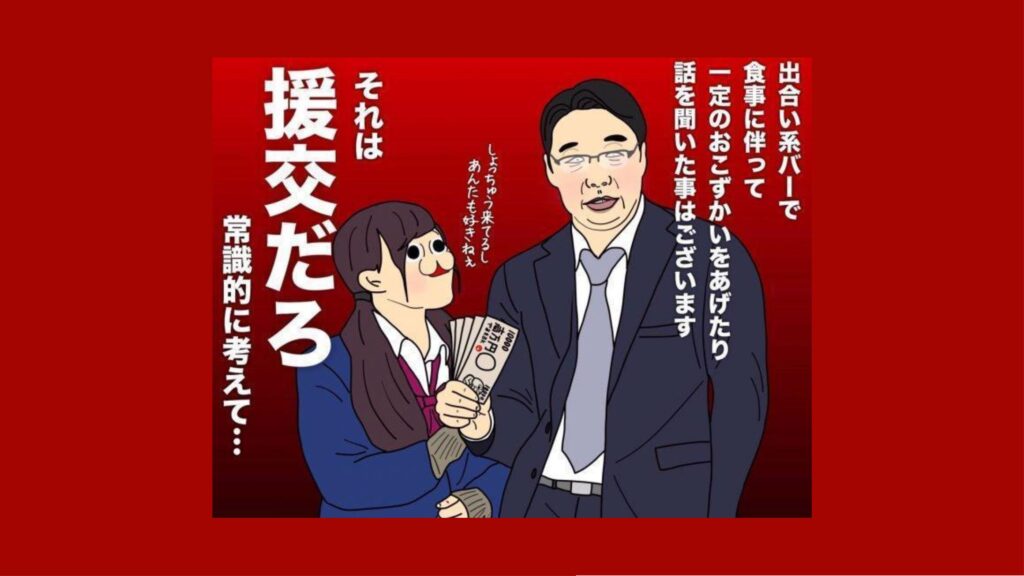
Japan’s legal system treats compensated dating involving minors as a serious crime. Under the 1999 Act on Punishment of Activities Relating to Child Prostitution and Child Pornography, any sexual act with a minor in exchange for money is illegal. Additionally, local “Youth Protection Ordinances” ban adults from soliciting minors for companionship or gifts.
Still, gray areas persist. If a relationship involves no sexual activity, prosecution can be difficult. To counter this, authorities closely monitor online platforms and meeting areas. Police in Tokyo and other major cities regularly patrol former hotspots such as Shibuya and Ikebukuro, while schools and municipalities conduct awareness campaigns to educate young people about the risks.
From Enjo Kosai vs Papa-Katsu: A Cultural Evolution?

Although enjo kosai has faded from headlines, its spirit endures through the term papa-katsu. In these arrangements, adult women seek older partners for financial or emotional support, often via dating apps. While legal among adults, critics say it mirrors the same economic and gender imbalances that once fueled enjo kosai — and, indeed, is just a nickname for the legal term enjo kosai (with the rarer “mama katsu” (ママ活) being where a women provide for younger men).
Some argue that papa-katsu reflects changing views on independence and transactional relationships. Either way, both practices expose Japan’s deeper struggles with loneliness, gender expectations, and the commercialization of intimacy.
The Continuing Debate on Enjo Kosai
Even today, enjo kosai sparks debate about autonomy, morality, and media responsibility. Is it empowerment or exploitation? Should the focus be on criminalization or on addressing social inequality? Academics, policymakers, and online communities continue to wrestle with these questions as Japan’s dating culture evolves.
Enjo kōsai reflects how Japan’s society has changed over the years. What began in the 1990s as a reaction to strict social rules has evolved in the digital age into a complicated mix of freedom, loneliness, and economics. Looking at enjo kōsai helps us understand how people in Japan navigate modern relationships, where money, emotion, and expectation often overlap in unexpected ways.
Read More