
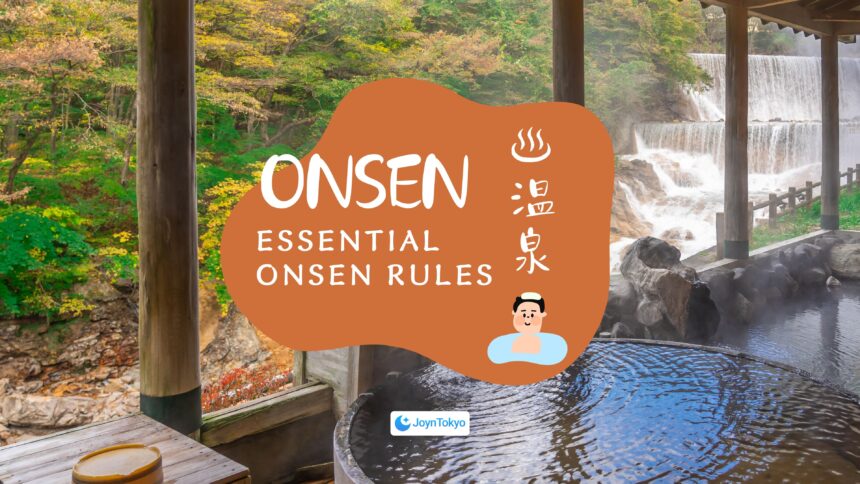


The core rules of Japanese onsen are simple: shower completely before entering, go in naked (no swimwear), keep your towel out of the water, tie back long hair, and stay quiet. Onsen are shared, sacred spaces — knowing the basics ensures a respectful and relaxing experience for everyone.
Why Onsen Rules Matter
Japan’s onsen (温泉) culture is over a thousand years old. These mineral-rich hot spring baths are considered sacred spaces for relaxation, healing, and quiet reflection — not just a swim. The rules exist to keep the water clean, respect other bathers, and honor a centuries-old tradition. Breaking them, even unintentionally, can cause real offence, so knowing the basics before you arrive makes a world of difference.
The Essential Japanese Onsen Rules
1. Shower First — No Exceptions
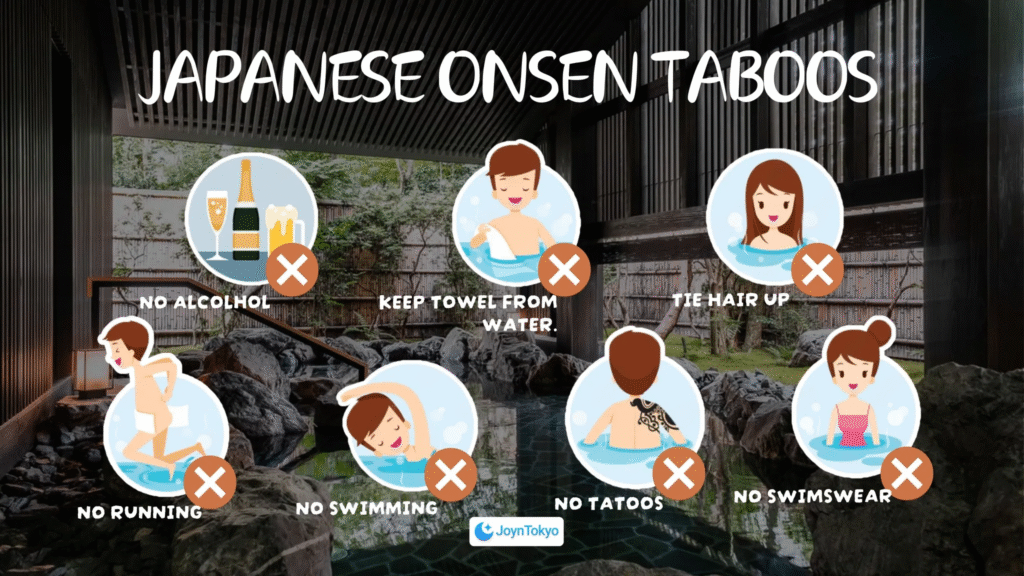
Before entering any bath, sit at one of the shower stations along the wall and wash your entire body with soap and shampoo. Rinse completely. This is the single most important rule in any onsen, and skipping it is considered deeply disrespectful to other bathers sharing the water.
2. No Swimwear
Traditional onsen are entered completely naked. Swimwear is only permitted at designated mixed-bathing (konyoku) facilities or water park-style onsen resorts. If you’re unsure, check the facility’s website before visiting.
3. Keep Your Towel Out of the Water
You’ll receive a small hand towel with entry. You can bring it to the bath for modesty while walking, but it must never touch the bathwater. Most bathers fold it neatly and place it on top of their head while soaking.
4. Tie Up Long Hair
Long hair must be tied up and kept completely clear of the bathwater at all times. Hair ties are usually available in the changing room if you forget to bring one.
5. Keep Noise to a Minimum
Onsen are quiet, meditative environments. Speak softly if at all, and keep phone use to zero inside the bathing area. Many facilities prohibit phones entirely past the changing room door.
6. No Photography
Photography is strictly forbidden in all onsen bathing areas, no exceptions. Leave your phone in the locker.
7. No Running, Splashing, or Swimming
Move slowly and carefully on the wet floors. Onsen baths are for soaking, not swimming. Splashing or roughhousing disturbs other bathers and is considered very bad manners.
8. No Food or Drink in the Bath Area
Eating and drinking are not permitted in the bathing area. Save the post-soak cold milk or beer — a beloved Japanese tradition — for the changing room or lounge.
Start Your Own Japan Journey With Expert Guidance
Most people never make it to Japan because the start is confusing and tiring. Wrong visa route. Underestimated budget. Months lost to confusion.
Get personalized support for your new life in Japan.
Book Your FREE Consultation✓ 500+ Bookings ✓ English-speaking Relocation Support Experts
Step-by-Step: How to Use a Japanese Onsen
- Pay and collect your items. At the front desk you’ll receive a locker key and a small hand towel. Larger bath towels can usually be rented for a small fee. Shoes go in a separate locker near the entrance.
- Undress in the changing room (datsuiba). Store all clothing and belongings in your locker. Bring only your small towel into the bathing area.
- Sit at a shower station and wash thoroughly. Use the provided soap and shampoo. Rinse completely — including your hair if you washed it. Leave the shower station clean for the next person.
- Enter the bath slowly. Ease yourself in gradually. Water temperatures typically run 40–44°C (104–111°F), so take your time.
- Soak and relax. Most bathers soak for 10–15 minutes, then take a short break at the edge or in a cooler bath before returning. Listen to your body.
- Dry off before re-entering the changing room. Use your towel to dry yourself at the bath’s edge to avoid dripping water through the facility.
Japanese Onsen Rules: Dos and Don’ts
Do:
- Rinse off completely before entering
- Move slowly and quietly at all times
- Try multiple baths if available (indoor, outdoor, different minerals)
- Drink water before and after to stay hydrated
- Fold your towel on your head while in the bath
- Leave shower stations clean after use
Don’t:
- Enter with soap or shampoo still on your body
- Dip your towel into the bathwater
- Shave in or near the bath
- Swim, splash, or dive
- Stare at other bathers
- Enter with open wounds or contagious skin conditions
The Tattoo Rule Explained
The tattoo ban is one of the most commonly asked questions from international visitors. The vast majority of traditional onsen in Japan prohibit tattoos of any size or placement. The ban has historical roots linking tattoos to organized crime (yakuza), though attitudes are gradually shifting in tourist-heavy areas.
If you have visible tattoos, your best options are:
- Kashikiri (private onsen): Rent the entire bath exclusively — no shared space, no policy conflict. Many ryokan offer this as a standard option.
- Tattoo-friendly facilities: A growing number of onsen, particularly in major cities and popular tourist areas, now explicitly welcome tattooed guests. Always confirm before you visit.
- Waterproof coverings: Some facilities permit tattoos if they are fully covered with provided waterproof patches. Ask at reception.
Indoor vs. Outdoor Baths (Rotenburo)
Most onsen facilities offer both indoor baths (uchifuro) and outdoor baths (rotenburo). The outdoor baths are particularly prized — soaking in mineral-rich water surrounded by snow-dusted pine trees or misty mountain views is one of Japan’s most iconic experiences. The same etiquette rules apply in both settings.
In outdoor baths, be especially mindful not to splash water onto surrounding rock features or landscaping, and avoid pouring cold water into the shared bath to adjust the temperature.
Onsen Rules for Families and Children
Children are welcome at most onsen. There is a general age threshold — usually around 10–12 years old — after which boys must use the men’s bath and girls the women’s bath. Younger children may typically accompany a parent of either gender, but it’s worth checking the facility’s specific policy in advance. Children should follow the same washing rules and be kept calm inside the bathing area.
Finding the Best Onsen in Japan
Japan’s most famous onsen towns — Hakone, Beppu, Kusatsu, and Kinosaki — are celebrated for good reason, but some of the most memorable experiences are found well off the tourist trail. If you want to go deeper into Japan’s hot spring culture, exploring the best hidden hot springs in Japan will take you to remote, atmospheric baths that most visitors never discover — the kind where you might share the water with nothing but pine trees and mountain mist.
Frequently Asked Questions
Do I need to bring my own towel to an onsen? Most facilities provide a small hand towel with entry. Larger bath towels can usually be rented at the front desk for a small fee, or you can bring one from your hotel.
What if the onsen water is too hot? Don’t force it. Move to a cooler bath, sit on the edge, or take a break. Never pour cold water directly into the shared bath to cool it down — this is poor etiquette and may upset the mineral balance.
How long should I soak in an onsen? First-timers should start with around 10 minutes, then take a break. Soaking too long in very hot water can cause dizziness or low blood pressure. Experienced bathers typically do multiple shorter soaks with cool-down breaks in between.
Can I visit an onsen if I don’t speak Japanese? Absolutely. Signs at popular onsen increasingly include English, Korean, and Chinese. A respectful attitude and willingness to follow the cues of other bathers will carry you a long way.
Can I wear glasses in the onsen? Technically yes, though steam fogs them up quickly. Most bathers leave glasses in their changing room locker.
Read More