



Japan is a country with an efficient and friendly police force. Although most people will never have cause to encounter the police, I have seen (and spoken to) an officer going door to door looking for a child’s bike. Additionally, most missing persons are eventually found, and crimes solved (though not all).
There are, however, some mysteries that not only remain unsolved, but have perplexed investigators for decades. One of those is the mystery of Mt. Asahidake’s SOS sign. To start, let’s head to Hokkaido, nearly four decades ago.
Read More

Missing Hikers and Discovery of SOS Sign
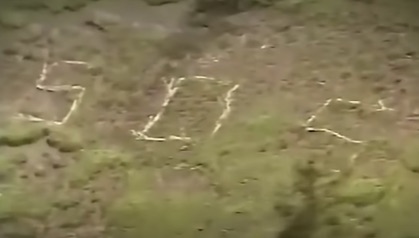
On 24 July 1989, two hikers from Tokyo were reported missing, having set off earlier to climb Mt. Asahidake, the tallest mountain on the island of Hokkaido. Despite the inclement weather leading to low visibility, a mountain rescue helicopter was able to make out something in a clearing roughly 2.6 miles from the peak of the mountain: a sign reading “SOS,” made with 19 large pine logs.
This significant discovery helped the rescuers to narrow the scope of their search to the surrounding area. Sure enough, not long after, the helicopter discovered the two men as they emerged from a nearby cave, drawn by the noise.
Not Our Sign

Lifting them out of danger, the rescuers, after reassuring the pair that they were going to be okay, and that they were going to be taken to safety, took a moment to congratulate them on their quick thinking.
“If it weren’t for the SOS sign that you made, I doubt we would have ever found you,” they were told.
“I’m sorry,” the hikers replied, “but we don’t know what you mean: we never made any sign.”
Search for Sign’s Creator
The next day, a fresh rescue team, this time on the ground, ventured out to search the area, reasoning that another hiker must be around somewhere, still requiring help. However, after a brief search, they made a more tragic discovery: fragments of human bones, that appeared to have been disturbed, at some point, by animals. However, without the entire skeleton, they kept searching, and made yet another finding.
Discovery of Items
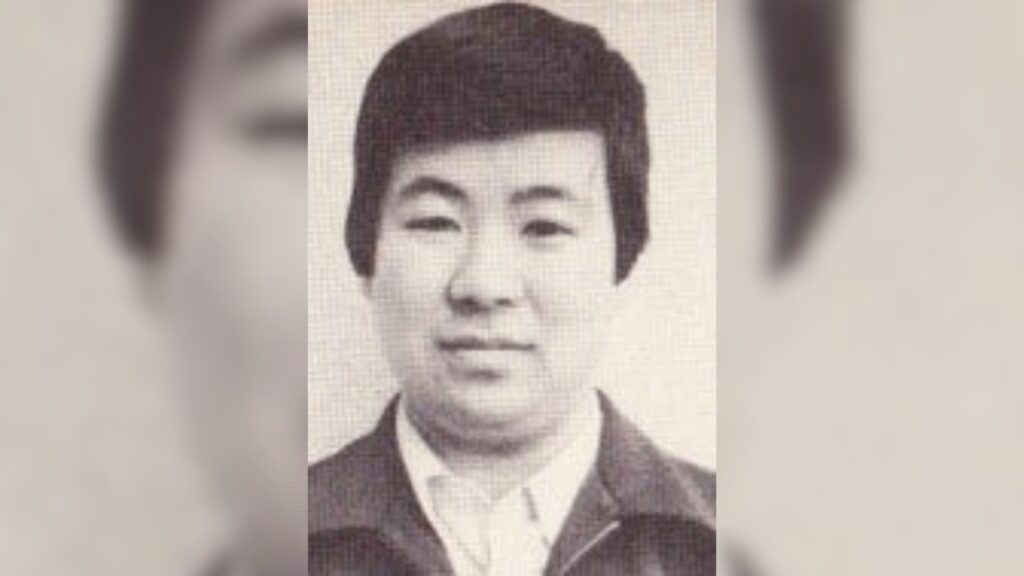
Inside a hole roughly large enough for one person, the authorities discovered a human skull, a pair of basketball shoes, and a backpack with some items for washing, two cameras, a notebook, a Sony Walkman, four cassette tapes, and an ID — for Kenji Iwamura, a native of Aichi Prefecture.
Iwamura had been missing since he himself had gone hiking on Mt. Asahidake in 1984, five years earlier. With these discoveries, police believed that they had found the answer to who the bones belonged to, and who made the SOS sign. But how could it be that three hikers, all of whom were experienced, could have ended up in a place that claimed a life, and threatened two more?
Start Your Own Japan Journey With Expert Guidance
Most people never make it to Japan because the start is confusing and tiring. Wrong visa route. Underestimated budget. Months lost to confusion.
Get personalized support for your new life in Japan.
Book Your FREE Consultation✓ 500+ Bookings ✓ English-speaking Relocation Support Experts
Why Do People Get Lost Here?
There are two major factors that can lead people to easily becoming lost on Mt. Asahidake.
The Weather
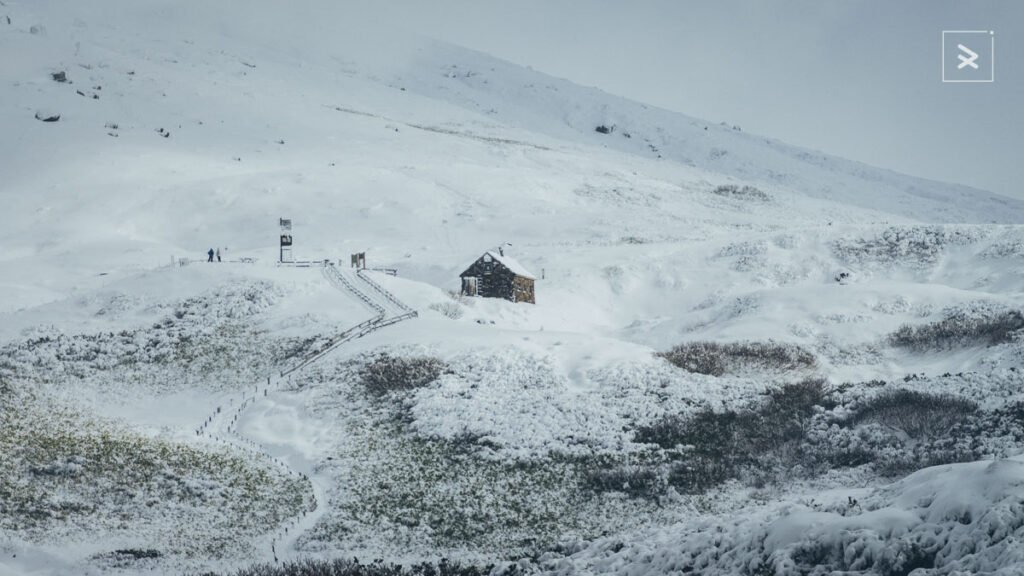
Firstly, the rough weather that the search helicopter faced when searching for the hikers from Tokyo is far from unusual, even in the summer. Locals remarked that storms coming on incredibly quickly was hardly rare, and that those unfamiliar with the landscape could easily become disoriented in the fog and rain.
The Landscape
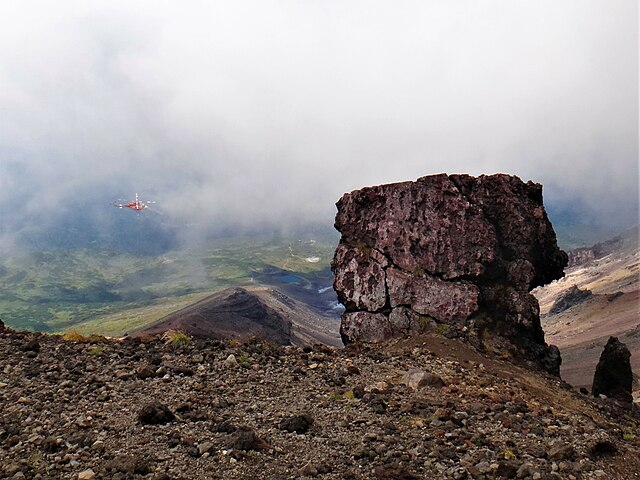
On the trail to the summit of Mt. Asahidake, there is a rock called Kinko Iwa, or “Safety Rock.” Hikers are told to turn right at this rock in order to make the relatively uncomplicated trek to the summit. However, extremely closeto Kinko Iwa is another, incredibly similar-looking rock, called Nise Kinko Iwa: Fake Safety Rock. Turning right here will send you instead through a thick forest and eventually, a steep route down the mountain.
In addition to it soon becoming much easier to continue down than to climb up, the surrounding landscape is also home to sasa bamboo, which here grows incredibly thickly, and also grows out to the side, making it nearly impossible to get back out. Indeed, a media team that was reporting on the SOS sign themselves became trapped, and required rescue.
So that’s it, right? We have a body, and we have an explanation. The mystery of the SOS sign is no mystery at all: Iwamura must have made it, but it wasn’t seen at the time. Right?
Investigation of Body and Items
Well, not exactly. Despite a significant amount of evidence, some questions began to quickly emerged that baffled investigators.
Bone Analysis
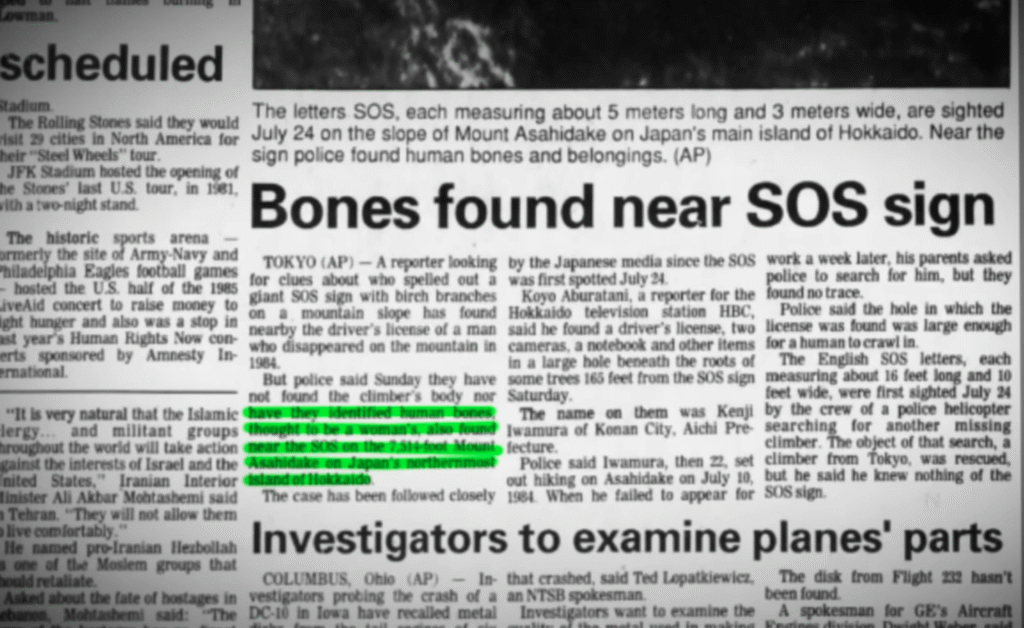
The bones were immediately looked at to confirm — as well as could be for bones that had been explosed to the elements for yours, and had no identifying marks — that they were Iwamura’s. Two things surprised the medical experts, however. Firstly, while these bones did match Iwamura’s age (being those of a 20-40 year old), they were the bones of a woman, which seemed to rule out their being Iwamura’s.
One year later, a contradictory analysis said they belonged to a man, but there was another thing that confounded the police: the bones were fractured before the time of death. Despite having been disturbed by animals, the medical professionals concluded that the deceased was badly injured before death.
Difficulty of Creating the Sign
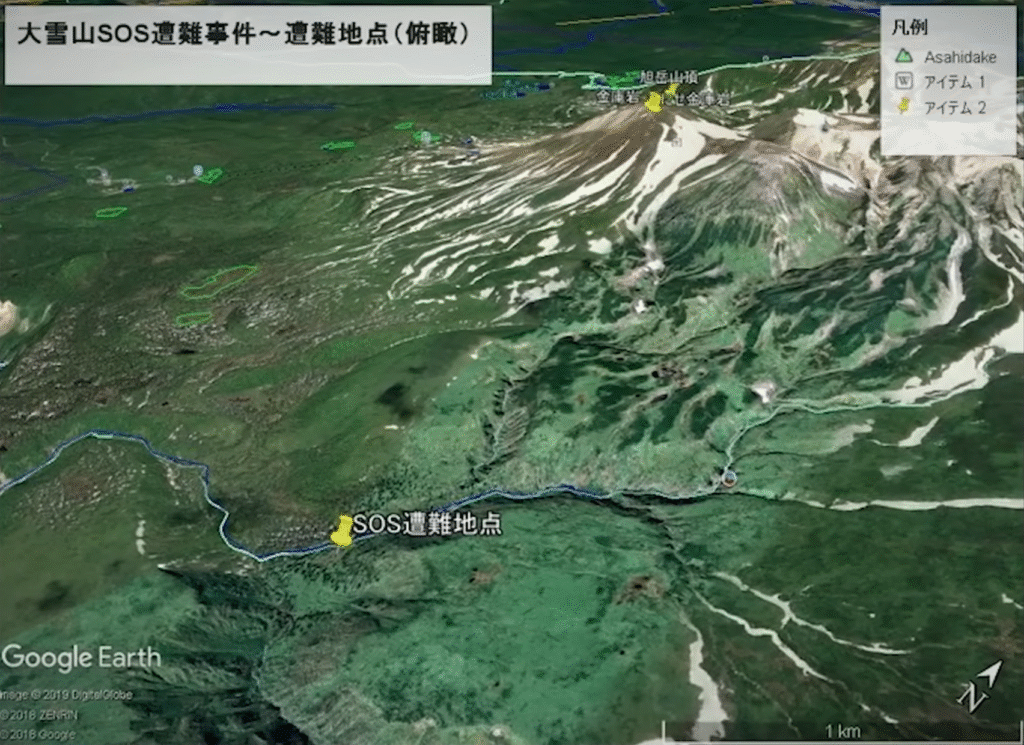
With an injury as significant as a fracture being taken into consideration, it becomes highly unlikely that Iwamura could have possibly lifted 19 logs, each of which could weight between 150 and 400lbs. Authorities estimate that it would take one person in good health at least two days to make the sign, making it near impossible for someone suffering a broken bone.
Additionally, no axe has ever been found at or near the scene, and Iwamura would have had no cause to carry one with him anyway, which begs the question: how were the trees felled in the first place? No logging company has claimed responsibility, and sourcing birch wood from such an inaccessible area would have been a fool’s errand in the best of circumstances.
The Cassette Tapes — and Unanswered Questions
All of this, put together, makes it hugely unlikely that Iwamura could have moved even one log, let alone 19 and organized them into a distress signal. Yet, this is not the end, as there are even more bizarre aspects to the mystery, revealed by the cassette tapes.
The Voice
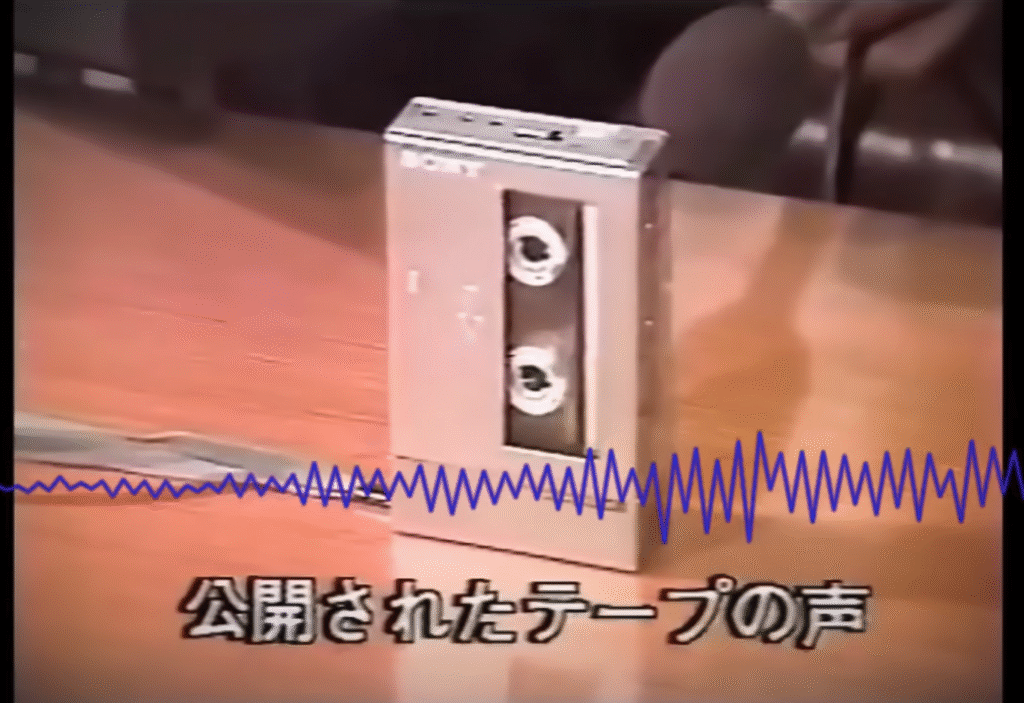
The cassette tapes found, for the most part, only contain recordings of anime soundtracks, and Iwamura was known by his family to be a fan of anime. However, on one tape, a fresh recording had been made. It was the voice of a man in distress — and we will get to the exact wording shortly — and repeats the same few things over and again.
It is speculated that Iwamura (or whoever made the recording) made the recording because he was trying to save his voice, and could simply replay his recording to anyone who would be able to listen, even if he was extremely short on energy. This seems very sensible, and since the cassette tapes otherwise played music Iwamura enjoyed, it would be logical that it is his recorded voice — but when it was played to his parents, they both denied that it was their son’s voice.
The Words
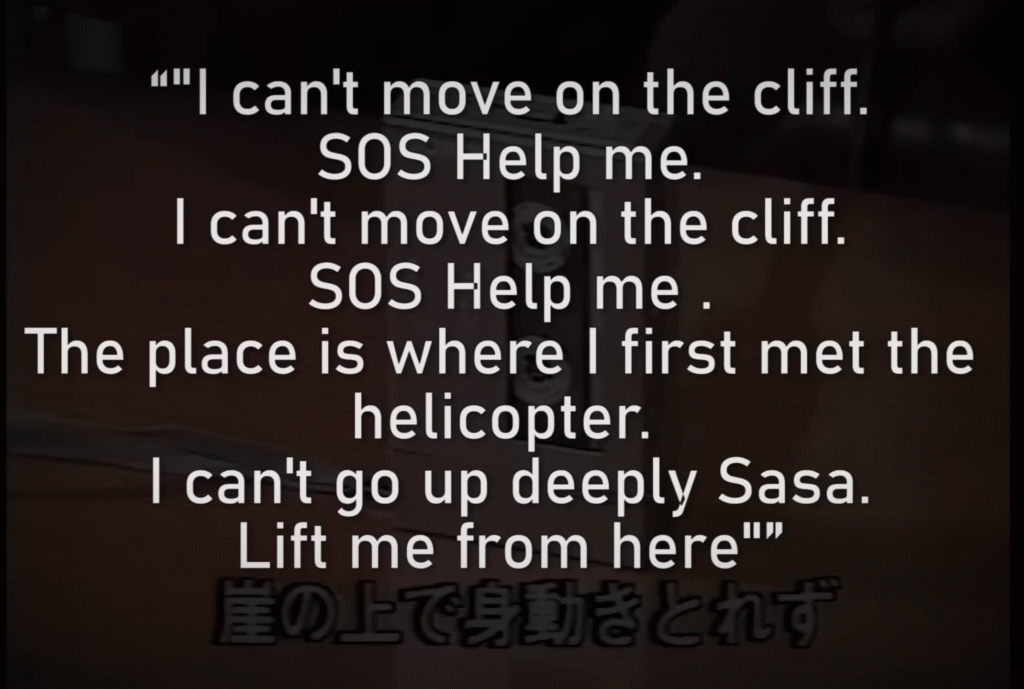
Perhaps the strangest thing are the words themselves. The words that are shouted out are:
“SOS! Please help me! I’m stuck on the cliff! I’m at the location where I first met the helicopter! The sasa is thick, and I can’t climb up! Please pick me up!”
This all gels with what we know about the location… but why did this person meet a helicopter? Is it possible they met with a helicopter that let without them?
Other Ambiguities
While the Japanese of the recording is often translated as “Help me! I’m stuck on the cliff!” and so on, leading them to believe that the person on the tape must have been alone, this is not necessarily the case. In Japanese, personal pronouns are often omitted from sentences, so it cannot be ruled out that they were not alone, and could have been in the company of someone strong enough to create the sign.
One final ambiguity is that, although the bone analysis was changed from being definitely female to definitely male, the police still have not formally identified the bones as those of Iwamura. With DNA testing having dramatically improved, and bones preserving DNA extremely well even in harsh environments, it should be a simple matter, especially as they have access to his parents and items in his former home.
Mysteries abound concerning how the infamous SOS sign was created, as well as even the identiy of the body, and the possibility that they were not alone. Whether or not this case will ever be truly solved gets more and more unlikely day by day, but the fascination it holds for amateur and professional sleuths may last forever.
Read More