
Is same-sex marriage legal in Japan? The 2026 update
Japan is often viewed as a modernization success story, blending deep-rooted tradition with futuristic technology. Yet, for LGBTQ+ couples living in or planning to move to the country, the legal landscape feels stuck in the past. As the only G7 nation that does not fully recognize same-sex unions, Japan faces increasing international and domestic pressure

Japan is often viewed as a modernization success story, blending deep-rooted tradition with futuristic technology. Yet, for LGBTQ+ couples living in or planning to move to the country, the legal landscape feels stuck in the past. As the only G7 nation that does not fully recognize same-sex unions, Japan faces increasing international and domestic pressure to update its civil code.
So, is same-sex marriage legal in Japan right now? The short answer is no. However, the long answer is a complex web of local partnership systems, conflicting high court rulings, and a constitution that is currently being debated by the country’s top judges.
If you are trying to navigate life as a same-sex couple in Japan, or simply following the global fight for marriage equality, understanding the nuance of the current law is essential. This guide breaks down exactly where the law stands today, the “partnership” loophole, and why the Supreme Court holds the key to the future.
The current legal status of same-sex marriage
Under current Japanese national law, same-sex marriage is not legal. The Civil Code and Family Register Act currently define marriage as a union between a husband and a wife. Consequently, municipal offices – which handle marriage registration – will reject applications from same-sex couples.
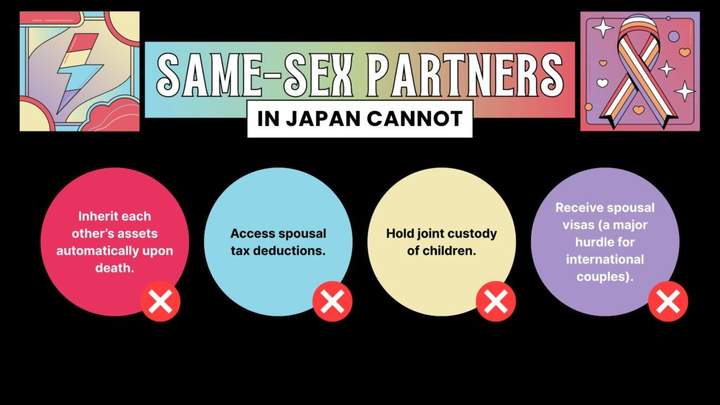
This exclusion has significant real-world consequences. Unlike heterosexual married couples, same-sex partners in Japan cannot:
- Inherit each other’s assets automatically upon death.
- Access spousal tax deductions.
- Hold joint custody of children.
- Receive spousal visas (a major hurdle for international couples).
While the government has passed legislation to promote “understanding” of LGBTQ+ issues, it has stopped short of granting actual legal rights or recognition.
The loophole: Partnership Certificates
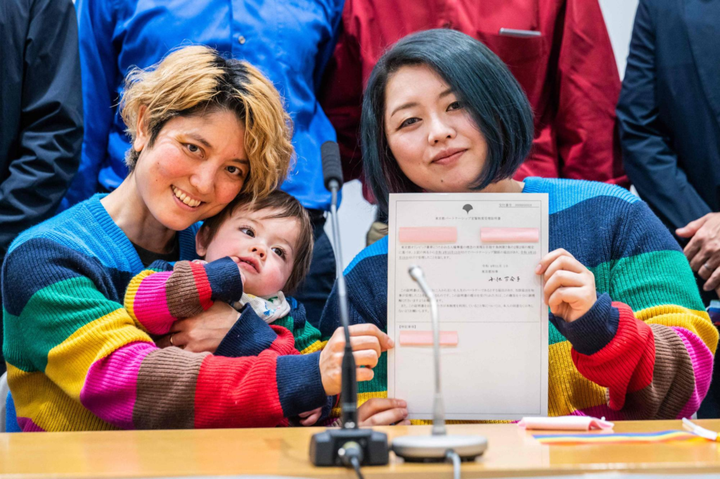
If you live in Japan, you might have seen news about cities “recognizing” same-sex couples. This refers to the Partnership Oath System.
As of 2026, hundreds of municipalities – including major metropolises like Tokyo, Osaka, and Fukuoka – issue partnership certificates. These documents allow couples to pledge their commitment to one another and are recognized by local governments.
What these certificates do
These certificates are helpful for day-to-day life. They often allow couples to:
- Apply for public housing together.
- Consent to medical surgery for a partner (hospital visitation).
- Be treated as family by certain private companies (like mobile phone carriers offering family plans).
What they don’t do
Crucially, these certificates are not legally binding. They do not change your marital status on your family registry (koseki). A landlord or hospital can technically refuse to honor them without legal penalty, though this is becoming rarer. Most importantly, they do not provide any of the federal benefits regarding taxes, inheritance, or immigration.
The battle in the courts
While the parliament (Diet) has been slow to act, the judicial system has been incredibly active. Since 2019, a wave of “Freedom of Marriage for All” lawsuits has swept across the country, challenging the constitutionality of the current ban.
The argument centers on two articles of the Japanese Constitution:
- Article 14: Guarantees equality under the law.
- Article 24: States marriage shall be based on the “mutual consent of both sexes.”
The government has historically argued that Article 24 defines marriage as between a man and a woman. However, plaintiffs argue it was written to prevent forced marriages, not to ban same-sex ones.
A split verdict
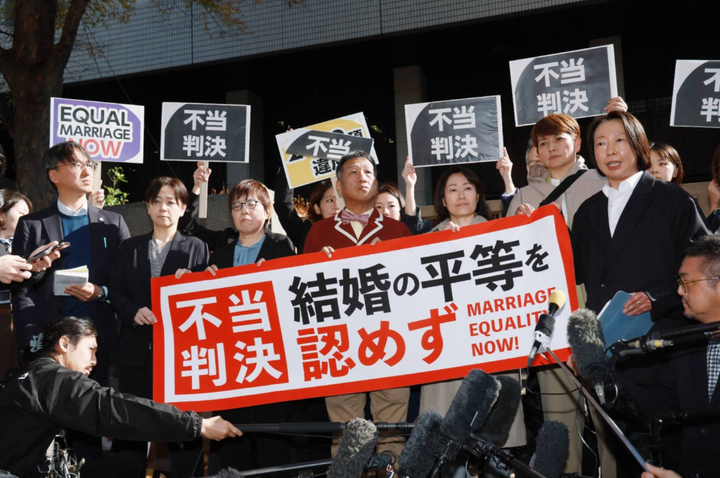
The judicial results have been a rollercoaster. Between 2024 and 2025, High Courts in Sapporo, Nagoya, Osaka, and Fukuoka ruled that the ban on same-sex marriage is unconstitutional. These courts firmly stated that denying marriage rights violates the constitutional guarantee of equality.
However, the legal path hit a snag in November 2025. In a diverging ruling, the Tokyo High Court upheld the ban, declaring it constitutional. The court dismissed claims of discrimination, stating that the legislature has the discretion to define marriage.
What happens next?
Japan is currently at a legal stalemate. With conflicting rulings from the High Courts – some demanding equality and others upholding the status quo – the issue has been pushed to the Supreme Court.
The Supreme Court will ultimately decide whether the current Civil Code violates the Constitution. A ruling of unconstitutionality would effectively force the National Diet to amend the laws and legalize same-sex marriage. Until that ruling is handed down, or until the legislature voluntarily acts, same-sex couples in Japan remain in a legal gray zone – recognized by their neighbors, perhaps, but not by their country.
Related JoynTokyo reads

Ultimate Guide to Driving in Japan
A driver spent a week cruising Hokkaido and called it the most relaxing road trip of his life. Another took a mountain route from Kusatsu to Kanazawa and described it as “like being dialled into an F1 race car.” Both were experienced drivers. Both were in Japan. Both are right. Honestly, driving in Japan is

Cash vs Card in Japan: What Should You Use in 2026?
People who went to Japan five years ago will tell you cash is king. People who went last month will tell you they barely touched a note. Both are telling the truth, they just had different trips. The honest answer for 2026 is this: Japan has changed significantly. Most major establishments in cities now accept

Sheila Cliffe on The Kimono Closet and the Stories Kimono Hold
Sheila Cliffe is a longtime kimono researcher and the author of Kimono Style. In her new book, The Kimono Closet, she looks beyond kimono as fashion or art objects and instead explores their deeper place in family life, memory, and identity. She spoke with JoynTokyo to give us an exclusive look at the new book,