

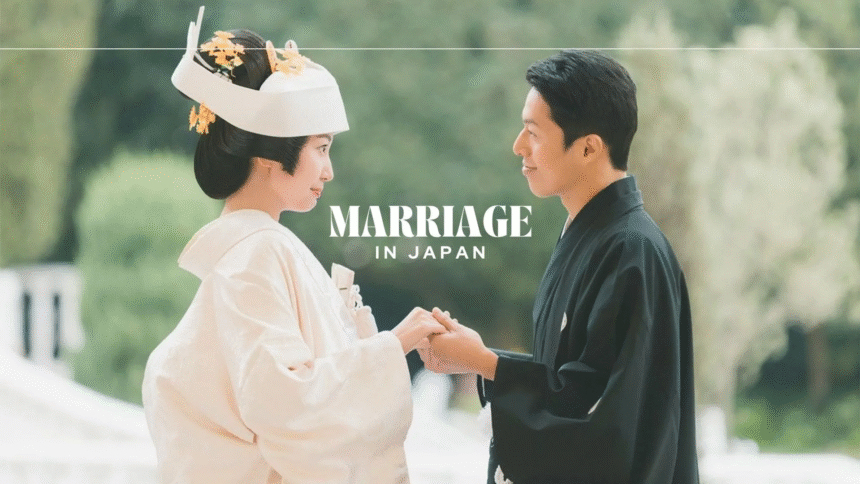


If you are a foreigner looking to tie the knot in Japan – either with a Japanese national or another foreign resident – you might be surprised to learn that a white dress and a priest have absolutely no legal standing.
In Japan, marriage is strictly a civil procedure. It happens at a desk in a municipal government office, not at an altar. Whether you plan to have a lavish ceremony later or just want to sign the papers, navigating the Japanese family registry system requires preparation, patience, and a fair amount of paperwork.
This guide will walk you through the exact steps to legally register your marriage in Japan, covering the necessary documents, the role of the Kon-in Todoke, and recent changes to affidavit requirements.
1. Understanding the System: Civil vs. Ceremonial
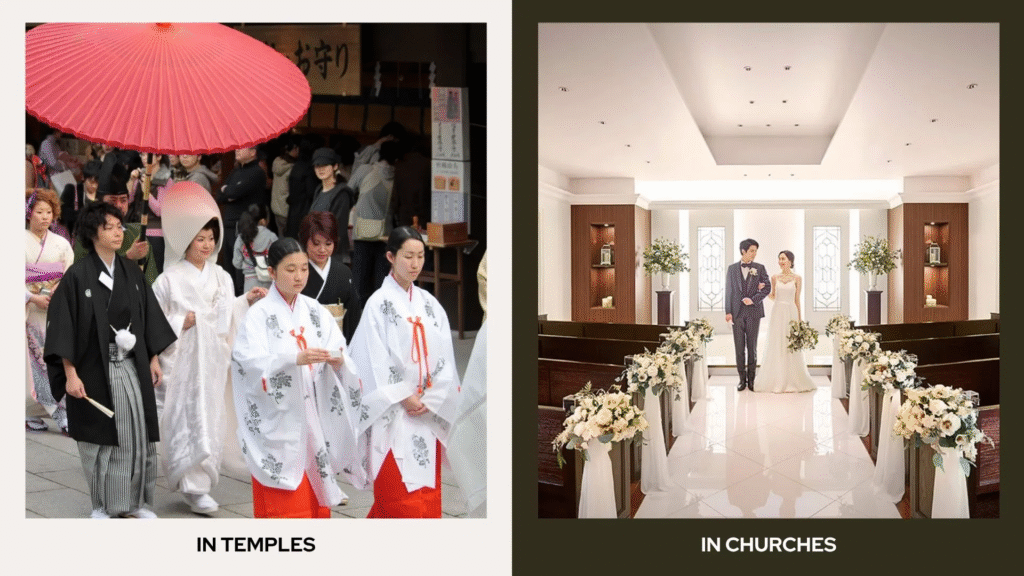
The most important thing to understand is that religious or ceremonial weddings are not legally binding in Japan. You can have a ceremony at a shrine, a hotel, or a church, but until you submit the correct paperwork to the city hall (ward office), you are single in the eyes of the law.
Most couples choose to register their marriage at the city hall first, often on a date that holds special significance to them, and hold a celebratory wedding ceremony on a different day. The legal date of your marriage will be the day your documents are accepted by the municipal office.
A lot of couples still want the feeling of something traditional, even if the legal part happens under fluorescent lights at city hall. If you’re curious about the old school matchmaking side of things, omiai, Japan’s formal introduction system is still around in modern forms, and it’s often part of how international couples meet and move toward marriage.
Read More
2. Who Can Marry in Japan?
The legal requirements for marriage in Japan are relatively straightforward, but they are strictly enforced.
- Age: Both parties must be at least 18 years old. (Note: The legal age for women was raised to 18 in April 2022 to match men).
- Legal Capacity: You must meet the legal requirements for marriage in your home country. If your home country prohibits you from marrying (for example, if you are not of legal age in that country), you cannot marry in Japan.
- Prohibited Relationships: You cannot marry close blood relatives.
- Remarriage Period: Women previously had to wait 100 days after divorce to remarry, but this law was largely abolished in 2024, except in cases where pregnancy might complicate paternity presumption.
Start Your Own Japan Journey With Expert Guidance
Most people never make it to Japan because the start is confusing and tiring. Wrong visa route. Underestimated budget. Months lost to confusion.
Get personalized support for your new life in Japan.
Book Your FREE Consultation✓ 500+ Bookings ✓ English-speaking Relocation Support Experts
3. Gathering Your Documents
Bureaucracy in Japan is famous for being thorough. Before you even think about going to the city hall, you need to assemble a dossier of documents. If any of your documents are not in Japanese, you must attach a Japanese translation. You do not need a professional translator for this; you can do it yourself or ask a friend, as long as the translator signs the document.
Here is the standard checklist for a foreign national marrying in Japan:
The Kon-in Todoke (Marriage Registration Form)
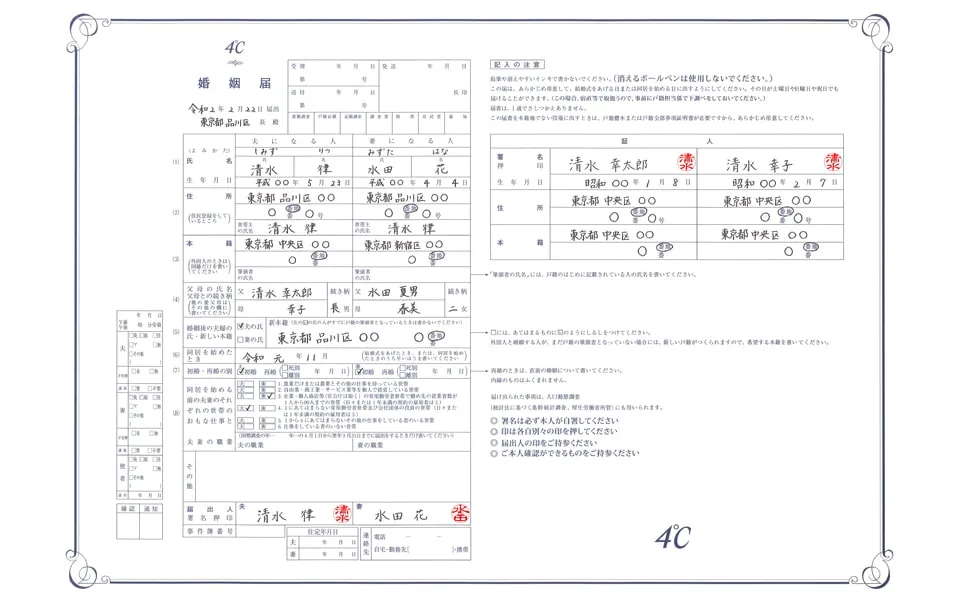
This is the official marriage application. You can pick one up at any municipal office or sometimes download a “fancy” design online (local mascots and floral patterns are popular).
- Writing: It must be filled out in Japanese.
- Witnesses: You need signatures from two witnesses who are over 18 years old. They can be of any nationality. If they are foreigners, they should sign their names as they appear in their passports.
- Stamps: Japanese nationals will use their hanko (personal seal). Foreigners can simply sign their names, though having a seal is acceptable too.
Passport
You will need your valid passport to prove your identity and nationality.
Certificate of Competency to Marry (Affidavit)
This is often the trickiest document to obtain. The Japanese government needs proof that you are legally free to marry in your home country (i.e., you are currently single and of legal age). This document is formally called a Certificate of Legal Capacity to Contract Marriage.
- Where to get it: Historically, you would visit your country’s embassy or consulate in Japan to swear an oath and receive this certificate.
- Important Update for U.S. Citizens (Effective Sept 1, 2025): The U.S. Embassy and consulates in Japan no longer notarize “Affidavits of Competency to Marry.” Instead, U.S. citizens must now download a specific PDF statement from the Embassy website to present to city offices. If your local ward office insists on a notarized document, you may need to seek remote notarial services from the U.S.
- Other Nationalities: Procedures vary. UK citizens, for example, often need to give notice at the British Embassy, while other nationals may need to get documents from government offices back home. Always check your specific embassy’s website for the latest procedure.
Birth Certificate (Original + Translation)
Some, but not all, municipal offices require a certified copy of your birth certificate. It is safer to have one ready, along with a Japanese translation.
4. The Registration Procedure
Once you have your stack of papers, the process is surprisingly anti-climactic.
- Visit the Municipal Office: Go to the “Family Registration” (Koseki) section of the city hall or ward office in the district where you live. You can technically register at any city hall in Japan, even if you don’t live there (popular for couples who want to register at a resort destination), but registering where you reside is generally smoother.
- Submit Documents: Hand over your Kon-in Todoke, passports, affidavits, and translations.
- The Wait: The clerk will review everything. This can take anywhere from 15 minutes to a few hours depending on how busy they are and how unique your foreign documents look.
- Approval: If everything is in order, they will accept the registration. Congratulations—you are married!
Pro Tip: Be prepared for potential friction regarding middle names. Japanese forms often don’t have a designated space for middle names, so ask the clerk exactly how they want it written (usually combined with the given name).
5. Proof of Marriage
After your registration is accepted, you don’t automatically get a fancy certificate. You must request proof.
- Certificate of Acceptance (Kon-in Todoke Juri Shomeisho): This is the standard proof of marriage. It looks like a basic receipt.
- The “Fancy” Certificate: For a higher fee (usually around 1,400 yen), you can request a decorative version of the certificate. This is what most couples frame or use for photos, as it looks much more impressive than the standard A4 printout.
Note that your home country will not automatically know you are married. You generally do not need to register the marriage with your embassy (the U.S., for instance, does not keep a registry of marriages abroad), but you will need your Japanese marriage certificate to prove your status for visa applications or name changes later.
6. Is Same-Sex Marriage Legal in Japan?
Currently, same-sex marriage is not legal in Japan.
While Japan is the only G7 nation that does not recognize same-sex unions, the legal landscape is shifting rapidly. As of late 2025, several high courts (including Sapporo, Tokyo, Nagoya, and Osaka) have ruled that the ban on same-sex marriage is unconstitutional. However, these rulings do not immediately change the law; the Civil Code must be amended by the Diet (parliament), or a final Supreme Court ruling must force the change.
In the meantime, many municipalities and prefectures offer a “Partnership Oath System.” This allows same-sex couples to receive a certificate recognizing their union. While this certificate helps with some practical matters – like hospital visitation rights or renting public housing – it does not offer the legal benefits of marriage, such as inheritance rights, tax deductions, or spousal visas.
7. Post-Marriage Checklist
Once the dust settles, there are a few administrative tasks left:
- Visa Status: If you married a Japanese national, you may be eligible for a Spousal Visa. This is not automatic; you must apply for a Change of Status of Residence at the Immigration Bureau.
- Name Change: Japan does not change your name automatically. If a foreign spouse wants to take their Japanese partner’s surname, they must do so through their own country’s embassy and passport office first. Conversely, if a Japanese spouse wants to take a foreign surname, they must file a specific form at the city hall within six months of the marriage.
Summary
Getting married in Japan is less about romance and more about following the rules. But once you navigate the Kon-in Todoke and the translations, you will have a marriage that is legally recognized not just in Japan, but worldwide.
Be sure to double-check every requirement with your specific local municipal office before you go – rules can vary slightly between wards, and being over-prepared is the key to a stress-free registration.
Read More