
Japow: Enjoy a Unique Japanese Ski Experience in Hokkaido
Winter in Japan has (finally) well and truly arrived! Along with the new bite in the air and the chic-yet-cozy winter fashion, the advent of the year’s snowy season brings about a deep desire among many to get out and hit the slopes! This brings a fresh problem, however: the agony of choice. Japan has
Winter in Japan has (finally) well and truly arrived! Along with the new bite in the air and the chic-yet-cozy winter fashion, the advent of the year’s snowy season brings about a deep desire among many to get out and hit the slopes!
This brings a fresh problem, however: the agony of choice. Japan has hundreds of ski resorts, so where should you go? If you’re an experienced skier going with more amateur friends and family, what kind of place will suit everyone’s needs? And how can you have a ski experience that is uniquely Japanese, even down to the snow? Snap on your boots, and let us show you an experience that is a little off-piste with Japow in Hokkaido!
What is “Japow”?
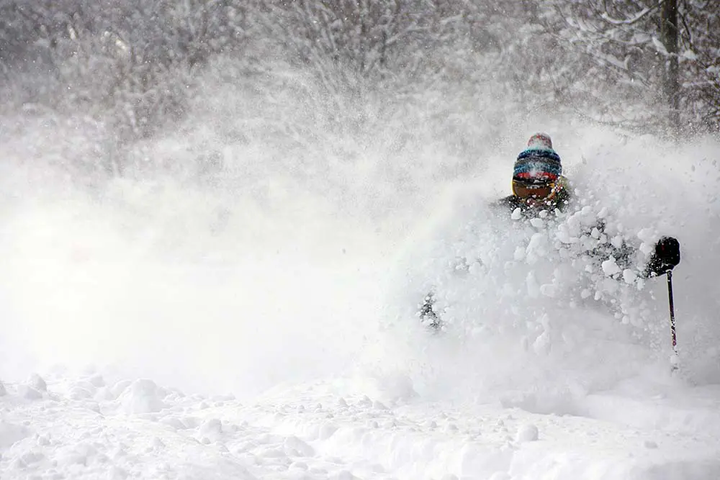
On 3 December, JoynTokyo was fortunate enough to be invited by the Japan National Tourism Organization to take part in a briefing to discuss a little known phenomenon that is unique to Japan: “Japow,” a combination of “Japan” and “powder snow.”
Japow is a kind of extremely dry, incredibly light powder snow. This is the apex of what is known in some places as “champagne powder,” and is almost feathery to the touch. This means it stays looser for a much longer time, without turning “slushy,” even in sunshine, as wetter, heavier powder can be apt to become.
How is Japow created?
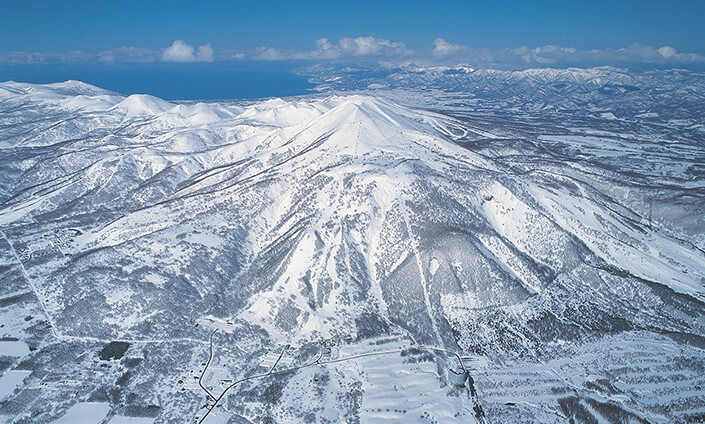
So why is it that Japan, almost alone, can experience this type of snow? Well, this is thanks to the quirks of geography between Hokkaido and northern Honshu and their neighbour to the west, Siberia.
One of the coldest regions on Earth, in the winter the winds become incredibly cold, sometimes reaching temperatures as low as -30C. As these winds travel east, they cross the relatively warm waters of the Sea of Japan, and so water vapor begins to rise into the air and join the winds.
Once it reaches land, the newly-joined water vapor rapidly cools, and it begins to snow. However, the larger, wetter snows fall first, as they are much heavier, which is what results in slushier snow at the outside of the mountainous regions. Once this snow has been removed, we are left with only light, dry, fluffy Japow that is utterly perfect for skiing.
Hokkaido’s “Powder Belt”
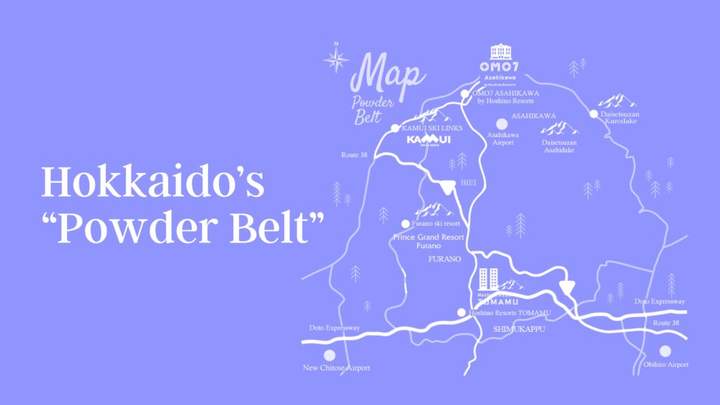
So, given this, it must be the case that Hokkaido and northern Honshu are paradises for Japow, right? Well, yes and no. Most likely, Niseko in Hokkaido and Hakuba in Honshu are the biggest snow resort areas you will be familiar with, and for good reason. Hakuba once hosted the Winter Olympics, and Niseko has been a must-visit destination for skiers for decades.
However, while they do receive their fair share of Japow, as they are relatively close to the coast, they also receive a significant amount of the heavier snow, too. This means that more inland areas are the biggest beneficiaries of the one-of-a-kind Japow phenomenon.
These areas — which include Furano, Biei, Daisetsu, and Asahikawa — are collectively known as Hokkaido’s “powder belt.” They receive between 15 and 20 meters of snow every year, and have more consistent snowfalls than the European Alps or the American Rockies. Not only that, they are also far less known to tourists, meaning that one can enjoy an incredible skiing experience while also taking in a side of Japan that few will ever see.
Asahikawa
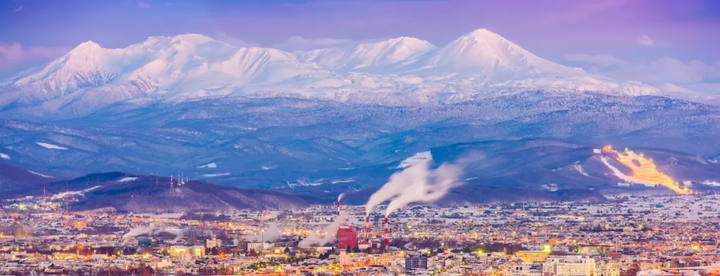
Today, we’ll be focusing on the aforementioned Asahikawa, introduced to the briefing by Yoshinori Sakuno, the Tourism Ambassador for Asahikawa City and founder of doq, a marketing agency that has been connecting Japan and Australia since 2009. Sakuno is himself an avid skier, and even with decades of experience under his belt, he became an instant convert to the joys of Asahikawa since his first visit in 2022.
“My friend told me to come visit, as he had this place he had to show me. I got on a plane from Sydney, and arrived in Tokyo at 5:20am,” he said. “We left on a flight to Asahikawa Airport at 7am, arrived at 8:35am, and we were at the summit of Mt. Asahidake, the tallest mountain in Hokkaido, ready to ski, by 10am. That’s accessible this location is.”
The ease and speed of access to this area is, indeed, incredible. The city center of Asahikawa City is just 20 minutes from the airport, and — incredibly for a snow resort region — just 0.3% of planes are canceled due to snow. So if you want to get on the slopes fast, there are few better options. But that is not the only thing that makes it a top-spot for anyone who wants to experience real Japow.
Top Attractions
Asahikawa is a paradise for lovers of snowsports. It is so engraved as a part of the city’s modern history that as soon as you leave the airport, you are greeted by a statue of Theodor von Lerch, an Austrian general who, when assigned to Japan in 1910 as a military training observer, trained Japanese soldiers in alpine skiing, and is credited today as a pioneer of skiing in Japan.
Snowsports
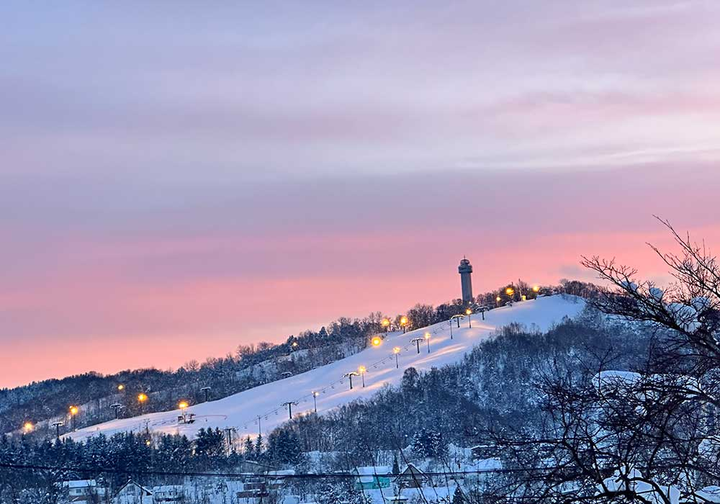
As such, it should come as no surprise that there are nine ski resorts that are easily accessible from the city. It has a long ski season, from mid-December to mid-April inclusive being fine for skiing. Additionally, the softness of Japow means that it is great for children and beginners, who might be more liable to fall, as well as enjoyably smooth for intermediate and advanced snow sports enthusiasts.
For those who don’t ski, other activities, such as snowshoeing, are also available — and have the potential for once-in-a-lifetime experiences. “I went snowshoeing, and came across a local who was out snowshoeing too,” Sakuno says. “Even as a native Japanese speaker, I sometimes had difficulty understanding his dialect! But it was a fun meeting between us — which ended with us sharing hot miso soup — that I couldn’t get anywhere else.”
Cuisine
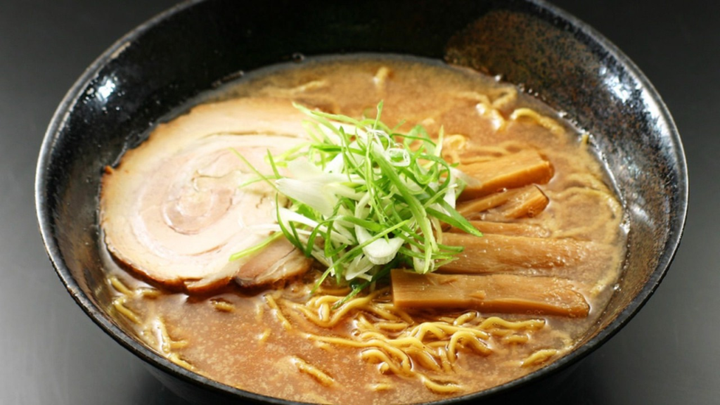
Although it is less well known to tourists, Asahikawa City is actually the second largest city in Hokkaido, and as such is home to over 2,000 restaurants and food shops where you can enjoy both national favorites and local delicacies.
In particular, Sakuno recommends that any visitor tries Asahikawa Ramen. It is famous for its signature “double broth,” which combines a seafood soup with a pork, chicken, and vegetable soup, topped off with concentrated soy sauce for a slightly oily yet delicious broth for the thin, hard, wavy noodles. You can even visit the Asahikawa Ramen Town, with eight famous local ramen restaurants to try from!
Additionally, it is a great place for Hokkaido classics, such as incredibly fresh sushi and sashimi, as well as Genghis Khan grilled lamb. A haven for foodies.
Non-Skiing Activities
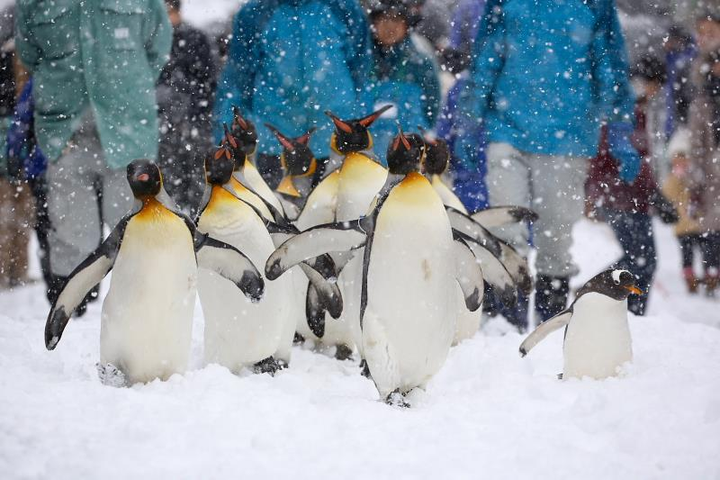
If you want a quick break from snowsports — or if you’re along with friends and family who are skiers but it’s not really your thing — then there are plenty of other fun things to do in Asahikawa.
The Asahikawa Zoo is the second most visited zoo in Japan, and for good reason. The most popular animals on display are the polar bears and the penguins, with an underwater tunnel allowing you to see penguins glide through the water. Wolves and deer can also be seen, as well as more exotic animals, such as lions and orangutans.
The cold air also accentuates the comfort and warmth of onsen hot springs, of which there are plentiful options. The natural hot spring water is not only relaxing, but is perfect for unwinding muscles after a long day on the slopes.
So if you’re looking to carve fresh tracks this winter in a spot that’s easily accessible, has incredible food, and snow like nothing you’ve ever ridden on before, then put a trip to Asahikawa and experiencing the wonders of Japow on your Christmas list.
Related JoynTokyo reads

Ultimate Guide to Driving in Japan
A driver spent a week cruising Hokkaido and called it the most relaxing road trip of his life. Another took a mountain route from Kusatsu to Kanazawa and described it as “like being dialled into an F1 race car.” Both were experienced drivers. Both were in Japan. Both are right. Honestly, driving in Japan is

Cash vs Card in Japan: What Should You Use in 2026?
People who went to Japan five years ago will tell you cash is king. People who went last month will tell you they barely touched a note. Both are telling the truth, they just had different trips. The honest answer for 2026 is this: Japan has changed significantly. Most major establishments in cities now accept
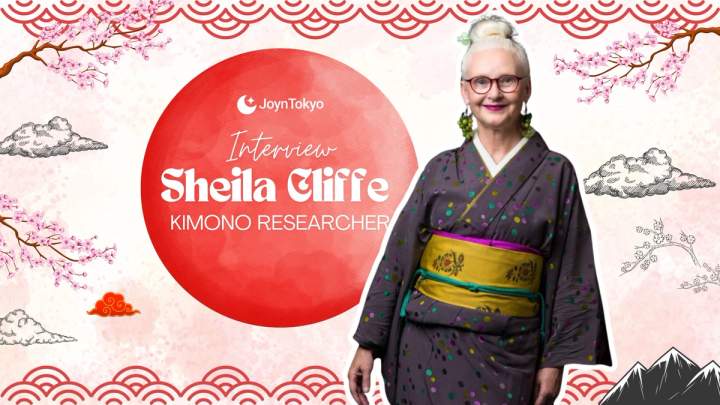
Sheila Cliffe on The Kimono Closet and the Stories Kimono Hold
Sheila Cliffe is a longtime kimono researcher and the author of Kimono Style. In her new book, The Kimono Closet, she looks beyond kimono as fashion or art objects and instead explores their deeper place in family life, memory, and identity. She spoke with JoynTokyo to give us an exclusive look at the new book,