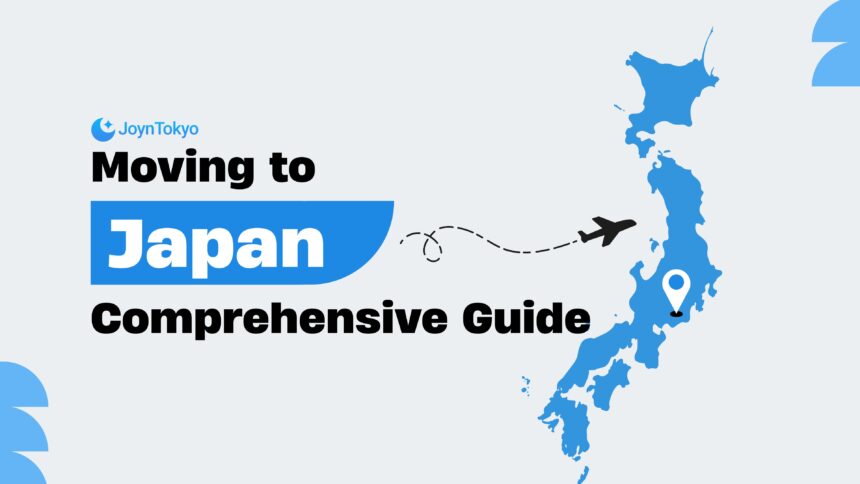

Moving to Japan is one of those decisions that feels thrilling and slightly overwhelming at the same time. One you land, step into crisp air, walk past vending machines glowing with unfamiliar drinks, you’ll suddenly realize that the next chapter of your life has officially started. And then the paperwork begins.
Utilities, city hall visits, phone plans, rental inspections, forms with boxes you hope you are ticking correctly. It is a lot, but none of it is impossible. This guide will lay out the entire experience in a way that will feel clear for a newcomer: the kind of information we wish someone had handed us on day one.
Rental Process – How to Secure an Apartment With Confidence
Renting in Japan has its own rules, unspoken etiquette, and a process that feels different from what many newcomers know. Once you understand the flow, it becomes manageable and even predictable.
English Speaking Real Estate Companies
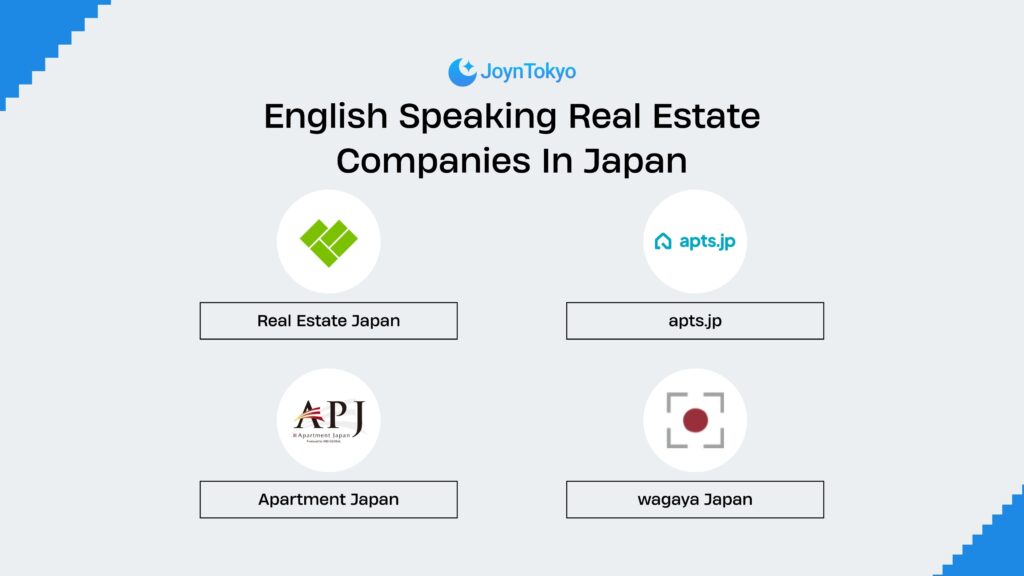
Using an English speaking real estate company removes most of the stress of renting in Japan when your Japanese is still limited. These services filter for properties that accept foreign tenants, explain all the fees in plain English, and handle the paperwork with guarantor companies and Japanese contracts on your behalf. They also coordinate viewings, flag problem clauses before you sign, and give you a clear cost breakdown so you know what you will pay at move in.
There is no official ranking, but the services below show up again and again in recent guides for foreign residents and are among the most widely used options nationwide.
- Real Estate Japan Large portal that focuses on foreigner friendly rentals and sales, with an English site and regular information for international renters and buyers.
- apts.jp Tokyo based agency that supports foreigners through the whole rental process, including searches, viewings, contracts, and move in logistics in English.
- Apartment Japan Online platform offering nationwide foreigner friendly rentals, with multilingual support and an emphasis on clear, upfront pricing and lower move in barriers.
- wagaya Japan Real estate information site built for foreigners, with multilingual support and listings all over Japan that can be searched by area, train line, and building type.
Required Documents
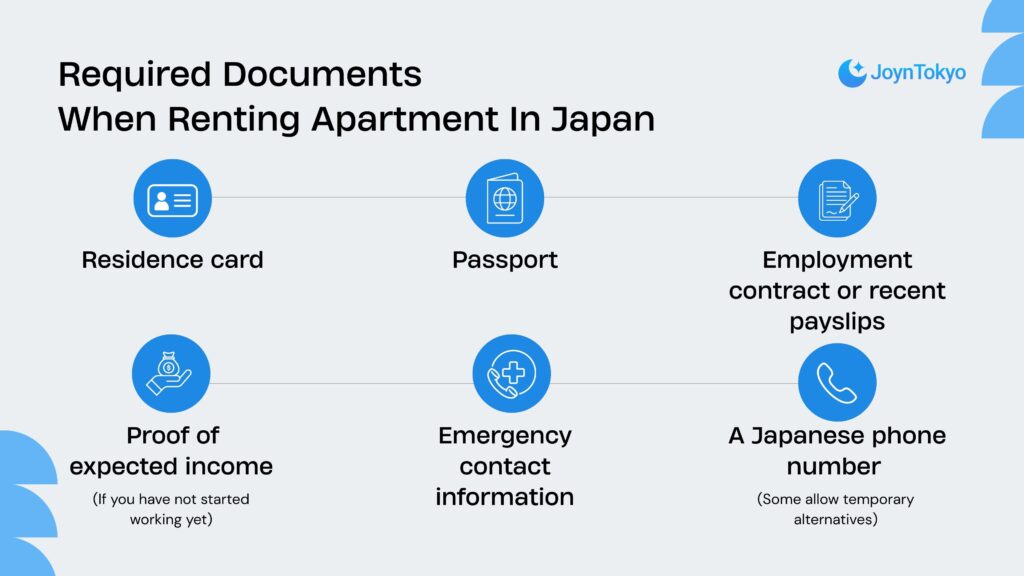
Most agents will ask for:
- Residence card
- Passport
- Employment contract or recent payslips
- Proof of expected income if you have not started working yet
- Emergency contact information
- A Japanese phone number (some allow temporary alternatives)
If you do not have all items yet, agencies often suggest temporary solutions. They know newcomers do not arrive with everything sorted out.
Application Flow
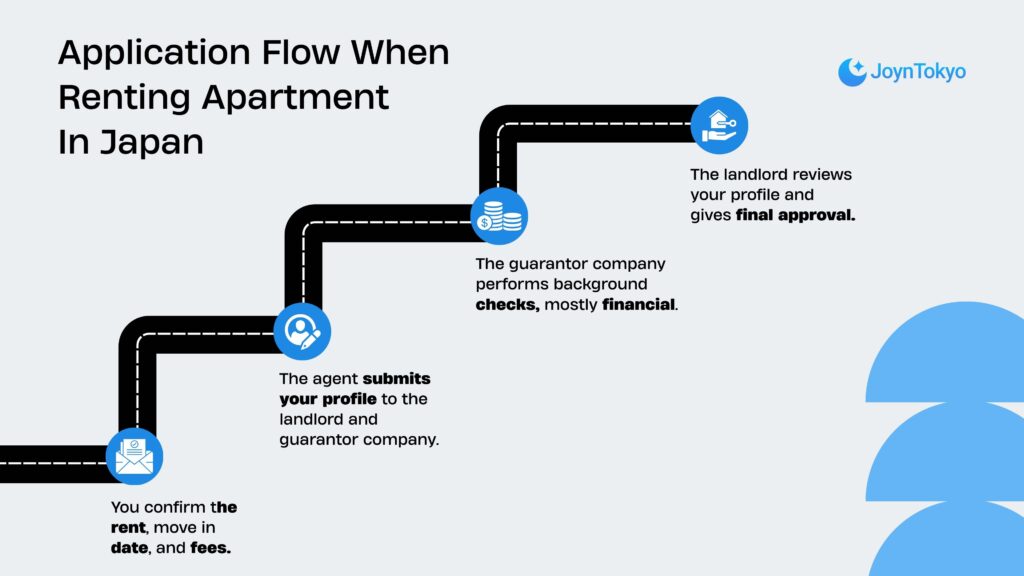
Once you choose an apartment, your agent prepares the application. The process usually looks like this:
- You confirm the rent, move in date, and fees.
- The agent submits your profile to the landlord and guarantor company.
- The guarantor company performs background checks, mostly financial.
- The landlord reviews your profile and gives final approval.
There is no in person interview. Everything happens quietly behind the scenes, often taking three to seven days depending on the landlord’s schedule.
What to Expect After Submission
Once approval comes through, the agent will schedule your contract signing date, provide a detailed breakdown of all initial costs, let you choose a move in date and key pickup time, and share instructions for utilities and lock changes. When you finally step into your new apartment, take your time walking around and noting any scratches or marks because being thorough here protects you during move out.
Rental Process – Checklist
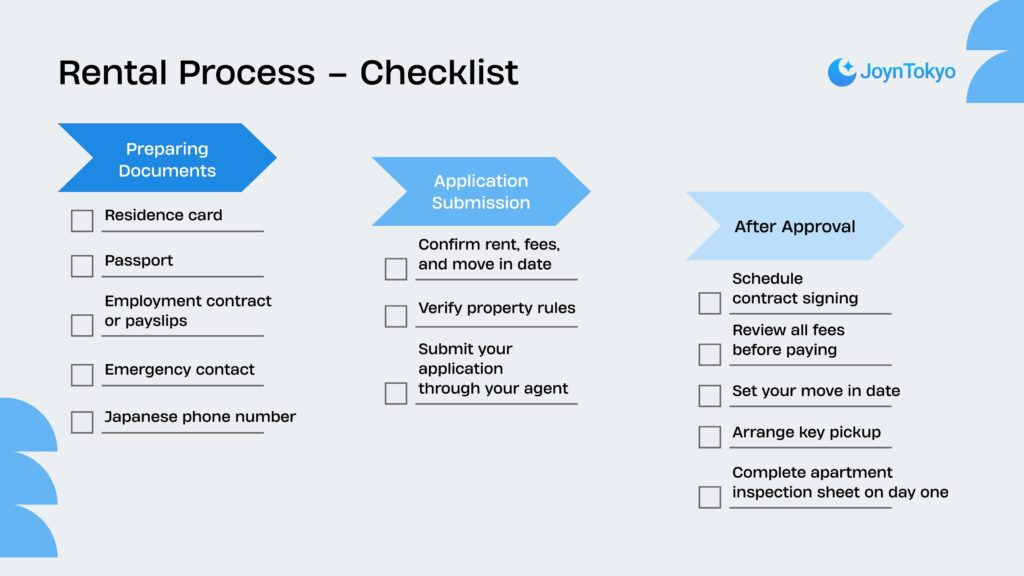
Preparing Documents
- Residence card
- Passport
- Employment contract or payslips
- Emergency contact details
- Japanese phone number (or temporary workaround)
Application Submission
- Confirm rent, fees, and move in date
- Verify property rules (noise, pets, garbage areas)
- Submit your application through your agent
After Approval
- Schedule contract signing
- Review all fees before paying
- Set your move in date
- Arrange key pickup
- Complete apartment inspection sheet on day one
Fees for Renting an Apartment in Tokyo
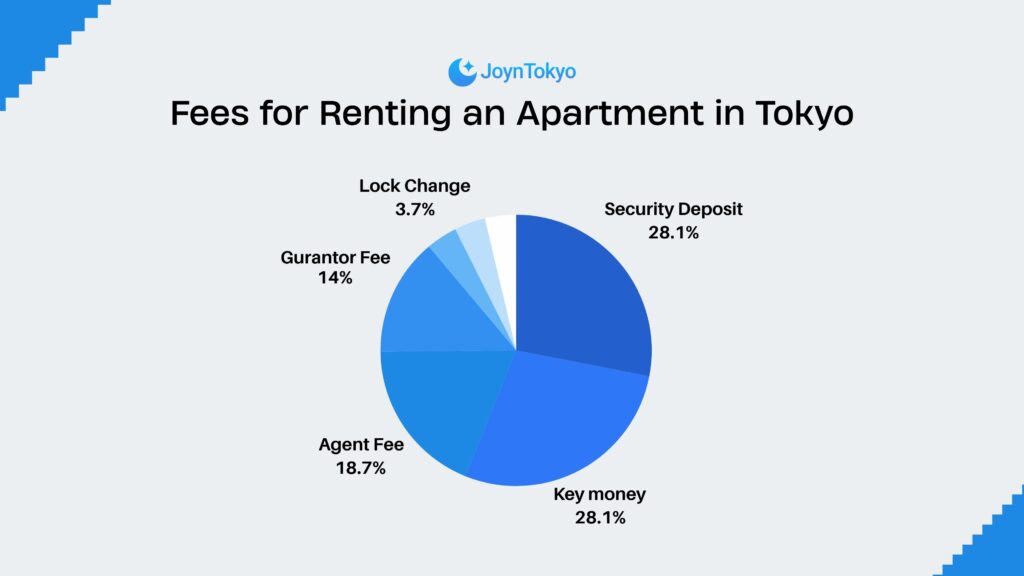
Tokyo rent is more than just the advertised monthly amount. Initial move in costs can easily add up to several months of rent, but once you understand what each fee is for, it becomes much easier to plan your budget calmly.
Rent and Security Deposit
Most apartments require a security deposit of one or two months of rent. This money is held by the landlord and is used for things like:
- Professional cleaning when you move out
- Repairs for damage beyond normal wear
- Key replacement if required
Depending on the condition of the apartment and the exact contract rules, you may get some of this deposit back at the end of your lease — however, don’t count on it.
Key Money
Key money is a traditional payment that still appears on many listings. It is:
- Paid directly to the landlord as a one-time gift
- Often equal to one month of rent
- Completely non-refundable
If you want to reduce your initial costs, search for properties specifically marked as no key money.
Guarantor Company Fees
Many foreigners use a guarantor company instead of asking a friend or employer to act as guarantor. Typical costs are:
- A one time fee, often around half to one month of rent
- An annual renewal fee after the first year
The guarantor company promises to cover unpaid rent, which reassures the landlord and is the reason this fee exists in the first place.
Top Guarantor Companies for Foreigners
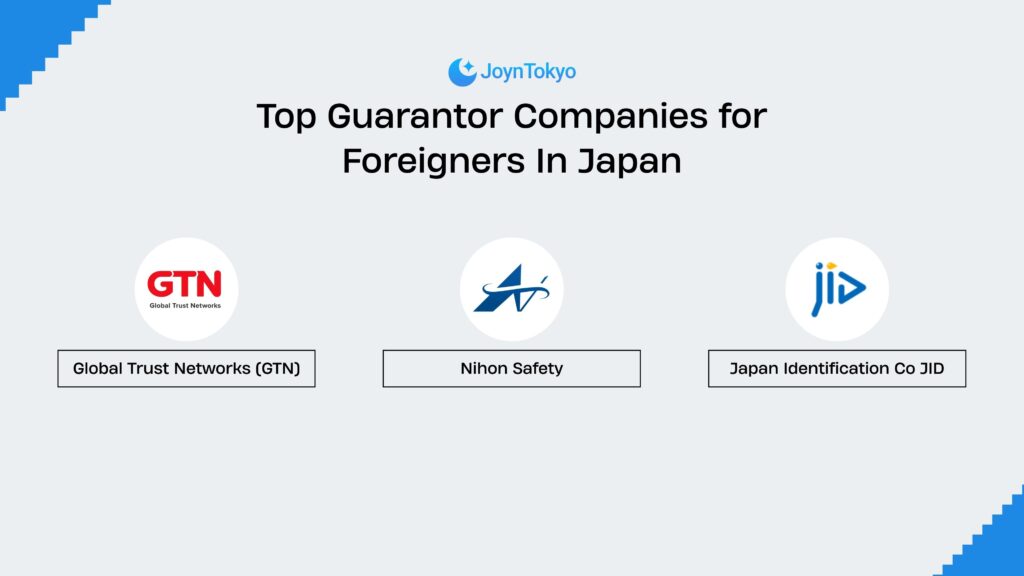
You usually do not choose the guarantor company yourself, since each property is tied to specific partners, but it helps to know the major names that actively support foreign residents.
Global Trust Networks (GTN)
A large guarantor company that focuses on non-Japanese residents, with multilingual support and extra services such as help with phones, bank accounts, and student support.
Nihon Safety
A nationwide guarantor company that explicitly supports non-Japanese tenants and offers customer service in English and other languages, with fees typically around 50% to 100% of one month of rent plus an annual renewal.
Japan Identification Co JID
A guarantor company that states it will help anyone who wants to rent a home, regardless of nationality, occupation, gender, or age, and provides information and support in English for international residents.
In practice your real estate agent will tell you which guarantor company is tied to a specific property, but if you hear one of these names it is a good sign that the system is already set up with foreign tenants in mind.
Agency Commission
Real estate agencies usually charge a commission for their work in finding and handling the property. The standard rate is up to one month of rent, although some agencies offer discounts or campaigns during quieter seasons, so it is always worth asking if the fee is flexible.
Fire Insurance and Lock Change
Fire insurance is mandatory for most rentals and is usually a small, fixed cost for the entire contract period. Lock changes, on the other hand, can feel expensive, but many landlords insist on them for security when a new tenant moves in. This is a one time cost paid at move in, not something you pay every month.
Moving Companies – Choosing the Right Service
In Japan you are mostly choosing the level of help you want. Full service movers pack everything, transport it, and reinstall appliances, while simple plans only provide a truck and movers to carry boxes you pack yourself. Many people use a middle option where movers handle large furniture and appliances and you move smaller items by yourself or by courier.
Always check the rules for both your old and new buildings before booking. Some places restrict move in hours, require elevator reservations, or limit truck size. Busy periods, especially late March, fill up fast and prices rise, so booking early gives you more choice and better rates.
Process and Fees
When you compare companies, focus on what is included rather than just the base fee. Ask about:
- Packing materials and packing or unpacking service
- Installation of washing machines, lighting, and air conditioners
- Insurance if items are lost or damaged
- Extra charges for stairs, no elevator, or early morning and evening slots
Get quotes from two or three companies with the same conditions, then choose the one that fits both your budget and the level of support you actually want.
English-Speaking Moving Companies
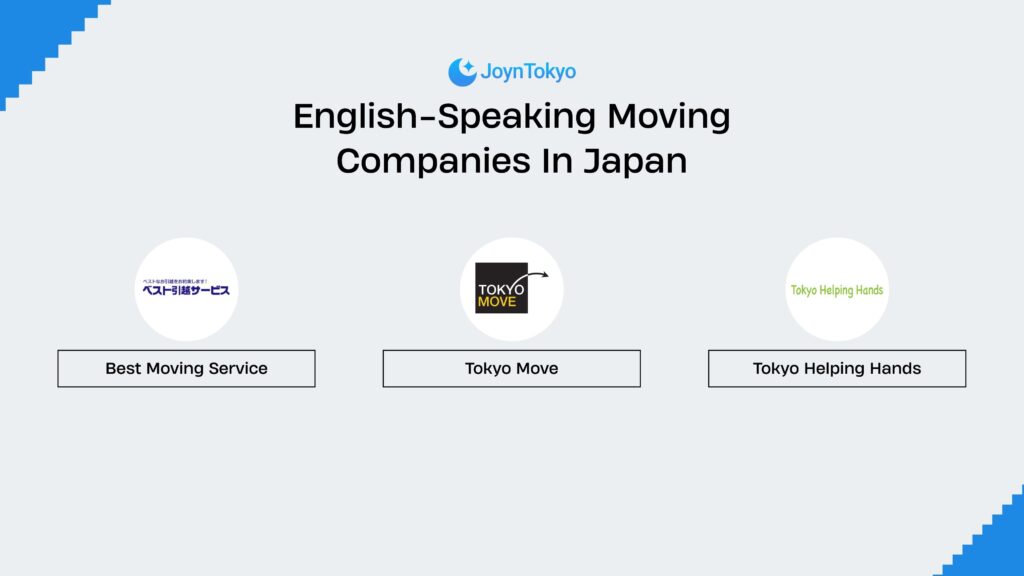
If you prefer to handle everything in English, there are several moving companies in Japan that advertise English support. Most can reply to email or quote forms in English and will explain what is included, such as packing, disposal, and storage, so you are not guessing on moving day.
Some widely used options include
- Best Moving Service English support with online quotes, active mainly in Tokyo, Osaka, and Fukuoka, suitable for singles and families moving within Japan.
- Tokyo Move Tokyo based mover with English communication, known for simple plans, fast quotes, and add ons like storage or disposal.
- Tokyo Helping Hands Small company that helps with moving plus light organizing and cleaning, aimed at foreign residents in Tokyo and surrounding prefectures.
For any mover, send the same basic information to each company, ask for a written quote in English, and confirm in advance which services are included so you can compare fairly.
Setting up Utilities, Making Your Apartment Livable
Once your lease is signed, the next step is turning your empty shell into a place you can actually live in. In Japan, some utilities start automatically, others require you to call or go online before move in. Your agent or landlord will usually give you basic instructions, but it helps to know what to expect.
Electricity
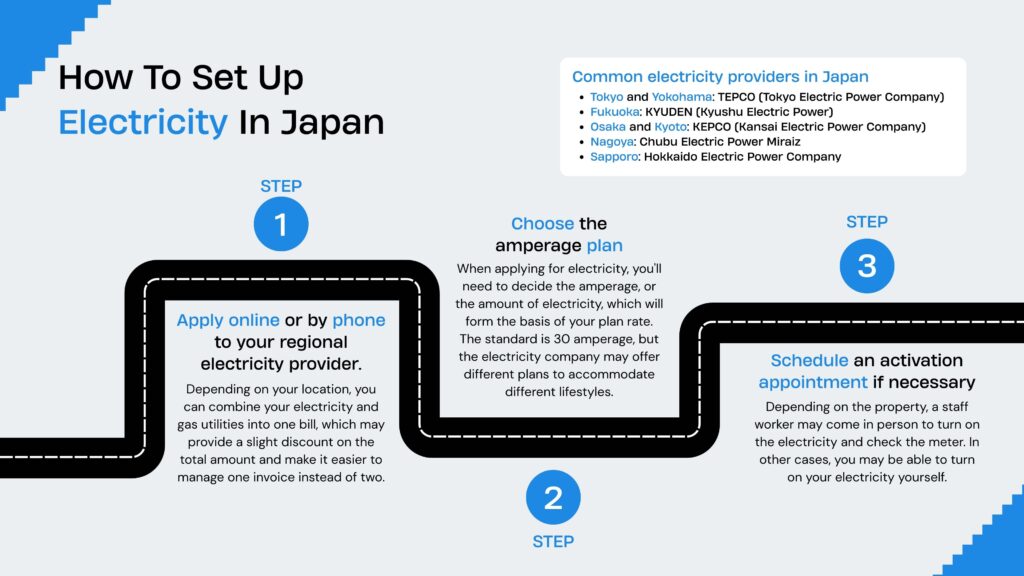
In many apartments, electricity is already connected when you move in, you just need to transfer it into your name. Usually you will
- Find a postcard or leaflet from the electric company in the apartment
- Scan a QR code or fill in a simple form with your name, move in date, and bank or card details, or call the number on the paper and give the same information
If the power is off, you may need to flip the breaker switch in the fuse box after you register. There is no need for a home visit in most cases.
Gas
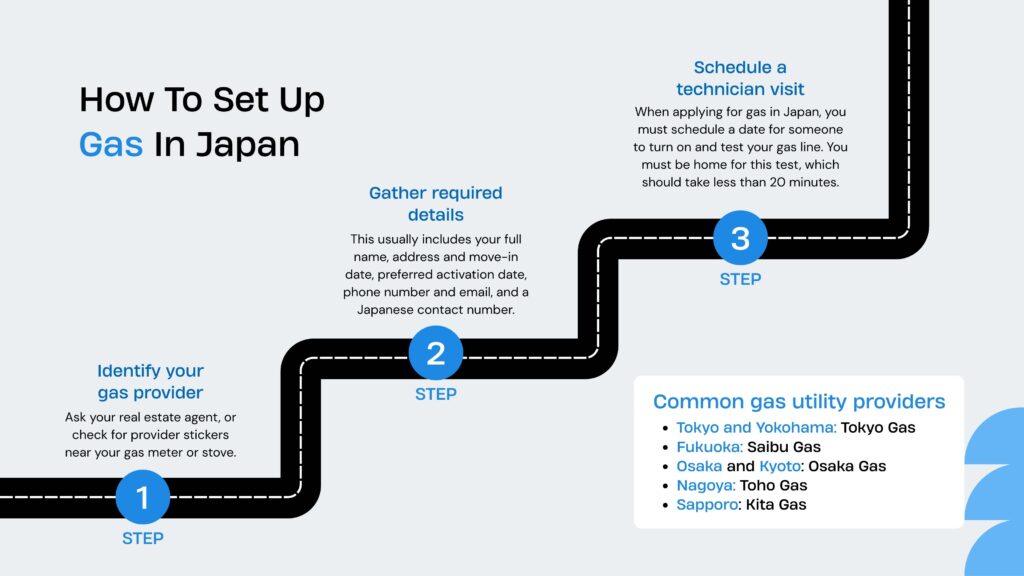
Gas is stricter for safety reasons. It is often off when you move in, and you cannot use the stove or take a hot shower until it is turned on. The usual steps are
- Call the gas company at least a few days before move in
- Book a time for a staff member to visit the apartment
- Be at home for the appointment while they open the gas, check for leaks, and explain how to use the stove and water heater
If your schedule is tight, ask your agent to help you book this visit as soon as your move in date is confirmed.
Water
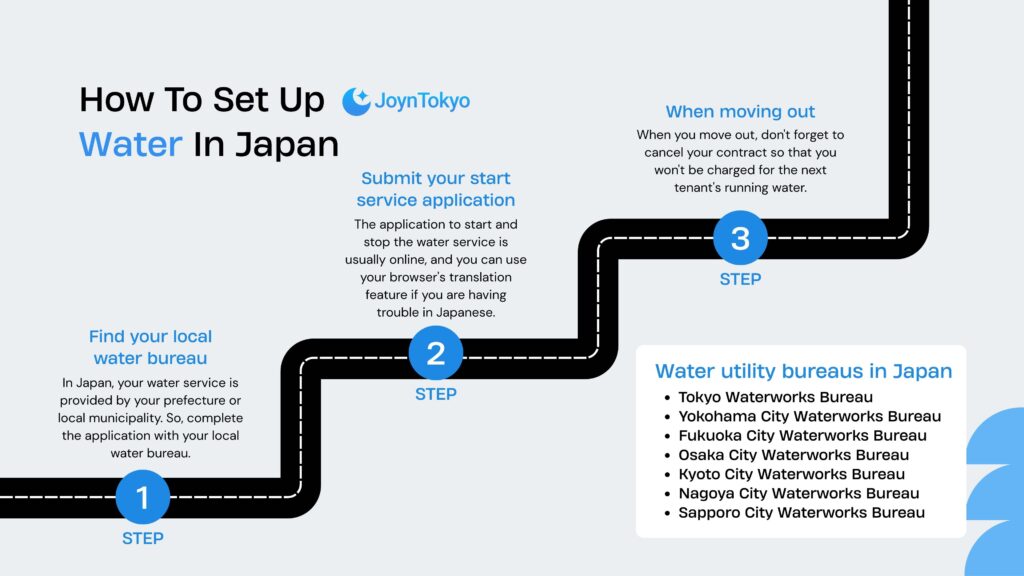
Water is usually the easiest. In many buildings it is already running when you arrive. Depending on the city, you might
- Do nothing, the contract is automatically created in your name based on the landlord’s notice
- Or send in a simple start of service postcard or online form to the city water bureau
If you find a notice in the mailbox about water service, follow the instructions or ask your agent to translate the key points.
Internet and WiFi
Internet can take the longest to set up, so try to arrange it early if you work from home or rely on streaming. There are three common patterns
- Building internet included, you just plug in a LAN cable or use the provided WiFi
- Existing line in the room, you sign a contract with a provider and they mail a router
- No line yet, you need a visit from a technician to install the line
Ask your agent which pattern applies to your apartment. While you wait for installation, many people use pocket WiFi or extra data on their phone as a temporary solution.
Trash
Trash rules are strict in Japan, so understanding them early saves a lot of stress. Your city or ward decides
- How to separate burnable, non-burnable, cans, bottles, and other categories
- Which days and times each type of trash is collected
- Where the collection point is for your building
You will usually receive a trash guide booklet or leaflet in Japanese, sometimes with simple English or pictures. Keep it somewhere visible at home and copy the key pick up days into your calendar. If anything is unclear, ask your agent or a neighbor to confirm the basic rules so you do not accidentally leave the wrong bags out on the wrong day.
City Hall Visit – Completing Your Essential Newcomer Registrations
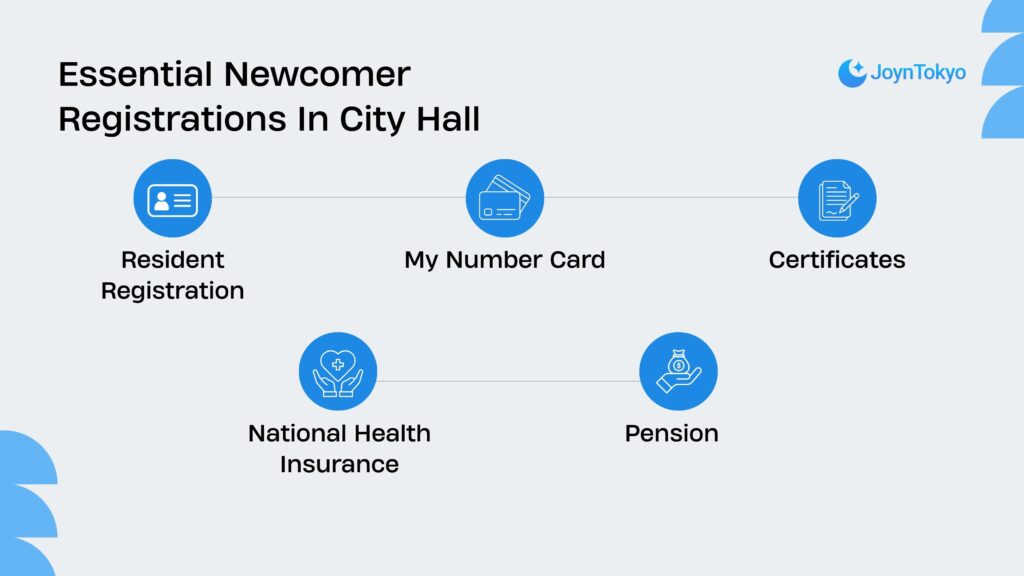
Soon after moving into your new address in Japan, you will need to visit your local city hall or ward office. This visit ties your daily life to that specific municipality, it affects health insurance, taxes, and even things like getting a phone contract or joining a gym. Plan to go on a weekday, bring all your key documents, and set aside at least a couple of hours, especially if you do not speak much Japanese yet.
Resident Registration at Your New Address
Your first stop is usually the counter for moving in procedures. Here you register your address on your residence record, which updates the back of your Residence Card. You normally need your Residence Card, passport, and your new address written clearly in Japanese.
After the registration is complete, staff will print your new address on your Residence Card and your information will be added to the city records. This registration is the base for almost everything else, so do it as early as possible after moving.
My Number and Certificates
Japan uses a personal identification number called My Number. If you arrived recently or moved from another city, you may receive a My Number notification card or letter by mail, or you might ask about it at city hall.
You can also apply for a plastic My Number Card, which makes it easier to get official documents from convenience stores and to use some online government services. At the same counters, you can request residence certificates or other official documents if you need them for work, school, or bank procedures.
National Health Insurance
If you are not already covered by company health insurance, you will usually enrol in National Health Insurance at city hall. Staff will check your visa status, address, and sometimes income information, then calculate your premium.
After you join, you will receive an insurance card that you must bring to clinics and hospitals so you only pay a portion of the medical fees. If you change jobs or get company insurance later, you need to return to city hall to update or cancel this enrolment.
Pension and Other Registrations
Depending on your visa type and work situation, you may also need to complete basic pension registration. In many cases this is handled automatically through your employer, but city hall staff can confirm your situation and give you the right forms or guidance.
Some municipalities also handle things like child allowance, daycare registration, and other local services at nearby counters, so if you have children or special circumstances, ask if there is anything else you should register for.
What to Bring and How to Prepare
To keep the visit smooth, bring your Residence Card, passport, your new address written in Japanese, and any documents your employer gave you. If you are joining National Health Insurance without a job yet, bring any proof of previous income if you have it, though it is not always required.
It can also help to prepare a simple note in Japanese explaining that you just moved, your new address, and what you want to do, resident registration, health insurance, My Number card, then show it at the information desk so they can direct you to the right counters in order.
Getting a Japanese Phone Number – An Essential Step for Everyday Life
Getting a local number is one of the first things that makes life in Japan feel stable. You will use it for delivery apps, banking, job applications, school or company contact, and endless SMS verification codes for online services. Without a Japanese number, simple tasks such as opening a bank account or finishing rental and utility registrations can become much more complicated.
Why a Japanese Phone Number Matters
Many services in Japan assume you have a local number in your own name. Banks, some rental agencies, government related apps, and even basic online services often send one time passwords by SMS or call you back on a Japanese number. A local number also makes it easier for your employer, school, and delivery drivers to reach you quickly.
Main Options, SIM, eSIM, and Phone Contracts
Most newcomers get a voice enabled SIM or eSIM with data so they have both mobile internet and a Japanese phone number. These plans are available from the major carriers and from smaller providers that rent space on their networks. Data-only SIMs are fine for travel, but they usually do not give you a phone number for calls and SMS, which limits what you can sign up for.
For stays of a year or more, look for a resident plan rather than a tourist prepaid SIM. Voice and data plans for residents can be billed monthly and let you keep the same number when you change phones or move apartments. Some services that target foreigners, such as Sakura Mobile or Mobal, provide Japanese numbers, English support, and delivery to your home or temporary address.
Documents You Need
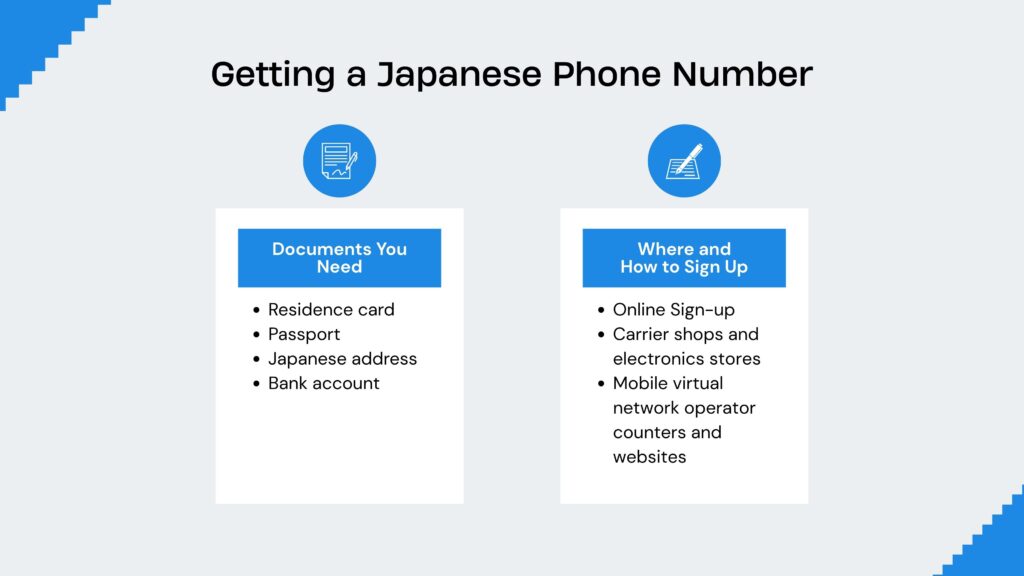
Requirements differ slightly by company, but most long stay plans expect:
- Residence Card showing your current status and period of stay
- Passport
- Japanese address, often proven with your lease or a utility bill
- Payment method such as a credit card or sometimes a bank account
Some companies accept cash payments at convenience stores or allow you to sign up before you have a bank account, which can be helpful right after arrival.
Where and How to Sign Up
You can get a Japanese number in three main places:
- Online sign-up Many providers let you apply in English, upload photos of your documents, and have the SIM or eSIM details sent to you. This is often the easiest option for new arrivals.
- Carrier shops and electronics stores The big three networks, NTT docomo, au, and SoftBank, have shops in most city areas, and large electronics stores such as Yodobashi Camera or Bic Camera also sell contracts and SIMs.
- Mobile virtual network operator counters and websites Mobile virtual network operator, or MVNOs are low cost providers that use the big networks. They often have cheaper plans and online sign up, sometimes with limited English support.
If you are not confident in Japanese, taking a Japanese speaking friend or an interpreter for help with the first contract can make a big difference.
Choosing a Provider
When you compare plans, focus less on brand and more on how you will actually use your phone. Common concerns include:
- Coverage in the areas where you live, study, or work
- Data allowance and speed
- Price and any minimum contract period
- Call rates and options for unlimited or discounted calls
- English support by email or chat if you need it
The big carriers offer strong coverage nationwide, while budget brands and MVNOs trade slightly lower speeds at busy times for lower monthly costs.
Practical Tips for Your First Contract
Try to get your Japanese number early in your first weeks. It will smooth your bank account application, some city hall procedures, and countless online registrations. Before you sign anything, check
- Contract length and early cancellation fees
- Whether your number can be moved to another provider later
- How to change your plan if your data use is higher or lower than expected
Keep a photo of your SIM card details and contract information somewhere safe. Once this step is done, a lot of other pieces of your new life in Japan fall into place much more easily.
Getting a Japanese Bank Account – A Newcomer Friendly Walkthrough
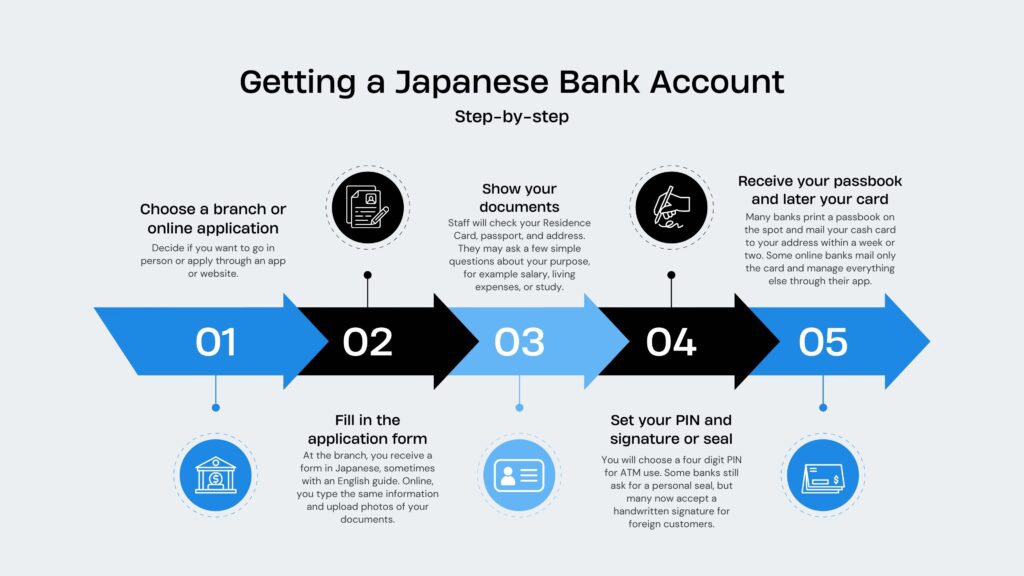
Opening a bank account is one of the first practical steps that makes life in Japan smoother. Your salary, rent payments, some utility bills, and many subscription services are easiest when you have a Japanese account in your own name.
Why a Japanese Bank Account Matters
Most employers and schools in Japan pay salaries and scholarships by bank transfer only, no cash. Landlords and utility companies may also ask you to register automatic withdrawals from a Japanese account. On top of that, having a local account makes it easier to get a credit card, mobile phone contract, and use cashless payment apps that charge from your balance.
Types of Banks and Common Choices
You will see three broad groups of banks:
- Mega banks such as MUFG, Mizuho, and SMBC, with branches and ATMs across the country
- Regional banks and credit unions, focused on specific prefectures or cities
- Online and app based banks, with good apps but fewer or no branches
For newcomers, the main differences are English support, ATM access near your home or workplace, and how easy their forms are to understand. Some banks and internet banks offer English pages and simplified application processes that are more friendly to recent arrivals.
Basic Requirements and Documents
Requirements vary by bank, but most will expect
- Residence Card with a valid status and remaining period of stay
- Passport
- Japanese address, often confirmed by your Residence Card or a recent utility bill
- Phone number in Japan
- Personal information form, name, occupation, employer or school, contact details
Some banks prefer that you have completed resident registration at city hall before you apply. If in doubt, check the bank’s website or ask at the information counter before taking a number.
Step by Step, Opening Your Account
The basic flow is usually:
- Choose a branch or online application Decide if you want to go in person or apply through an app or website.
- Fill in the application form At the branch, you receive a form in Japanese, sometimes with an English guide. Online, you type the same information and upload photos of your documents.
- Show your documents Staff will check your Residence Card, passport, and address. They may ask a few simple questions about your purpose, for example salary, living expenses, or study.
- Set your PIN and signature or seal You will choose a four digit PIN for ATM use. Some banks still ask for a personal seal, but many now accept a handwritten signature for foreign customers.
- Receive your passbook and later your card Many banks print a passbook on the spot and mail your cash card to your address within a week or two. Some online banks mail only the card and manage everything else through their app.
Online and Cashless Friendly Options
If you are comfortable using apps, online banks and newer services can be easier. They often have:
- Simple online application in English or easy Japanese
- Mobile apps to check your balance, transfer money, and pay bills
- Wide ATM access through convenience stores
These can be especially convenient if you move frequently or do not live near a big bank branch.
Practical Tips for Newcomers
- Try to get your Residence Card updated with your new address before opening an account, it reduces questions at the counter
- Bring a memo in Japanese with your name, address, and reason for opening the account, for example salary deposit, and show it to staff
- Ask directly if they accept a signature instead of a seal
- Keep your bank card, passbook, and PIN information separate and note the bank’s phone number in case of loss
Once your account is open, you can register it with your employer, set up automatic payments, and connect it to cashless apps, which makes daily life in Japan much easier.
Moving to Japan is really just a series of small practical steps, not one huge moment, and once you understand them the whole process becomes much less intimidating. You find an apartment that will accept you, budget for the real move in costs, book a mover, set up electricity, gas, water, internet, and learn the trash rules, then take care of city hall paperwork, your phone number, and a local bank account so your salary and bills can flow smoothly.
None of this is glamorous, and some of it will feel slow or confusing, especially in Japanese, but if you treat it like a checklist and tackle one item at a time, you quietly build the foundation that lets everything else, work, study, travel, and everyday routines, feel stable. Once those basics are in place, you can stop worrying about paperwork and start paying attention to the fun parts of living in Japan, exploring neighborhoods, learning the language, and building a life that feels like your own.