




Becoming a voice actor (seiyuu) in Japan requires attending a specialized voice acting school, building skills through training and auditions, and joining a talent agency that represents voice actors. Most aspiring seiyuu enroll in a voice acting academy for 1-2 years, then audition for agencies that connect them with anime, game, and dubbing work.
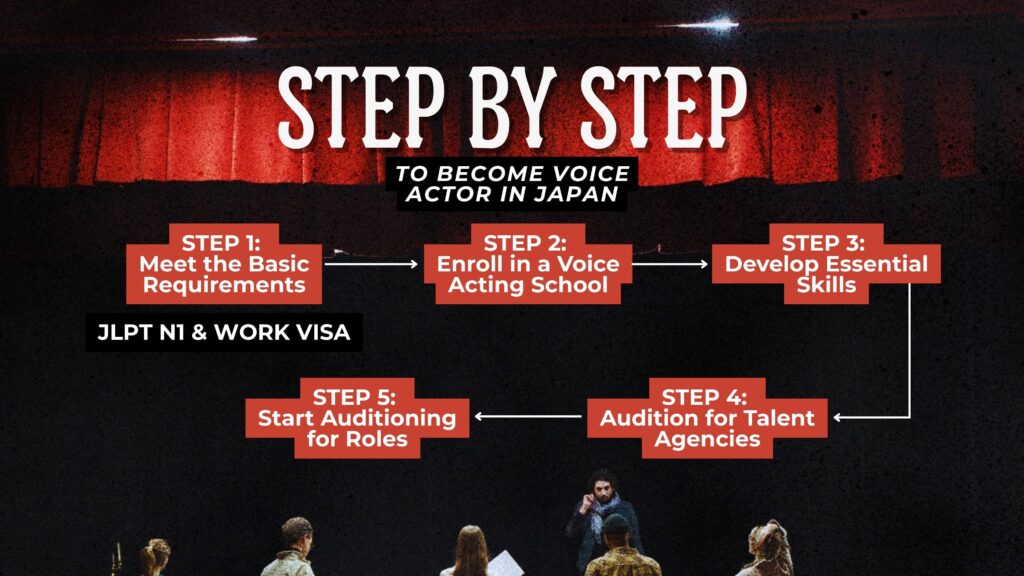
Step 1: Meet the Basic Requirements
To work as a voice actor in Japan, you need Japanese language proficiency at a native or near-native level. Most voice acting schools and agencies require fluency since you’ll be reading scripts, taking direction, and performing in Japanese. If you’re a non-native speaker, achieving N1 level on the Japanese Language Proficiency Test (JLPT) is typically the minimum standard.
You’ll also need proper visa status to work legally in Japan. Foreign nationals usually require a work visa (typically the “Entertainer” visa or “Specialist in Humanities/International Services” visa depending on your activities) or spouse visa, as student visas have limited work permissions that may not cover entertainment industry activities.
Read More


Step 2: Enroll in a Voice Acting School
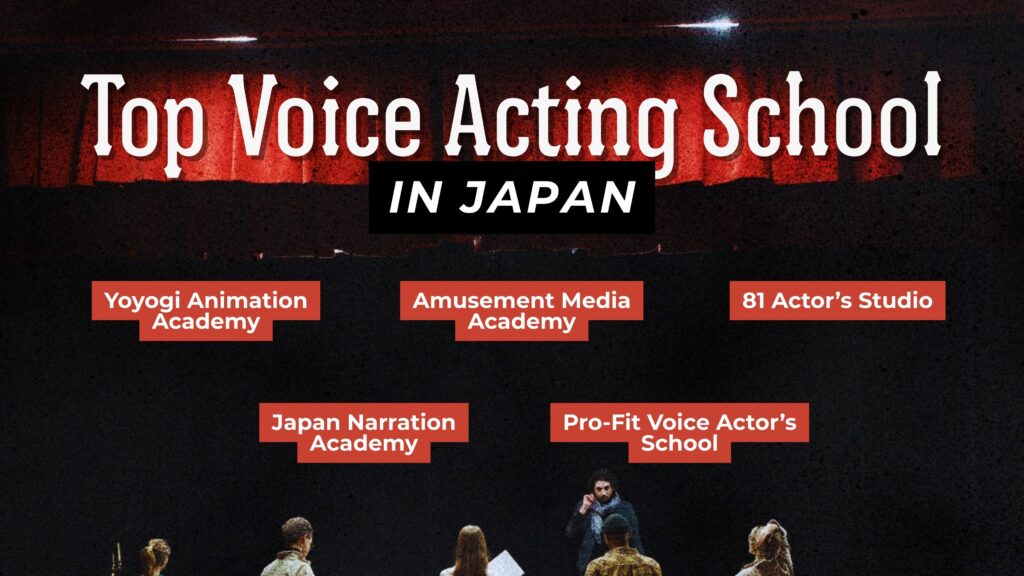
Voice acting schools (seiyuu yoshuujo) are the primary pathway into the industry. These specialized academies teach vocal technique, acting, script reading, character interpretation, and microphone performance. Training typically lasts 1-2 years.
Leading voice acting schools include:
- Yoyogi Animation Academy: One of Japan’s largest with campuses nationwide
- Amusement Media Academy: Offers comprehensive seiyuu programs in Tokyo
- 81 Actor’s Studio: Run by 81 Produce talent agency
- Pro-Fit Voice Actor’s School: Connected to Pro-Fit agency
- Japan Narration Academy: Focuses on narration and dubbing
Tuition generally ranges from ¥800,000 to ¥1,500,000 per year. Many schools hold entrance auditions or interviews, though some accept all applicants.
Boost Your Chances of Finding the Right Opportunity!
Speak to our consultants to find out how you can start working in Japan!
Book Your FREE Consultation✓ 500+ Bookings as of 2026-04-09 ✓ English-speaking support
Step 3: Develop Essential Skills
During your training, focus on building these core competencies:
Vocal control: Learn breathing techniques, voice projection, pitch modulation, and how to maintain vocal health during long recording sessions.
Acting ability: Study emotional expression, character analysis, and how to convey personality through voice alone without physical acting.
Script reading: Practice cold reading, understanding context quickly, and delivering lines naturally while standing at a microphone.
Accents and character voices: Develop range by practicing different age groups, genders, dialects, and character archetypes from young children to elderly characters.
Stamina and professionalism: Build the endurance for 4-6 hour recording sessions and learn studio etiquette.
Step 4: Audition for Talent Agencies
After completing voice acting school, the next step is joining a talent agency (jimusho). Agencies represent voice actors, negotiate contracts, and provide audition opportunities for anime, games, dubbing, and commercial work.
Agencies typically have three levels of affiliation:
- Junior/trainee: Receive additional training while beginning to audition
- Preparation/associate: Take on minor roles while developing
- Full member: Receive priority for auditions and major roles
Major voice acting agencies include 81 Produce, Aoni Production, Sigma Seven, Arts Vision, Mausu Promotion, and Tokyo Actor’s Consumer’s Cooperative Society. Many schools have connections with specific agencies, making the transition smoother.
Prepare for agency auditions by having a demo reel showcasing different character types and emotional ranges. Auditions typically involve cold reading from provided scripts, self-introductions, and interviews about your motivation and availability.
Step 5: Start Auditioning for Roles

Once affiliated with an agency, you’ll begin the audition circuit. Early career voice actors typically audition for:
- Background characters in anime (crowd voices, minor roles)
- Mobile game characters
- Drama CD productions
- Dubbing for foreign films and TV shows
- Narration for educational videos or advertisements
- Radio drama productions
Expect to face significant competition. Hundreds of voice actors may audition for a single role. Persistence is essential, as it’s common to face numerous rejections before landing work.
Step 6: Build Your Career
Building a sustainable voice acting career in Japan takes time and strategy:
Accept all work initially: Early in your career, take every role offered to gain experience, make connections, and build your resume.
Network within the industry: Attend industry events, maintain good relationships with sound directors and producers, and connect with fellow voice actors.
Develop a specialty: While maintaining range, many successful seiyuu become known for particular character types, which leads to more consistent casting.
Expand your presence: Many voice actors supplement their income and build fanbase through radio shows, live events, singing (many anime voice actors release music), YouTube channels, and fan meetings.
Continue training: Even established professionals take ongoing lessons to maintain and improve their skills.
Timeline and Expectations
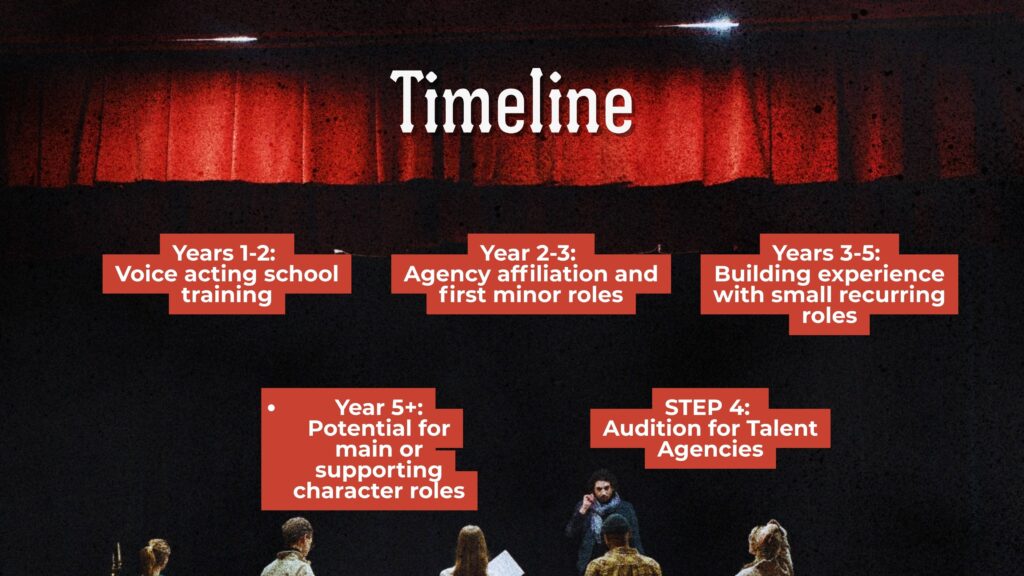
The typical path to becoming a working voice actor in Japan takes 3-5 years minimum:
- Years 1-2: Voice acting school training
- Year 2-3: Agency affiliation and first minor roles
- Years 3-5: Building experience with small recurring roles
- Year 5+: Potential for main or supporting character roles
Financial reality: Most voice actors earn limited income initially. Pay for minor anime roles might be ¥15,000-¥30,000 per episode. Many voice actors work part-time jobs during their first several years while building their careers.
Alternative Paths
While the school-to-agency route is standard, some alternatives exist:
Direct agency auditions: Some agencies hold open auditions for new talent without requiring school attendance, though this is less common.
Indie and online work: Building a portfolio through indie game projects, web animations, or online content can provide experience, though it rarely leads directly to mainstream agency representation.
Transfer from related fields: Some actors, singers, or radio personalities transition into voice acting after establishing careers in adjacent entertainment fields.
Challenges for International Aspirants
Non-Japanese voice actors face additional hurdles. The industry strongly prefers native speakers, and even with perfect Japanese fluency, foreign accents can limit opportunities. Success stories exist but remain rare. Building fluency from childhood or having one Japanese parent significantly improves prospects.
Consider whether you can commit to living in Japan long-term, as voice acting careers require physical presence for auditions and recordings. Remote work is generally not viable for establishing a career.
Getting Started Today
If you’re serious about pursuing voice acting in Japan:
- Achieve Japanese fluency if you haven’t already
- Research voice acting schools and their entrance requirements
- Prepare financially for tuition and living expenses in Japan
- Secure appropriate visa status
- Study the current anime and voice acting industry to understand trends and expectations
Voice acting in Japan is a competitive field requiring dedication, talent, continuous improvement, and resilience through rejection. Success is possible for those willing to commit to the rigorous training pathway and persist through the challenging early career years.
Read More