
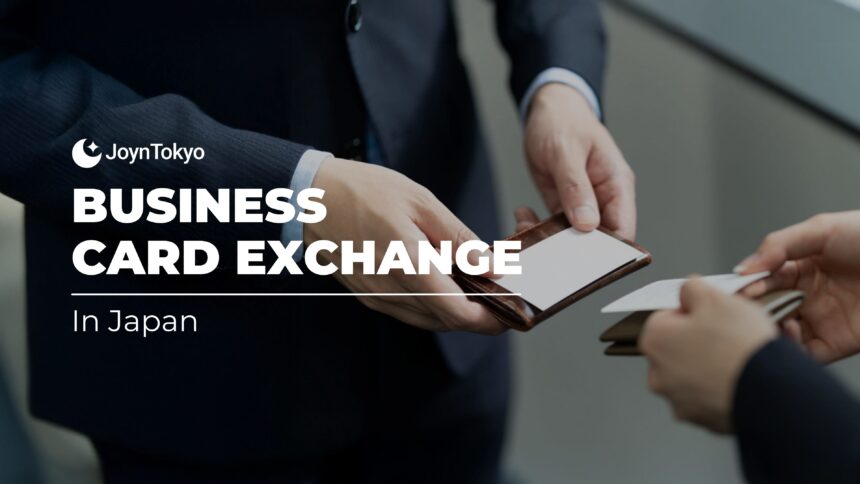


Japanese business card exchange, known as meishi koukan (名刺交換), is a formal ritual in Japanese business culture where professionals exchange business cards using specific etiquette and protocols. This ceremonial practice demonstrates respect, establishes hierarchy, and marks the official beginning of a business relationship in Japan.
How to Exchange Business Cards in Japan
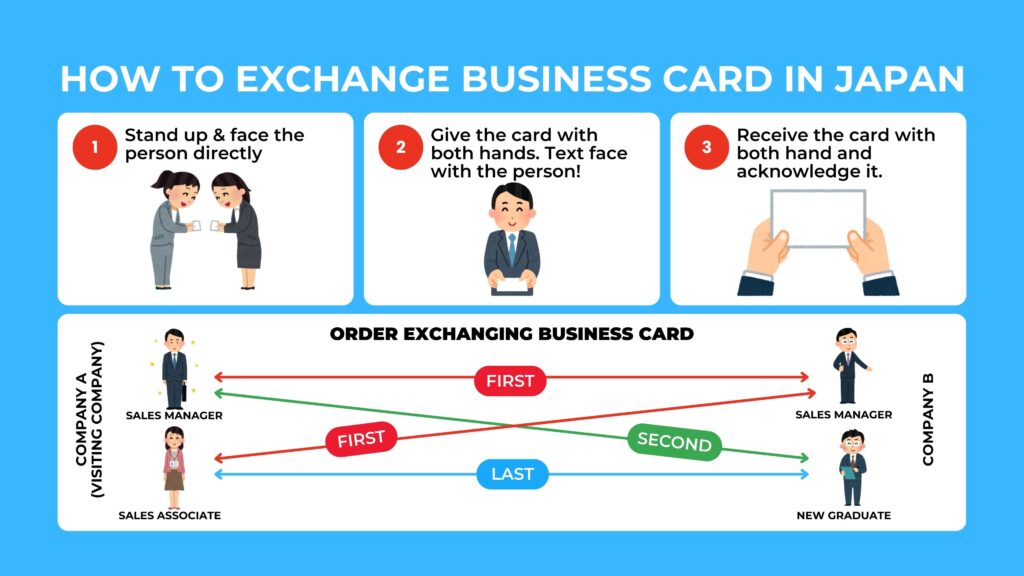
The proper method for exchanging business cards in Japan follows these essential steps:
The Presentation: Hold your business card with both hands at the top corners, with the text facing the recipient so they can read it immediately. Stand and bow slightly as you present the card, stating your name and company clearly.
Receiving a Card: Accept the card with both hands, take a moment to read it carefully, and acknowledge the person’s name and title. Never immediately pocket the card or write on it in.
During Meetings: Place received cards on the table in front of you in the order of seating or hierarchy throughout the meeting. The most senior person’s card should be positioned prominently. This shows respect and helps you remember names and titles.
After the Meeting: Once the meeting concludes, carefully place the cards in a card holder or wallet, never in your back pocket or anywhere that might damage or disrespect them.
Key Rules and Etiquette
Several critical rules govern Japanese business card exchange:
Always use both hands when giving and receiving cards. Using one hand is considered casual and disrespectful in Japanese business settings.
Present your card first if you are lower in rank or the visitor. The junior person or visitor typically initiates the exchange.
Never write on someone’s card, and avoid bending, folding, or treating the card carelessly, as it represents the person themselves.
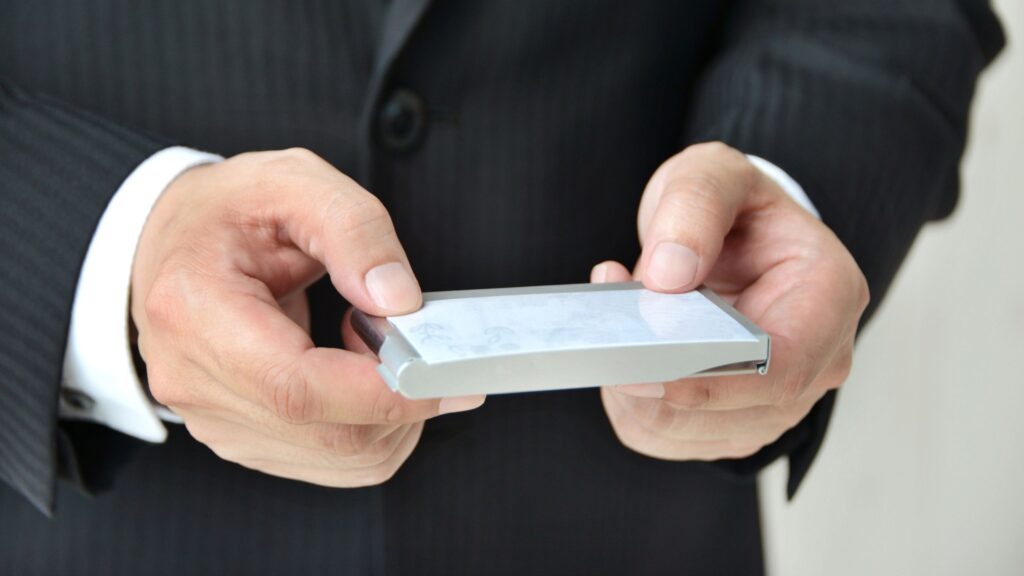
Keep your cards pristine and accessible. Store them in a proper card case (meishi-ire) and ensure they are clean and undamaged before meetings.
Exchange cards at the beginning of the meeting, not at the end. This allows proper introductions and relationship building.
Boost Your Chances of Finding the Right Opportunity!
Speak to our consultants to find out how you can start working in Japan!
Book Your FREE Consultation✓ 500+ Bookings as of 2026-08-05 ✓ English-speaking support
Why This Protocol Matters
In Japanese business culture, the business card represents the individual and their company. The careful, respectful exchange demonstrates your understanding of hierarchy, your attention to detail, and your respect for Japanese customs. Mishandling this ritual can damage first impressions and potentially harm business relationships.
Foreign business professionals working in Japan or with Japanese companies should invest time in learning and practicing proper meishi koukan, as it signals cultural competence and seriousness about the business relationship. Many Japanese professionals appreciate when international partners make the effort to follow these protocols correctly.
Practical Preparation Tips
Before attending business meetings in Japan, prepare your business cards with Japanese text on one side (or at minimum, ensure your English cards are high quality). Bring more cards than you think you’ll need, as Japanese business culture involves exchanging cards with everyone you meet, not just key decision-makers.
Practice the physical mechanics of the exchange beforehand so the movements feel natural. Consider having a Japanese colleague or mentor review your technique before important meetings.
Understanding and correctly executing Japanese business card exchange demonstrates cultural respect and professionalism, setting a positive foundation for successful business relationships in Japan.
Read More