
Work Visas in Japan – Eligibility Requirements and What Foreign Workers Should Know
Working in Japan often sounds simple on the surface, find a job, get a visa, move to Japan. In reality, the visa comes before almost everything else, and misunderstanding how it works is one of the most common reasons people get stuck or give up early. Japan’s work visa system is not designed for flexibility
Working in Japan often sounds simple on the surface, find a job, get a visa, move to Japan. In reality, the visa comes before almost everything else, and misunderstanding how it works is one of the most common reasons people get stuck or give up early. Japan’s work visa system is not designed for flexibility or trial and error. It expects clarity, paperwork, and a clear match between who you are and what you plan to do.
Before job boards, recruiters, or interviews even come into play, it helps to understand how work visas actually function and what immigration is really looking for.
How Japan’s Work Visa System Actually Works
Japan does not offer a general purpose work visa. Every work visa is tied to a specific category, and that category is tied to the type of work you are allowed to do. Immigration is less concerned with job titles and more focused on the actual duties involved in the role.
If a job does not clearly fit into one of the recognized visa categories, approval becomes difficult, even if a company wants to hire you. This is why people sometimes receive job offers that ultimately cannot be sponsored.
In most cases, the company acts as your sponsor and submits documents proving that the role fits a valid category and that you are qualified to perform it. Because of this, your visa status and your job are closely connected.
Common Work Visa Categories in Japan
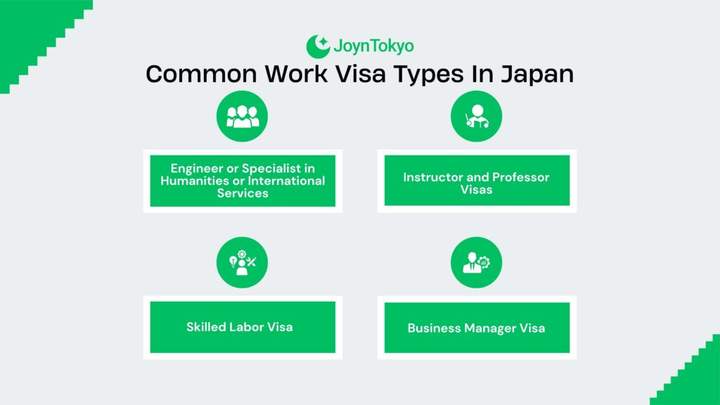
Despite the number of visa categories that exist, most foreign workers fall under just a few of them.
Engineer Specialist in Humanities International Services Visa
Often referred to simply as the Engineer or Humanities visa, this is the most widely used category. It covers a broad range of professional roles including IT, engineering, marketing, sales, design, finance, consulting, and translation.
This visa usually requires a university degree related to the job or several years of relevant professional experience. Immigration looks for a logical connection between your background and the work you will be doing. The closer that match is, the smoother the process tends to be.
Instructor and Professor Visas
These visas are used for formal teaching positions. The Instructor visa typically applies to public schools and boards of education, while the Professor visa is for universities and research institutions.
Private language schools often sponsor the Engineer Humanities visa instead, even though the work involves teaching. This distinction surprises many first time applicants and is a common source of confusion.
Skilled Labor Visa
The Skilled Labor visa applies to specific trades such as foreign cuisine chefs, construction specialists, and certain technical manufacturing roles. Requirements are strict and usually include many years of documented experience.
This is not a general labor visa and does not apply to most service industry jobs.
Business Manager Visa
This visa is for people starting or managing a business in Japan. It requires a substantial financial investment, a physical office, and a realistic business plan.
It is not intended for freelancers experimenting with the market or small side projects. Immigration expects stability from the beginning.
Education and Experience Requirements
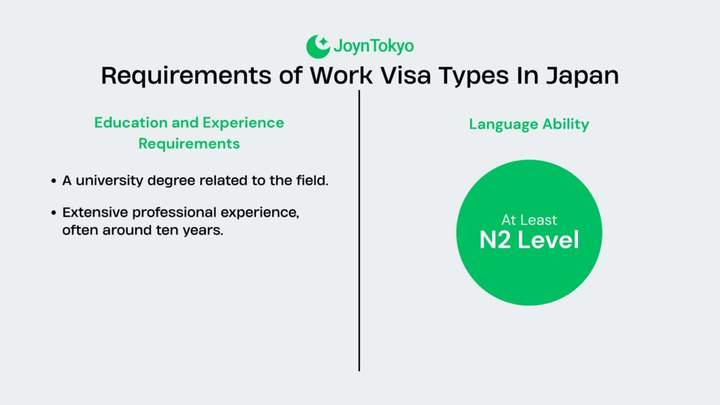
For most work visas, immigration looks for one of two things.
- A university degree related to the field.
- Extensive professional experience, often around ten years.
The degree does not need to match perfectly, but there should be a clear and reasonable connection. A marketing degree applying for a marketing role makes sense. A degree in an unrelated field applying for a highly technical position raises questions.
If you are relying on work experience instead of a degree, documentation matters. Reference letters, employment certificates, and contracts carry weight. Informal or undocumented work is much harder to count.
Language Ability and Visa Eligibility
Japanese language ability is rarely a formal requirement for obtaining a work visa. Immigration does not usually test language skills during the application process.
Some visa types, such as Specified Skilled Worker, include language and skills testing. These are separate systems and operate differently from standard professional work visas.
Jobs That Do Not Qualify for Work Visas
Roles such as restaurant staff, retail workers, hotel receptionists, and convenience store employees generally do not qualify for standard work visas. Even if a company is willing to hire a foreigner, immigration will not approve sponsorship for jobs considered unskilled or easily filled within Japan.
Working holiday visas and student visas allow limited work in these areas, but they are temporary solutions. They are not long term pathways unless you later qualify for a proper work visa.
Sponsorship and the Employer’s Role
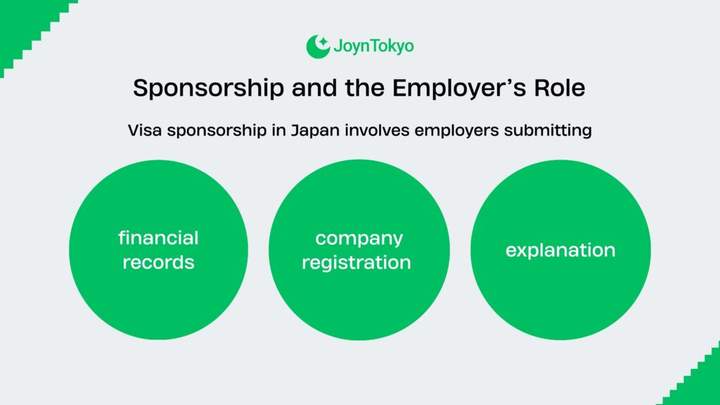
Visa sponsorship in Japan involves employers submitting financial records, company registration documents, and explanations showing why hiring a foreign worker is necessary.
This process can feel intimidating for smaller companies, which is why some avoid sponsorship even when interested in a candidate. It also explains why recruiters and large firms play such a central role in overseas hiring.
Once sponsored, your visa is tied to your employment conditions. Changing jobs is allowed, but immigration must be notified, and your new role must still fit your visa category.
Duration and Renewal of Work Visas
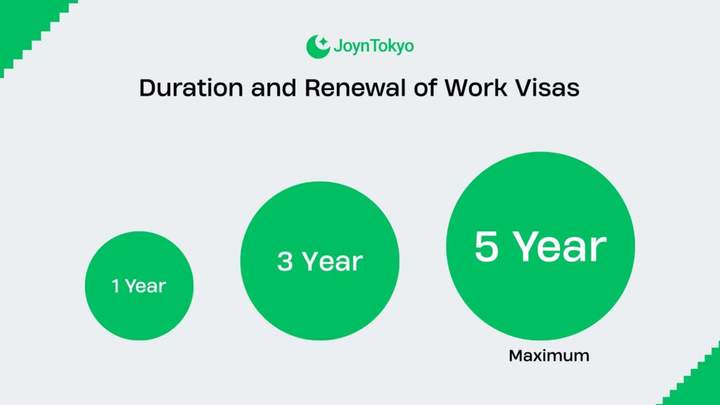
Initial work visas are commonly issued for one year, sometimes three, and occasionally five. Renewal depends on continued employment, stable income, and compliance with immigration rules.
If your job remains consistent, renewals are usually straightforward. Gaps in employment or major changes in role can complicate things and may require additional explanation.
Over time, some workers become eligible for longer visa periods or permanent residency, depending on income, profession, and points based criteria.
Setting Expectations Before You Start Job Hunting
Before applying for jobs, it helps to pause and confirm a few things.
- Your background matches a visa category.
- The roles you are targeting are sponsor eligible.
- Your long term plans align with that visa path.
Once those pieces are clear, the job search becomes more focused and far less frustrating.
Once you have found a job and visa, the next step is developing your career.
Related JoynTokyo reads

Ultimate Guide to Driving in Japan
A driver spent a week cruising Hokkaido and called it the most relaxing road trip of his life. Another took a mountain route from Kusatsu to Kanazawa and described it as “like being dialled into an F1 race car.” Both were experienced drivers. Both were in Japan. Both are right. Honestly, driving in Japan is

Cash vs Card in Japan: What Should You Use in 2026?
People who went to Japan five years ago will tell you cash is king. People who went last month will tell you they barely touched a note. Both are telling the truth, they just had different trips. The honest answer for 2026 is this: Japan has changed significantly. Most major establishments in cities now accept

Sheila Cliffe on The Kimono Closet and the Stories Kimono Hold
Sheila Cliffe is a longtime kimono researcher and the author of Kimono Style. In her new book, The Kimono Closet, she looks beyond kimono as fashion or art objects and instead explores their deeper place in family life, memory, and identity. She spoke with JoynTokyo to give us an exclusive look at the new book,