
Game Developer in Japan: Career Guide, Opportunities, and Industry Insights
Japan’s gaming industry stands as one of the most influential in the world, home to iconic companies like Nintendo, Sony Interactive Entertainment, and Capcom. Becoming a game developer in Japan offers unique opportunities to work on globally recognized franchises and cutting-edge gaming technology. What Does a Game Developer Do in Japan? The term “game developer”
Japan’s gaming industry stands as one of the most influential in the world, home to iconic companies like Nintendo, Sony Interactive Entertainment, and Capcom. Becoming a game developer in Japan offers unique opportunities to work on globally recognized franchises and cutting-edge gaming technology.
What Does a Game Developer Do in Japan?
The term “game developer” covers more territory than you might think. You could be:
- Writing the core engine code that makes a game run smoothly at 60fps
- Designing intricate level layouts that balance challenge with player satisfaction
- Creating character models and animations that bring virtual worlds to life
- Programming AI behaviors that make NPCs feel genuinely intelligent
- Optimizing network code for seamless online multiplayer experiences
The common thread? You’re collaborating with talented teams to build experiences that players around the world will remember for years. Japanese studios are particularly known for their obsessive attention to polish – that extra month spent fine-tuning how a character’s hair moves or perfecting the feel of a jump isn’t unusual here.
Major Game Development Hubs in Japan
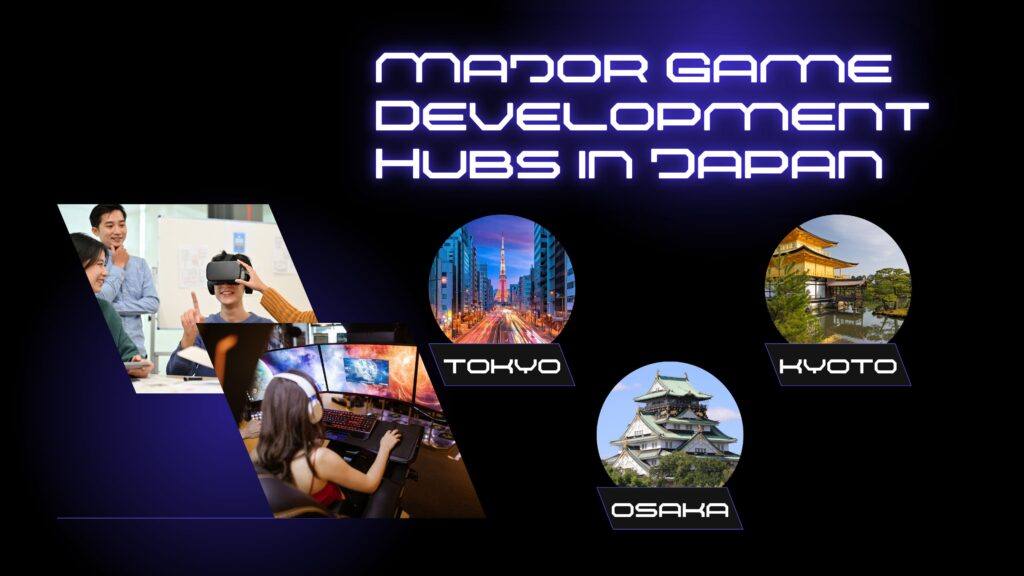
Tokyo dominates the landscape as you’d expect, packed with everything from massive publishers to scrappy indie teams working out of shared office spaces in Shibuya.
Kyoto and Osaka are also a major gaming hub. Nintendo’s Kyoto headquarters has been shaping gaming for over a century, while Osaka hosts major studios like Capcom and a thriving indie scene. The Kansai region offers a somewhat more relaxed pace compared to Tokyo’s intensity.
Emerging hubs like Fukuoka and Sapporo are worth watching, especially if you’re interested in mobile development. Lower living costs and growing tech scenes make these cities increasingly attractive to both studios and developers.
The Skills That Actually Matter
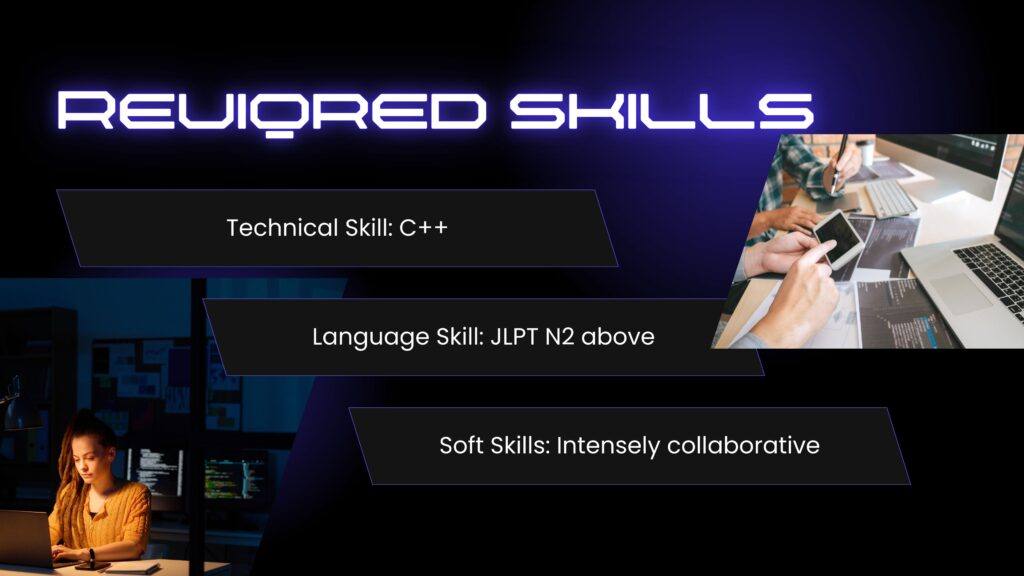
Let’s cut through the noise. Here’s what will get you hired:
Technical Must-Haves
C++ remains king for console development, while Unity and C# dominate mobile and indie spaces. Unreal Engine proficiency opens doors at studios working on high-fidelity titles. But here’s the thing – tools change. What hiring managers really want is evidence that you can learn new systems quickly and solve complex problems elegantly.
The Language Question
The Soft Skills Nobody Talks About
Japanese game development is intensely collaborative. The lone genius programmer stereotype doesn’t fly here. You need to communicate clearly, accept feedback gracefully, and contribute to team harmony. Cultural fit matters as much as technical chops.
Breaking Into the Industry: Three Realistic Paths
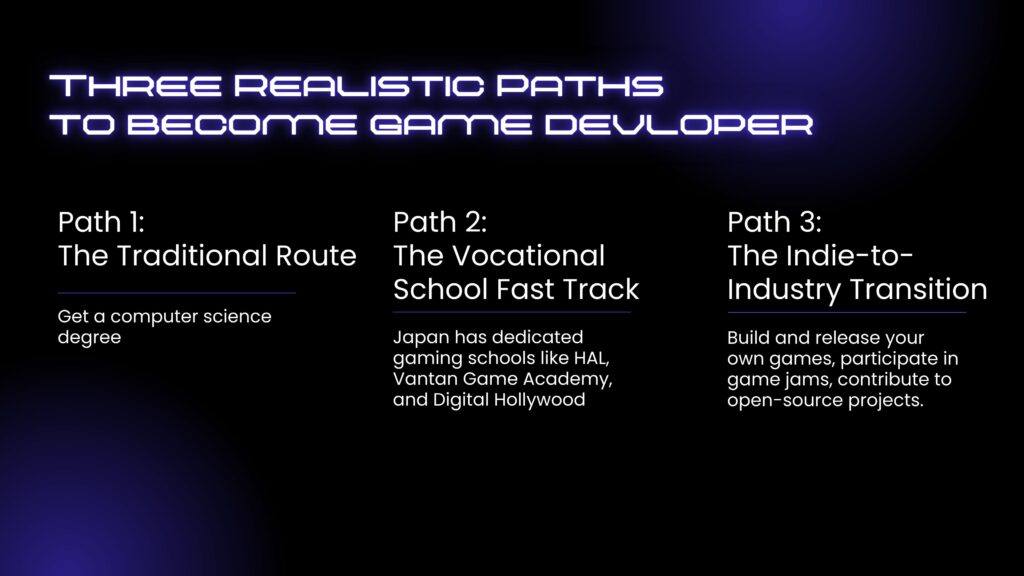
Path 1: The Traditional Route
Get a computer science degree, build an impressive portfolio, apply to entry-level positions at mid-size studios. This is slower but more stable. You’ll likely start with less glamorous work – UI programming, tools development, QA automation – before touching core gameplay systems.
Path 2: The Vocational School Fast Track
Japan has dedicated gaming schools like HAL, Vantan Game Academy, and Digital Hollywood. They’re expensive, but they deliver direct industry connections and portfolio-building opportunities. Many graduates land jobs through school recruitment events that aren’t advertised publicly.
Path 3: The Indie-to-Industry Transition
Build and release your own games, participate in game jams, contribute to open-source projects. A polished indie title that shows strong technical and design sense can open doors that a degree alone won’t. This path requires more self-direction but proves you can ship products.
Work Culture and Environment
Japanese game development studios typically follow standard Japanese business practices, including hierarchical structures and emphasis on teamwork. Work hours can be demanding, particularly during crunch periods before major releases, though labor reforms have improved conditions at many companies.
Foreign developers should prepare for cultural differences in workplace communication styles, decision-making processes, and the importance placed on harmony within teams. Understanding these cultural nuances helps with successful integration.
Salary Expectations
Keep in mind these are base salaries, it does not factor in bonuses Mobile game companies sometimes offer higher base salaries but with more volatile job security.
Visa Requirements for International Developers
Pro tip: some developers enter on student visas while attending Japanese language schools, which provides time to network and hunt for jobs while improving language skills.

Japanese Student Visa Requirements and Immigration Process
The Companies Everyone Wants to Work For (And Some You Should Consider Instead)
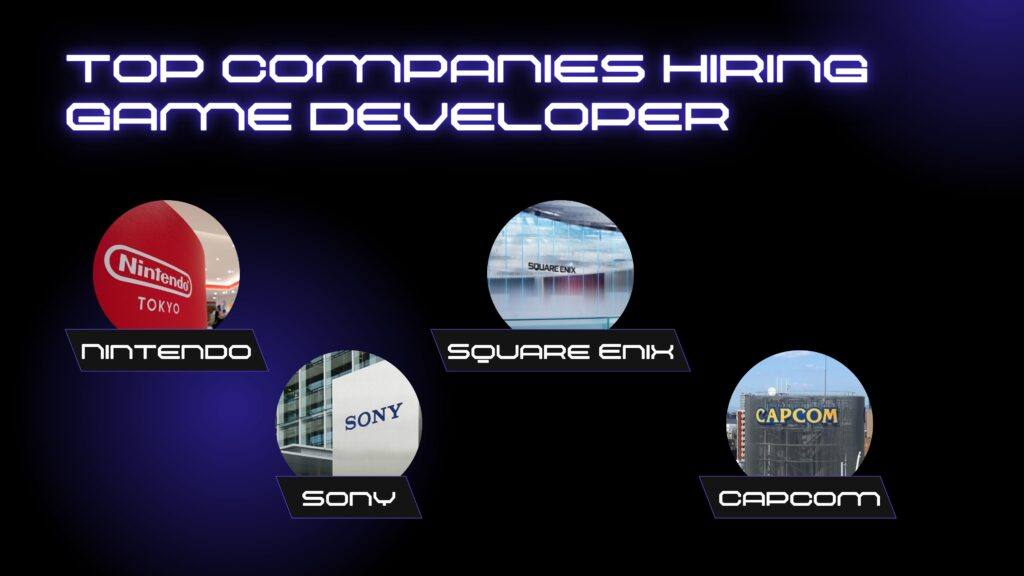
Sure, Nintendo, Sony, Square Enix, and Capcom are dream employers for good reason. These companies work on franchises with decades of history and budgets that ensure the resources to realize ambitious visions.
But don’t sleep on mobile giants like Cygames, which offers competitive salaries and cutting-edge technology. PlatinumGames gives developers extraordinary creative freedom for a studio of its size. FromSoftware has become synonymous with innovative game design following the Souls series’ success.
Smaller studios often provide faster advancement and more direct creative impact. You might touch more aspects of development and see your specific contributions more clearly in the final product.
Building Your Network – It Actually Matters
Game jams like Global Game Jam have active Japanese chapters. The barrier to entry is low, the learning is high, and you’ll meet people at all skill levels. Don’t underestimate local meetups either. Tokyo Indie Games, Sapporo Game Camp, and similar events connect you with the community.
Should You Pursue Game Development in Japan?
Here’s what this career demands: technical skill that you continuously update, willingness to learn a difficult language, adaptability to a different work culture, and genuine passion for games that survive.
What it offers in return: the chance to work on franchises that defined your childhood, collaboration with some of the industry’s most talented creators, job stability unusual in the tech world, and the satisfaction of building entertainment that resonates globally.
The romanticized version of game development – casually coding the next masterpiece while sipping coffee in Shibuya – isn’t reality. The actual version involves debugging obscure crashes, sitting through long meetings about menu UI, and sometimes questioning your career choices during the fifth straight weekend of crunch.
But if you’ve read this far and still feel excited rather than deterred? You might just have what it takes. The Japanese gaming industry needs talented developers who understand both the technical demands and cultural context. That could be you.
Related JoynTokyo reads

Ultimate Guide to Driving in Japan
A driver spent a week cruising Hokkaido and called it the most relaxing road trip of his life. Another took a mountain route from Kusatsu to Kanazawa and described it as “like being dialled into an F1 race car.” Both were experienced drivers. Both were in Japan. Both are right. Honestly, driving in Japan is

Cash vs Card in Japan: What Should You Use in 2026?
People who went to Japan five years ago will tell you cash is king. People who went last month will tell you they barely touched a note. Both are telling the truth, they just had different trips. The honest answer for 2026 is this: Japan has changed significantly. Most major establishments in cities now accept

Sheila Cliffe on The Kimono Closet and the Stories Kimono Hold
Sheila Cliffe is a longtime kimono researcher and the author of Kimono Style. In her new book, The Kimono Closet, she looks beyond kimono as fashion or art objects and instead explores their deeper place in family life, memory, and identity. She spoke with JoynTokyo to give us an exclusive look at the new book,