
How to Become an English Teacher in Japan
To become an English teacher in Japan, you need a bachelor’s degree in any field and native or near-native English proficiency. Most positions require no prior teaching experience or Japanese language skills, making it one of the most accessible ways for foreigners to live and work in Japan. Basic Requirements The minimum qualifications for teaching

To become an English teacher in Japan, you need a bachelor’s degree in any field and native or near-native English proficiency. Most positions require no prior teaching experience or Japanese language skills, making it one of the most accessible ways for foreigners to live and work in Japan.
Basic Requirements
The minimum qualifications for teaching English in Japan are:
- Bachelor’s degree from an accredited university (in any subject)
- Native or fluent English speaker from an English-speaking country
- Clean criminal background check
- Valid passport from an eligible country (typically USA, UK, Canada, Australia, New Zealand, Ireland, or South Africa)
Step-by-Step Process
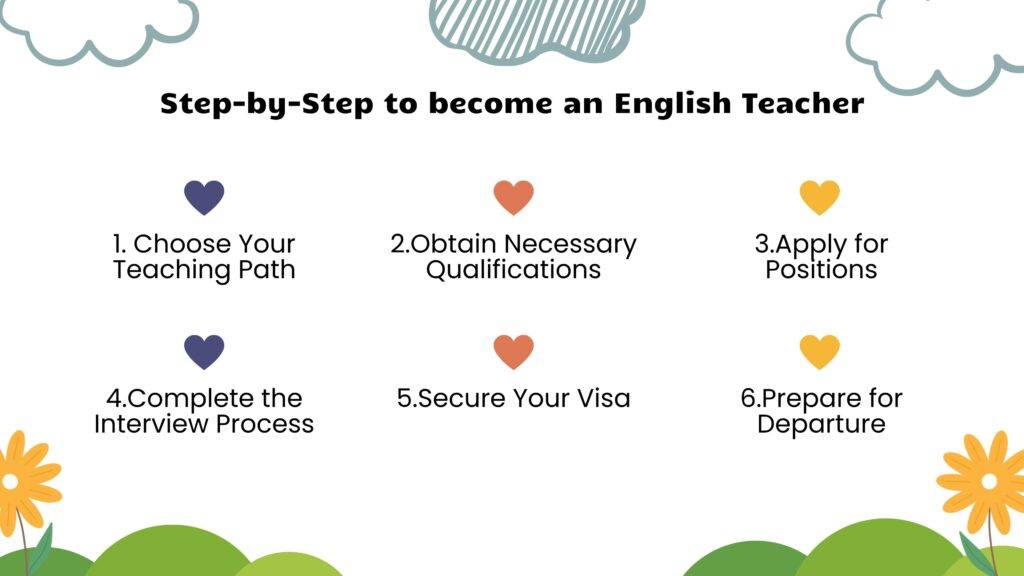
1. Choose Your Teaching Path
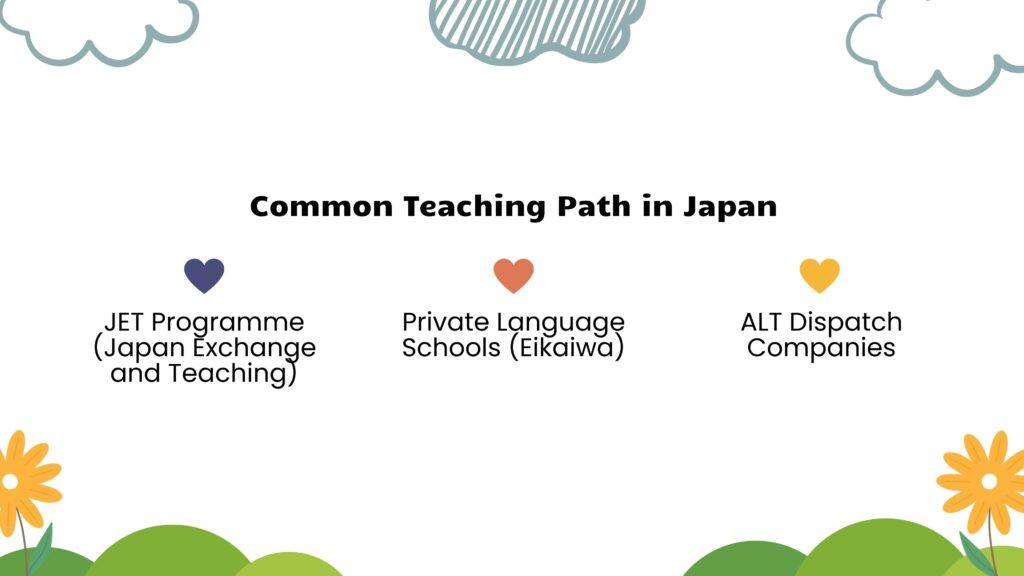
There are several routes to teaching English in Japan:
JET Programme (Japan Exchange and Teaching): A prestigious government-sponsored program that places teachers in public schools. Applications open once yearly (usually autumn) with positions starting in July/August. JET offers competitive salary (approximately ¥3.36 million annually), benefits, and strong support systems.
Private Language Schools (Eikaiwa): Companies like GABA, ECC, Berlitz, and AEON hire year-round. These positions typically involve teaching conversational English to students of all ages in private classrooms.
ALT Dispatch Companies: Organizations like Interac and Altia Central hire Assistant Language Teachers to work in public schools. These offer more flexibility than JET with multiple hiring periods throughout the year.
International Schools: Require teaching credentials and experience but offer higher salaries and Western-style work environments.
Private Tutoring: Possible once you’re in Japan, though difficult to secure a visa through this route alone.
2. Obtain Necessary Qualifications
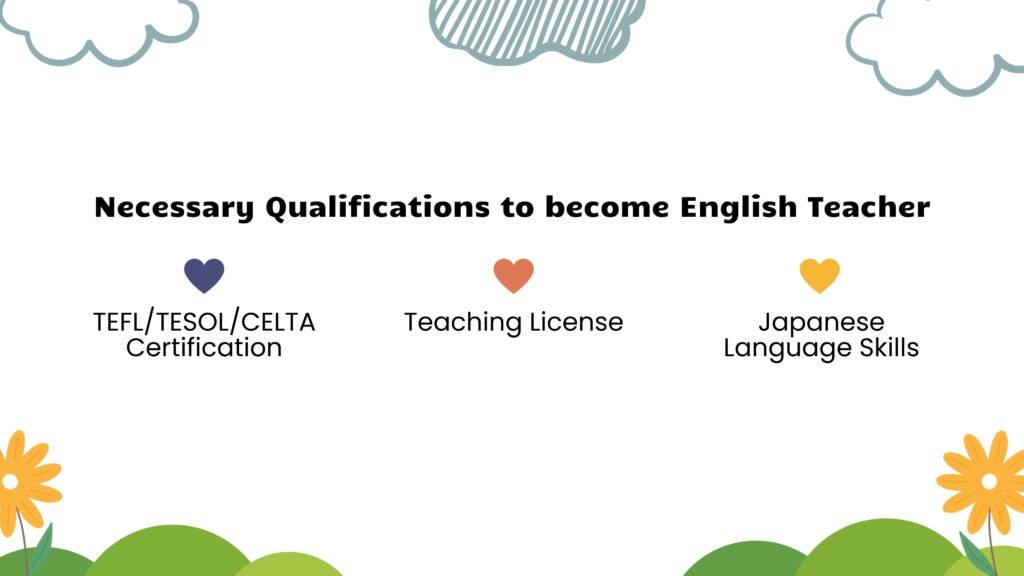
While a bachelor’s degree is mandatory, additional qualifications strengthen your application:
TEFL/TESOL/CELTA Certification: Not required for most positions but highly recommended. A 120-hour certification course costs $200-$1,500 and significantly improves job prospects and teaching ability.
Teaching License: Required for international schools and some university positions. Not necessary for most entry-level positions.
Japanese Language Skills: Optional for most English teaching jobs, though even basic Japanese (JLPT N5-N4 level) helps with daily life and can make you a more competitive candidate.
3. Apply for Positions
Timeline: Start applying 3-6 months before your desired start date. JET Programme requires applications 8-10 months in advance.
Application Materials:
- Updated resume/CV
- Cover letter expressing motivation for teaching in Japan
- Copies of your degree certificate
- Professional reference letters (2-3)
- Passport copy
- Recent photograph
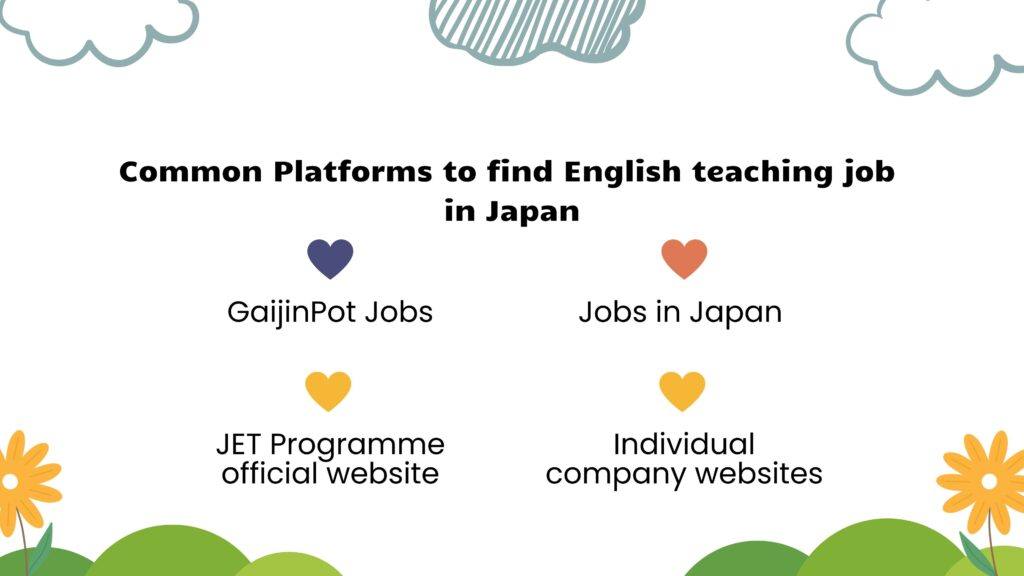
Where to Apply:
- GaijinPot Jobs (gaijinpot.com)
- Jobs in Japan (jobsinjapan.com)
- JET Programme official website (jetprogramme.org)
- Individual company websites (direct applications often preferred)
4. Complete the Interview Process
Most companies conduct video interviews for international candidates. Prepare for:
- Self-introduction and motivation questions
- Mock teaching demonstrations (usually 5-10 minutes)
- Questions about handling classroom challenges
- Availability and contract length discussions
Research common teaching scenarios and practice explaining grammar points simply.
5. Secure Your Visa
Once you receive a job offer, your employer will sponsor your work visa. You’ll need:
- Certificate of Eligibility (CoE) – Your employer applies for this in Japan
- Valid passport
- Visa application form
- Passport photo
- Supporting documents from your employer
The process typically takes 1-3 months. You cannot legally work in Japan without the proper visa.
Work in Japan: The Complete Guide for Foreigners in 2026
6. Prepare for Departure
Financial Preparation: Save $3,000-$5,000 for initial expenses. While most jobs provide housing support, you’ll need money for deposits (often 3-4 months’ rent), settling-in costs, and living expenses until your first paycheck.
What to Bring:
- Professional work clothing (business casual minimum)
- Teaching materials and resources
- Any prescription medications (with prescription)
- International driver’s license if planning to drive
Salary and Benefits Expectations
Entry-level English teachers in Japan typically earn:
- Monthly salary: ¥200,000-¥300,000 ($1,500-$2,200 USD)
- Annual salary: ¥2.4-¥3.6 million
- JET Programme: ¥3.36 million starting salary
Benefits often include:
- Subsidized or free housing
- Flight reimbursement (often after contract completion)
- Health insurance and pension enrollment
- Paid holidays (10-20 days annually)
- Contract completion bonuses
For comprehensive info about average salaries, top earning careers in Japan, and more!
Contract Lengths
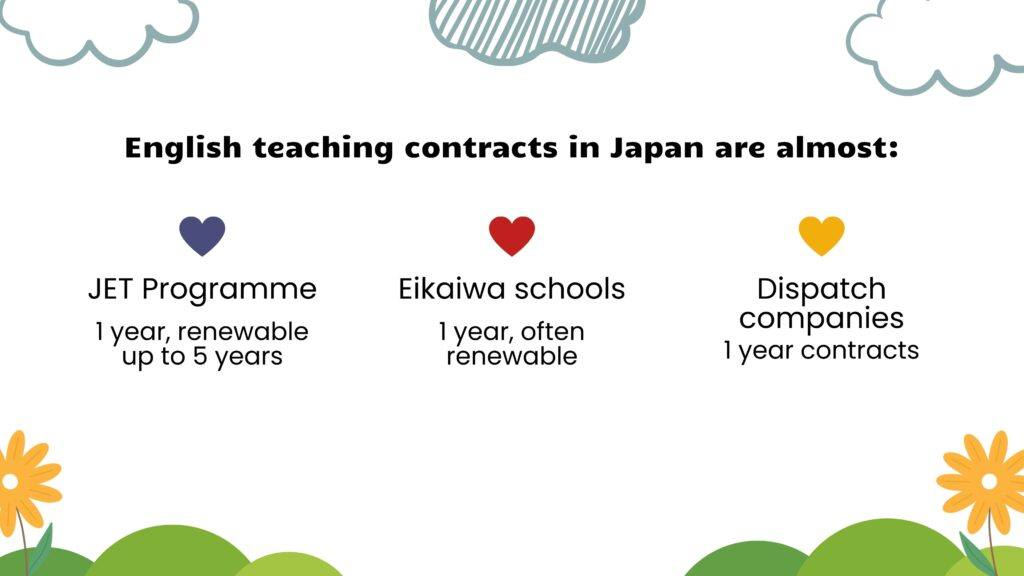
Most positions offer one-year contracts with renewal options:
- JET Programme: 1 year, renewable up to 5 years
- Eikaiwa schools: 1 year, often renewable
- Dispatch companies: 1 year contracts
Alternative Paths
If you don’t meet the bachelor’s degree requirement, consider:
- Completing your degree online while working toward this goal
- Teaching English online to gain experience
- Pursuing student visas to study Japanese while building qualifications
For those with teaching licenses or master’s degrees in education or TESOL, university positions offer higher salaries (¥3-6 million annually) and better working conditions.
Next Steps
- Assess your qualifications against the basic requirements
- Choose your preferred teaching path (JET, eikaiwa, or dispatch company)
- Obtain a TEFL certification if you have time
- Prepare your application materials
- Begin applying to positions 3-6 months before your target start date
- Stay active in online communities like Reddit’s r/teachinginjapan for current information and support
Teaching English in Japan offers an incredible opportunity to experience Japanese culture, develop professional skills, and build international connections. With proper preparation and realistic expectations, you can successfully navigate the application process and begin your teaching journey in Japan.
Related JoynTokyo reads

Ultimate Guide to Driving in Japan
A driver spent a week cruising Hokkaido and called it the most relaxing road trip of his life. Another took a mountain route from Kusatsu to Kanazawa and described it as “like being dialled into an F1 race car.” Both were experienced drivers. Both were in Japan. Both are right. Honestly, driving in Japan is

Cash vs Card in Japan: What Should You Use in 2026?
People who went to Japan five years ago will tell you cash is king. People who went last month will tell you they barely touched a note. Both are telling the truth, they just had different trips. The honest answer for 2026 is this: Japan has changed significantly. Most major establishments in cities now accept

Sheila Cliffe on The Kimono Closet and the Stories Kimono Hold
Sheila Cliffe is a longtime kimono researcher and the author of Kimono Style. In her new book, The Kimono Closet, she looks beyond kimono as fashion or art objects and instead explores their deeper place in family life, memory, and identity. She spoke with JoynTokyo to give us an exclusive look at the new book,