
Japanese Student Visa Requirements and Immigration Process
Once you receive an acceptance or conditional offer, the focus shifts away from schools and toward immigration. This stage feels intimidating at first, but the Japan student visa process is actually very structured. When you understand who does what and in what order, it becomes a checklist rather than a mystery. Student Visa Process for
Once you receive an acceptance or conditional offer, the focus shifts away from schools and toward immigration. This stage feels intimidating at first, but the Japan student visa process is actually very structured. When you understand who does what and in what order, it becomes a checklist rather than a mystery.
Student Visa Process for Studying in Japan
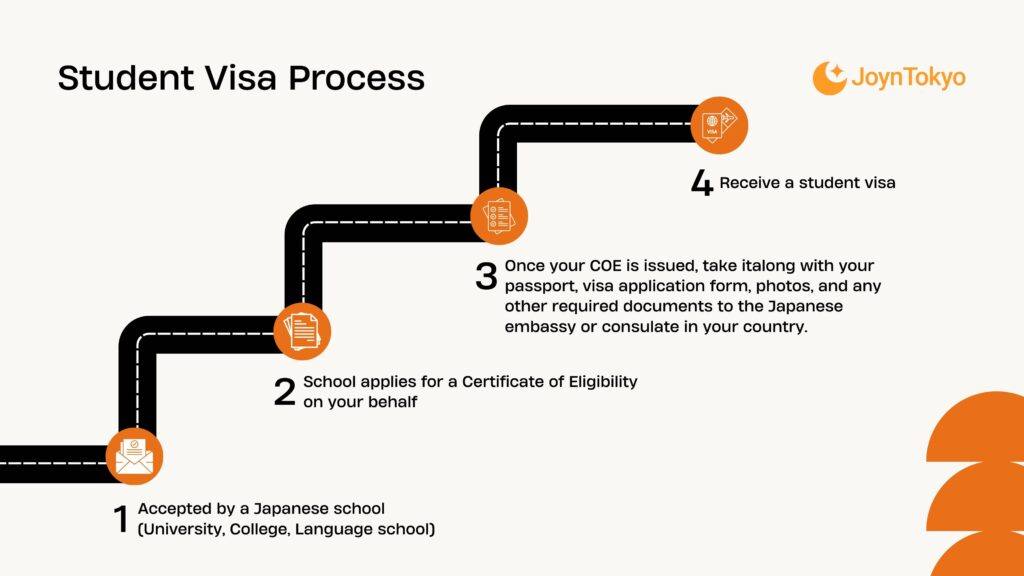
Japan uses a two step system for student visas. First, immigration inside Japan reviews your eligibility. Then your local embassy or consulate issues the visa. Schools play a central role in this process, which is why timing and complete documents matter so much.
In most cases, you cannot apply for a student visa on your own without school involvement. Your school acts as your sponsor and handles the initial immigration submission.
Certificate of Eligibility Explained
The Certificate of Eligibility, often called the COE, is the most important document in the entire process. It is issued by Japanese immigration and confirms that you meet the requirements to stay in Japan as a student.
After you accept an offer, your school submits the COE application on your behalf. This includes your personal details, study plan, and financial information. Immigration reviews whether your purpose of stay is clear, realistic, and properly funded.
This review period takes time and patience. During this stage, immigration may request additional documents or clarification. Once approved, the COE is sent to you so you can move to the final visa step.
Required Documents for a Japanese Student Visa
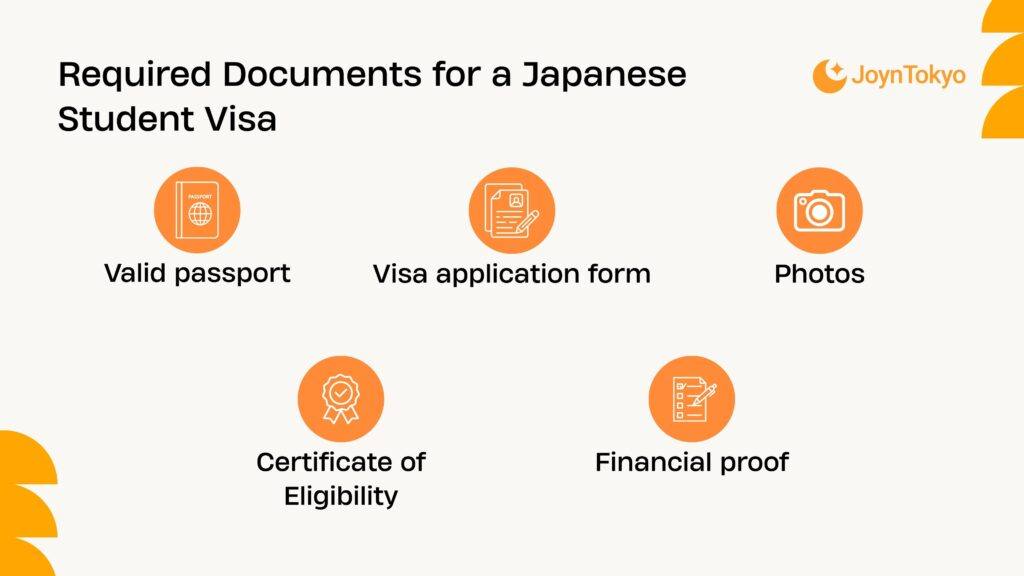
Exact requirements vary slightly by country, but most students need a valid passport, visa application form, and the issued Certificate of Eligibility. Passport sized photos are usually required.
Financial proof is a key part of the process. This may include bank statements, sponsor letters, or income documentation showing you can cover tuition and living costs. Some embassies also ask for proof of enrolment or a letter from the school.
It is important that all documents are accurate and consistent. Even small discrepancies can slow things down.
Financial Requirements and Sponsorship
Japan does not publish a single fixed amount for student funding, but immigration expects to see realistic coverage of tuition and living expenses. Funds can come from personal savings, family sponsors, or scholarships.
If someone else sponsors you, you will usually need a relationship explanation and proof of their income. Clear documentation here makes the rest of the process much smoother.
Working on a Student Visa
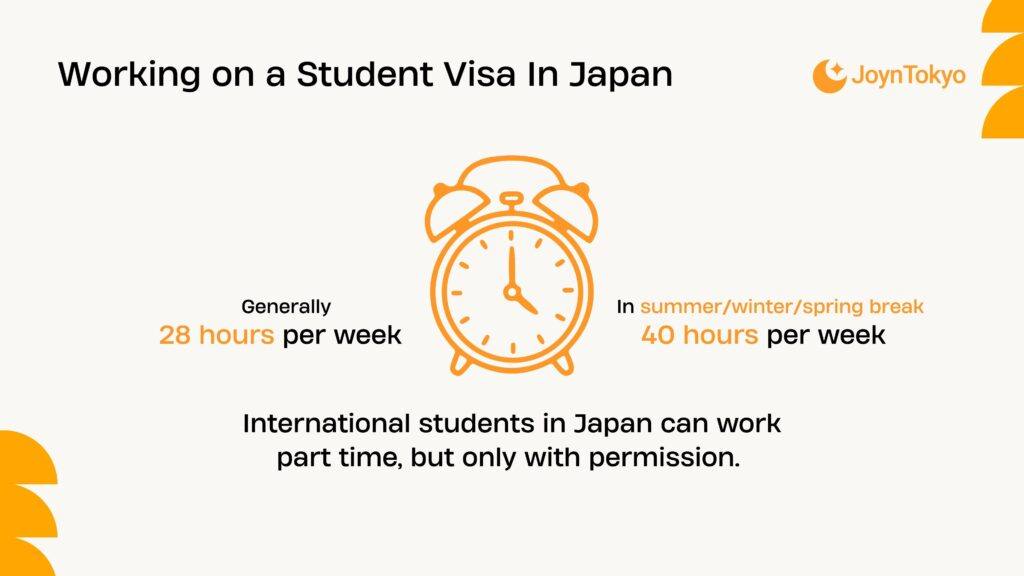
International students in Japan can work part time, but only with permission. After arriving, students apply for a work permit that allows up to a set number of hours per week during term time.
This permission is separate from the visa itself and is usually granted without difficulty. However, exceeding allowed hours or working in restricted industries can cause serious problems. Following the rules protects your visa status and future options.
Visa Validity, Renewal, and Compliance
Student visas are issued for a fixed period based on your program length. If your studies continue beyond that period, you must apply for a renewal before expiration.
Maintaining visa status means attending classes, making academic progress, and following work restrictions. Schools are required to report certain attendance issues to immigration, so consistency matters.
As long as you stay enrolled and compliant, renewals are usually straightforward.
Whats Next
With your visa approved, attention shifts to practical preparation. The next guide covers costs, tuition, and financial planning, including realistic monthly budgets, living expenses by city, and how to manage money once you arrive in Japan.
Related JoynTokyo reads

Ultimate Guide to Driving in Japan
A driver spent a week cruising Hokkaido and called it the most relaxing road trip of his life. Another took a mountain route from Kusatsu to Kanazawa and described it as “like being dialled into an F1 race car.” Both were experienced drivers. Both were in Japan. Both are right. Honestly, driving in Japan is

Cash vs Card in Japan: What Should You Use in 2026?
People who went to Japan five years ago will tell you cash is king. People who went last month will tell you they barely touched a note. Both are telling the truth, they just had different trips. The honest answer for 2026 is this: Japan has changed significantly. Most major establishments in cities now accept

Sheila Cliffe on The Kimono Closet and the Stories Kimono Hold
Sheila Cliffe is a longtime kimono researcher and the author of Kimono Style. In her new book, The Kimono Closet, she looks beyond kimono as fashion or art objects and instead explores their deeper place in family life, memory, and identity. She spoke with JoynTokyo to give us an exclusive look at the new book,