


Money is often the deciding factor when it comes to studying in Japan. Not because it is always expensive, but because the costs are unfamiliar and spread across different categories. Once you understand what you are actually paying for and when, budgeting becomes far less intimidating and much more realistic.
Cost of Studying in Japan for International Students
The total cost of studying in Japan depends on your school type, location, and lifestyle. Universities, language schools, and vocational schools all have different fee structures, and living costs vary widely by city.
Instead of thinking in one big number, it helps to break expenses into tuition, upfront fees, and monthly living costs. This approach makes planning clearer and prevents unpleasant surprises later.
Tuition Fees by School Type
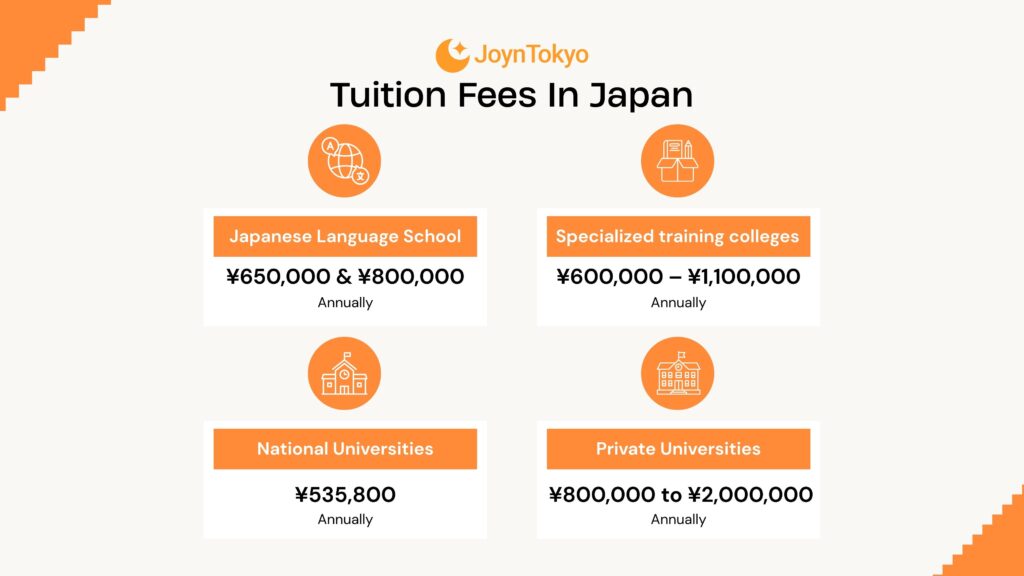
Tuition is usually the largest fixed cost, but it is also the most predictable.
Universities in Japan often charge an admission fee in the first year, followed by annual tuition. Public universities tend to be more affordable, while private universities cost more but may offer better support services or program flexibility.
Typical ranges include:
- Public Universities: ¥535,800
- Private Universities: ¥800,000 – ¥2,000,000
Language schools usually charge tuition in blocks, such as six months or one year, paid upfront. The cost depends on course length and intensity, and long term programs require proof that you can pay for the full period.
Typical range for a language school:
- ¥600,000 to ¥800,000
Vocational schools fall somewhere in between. Tuition is higher than most public universities but is tied closely to practical training and facilities. Some programs also include material or equipment fees.
Typical range for a vocational school:
- ¥650,000 to ¥1,100,000
Turn Your Education Plans into a Real Path to Study in Japan!
Our consultants can guide you through school options, applications, and visas so you can focus on preparing for life and learning abroad.
Book Your FREE Consultation✓ 500+ Bookings as of 2026-08-06 ✓ English-speaking support
Living Costs and Monthly Expenses
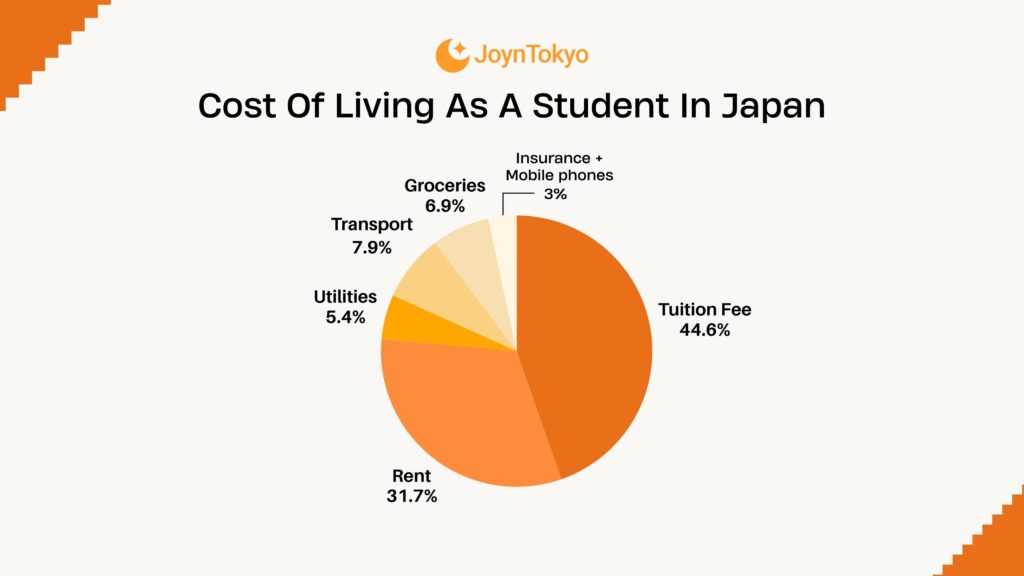
Tokyo is the most expensive option, especially for rent, but it also offers more part time work opportunities. While possible to live on minimum wage in Tokyo, it will be highly unlikely to do so under the student visa. Regional cities often cost less and provide a quieter student lifestyle, which some students prefer.
Monthly expenses typically include rent, utilities, food, transportation, phone plans, and health insurance. Students who cook regularly and live in shared housing can keep costs manageable. Lifestyle choices matter just as much as location.
Real Monthly Expenses From a Student Experience
The figures below are based on real monthly expenses from a member of our team during their time studying in Japan. Rather than estimates or ideal budgets, these figures reflect what was actually spent on everyday living, including housing, food, transportation, and personal costs.
Because these numbers come from lived experience, they show how costs add up in practice, not just on paper. Individual spending will always vary, but this example offers a grounded reference point that helps turn abstract budgeting into something more concrete and relatable.
Rent – ¥60,000
Shared housing or student dormitories sit at the lower end, while private apartments cost more. If you’re looking for budget private apartments, look for available Leo Palace apartments. They offer affordable housing and come pre furnished.
Utilities – approx. ¥6,000
Includes electricity, water, and gas. Seasonal heating or cooling can push this higher.
Food and Groceries – approx. ¥40,000 (for 2 people)
Cooking at home can help you keep this cost down, although Japan has various affordable options, eating out often can dramatically increase this amount.
Transportation – approx. ¥23,000 (student travel pass for 6 months to Shibuya Station)
Once you pay for a student travel pass or a commuter pass, you can travel from two stations for free during the span of your pass. Time spans available for purchase are for 1 month, 3 months, or 6 months. Typically, your savings increase for longer time spans.
Mobile Phone – ¥3,500
Budget carriers are common among students and widely available. A useful thing to check is whether you can get internet access during your commute on the train, especially if your daily commute is long.
Health Insurance – approx. ¥1,500 monthly
National Health Insurance is mandatory and heavily subsidized for students.
Scholarships and Financial Support
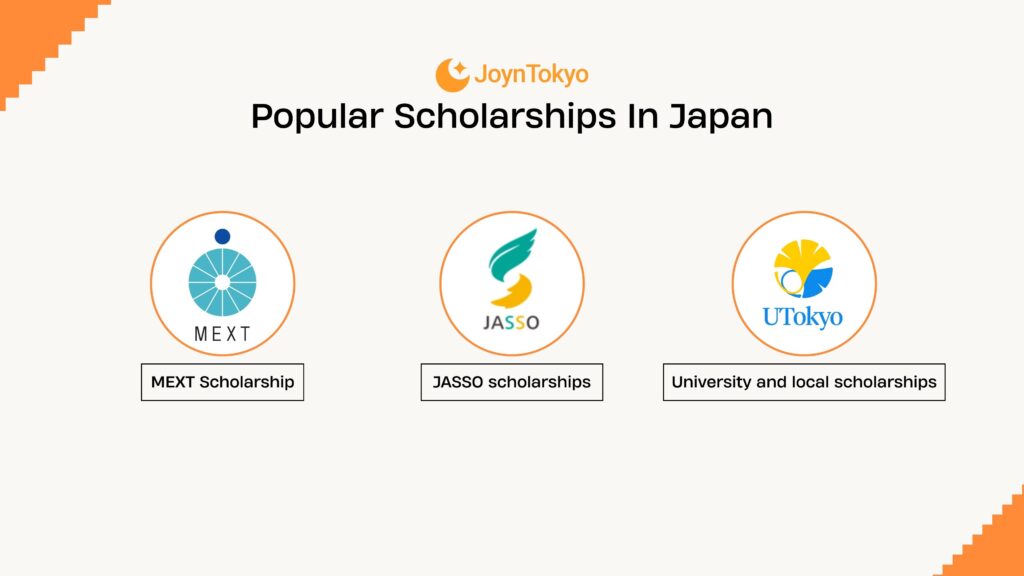
Japan offers a range of scholarships for international students, but competition is real and timing matters.
Some scholarships are applied for before arrival, while others are available only after enrolment. Government funded options like MEXT are well known, and is designed to cover the major costs that usually make studying abroad stressful. If you are selected, it typically includes your tuition fees and provides a monthly stipend that helps with day to day living expenses. In many cases, it also covers travel to Japan and a return flight at the end of the scholarship period, which can remove a huge upfront burden.
Universities, foundations, and local governments also offer smaller grants. These rarely cover everything so they are best treated as support, not a full replacement for personal funds.
Part Time Work and Income Expectations
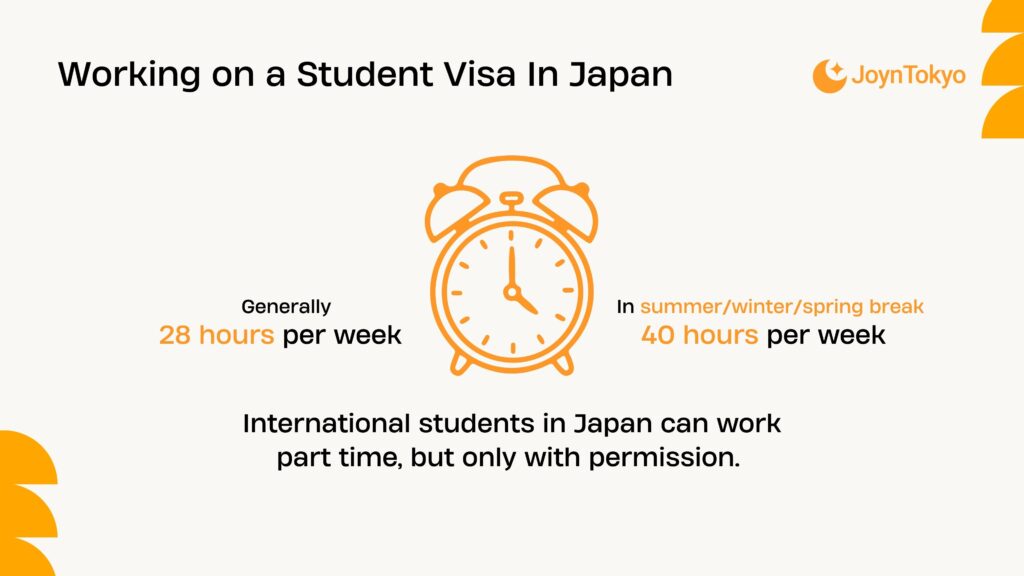
International students are allowed to work part time with permission, for up to 28 hours weekly and 40 hours weekly during breaks. Earnings should be seen as supplemental, not primary funding.
Most students work in retail, restaurants, convenience stores, or campus jobs. Wages vary by location and role, but part time work can help cover daily expenses like food and transportation. If improving your conversational Japanese is your goal, then we recommend finding a job with Japanese co-workers or an environment with opportunities to interact with Japanese people. One of our colleagues was able to learn much faster and become proficient in conversational Japanese by working in a cafe as a waiter.
Relying on work income to pay tuition is risky and often unrealistic, as typical amounts from part time work will be around ¥130,000 (more details below). The expectations is that students need to be financially stable without depending on part time employment.
Building a Realistic Budget
A realistic budget is less about discipline and more about knowing yourself. Start by covering the expenses you cannot avoid, things like rent, food, transport, and insurance. Once those are locked in, everything else becomes flexible rather than stressful.
Leaving a little breathing room matters more than hitting a perfect number. Unexpected costs always show up, a school event, a medical visit, a spontaneous dinner plans or events with friends. Students who plan with that in mind usually settle in faster and feel more at ease once daily life in Japan begins.
Sample Monthly Budget
Estimated Monthly Expenses (Using figures above)
| Expense Category | What It Covers | Estimated Cost |
|---|---|---|
| Essential Expenses | Housing, utilities, food, transportation, mobile phone, health insurance | ~ ¥115,000 |
| Entertainment and Personal Spending | Eating out, social activities, travel, hobbies, shopping, nightlife | ¥10,000+ |
| Total Estimated Monthly Budget | Essentials plus discretionary spending | ¥115,000+ |
Part Time Work Income Example (Student Visa Limit)
| Income Detail | Breakdown | Estimated Amount |
|---|---|---|
| Weekly Work Hours | 5 hours per day, 5 days per week | 25 hours |
| Hourly Wage | 2025 national minimum wage | ¥1,226 |
| Weekly Income | 25 hours × ¥1,226 | ~ ¥30,650 |
| Estimated Monthly Income | Weekly income × 4.3 weeks | ~ ¥130,000 |
As you can see it is possible for part time work to cover daily living expenses such as food, transportation, and personal spending, but since it is quite a tight budget, it should be treated as supplemental income. Immigration expects tuition and core living costs to be covered independently, with part time work acting as support rather than the foundation of your budget.
Whats Next
With finances planned and expectations set, the final step is preparing for daily life. The next article covers life in Japan as an international student.
Read More