


Life in Japan as an international student is equal parts structure and surprise. Some days feel carefully organized down to the minute, others unfold in ways you did not expect at all. Between language learning, part time work, social etiquette, and long term career planning, the experience shapes more than just your resume. It changes how you think, how you communicate, and how you see your future.
Daily Life as an International Student in Japan
Student life in Japan is built around routine. Classes are often punctual and formal, attendance matters, and classroom expectations can vary by school. Campus life can feel surprisingly relaxed once classes end. Clubs, circles, and casual meetups create space to socialize, practice Japanese, and form friendships that extend well beyond the classroom.
Housing is usually compact but efficient. Many international students live in dormitories, share houses, or small studio apartments where every item has a purpose. Convenience stores quickly become part of daily life, not just for food, but for paying bills, printing documents, or grabbing a quick meal between classes.
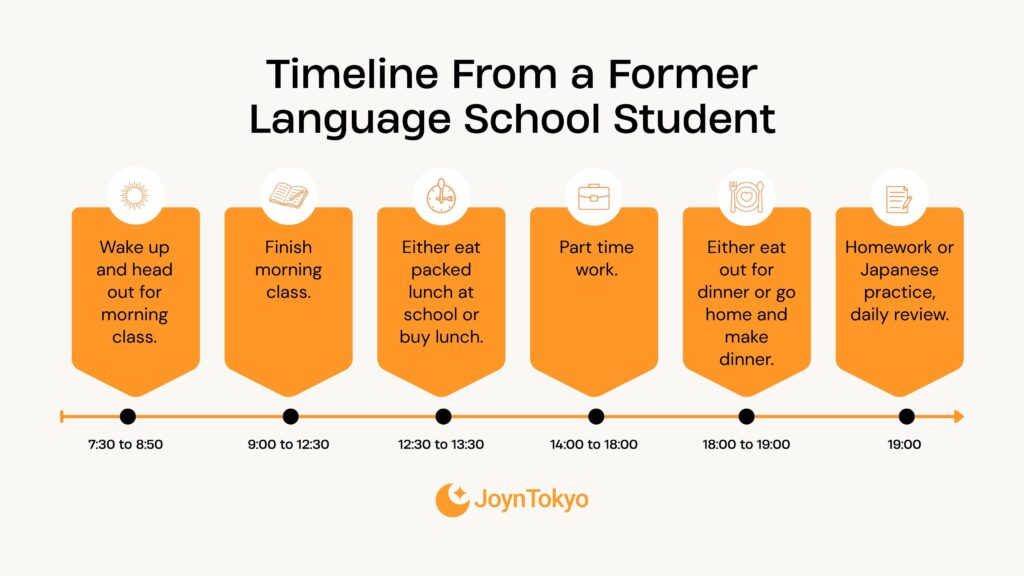
Daily Schedule From a Former Language School Student
7:30 to 8:50 – Wake up and head out for morning class.
9:00 to 12:30 – Finish morning class.
12:30 to 13:30 – Either eat packed lunch at school or buy lunch.
14:00 to 18:00 – Part time work.
18:00 to 19:00 – Either eat out for dinner or go home and make dinner.
19:00 – Homework or Japanese practice, daily review can make a large difference.
If you’re wondering what to eat as a student in Japan, check out this guide for common Japanese cuisines.
Language Learning Beyond the Classroom
Japanese language study rarely stops when class ends. Even students enrolled in English taught programs quickly realize that daily life requires functional Japanese. Ordering food, filling out paperwork, or talking to a landlord becomes its own kind of lesson.
Mistakes are common and usually met with patience. Over time, confidence grows through repetition rather than perfection. Many students notice that their listening skills improve first, followed by speaking in short, practical phrases. Fluency comes slowly, but progress feels real when simple interactions stop feeling stressful and start feeling normal.
Turn Your Education Plans into a Real Path to Study in Japan!
Our consultants can guide you through school options, applications, and visas so you can focus on preparing for life and learning abroad.
Book Your FREE Consultation✓ 500+ Bookings as of 2026-08-06 ✓ English-speaking support
Working Part Time as a Student
Most international students take on part time jobs to support living expenses and gain local experience. Popular options include convenience stores, restaurants, language tutoring, or campus roles. These jobs are not just about income. They offer daily exposure to spoken Japanese, workplace etiquette, and customer expectations.
Work culture can feel strict at first. Politeness, consistency, and attention to detail are valued highly. Over time, students often find that these habits carry over into their studies and personal lives. Even a few shifts a week can make a noticeable difference in language ability and cultural understanding.
Career Pathways After Graduation
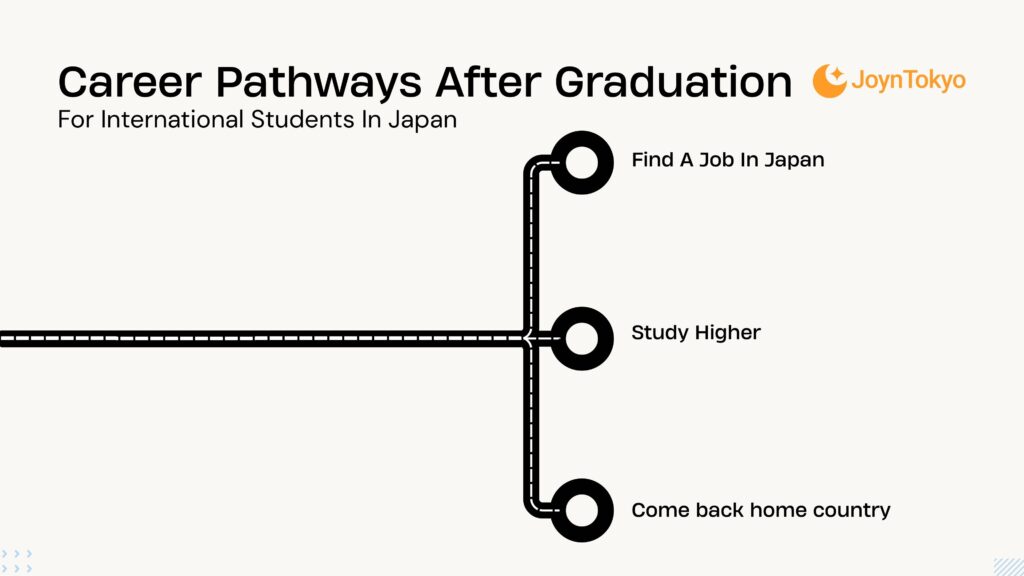
Career planning often begins earlier in Japan than many students expect. Job hunting follows a structured timeline, especially for those aiming to work at Japanese companies. Company seminars, entry sheets, and multiple interview stages are common, and preparation can take months.
For students fluent in Japanese, opportunities open up across industries such as technology, manufacturing, consulting, and marketing. Others find paths in international firms, startups, or global roles that value cross cultural experience over native level language ability. Some graduates choose to continue into graduate school, while others return home with skills that translate well internationally.
Building a Long Term Career in Japan
Staying in Japan long term requires more than academic success. Visa status, language proficiency, and workplace adaptability all play a role. Many graduates begin on work visas tied to specific employers, then gradually expand their options as experience grows.
Those who thrive tend to balance flexibility with persistence. Careers may not follow a straight line, and early roles may not match long term goals exactly. But living and working in Japan builds resilience, attention to detail, and cultural awareness that remain valuable no matter where life leads next.
For international students, Japan can be a study destination and a training ground for adulthood, independence, and global careers. The lessons learned often stay long after graduation, shaping both professional paths and personal perspectives.