


A driver spent a week cruising Hokkaido and called it the most relaxing road trip of his life. Another took a mountain route from Kusatsu to Kanazawa and described it as “like being dialled into an F1 race car.” Both were experienced drivers. Both were in Japan. Both are right.
Honestly, driving in Japan is not universally easy or universally hard. It is context-dependent in a way that most blog posts, the kind that breezily assure you it is “a piece of cake” fail to acknowledge. Highway driving through Hokkaido is genuinely relaxing. A narrow mountain road at dusk, shared with local drivers who know every curve and are not slowing down for you, is something else entirely.
This guide tells you what driving in Japan is actually like: the good, the genuinely demanding, and everything you need to know to make an informed decision about whether to rent a car, and how to do it safely if you do.
Is Driving in Japan Easy or Stressful for Foreigners?
The answer is: both, depending on where you are and what you are used to.
Why Many Blogs Say It’s Easy
They are not wrong, they are just incomplete. Japan’s road infrastructure is excellent. Roads are well-maintained, signage is generally clear on major routes, traffic is disciplined, and Japanese drivers are notably more courteous than drivers in many comparable countries. On highways and in smaller regional cities, driving in Japan is genuinely pleasant. Multiple experienced drivers who have driven across the US, Europe, and Southeast Asia consistently rate Japanese highway driving as one of the easier international experiences.
Drivers from Australia, the UK, or other left-hand traffic countries have an even smoother transition. The road positioning feels natural from the start.
Why Real Experiences Can Feel More Stressful
Here is what the “piece of cake” posts tend to skip:
- Rural and mountain roads in Japan are significantly narrower than roads of equivalent speed limits in North America or Western Europe
- Japanese drivers on mountain routes often drive fast and confidently, because they know the roads. You do not.
- Road signs frequently carry Japanese-only subtext that changes the meaning of otherwise familiar pictograms
- Construction zones use portable traffic signals that look nothing like the full-size versions foreigners are accustomed to
- GPS applications including Google Maps have documented reliability issues in rural areas, with incorrect speed limits and inaccurate ETAs
One New York City driver, experienced with European mountain roads, Italian village lanes, and UK left-hand driving, found the Kusatsu-to-Kanazawa route more demanding than anything he had driven before. He also said he would do it again. Both things are true.
The Key Difference Between “Safe” and “Mentally Demanding”
Japan’s roads are safe by global standards. They are also, in specific contexts, mentally demanding in a way that safety does not quite capture. The discipline of Japanese traffic, the precision required on narrow roads, the constant micro-adjustments, and the unfamiliar signage conventions all add cognitive load that accumulates over hours. Experienced drivers handle this well. Less experienced drivers, or drivers who have underestimated the challenge, find it exhausting.
The preparation gap is the real problem. Go in knowing what you are facing, and Japan is a fantastic country to drive in. Go in expecting a European motorway experience and you will be caught off guard.
What Do You Need to Drive in Japan Legally?
Getting the paperwork right before you arrive is non-negotiable. Japan’s enforcement of driving documentation is serious, and driving without the correct documentation is a genuine legal risk.
International Driving Permit (IDP) Requirements
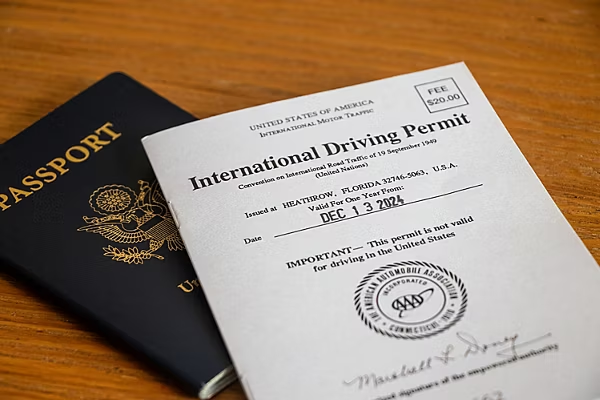
For most foreign visitors, an International Driving Permit based on the 1949 Geneva Convention is the correct document. Japan does not accept IDPs issued under the 1968 Vienna Convention, a detail that catches some European drivers off guard.
| Requirement | Detail |
| IDP convention | 1949 Geneva Convention only |
| Must carry | Original license alongside IDP at all times |
| Validity in Japan | Up to 1 year from date of entry |
| Where to obtain | In your home country before departure |
| Countries needing translation instead | Switzerland, Germany, France, Belgium, Monaco, Slovenia, Taiwan |
Drivers from the countries listed above cannot use a standard IDP in Japan. They must obtain an official Japanese translation of their foreign license from the Japan Automobile Federation (JAF) or their country’s embassy in Japan.
License Conversion (Gaimenkirikae, 外免切替) Explained
If you are living in Japan long-term, not visiting – an IDP is a temporary solution, not a permanent one. The correct path for residents is converting your foreign license to a Japanese driving license (gaimenkirikae).
The process:
- Confirm your country is on Japan’s approved list at your local Driver’s License Centre (Unten Menkyo Centre)
- Provide proof that you held the foreign license and lived in the issuing country for at least three months
- Submit an official Japanese translation of your license
- Complete a written knowledge test (some nationalities) and/or a practical driving test (most nationalities)
- Pay the applicable fees
The difficulty of the practical test varies significantly by nationality. Drivers from countries with bilateral recognition agreements (Australia, Canada, some EU countries) typically face a simpler process. Drivers from the US, for example, face a more demanding practical examination that has a significant failure rate on the first attempt. Budget time accordingly.
The “3-Month Rule” and Long-Term Residents
This is the rule that most surprises people planning to stay in Japan beyond a short trip. Once you are registered as a resident in Japan, your IDP is only valid for three months from the date you registered your address, not one year from entry. After that point, driving on an IDP is illegal regardless of when you arrived.
The key trap: briefly leaving Japan and re-entering does not reset the three-month clock. Japanese authorities are explicit on this. If you are registered as a resident and your three months have elapsed, you need a Japanese license. There is no workaround.
What Are the Basic Driving Rules in Japan?
Japan’s road rules are clear, enforced, and in several respects stricter than what foreigners from North America or Europe are used to.
Left-Side Driving and Right-Hand Steering
Japan drives on the left side of the road. The steering wheel is on the right side of the car. For drivers from the UK, Australia, New Zealand, and similar countries, this is immediately familiar. For drivers from North America, continental Europe, or most of Asia, this is the first adjustment.
The good news: most people adapt within the first twenty to thirty minutes. The brain recalibrates faster than you expect. What helps:
- Start with a few loops around a quiet residential block before committing to busy roads
- Pay attention to road positioning at junctions, this is where left-hand traffic feels least natural
- Have a co-pilot remind you to “keep left” for the first hour, particularly after stops
The most common error for newly adapted drivers is drifting toward the centre of the road, particularly on narrow streets. Being aware of this tendency is half the correction.
Speed Limits and How They Are Followed in Reality
| Road Type | Official Speed Limit | Real Traffic Speed |
| Residential / city streets | 30–50 km/h | Usually followed |
| National roads | 60 km/h | Often 70–80 km/h |
| Expressways | 80–100 km/h | 100–120 km/h common |
| Mountain roads | 30–40 km/h | Locals often 60+ km/h |
The gap between posted limits and actual traffic speed is real and consistent. Speeding is widespread, particularly on expressways and mountain roads where local drivers are entirely comfortable with the terrain. Speed cameras exist but are not ubiquitous. The sensible approach as a foreign driver: follow the speed of surrounding traffic on highways where visibility is good, and stick closer to the posted limit on mountain and rural roads where you cannot see what is coming.
Drink-driving laws are among the strictest in the world. The legal limit is 0.03% BAC effectively zero. Having a drink the night before and driving the following morning can theoretically result in prosecution if you are involved in an accident.
Stop Signs, Railway Crossings, and Strict Rules
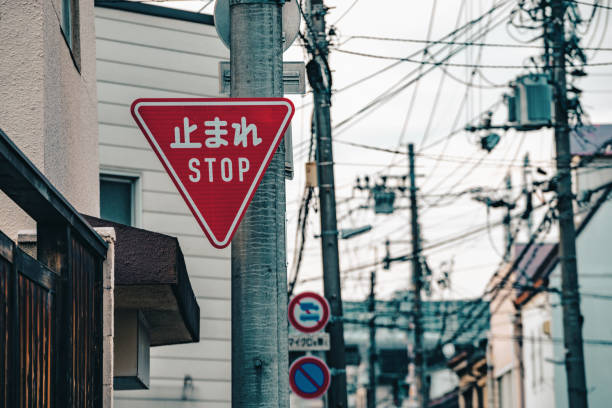
Two rules require particular attention:
Stop signs (止まれ — tomare): A full, complete stop is legally required. Not a rolling stop. Not slowing to 5 km/h. Wheels must stop completely. This is enforced. Running a stop sign is one of the most common violations committed by foreign drivers who assume the standard is similar to their home country.
Railway crossings: You must stop before every railway crossing, check both directions, and cross only when clear — even if the barriers are up and the signals are not active. This is non-negotiable under Japanese law. Stop, look, proceed.
Parking Restrictions and Designated Parking Culture
On-street parking in Japan is heavily restricted. Unlike many countries where parking on a side street is a grey area, in Japan it is typically either clearly marked as permitted or clearly not. The consequences of parking incorrectly are swift: vehicles are clamped or towed to a pound, and retrieval involves fees and bureaucratic effort.
In cities, use paid parking garages (chūshajō — 駐車場). They are numerous and well-signed. In tourist areas, fees can be significant: ¥200–¥400 per 15 minutes in busy districts like central Takayama or Kyoto is not unusual. Budget for this if your itinerary includes stops in popular locations.
In rural areas, parking is generally much easier and often free near attractions and trailheads.
Why Are Japanese Roads So Narrow and Challenging?
Narrowness is the single most consistently surprising element of driving in Japan for foreigners, particularly those from North America. It is worth understanding why, so you can calibrate your expectations accurately.
Understanding Seikatsu Dōro (生活道路 , Residential Roads)
Seikatsu dōro: literally “life roads” are the network of local residential streets that form the capillary system of Japanese neighbourhoods. They were not designed around cars. Many were established as pedestrian and cart paths long before automotive transport existed, and the buildings on either side were constructed to the edge of the available space. Widening them now is prohibitively difficult.
These roads carry cars, bicycles, pedestrians, delivery trucks, and the occasional bus, all sharing a space that was designed for none of them. This is where the real driving challenge in Japan lives, not on the highways.
Comparing Japanese Road Widths vs US/Europe
The numbers make the difference concrete:
| Road Type | Japan (typical width) | US Equivalent (typical width) |
| Standard city lane | ~2.5–3.0 m per lane | ~3.0–3.7 m per lane |
| Residential street (total) | ~4.0–5.5 m | ~6.0–9.0 m |
| Mountain road (per direction) | ~2.0–2.5 m | ~3.0–3.5 m |
| Kei car width | ~1.48 m | N/A |
| Standard Japanese car (e.g. Corolla) | ~1.78 m | ~1.80 m |
A standard-width car on a narrow Japanese mountain road can have less than 30 cm of clearance on each side. When a bus or truck approaches from the opposite direction and partially crosses the centre line, which happens regularly on single-lane mountain roads — the margin becomes very small very quickly.
Driving Through Villages, Mountains, and Tight Urban Streets
Three distinct challenges, each requiring a different mental approach:
Villages: Speed is low, but roads are unpredictably narrow. Delivery vehicles park without much warning. Elderly residents cross slowly and sometimes unexpectedly. The challenge is patience and attention, not speed.
Mountain roads: Speed is higher, visibility is limited, and local drivers know the route far better than you do. Pulling over to let fast locals pass is not defeat but rather the sensible strategy. One experienced driver on the Kusatsu-to-Kanazawa route described it this way: “I was already going over the speed limit, but seeing the cliffs below and not knowing the road layout ahead, I decided to let them pass.”
Urban streets: The combination of pedestrians, cyclists, delivery bikes, taxis, and stop-start traffic creates a high-density decision environment. Tolerable in smaller cities like Kanazawa. Genuinely demanding in Tokyo or Osaka.
What Makes Driving in Japan Mentally Exhausting?
Safe does not mean effortless. Japan’s roads are well-maintained and its drivers are disciplined, but the specific demands of the environment add up over time in ways that differ from highway driving in most other countries.
Constant Attention and Micro-Decisions
On a narrow residential road, you are making continuous calculations: is there room for both this car and a cyclist coming the other way? Is that pedestrian about to step off the kerb? Is the gap in those parked delivery vehicles wide enough to pass through without slowing to a crawl? None of these decisions is individually difficult. The constant stream of them over hours is what creates fatigue.
Highway driving in Japan involves none of this. It is easy, well-signed, and genuinely pleasant, which is why drivers who limit their Japan road experience to motorways have a very different experience from those who take mountain or rural routes.
Sharing Roads With Pedestrians and Cyclists
Japan’s roads are shared in a way that surprises many foreigners. Narrow streets that carry two-way vehicle traffic also carry cyclists in both directions and pedestrians without dedicated footpaths. The hierarchy is clear, pedestrians first, always– but the practical execution of that hierarchy in a tight space requires constant awareness.
Cyclists in Japan are particularly unpredictable by the standards of other countries. Many ride on whichever side of the road is convenient at any given moment. Many carry umbrellas, children, or shopping while riding. The safest assumption is that every cyclist might do something unexpected at any moment.
Tight Turns, Blind Corners, and Mountain Roads
Blind corners on mountain roads are not marked or warned in advance. You navigate them by slowing, positioning wide (relative to the centre), and trusting that oncoming traffic will also be going carefully, which is not always a safe assumption. Local drivers who know every curve on a mountain road are typically driving it at a speed that reflects their familiarity with it. You do not have that familiarity.
The mental load of this– anticipating what is around the next bend, maintaining position on a road that is narrower than your car’s turning radius comfortably accommodates, watching for drop-offs on one side is sometimes too much. It does not make the road dangerous in the hands of an attentive driver, It does make it tiring.
How Difficult Are Road Signs and Navigation in Japan?
For most major roads and highways, road signs in Japan are genuinely clear and often bilingual. The challenge is in the details — and the details matter.
Pictograms vs Japanese-Only Subtext (補助標識)
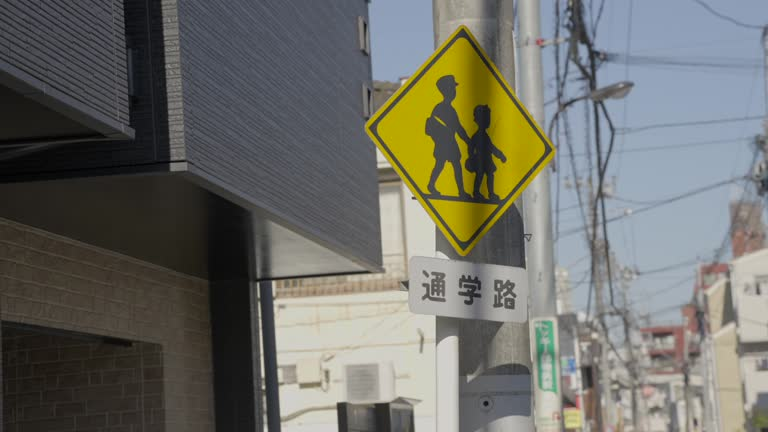
Japan uses internationally standardized pictogram signs for most primary road information. These are readable without Japanese. The complication is the hojo hyōshiki (補助標識),supplementary signs – small white rectangular signs hung below the primary sign that modify its meaning. These are almost always in Japanese only.
What a supplementary sign might say:
- “Except Sundays and holidays” — meaning the restriction above does not apply on those days
- “7:00–9:00” — meaning the restriction only applies during those hours
- “Trucks excepted” — meaning the restriction does not apply to commercial vehicles
- “No entry after this point” — meaning entry is restricted beyond a specific junction
Misreading or missing a supplementary sign is how foreign drivers end up on pedestrian-only streets, in time-restricted zones, or going the wrong way on a one-way road.
Time-Based and Conditional Road Restrictions
Several categories of road restriction that catch foreign drivers off guard:
- Time-based one-way streets: A road that is two-way from 9pm to 7am and one-way during the day
- Pedestrian priority zones: Streets open to vehicles only during certain hours, with pedestrian priority applying at other times
- Restricted entry zones: Delivery-only access during morning hours, with normal access otherwise
- School zones: Speed restrictions applying on weekday mornings and afternoons
GPS does not always reflect these restrictions accurately, particularly in older or less-updated mapping data. A road that Google Maps shows as accessible may have a sign – in Japanese indicating that entry is restricted at this hour.
Common Misunderstandings Foreign Drivers Face
The construction zone is the highest-risk misunderstanding point. Japan uses a portable traffic light system in road works, a small LED device mounted on a stand at road level, much smaller than the permanent lights foreigners are accustomed to. In a construction zone with multiple flashing LED signs and spinning warning lights, this portable traffic light is easy to miss. Missing it means entering a single-lane section while oncoming traffic has a green light. This exact scenario has been documented by multiple foreign drivers, including one who narrowly avoided a head-on collision before realising what had happened.
In any construction zone, stop and look for a traffic light at road level before proceeding.
Can You Rely on GPS and Navigation Apps in Japan?
GPS is essential. It is also imperfect. Knowing its limitations before you need it saves significant stress.
Limitations of Google Maps in Rural Areas
Google Maps works well in Japanese cities and on major routes. In rural and mountain areas, documented limitations include:
- Incorrect speed limit displays, which cause inaccurate ETA calculations
- Routing through roads that have conditional restrictions (pedestrian-only at certain hours, closed to through-traffic)
- Directing drivers toward roads that are technically passable but extremely narrow or poorly surfaced
- Occasionally routing through private property or roads that no longer exist
Several drivers on Japan road trip forums have noted Google Maps ETAs in rural areas being off by 30–50% due to incorrectly assumed speed limits. Add buffer time to any rural itinerary.
Why ETAs and Speed Limits Can Be Inaccurate
The speed limit database underlying navigation apps is not always current or accurate for Japanese rural roads. Speed limits on narrow mountain roads are often 30–40 km/h, but apps may display 50 or 60 km/h, and base their ETA on the higher figure. The result is an arrival time that assumes a pace you cannot safely maintain.
Add 25–30% to any Google Maps ETA for rural or mountain routes. This is not pessimism, it is a consistently reported experience from drivers who have done these routes.
Using Car Navigation Systems and Phone Number Search
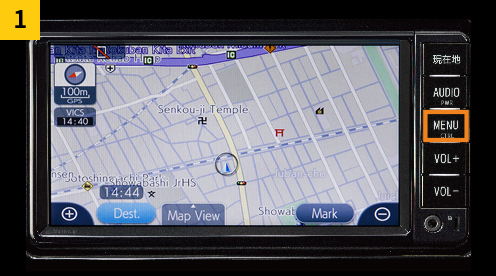
Rental cars in Japan come with built-in navigation systems (car navi). These are in Japanese, which limits their usability for non-Japanese readers. However, Japanese car navigation systems have one feature that is genuinely better than smartphone apps for Japan: phone number search.
Instead of entering an address – which Japanese addressing conventions make confusing, you can enter the phone number of your destination (hotel, restaurant, attraction) and the car navi routes directly to it. Most accommodations and attractions in Japan have listed phone numbers. Write them down before you drive.
What Are the Biggest Mistakes Made When Driving in Japan?
Underestimating Narrow Roads and Tight Spaces
The gap between “I know the roads are narrow” and “I understand what driving on a 2-metre mountain road with a bus approaching actually feels like” is significant. Most people who have driven only on North American or wide European roads have genuinely not experienced roads of this narrowness at normal driving speed. The Toyota Corolla that feels perfectly normal sized on a highway suddenly feels enormous on a mountain road where the available lane width is 30 cm wider than the car.
Rent is smaller. Japan’s kei cars (keijidōsha — 軽自動車) are purpose-built for this environment. At approximately 1.48 m wide versus the 1.78 m of a standard compact, that 30 cm difference is the difference between manageable and stressful on the narrowest roads.
Ignoring Japanese-Only Road Signs
The temptation is to focus on pictograms and ignore the Japanese text. This works most of the time. The 5% of cases where it does not work include the situations described above – time restrictions, conditional access, pedestrian zones, and those are exactly the situations where a mistake creates the most disruption.
A phone with a camera translation app (Google Translate’s camera mode works well for road sign text) is a practical backup. It is not a substitute for a co-pilot, but it covers emergencies.
Driving in Big Cities Like Tokyo or Osaka
Simply: do not start here. Do not return your car here. Tokyo and Osaka have excellent public transport for a reason, the roads, parking, and traffic density are not designed for casual tourist motoring. The cognitive load of city driving in these environments, combined with unfamiliar road rules and navigation challenges, is avoidable.
Pick up your rental car at a city one stop down on the Shinkansen from wherever you are starting. Return it the same way. The extra hour of train travel each way is absolutely worth it.
Over-Relying on GPS Without Situational Awareness
GPS is a tool, not a co-pilot. It does not know about the current state of the construction zone ahead. It does not know that the road it is routing you down is technically accessible to cars but is effectively a pedestrian shopping street at this hour. It does not notice the portable traffic light in the road works.
The co-pilot’s job: eyes on the actual road and signage, not just the GPS screen, cannot be replaced by navigation technology.
What Are the Best Tips for Driving in Japan Safely?
Renting a Smaller Car, The Kei Car Advantage
Kei cars are not a compromise. For Japan’s road environment, they are the correct choice. The advantages are specific and significant:
- Narrower width makes mountain and rural roads dramatically more manageable
- Easier to park in urban lots, which are designed around Japanese car dimensions
- Cheaper to rent than standard compact cars
- Lower highway tolls in some categories
- Psychologically less stressful on roads where every centimetre matters
The one limitation: if you have more than two passengers or significant luggage, the interior space is genuinely small. A kei van (keibako — 軽箱) solves the luggage problem while keeping the width advantage.
Always Driving Defensively and Cautiously
Japan’s roads reward defensive driving, the assumption that something unexpected is always possible, even when the immediate situation looks clear. The specific habits that matter most:
- Treat every junction with limited sightlines as potentially occupied, regardless of right of way
- Slow before blind corners on mountain roads
- Give cyclists significantly more space than feels necessary
- Watch for cars rolling slowly out of parking lots and garages, this is a documented pattern near rental car facilities specifically
- Do not assume that having right of way means the other driver knows you have right of way
Adding Extra Travel Time to Your Itinerary
Budget at least 25–30% more time than Google Maps estimates for rural routes. This is not conservative, it is accurate. The reasons compound: lower safe speeds on mountain roads than the speed limit suggests, GPS ETAs based on incorrect speed limit data, unexpected stops for construction zones, and the simple reality that unfamiliar terrain requires slower progress than familiar terrain.
Never drive to a hard deadline, a train, a flight, a reservation with a late-arrival penalty, on Japanese rural roads. The stress of the clock combined with the attention demands of the road is a bad combination.
Preparing for Construction Zones and Temporary Signals
Before entering any construction zone in Japan:
- Slow down immediately upon seeing warning signs
- Look specifically for a portable traffic light — a small LED device mounted at road level, distinct from the larger warning signs around it
- Wait for a green signal before entering a narrowed or single-lane section
- Do not be distracted by flashing LED warning signs while looking for the traffic signal
This one preparation makes a disproportionate difference to safety in Japan’s rural and mountain road works.
Do You Need a Co-Pilot When Driving in Japan?
The driver in Japan is handling: left-side positioning, unfamiliar road widths, occasional Japanese signage, GPS instructions, speed management, and traffic awareness simultaneously. A co-pilot removes several of those demands by taking ownership of navigation and sign-reading. The result is a driver who can focus entirely on the physical task of driving — which is the correct allocation of attention.
Drives that drivers described as “exhausting” solo frequently become “manageable” or even “enjoyable” with a co-pilot handling navigation. The reduction in cognitive load is real and substantial.
Reading Signs and Navigating in Real Time
A co-pilot who can read Japanese is a significant advantage. Not because most signs require it, but because the 10% of situations that do, construction zone supplementary signs, time-restricted access points, conditional restrictions — are exactly the situations where real-time translation has practical safety value.
A co-pilot without Japanese literacy is still valuable: they can handle GPS monitoring, watch the co-pilot side of the car on narrow roads, and provide a second pair of eyes at junctions.
Managing Narrow Roads and Parking Situations
On narrow roads, a co-pilot calling out the clearance on their side of the car — “you have about 20 centimetres on this side” — is genuinely useful information that a driver alone cannot gather. In tight parking situations, a co-pilot guiding from outside the car reduces the risk of contact with other vehicles or structures.
Brief your co-pilot before departure. This is not a “sit back and enjoy the scenery” role. It is an active support role that requires the same preparation, road signs, driving rules, route knowledge, that the driver brings.
How Expensive Is Driving in Japan?
Japan is not a cheap country to drive in. Budget for this from the start.
Highway Toll Costs and the ETC System
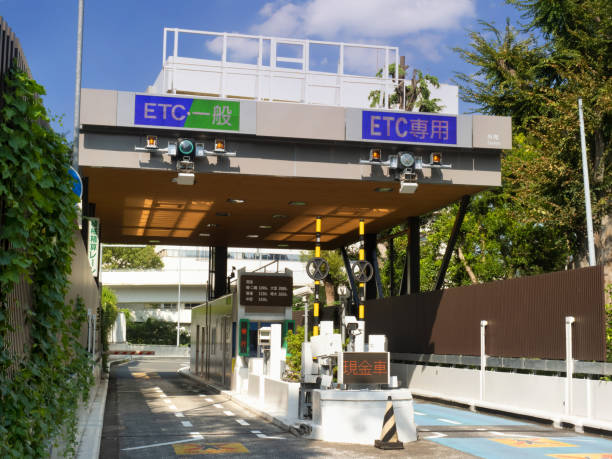
Japanese expressways (kōsoku dōro — 高速道路) are toll roads, and the fees accumulate quickly:
- A typical highway journey of 200–300 km can cost ¥3,000–¥6,000 in tolls
- Some routes, including the route through the Japanese Alps, run significantly higher
- Tolls are paid either in cash at toll booths or via the ETC system (Electronic Toll Collection)
The ETC card is rented from the rental company for approximately ¥300–¥500 per day. It is inserted into a reader in the car and allows passage through dedicated ETC lanes without stopping. For longer highway journeys, it is significantly more convenient than cash payment. Some toll roads offer ETC discounts as well.
Note: some tunnel and expressway segments on certain mountain routes have no cash payment option, ETC only. Confirm before your trip whether your intended route has this requirement.
Parking Fees in Cities vs Rural Areas
| Location | Typical Parking Cost |
| Central Tokyo / Osaka | ¥400–¥600 per 30 minutes |
| Major tourist cities (Kyoto, Takayama) | ¥200–¥400 per 15–30 minutes |
| Smaller regional cities | ¥100–¥300 per hour |
| Rural areas / trailheads | Free to ¥500 flat rate |
| Hotel parking (urban) | ¥1,000–¥3,000 per night |
| Hotel parking (rural / onsen) | Often free or included |
City parking is expensive enough to be a meaningful budget line item. For a two-hour stop in central Takayama, budget ¥1,200–¥2,400 in parking alone.
Rental Car Insurance and Why It Is Worth It
Standard rental car insurance in Japan covers basic damage liability. The full supplemental coverage (nōsha danki hoken or equivalent) covers the deductible on all damage, loss of use fees, and administrative charges that can make even a minor incident costly.
At Toyota Rent a Car, this comprehensive coverage costs approximately ¥1,200 per day. For the peace of mind on narrow roads and tight parking situations where contact is genuinely possible, this is one of the better value decisions available on a Japan road trip. Take the full coverage.
When Should You Drive in Japan Instead of Taking the Train?
Exploring Rural Areas Like the Japanese Alps
The Japanese Alps: the mountain region covering Nagano, Gifu, and Toyama prefectures — is one of the most rewarding driving destinations in the country and one of the least convenient by public transport. Destinations like Shirakawa-gō, Kamikōchi (bus access only within the park), and the Tateyama Kurobe Alpine Route are either inaccessible by train or require complex multi-transfer bus connections that consume most of a day.
By car, this region becomes a connected itinerary. Kusatsu to Kanazawa via Takayama and Shirakawa-gō — a spectacular mountain route — can be done in two to three days. By public transport, the same journey requires several days of careful schedule coordination and still misses the in-between spaces that make the drive rewarding.
Visiting Remote Destinations Like Shirakawa-gō
Some places are simply not practical without a car. Shirakawa-gō has bus connections, but they are infrequent and time-constrained. Arriving by car means arriving when you want and leaving when you choose. The experience of driving through the Shōkawa Valley toward the village, with the farmhouses appearing through the trees, is itself part of the destination.
Similar logic applies to: remote onsen towns, smaller national park access points, coastal routes in Sanin and Tōhoku, and agricultural areas where the appeal is precisely the things that exist between stations.
Saving Time on Complex Multi-Stop Itineraries
The train network is extraordinary for point-to-point travel between major destinations. For complex itineraries involving five or more stops across a region — particularly where those stops are not all on the same Shinkansen corridor — train connections involve multiple transfers, waiting times, and routing compromises. A car eliminates all of that.
One traveller who drove the Alps route documented that the same journey by train and bus would have added two full days to their itinerary. That is two days of transit versus two days of destination. The calculation is straightforward.
When Should You Avoid Driving in Japan?
City Travel and Public Transport Advantages
Tokyo, Osaka, Kyoto, Fukuoka, Nagoya, Sapporo, all of these cities have public transport systems that are faster, cheaper, and less stressful than driving. Trains run on time. They go everywhere. They do not require parking. They do not require you to navigate one-way systems in unfamiliar city centres.
If your itinerary is primarily urban — multiple cities connected by Shinkansen, with activities concentrated in city centres — a rental car adds cost and stress without adding value. The Japan Rail Pass or a combination of IC card and point-to-point tickets is the correct tool for urban Japan.
Parking Difficulties in Urban Centres
Beyond the cost, finding parking in central Tokyo or Osaka is a logistical challenge. Lots fill quickly during peak hours and at popular destinations. GPS parking guidance sometimes leads to lots that are full, requiring real-time improvisation in unfamiliar streets. The time spent finding, accessing, and paying for parking in city centres often exceeds the time saved by having a car compared to walking from a train station.
Why Trains Are Better for Most Tourists
Most first-time and second-time visitors to Japan spend their time in urban areas — Tokyo, Kyoto, Osaka, perhaps Hiroshima and Nara. For this itinerary, trains are the objectively better tool in almost every measurable way. Faster, cheaper, stress-free, and they put you at the centre of the action rather than in a parking structure several blocks from it.
Drive in Japan when the places you want to go are not well served by trains. Take the train when they are. The country’s transport system is good enough that this is an easy judgement to make.
What Is Driving Etiquette Like in Japan?
Polite Driving Culture and Low Road Rage
This is one area where Japan genuinely stands apart. Aggressive driving is rare. Road rage, the kind of honking, tailgating, and confrontational behaviour common in many Western cities is almost absent. Drivers yield, wait, and generally extend the same consideration to other road users that Japanese social culture extends in other contexts.
Honking is used sparingly and communicatively rather than aggressively. In Japan, a single brief horn tap means “I am here” not the sustained expression of frustration it often represents elsewhere. Honking repeatedly or aggressively is considered genuinely rude and is socially conspicuous.
Using Hazard Lights to Say “Thank You”
One of the most charming conventions of Japanese driving culture: when a driver yields to let you in, or another driver does something considerate for you, the appropriate acknowledgement is a brief double-flash of the hazard lights. It is universally understood and genuinely appreciated. It is also, for most foreigners, a surprising and pleasant discovery.
Likewise, a slight bow toward the driver who yielded, visible through the windscreen, is normal and appropriate. These small exchanges of courtesy give Japanese road interactions a quality that is genuinely different from driving elsewhere.
Understanding Unspoken Driving Behaviour
Japanese drivers tend to be predictable which is itself a form of courtesy. Signals are used before lane changes. Merges happen cooperatively. The “zipper merge”, alternating vehicles from merging lanes is practiced naturally and without confrontation.
The behaviours that do catch foreign drivers off guard are not aggression but inattention: slow merges from parking lots without fully checking for traffic, and the occasional very slow right turn across traffic that requires oncoming vehicles to slow. These are not dangerous so much as unexpected in an otherwise very attentive driving environment.
Is Driving in Japan Worth It? Final Verdict
Pros: Flexibility, Access, and Unique Experiences
- Access to destinations unreachable or impractical by public transport
- Complete schedule flexibility — no train times, no last bus anxiety
- The ability to stop anywhere that looks interesting
- A completely different perspective on the country — the villages between stations, the mountain roads, the agricultural valleys
- A more immersive travel experience in rural regions
Cons: Stress, Fatigue, and Complexity
- Mentally demanding on narrow and mountain roads
- Expensive — tolls, parking, and insurance add significantly to the budget
- Navigation challenges in rural areas with limited English signage
- The absolute necessity of avoiding alcohol — even the night before
- Real consequences for documentation errors or minor accidents
Who Should and Shouldn’t Rent a Car
You should drive in Japan if:
- Your itinerary includes rural, mountain, or remote destinations not well served by trains
- You are an experienced driver comfortable with unfamiliar road environments
- You have or can arrange a co-pilot, ideally with some Japanese language ability
- You are willing to prepare thoroughly: road signs, rules, documentation, insurance
- You have flexible timing and can absorb extra travel time without pressure
You should not drive in Japan if:
- Your itinerary is primarily urban — Tokyo, Kyoto, Osaka
- You have limited driving experience or are not comfortable in unfamiliar road environments
- You are travelling solo without navigation support
- You have fixed deadlines (flights, reservations) that cannot accommodate delays
- You are not prepared to research road rules and signage conventions in advance
Top 10 Essential Tips for Driving in Japan (Quick Summary)
#1 Choose a Small Car
Rent the smallest car that meets your luggage and passenger needs. A kei car is approximately 30 cm narrower than a standard compact, and on Japan’s narrowest roads, that 30 cm is the difference between manageable and stressful. At Toyota Rent a Car and most major agencies, kei and kei van options are available and cheaper than standard compacts.
#2 Avoid Big Cities
Pick up and return your rental car outside of Tokyo and Osaka. Take the Shinkansen to a smaller city first, then pick up the car there. Driving in Japan’s mega-cities is a different and significantly more demanding experience than rural or mountain driving — and is entirely unnecessary given the quality of urban public transport.
#3 Learn Key Road Signs
Specifically: the tomare stop sign (止まれ), the no-entry sign, the one-way sign, the pedestrian zone sign, and the no-parking symbol. Beyond these, understand that white rectangular supplementary signs below primary signs modify the primary rule and are almost always in Japanese only. A camera translation app on your phone covers emergencies.
#4 Use a Co-Pilot
Brief them before departure. Their job is active: monitoring GPS, reading signs, calling out co-pilot-side clearances on narrow roads, and managing in-car admin so the driver can focus. A good co-pilot transforms a demanding drive into an enjoyable one.
#5 Expect Narrow Roads
Do not let the narrowness surprise you when it happens. Accept it as the environment. Slow down, pull over when needed to let faster locals pass, and treat it as a feature of the experience rather than a problem to solve. The roads are what they are. Calibrate your speed and your expectations to match them.
#6 Don’t Fully Trust GPS
Use it as a guide, not an authority. Know that rural ETAs are often underestimated by 25–30%. Know that it may route you toward roads with time-based restrictions that it cannot account for. Use the car navigation’s phone number search feature for Japanese destinations. Keep a physical or offline backup of your route’s key waypoints.
#7 Add Extra Travel Time
Build in 25–30% extra time on rural routes. Never drive to a hard deadline. Schedule rest stops — mountain driving is fatiguing, and fatigue is a safety issue. The Japanese Alps and rural Tohoku and Kyushu routes consistently take longer than expected.
#8 Get Full Insurance
At ¥1,200 per day at Toyota Rent a Car, comprehensive supplemental coverage is among the best-value decisions on a Japan road trip. Narrow roads, tight parking situations, and the genuine possibility of minor contact make this not optional for most foreign drivers.
#9 Stay Calm in Construction Zones
Slow down immediately. Look specifically for a portable traffic light at road level — it will be smaller than you expect and may be positioned alongside multiple other flashing warning devices. Wait for a green signal before entering any narrowed section. Do not treat the flashing “GO / SLOW” LED message board as a traffic signal — it is not.
#10 Drive Defensively at All Times
Assume that the car exiting the parking lot has not fully checked for traffic. Assume the cyclist will change direction without signalling. Assume something may be on the other side of the blind corner. None of these assumptions are pessimistic — they are accurate reflections of Japan’s road environment. A defensive driver in Japan has excellent experience. An overconfident driver does not.
Read More