
Cycling in Japan: Etiquette, Laws, and What Foreigners Need to Know 2026
A New Zealander moves to Tokyo, hops on a bike, and immediately realises that everything they knowknew about cycling is useless. Roads are narrower. Sidewalks are fuller. Mamacharis barrel around blind corners with toddlers in the back seat and zero regard for oncoming traffic. Elderly women cycle the wrong way down one-way streets at a
A New Zealander moves to Tokyo, hops on a bike, and immediately realises that everything they knowknew about cycling is useless. Roads are narrower. Sidewalks are fuller. Mamacharis barrel around blind corners with toddlers in the back seat and zero regard for oncoming traffic. Elderly women cycle the wrong way down one-way streets at a pace that somehow feels both leisurely and threatening.
This is cycling in Japan.
It is also one of the most practical, enjoyable, and underrated ways to go through Japanese cities once you understand how it actually works. And “how it actually works” is a very different thing from “what the law technically says.” This guide covers both.
What Is Cycling Like in Japan?
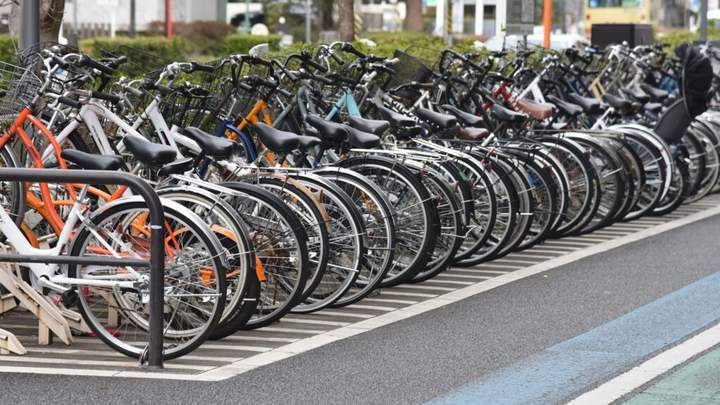
Japan has roughly 70 million bicycles in use at any given time. That number alone tells you something: this is not a country where cycling is a niche hobby or a weekend activity for enthusiasts in lycra. It is infrastructure. It is how people get to the train station, do the grocery run, take the kids to school, and move through their neighbourhood on a Tuesday afternoon.
More than half of Japanese households own at least one bicycle. Cycling accounts for around 12% of total national transportation, a figure that puts Japan well ahead of most comparable economies. And unlike the recreational cycling cultures in parts of Europe or North America, Japanese cycling is almost entirely practical in its intent.
That said, the system is a strange one. Japan has high cycling usage but an underdeveloped cycling infrastructure. It has clear laws that many people quietly ignore. It has a strong culture of social consideration that somehow coexists with people cycling through red lights while holding an umbrella and watching a video on their phone.
Understanding this gap between law and reality is the starting point for everything else.
Why Do So Many People Cycle in Japan?
Three reasons, mostly.
First, trains are expensive for short distances. Japan’s public transport is extraordinary for longer journeys, but paying ¥200 each way to go two stops adds up fast. A bicycle makes those trips free.
Second, urban density makes cycling viable. Japanese cities are compact. The distance between a residential area and a train station, a supermarket, or a school is usually short enough that a bicycle is the fastest option once you factor in walking to the platform and waiting for the next train.
Third, it is culturally normal across every demographic. Unlike many countries where cycling skews young and athletic, in Japan you will see elementary school children, university students, office workers, parents with two children strapped to the bike frame, and 80-year-old grandmothers, all cycling, often on the same stretch of sidewalk, coexisting through some combination of caution, habit, and mutual resignation.
Is Cycling in Japan Mainly for Commuting or Leisure?
Overwhelmingly commuting, in the broad sense. The dominant use case is short-distance urban travel, getting to the station, running errands, and doing the school run. Japan’s iconic mamachari was literally designed for this: it has a basket, an upright riding position, and typically a child seat. It is a grocery cart with wheels.
Leisure and sport cycling absolutely exist. Japan has world-class cycling routes, a passionate road cycling community, and a growing number of cycling tourists. But these are separate sub-cultures within cycling, not the everyday experience of the average person on a bike in a Japanese city.
How Does Cycling Fit Into Daily Life in Japanese Cities?
It functions as the last-mile solution, the bridge between home and the train network. Most Japanese train stations have large bicycle parking facilities (駐輪場), some multi-storey, many free or very cheap. Cyclists ride to the station, park their bike, take the train for the longer leg of the journey, and reverse the process on the way home.
This integration with public transport is one of Japan’s genuine cycling strengths. The infrastructure around stations is often excellent, even when the cycling infrastructure on the roads themselves is not.
Is It Better to Ride on the Road or the Footpath in Japan?
This is the first question every foreigner asks. The answer requires honesty about the gap between official rules and actual practice because the two are quite far apart.
What Does Japanese Law Say About Riding on the Road?
Under Japan’s Road Traffic Act (道路交通法), bicycles are classified as light vehicles (軽車両). The legal default is clear: cyclists should ride on the road, on the left side, following the same signals and rules as motor vehicles.
That is the law. In practice, the majority of cyclists in Japan ride on the footpath most of the time.
When Is It Allowed to Ride on the Footpath?
The law does allow sidewalk cycling in specific circumstances:
- The road has been designated as too dangerous for cyclists
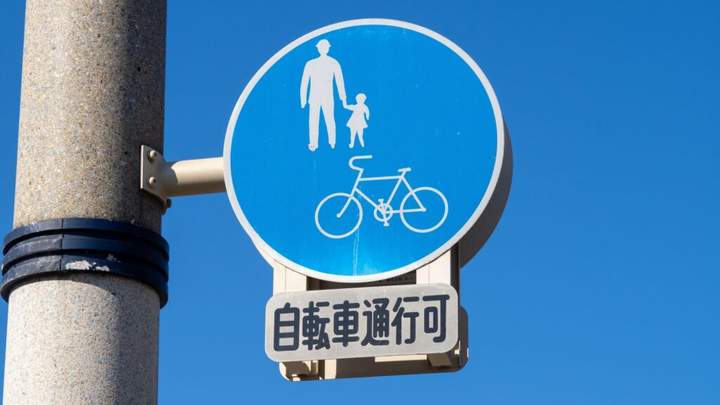
- A sign explicitly permits bicycle use on the footpath
- The rider is a child (13 and under)
- The rider is elderly
- The rider has a physical difficulty that makes road cycling unsafe
The “too dangerous” clause is the one most people rely on, implicitly, every time they mount the kerb. In practice, police rarely enforce it strictly. Enforcement focuses on dangerous sidewalk cycling, speed, recklessness, and near-misses, not on the act of being on the pavement itself.
Developing an intuitive grasp of the gap between official regulations and lived reality is a recurring theme for every foreigner finding their feet in Japan. Our pros and cons of living in Japan guide explores further facets of society where cultural norms and statutory rules don’t always align.
What Should Foreigners Do in Crowded Areas?
The practical approach that reflects both the law and local reality:
The rule of thumb from experienced resident cyclists: read each environment, adjust constantly, and never inconvenience pedestrians to maintain your speed.
What Are the Most Important Cycling Rules in Japan?
Some of these are strictly enforced. Others are widely ignored.
Legal Rules at a Glance
Do Cyclists Need Lights, Bells, or Reflectors?
A front white light is legally required after dark, not optional. A bell must be fitted to the bike. Rear reflectors are also required. None of this is negotiable from a legal standpoint, even if enforcement is inconsistent. If you get stopped by police at night without a front light, expect a warning at minimum. Buy lights at any Daiso or cycling shop. They are cheap, easy to fit, and the difference they make to your visibility at night is significant.
Are Helmets Mandatory in Japan?
Not for adults– not yet. As of 2023, wearing a helmet is a “duty of effort” (努力義務): officially encouraged but not legally enforceable. For riders under 13, helmets are required.
The statistics make the case regardless of law. Helmet use among Japanese cyclists sits at around 21%, very low, and fatality data consistently show head injuries as the primary cause of cycling deaths. Wear one. The law does not require it. The data strongly suggests it.
What Changed in 2026?
Two new enforcement provisions that foreigners especially need to know:
- Smartphone use while cycling is now actively fineable, not just prohibited in principle
- Dangerous sidewalk cycling faces stricter penalties
Japan is moving toward more serious enforcement of cycling behaviour. The relaxed atmosphere of previous years is gradually, definitively changing.
What Is the Proper Cycling Etiquette in Japan?
Laws tell you what is technically required. Etiquette tells you how to actually get along in a Japanese cycling environment, which matters more for your daily experience.
How Fast Should You Ride on a Footpath?
Slow. That is the complete answer.
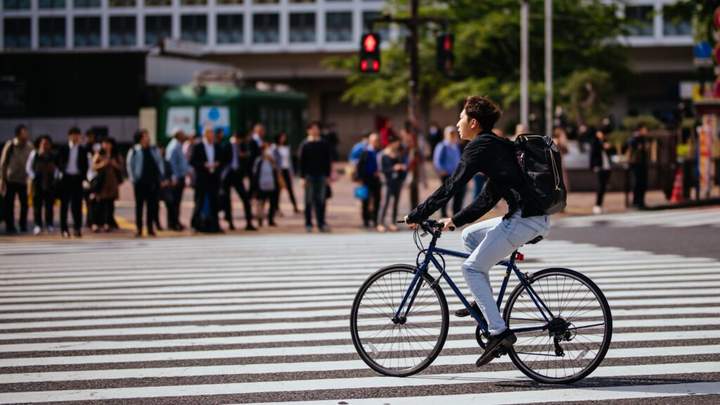
Japanese safety guidance is explicit: footpath cycling should be at a pace where you can stop quickly if a pedestrian steps sideways. In practical terms: a comfortable walking-adjacent speed in crowded areas, moderate speed only when the path ahead is genuinely and visibly clear.
Cycling fast on a busy footpath is dangerous and rude in equal measure. In a culture where not inconveniencing others is a baseline social value, barrelling through pedestrians on a bicycle registers as a meaningful breach of conduct – not just a traffic issue.
Why Should Cyclists Avoid Weaving or Sudden Movements?
Predictability is one of the most valued qualities in Japanese traffic, for cyclists and drivers alike. Sudden direction changes, unpredictable swerves, and erratic speed adjustments create risk and friction for everyone around you.
One experienced Tokyo commuter who covers 20km each way daily put it simply: “Be predictable. Don’t make sudden changes in speed or direction. Signal your next move.” This applies whether you are on the road or the pavement. Other road users can only respond to behaviour they can anticipate.
How Should You Behave Around Pedestrians?
A few non-negotiable points:
- Pedestrians always have the righthave right of way on footpaths. No exceptions, no matter how slowly or erratically they are moving.
- Do not ring your bell aggressively at pedestrians. A single gentle ring to announce your presence is fine. Repeated aggressive ringing is considered confrontational.
- If a footpath is crowded, particularly with children or elderly people, get off and walk. This is genuinely respected behaviour in Japan. As a foreigner doing it, you will be noticed positively.
- Pass pedestrians slowly and with clearance. People step sideways unexpectedly. Give them room.
What Is Considered Rude or Dangerous?
Things that will earn you disapproving stares, a police stop, or worse:
- Cycling fast through crowds
- Using your phone while riding (now fineable)
- Holding an umbrella while riding
- Cycling the wrong way against traffic
- Ignoring red lights at pedestrian crossings
- Parking your bike blocking a footpath or shop entrance
- Riding two abreast on the road
None of these will get you arrested. Some will get you fined. All of them create genuine risk and mark you as someone who does not understand how cycling in Japan works.
The concept of not inconveniencing others (meiwaku o kakenai) functions as a baseline social value that runs deep in Japanese culture. For a broader look at how this principle manifests in everyday life, our many meanings of sumimasen guide explores the nuances of apologies and social interactions in Japan.
What Cycling Mistakes Do Foreigners Often Make in Japan?
Why Do Some Newcomers Ride in the Wrong Place?
The most common mistake is defaulting to road-only cycling because that is the rule back home, without adjusting to specific road conditions. A major arterial road in Tokyo with fast-moving traffic and no cycle lane is genuinely dangerous. The footpath alongside it is where local cyclists are, for a reason.
The opposite mistake also happens: treating the footpath as a road and cycling at speed through pedestrian areas.
The adjustment required is not about choosing a road or pavement permanently. It is about reading each specific environment and making a judgment call, which is exactly how cyclists in Japan approach every block.
What Are the Common Mistakes at Intersections?
Right turns done the wrong way. Cyclists are not supposed to turn right like a car in Japan. The correct method is the two-stage right turn (二段階右折):
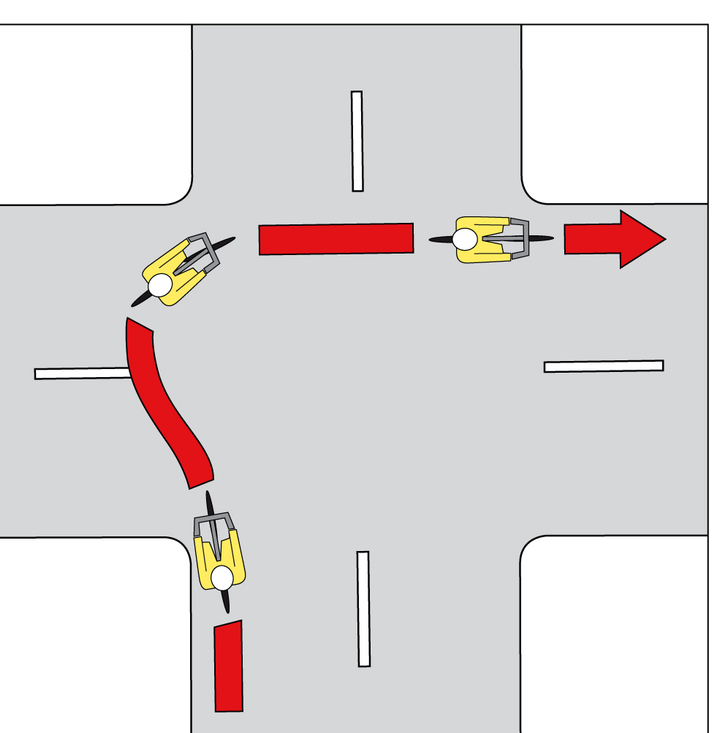
- Ride straight through the intersection
- Stop on the far-left corner
- Reposition to face the new direction
- Wait for the green light and proceed
This feels counterintuitive at first. It is the correct, safe method to use it consistently.
Trusting a green light immediately. Japan’s drivers frequentlyy push through amber lights, sometimes even early red. Taxis especially. Do not assume an intersection is clear just because the light changed in your favour. Look before you move. This specific habit causes serious accidents.
Why Is Signalling Important Even if Others Do Not Do It?
Because it makes you predictable. Most Japanese cyclists do not hand-signal. If you do, you look slightly unusual, and you significantly reduce the risk of a collision by giving drivers and other cyclists advance notic. Signal turns, signal stops if braking hard, and use eye contact at ambiguous intersections. It costs nothing.
What Should You Avoid in Busy Neighbourhoods?
- Cycling through groups of schoolchildren, dismount and walk instead
- Parking your bike in front of convenience stores or blocking footpaths
- Cycling through shopping arcades (商店街). Most prohibit cycling entirely
How Safe Is Cycling in Japan?
The honest answer: safer than the chaos suggests, but not without real risks.
In 2025, Japan recorded 3,269 pedestrian-cyclist accidents, the highest number since 2006. Around 57% of those accidents occurred on sidewalks or at crossings. The data shows a system under strain: high cycling density combined with inadequate dedicated infrastructure, and a culture of flexible rule interpretation that works most of the time, until it doesn’t.
What Are the Biggest Risks for Cyclists?
How Can You Stay Safe in Traffic?
- Ride assertively. Claiming your space on the road, not hugging the gutter, makes you more visible.
- Move to the front at red lights. Get ahead of the traffic queue so drivers can see you clearly.
- Use front and rear lights day and night. Many experienced Tokyo commuters run lights in daylight for visibility.
- Treat every parked car as a door about to open.
- Assume the mamachari coming toward you has not seen you. Ever.
What Kind of Bikes Do People Use in Japan?
What Is a Mamachari?
The mamachari (ママチャリ) is Japan’s defining bicycle. The name combines “mama” and “chari” (slang for bicycle). Features that define it:
- Front basket (standard)
- Rear child seat (common)
- Upright riding position
- Step-through frame
- Internal hub gearing (typically 3 speeds)
- Chain guard
- Built-in rear wheel lock
Heavy, slow, nearly indestructible. Absolutely everywhere. A decent mamachari from a shop like Asahi or Y’s Road costs ¥20,000–¥30,000 new, or less second-hand.
Are Electric Bicycles Common?
Increasingly so. Electric-assist bicycles (電動アシスト自転車) now account for roughly 23–24% of new bicycle sales in Japan. Particularly popular among parents carrying children, older riders, and longer-distance commuters. All Japanese e-bikes are pedal-assist only capped at 24km/h assistance by law.
Which Type of Bike Is Best for Daily Use?
For most foreigners settling into Japanese city life, a used mamachari or mid-range hybrid covers almost every situation comfortably.
Where Can You Park a Bicycle in Japan?
Bicycle parking is taken seriously in Japan. Leaving your bike in the wrong place does not just result in a fine it results in impoundment, and retrieving it costs both money and significant bureaucratic effort.
Are There Official Bicycle Parking Areas?
Yes, and they are widespread. Major train stations typically have ground-level parking lots (駐輪場), multi-storey facilities, and in some cities, fully automated underground storage systems. Many are free for the first one to two hours, then charge a modest daily rate. Monthly parking is available at most stations.
Can You Leave a Bike on the Street?
Sometimes. Look at what other bicycles around you are doing. In many shopping districts, bikes are casually lined up against walls without issue. Near major stations and shopping malls with clear “no bicycle parking” signs, your bike will be gone soon maybe within an hour.
If your bike gets impounded, the removal notice is posted at the location. You retrieve it from a designated pound (sometimes some distance away) and pay roughly ¥2,000–¥3,000.
How Do Bike Parking Rules Differ by City?
Tokyo enforces parking most actively near major stations. Kyoto has specific central areas where cycling is prohibited entirely – the narrow lanes around Gion, for example. Osaka is generally more relaxed. Regional cities and rural areas have very little formal enforcement at all. When in doubt: use a designated parking area, or look for an existing cluster of bikes where locals have established an informal but tolerated spot.
Can You Take a Bicycle on Trains in Japan?
Yes, but with specific conditions that catch many tourists off guard.
What Is a Rinko Bag?
A rinko bag (輪行袋) is a dedicated carrying bag for bicycles. To take a bicycle onto a Japanese train, it must be completely disassembled and packed into a rinko bag so that it no longer looks like a bicycle- wheels removed, frame packed, everything contained. This applies to JR lines, most private railways, and the Shinkansen (with advance seat reservation on most routes).
A Rinko bag from Y’s Road or Montbell costs ¥3,000–¥10,000 depending on quality.
Is It Practical for Tourists to Combine Cycling and Train Travel?
Absolutely and Japan is one of the best countries in the world for it. Take the Shinkansen or express train to a destination, rent a bike locally or bring your own in a rinko bag, cycle through the area, and continue by train. This approach works particularly well for:
- Shimanami Kaidō: between Onomichi (Hiroshima) and Imabari (Ehime), widely considered one of Asia’s best cycling routes
- Hokkaido route: open roads and dramatic scenery
- The Tama River cycling path: a manageable 50km escape from central Tokyo
- Lake Biwa: Japan’s largest lake, with a full 195km loop road
A note on timing: Avoid taking a rinko’d bicycle onto crowded commuter trains during rush hours (7–9am, 5:30–8pm). Even packed correctly, a bicycle takes up significant space and creates friction with commuters.
What Are the Best Places to Cycle in Japan?
Kyoto: Mostly flat in the city core. The Kamo River cycling path is beautiful and relaxed. Gets hilly toward the temple districts on the mountain edges, but manageable for most riders. Note: some central lanes are closed to bicycles — the lanes around Gion especially.
Osaka: Flat, wide streets, relaxed cycling atmosphere. The Osaka Castle area and waterfront routes are particularly good.
Kanazawa: Compact, historically rich, and far less crowded than the obvious destinations. Excellent for a full-day cycling loop through the samurai and geisha districts.
Hiroshima: Very flat, with a good local cycling culture and proximity to Shimanami Kaidō.
Fukuoka: Compact and increasingly cycling-friendly. A good city for residents looking for a calmer cycling environment than Tokyo. For more on living in these cities, our best cities to live in Japan guide has the full breakdown.
Best Scenic and Long-Distance Routes
Shimanami Kaidō deserves special mention. Rental bicycles are available at both ends and at each island. You do not need to bring your own bike. It is consistently rated one of the best cycling routes in Asia, and it is genuinely accessible for riders of most fitness levels.
The onset of Japan’s rainy season (tsuyu) can quickly turn a pleasant ride into a logistical challenge. For a broader look at Japan’s seasons, including preparation and what to expect throughout the year, see our guides to seasons in Tokyo and heat stroke in Japan.

How to Avoid and Treat Heat Stroke in Japan
How Can Foreigners Start Cycling in Japan?
Starting from zero is straightforward. A few administrative steps trip people up if they are not aware of them in advance.
What Do You Need Before Buying or Renting a Bike?
For renting: just your ID and the rental fee. Bike share systems like Hello Cycling require a Japanese phone number for registration, which makes them more accessible for residents than visitors. Tourism offices and most hotels rent bikes with minimal requirements.
For buying: you need to register the bicycle immediately after purchase.
How Do You Register a Bicycle in Japan?
Bicycle registration (防犯登録) is mandatory. If you buy new, the shop handles it for around ¥500–¥600. If you buy second-hand:
- Get a transfer form (譲渡証明書) from the previous owner
- Take the bike, the form, and your ID to any registered bicycle shop
- Complete the registration in your name
Your registered number confirms ownership if your bike is stolen and identifies you if your bike is found parked where it should not be.
For those planning to purchase their own set of wheels, understanding the mandatory registration and insurance is an essential part of the process. Our Japan identity cards guide breaks down the My Number system and the specific documentation required for administrative tasks like bicycle registration.
Do You Need Insurance?
Yes, and this is taken more seriously than most foreigners realise. Third-party liability insurance is mandatory for cyclists in a growing number of Japanese prefectures, including Tokyo, Osaka, and Kanagawa. The reason is practical: cyclists cause accidents that injure pedestrians, and compensation claims can be significant.
Options:
- Standalone bicycle insurance (自転車保険) available at convenience stores, post offices, and online from ¥2,000–¥5,000 per year
- Some home or renters insurance policies include cycling liability check yours
- Some credit cards include cycling coverage verify the details
For managing the broader financial logistics of life in Japan, see our guide on opening a bank account in Japan.
Is Cycling in Japan Worth It?
The Benefits
- Cost. Once you have a bike and insurance, most short trips are effectively free.
- Flexibility. No timetables, no platform crowding, no last-train anxiety for shorter distances.
- Speed for short trips. In dense urban areas, a bicycle often beats a taxi or bus for journeys under 3–4km.
- Seeing the city differently. The streets between train stations — the actual neighbourhoods — become visible in a way that never happens from underground.
- Health. Cycling integrates physical activity into daily life without requiring gym membership or dedicated exercise time.
The Drawbacks
- Rain. Japan has a lot of it. Cycling in rain is unpleasant. Cycling in rain while holding an umbrella is illegal and genuinely dangerous.
- Parking stress in central areas. Finding legal, safe parking near major attractions takes planning.
- Infrastructure inconsistency. The gap between a well-designed cycling environment and a poorly designed one is stark and sometimes jarring within the same city.
- The mamachari risk. It never fully goes away.
Who Is Cycling in Japan Best For?
The friction is real. So is the reward. Cycling in Japan is, at its best, one of the most satisfying ways to inhabit a Japanese city, to move through it at a human pace, on your own schedule, through streets that a train will never show you.
Planning your move to Japan and thinking about daily life logistics? Our moving to Japan ultimate guide covers everything from your first weeks to building a long-term routine. And for the professional side of life here, our work in Japan guide has the full picture on building your career.
Related JoynTokyo reads

Ultimate Guide to Driving in Japan
A driver spent a week cruising Hokkaido and called it the most relaxing road trip of his life. Another took a mountain route from Kusatsu to Kanazawa and described it as “like being dialled into an F1 race car.” Both were experienced drivers. Both were in Japan. Both are right. Honestly, driving in Japan is

Cash vs Card in Japan: What Should You Use in 2026?
People who went to Japan five years ago will tell you cash is king. People who went last month will tell you they barely touched a note. Both are telling the truth, they just had different trips. The honest answer for 2026 is this: Japan has changed significantly. Most major establishments in cities now accept

Sheila Cliffe on The Kimono Closet and the Stories Kimono Hold
Sheila Cliffe is a longtime kimono researcher and the author of Kimono Style. In her new book, The Kimono Closet, she looks beyond kimono as fashion or art objects and instead explores their deeper place in family life, memory, and identity. She spoke with JoynTokyo to give us an exclusive look at the new book,