
What Does “Sumimasen” Really Mean in Japanese?
Picture yourself on a packed Tokyo train. Someone taps your shoulder with a gentle “Sumimasen.” In that split second, you’ve heard an apology for the intrusion, an expression of thanks for your patience, and a polite request for space. Few Japanese words offer so much meaning with so few syllables. Why This Single Word Matters
Picture yourself on a packed Tokyo train. Someone taps your shoulder with a gentle “Sumimasen.” In that split second, you’ve heard an apology for the intrusion, an expression of thanks for your patience, and a polite request for space. Few Japanese words offer so much meaning with so few syllables.
Why This Single Word Matters
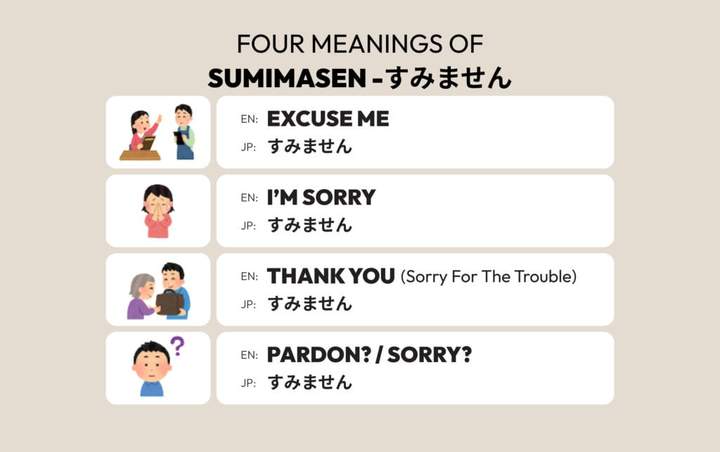
Foreign residents will quickly discover that Sumimasen solves three everyday problems at once: saying sorry, showing gratitude, and getting attention. Master using this magic word, and you can order food, apologize for minor slips, or call a station clerk, all without needing to memorize any new phrases.
Key Takeaways
- A triple-meaning word: sorry, thanks, excuse me.
- The safest default with strangers or in doubt.
- Speaking with a softer voice and giving a slight bow translates to instant sincerity.
Linguistic Roots: From Unfinished Business to Social Balance
Before it became a convenience-store catch-all, sumimasen emerged from classical Japanese. The verb sumi (済む/“to be finished”) plus the negative polite ending –masen, literally meaning “matters are not settled.” Over centuries, the phrase shifted from describing unfinished tasks to admitting a social imbalance, essentially “I owe you.” That lingering sense of indebtedness explains why the same syllables now cover apology, gratitude, and polite interruption.
1. Classical Echoes
Literary diaries of the Heian court used sumu to mark when obligations were completed. By negating it, writers highlighted unsettled duties, an attitude that still colors modern apologies.
2. Apology Meets Gratitude
In a harmony-first culture, even receiving kindness can feel like burdening the giver. Saying Sumimasen after a stranger carries your suitcase means “I realize I’ve inconvenienced you” as well as “thank you.”
When to Use “Sumimasen” in Daily Life
Step outside, and you’ll find that you will deploy the word dozens of times a day. Below are realistic scenarios you can copy verbatim.
1. Calling Staff at a Restaurant
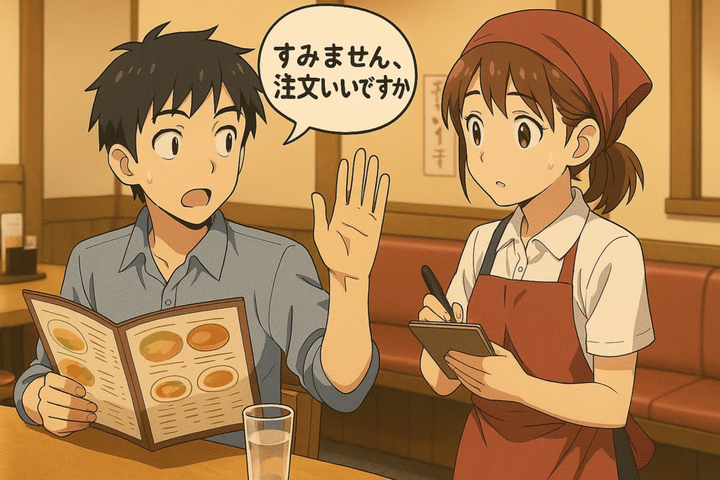
Sumimasen, chūmon ii desu ka.
(すみません、注文いいですか)Excuse me, may I order?
Tip: Raise your hand slightly: the softer the tone, the more courteous you are being.
2. Minor Mishap
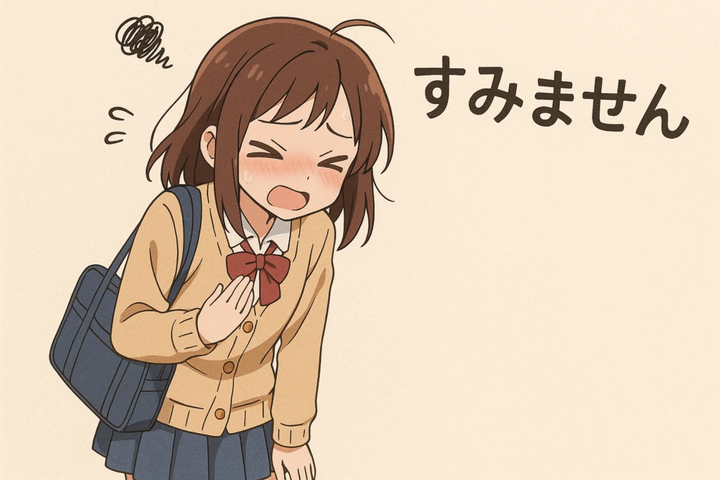
Sumimasen, ashi o funde shimaimashita.
(すみません、足を踏んでしまいました)I’m sorry, I stepped on your foot.
Tip: A quick nod or 15-degree bow restores harmony.
3. Humble Thanks
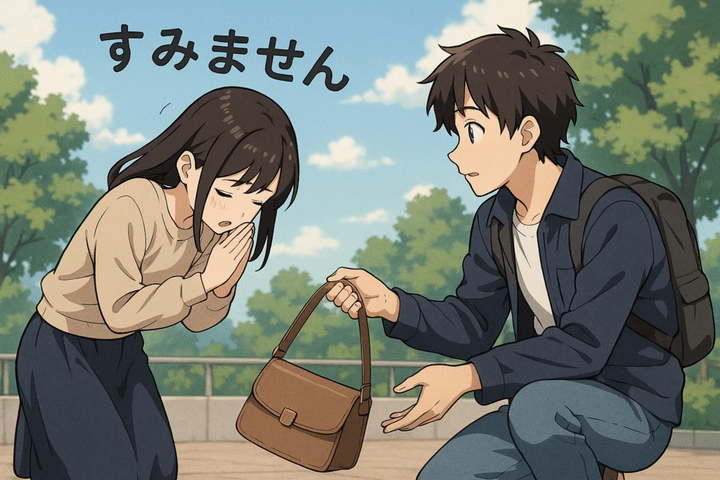
Sumimasen, tasukarimashita!
(すみません、助かりました)Thank you, that really helped!
Tip: Adds humility absent from a more simple arigatō.
4. Passing Through
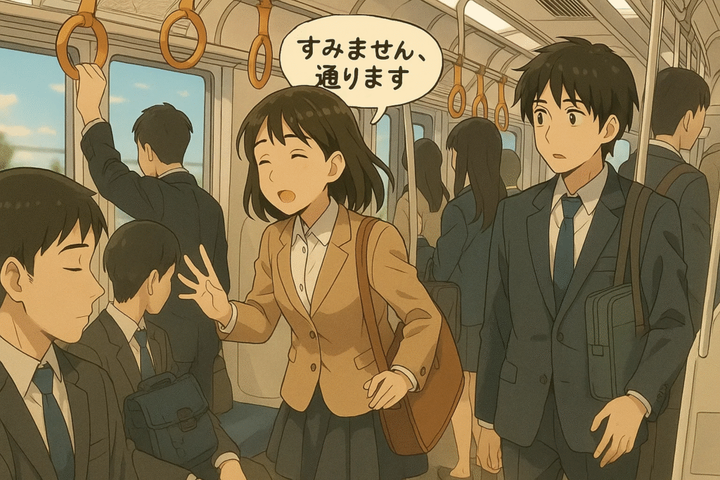
Sumimasen, tōrimasu.
(すみません、通ります)Excuse me, coming through.
Tip: Pair with a gentle hand to prevent surprise.
5. Interrupting Conversation
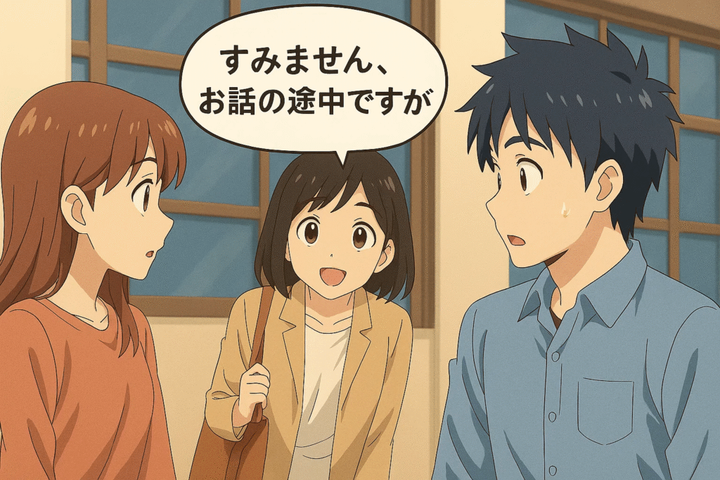
Sumimasen, ohanashi no tochū desu ga…
(すみません、お話の途中ですが)Sorry to interrupt, but…
Tip: Flags your request while respecting ongoing talk.
6. Getting off the Train
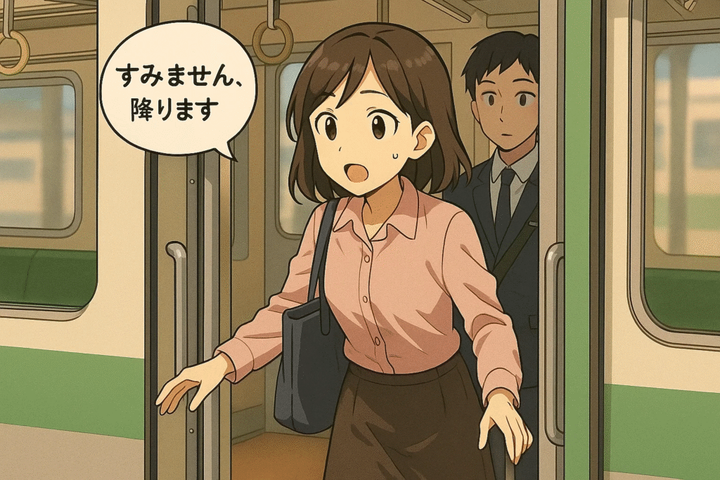
Sumimasen, orimasu.
(すみません、降ります)Excuse me, I’m disembarking.
Tip: Lets other passengers know that you are moving to get off the train.
Choosing Between Sumimasen, Gomen Nasai, and Arigatō
Still unsure? Apply this quick rule:
When in doubt, Sumimasen rarely offends.
Pronunciation and Register
On the street you will hear “Suimasen”, as the first m is dropped in casual conversation. Friends may even shorten it to “Suman.” Stick to the full Sumimasen with shop staff, elders, and supervisors, as the extra consonant signals care and clarity.
Non-Verbal Nuance
Words alone only travel half-way. Complement them with:
- A shallow bow (about 15°) for strangers, and deeper for bigger faults.
- Lowered volume and pitch to show respect.
- Keep arms to your side rather than crossed arms to appear honest.
Timing counts: speak immediately after the trigger event. Any delay signals insincerity.
Sumimasen Use Case Cheat-Sheet
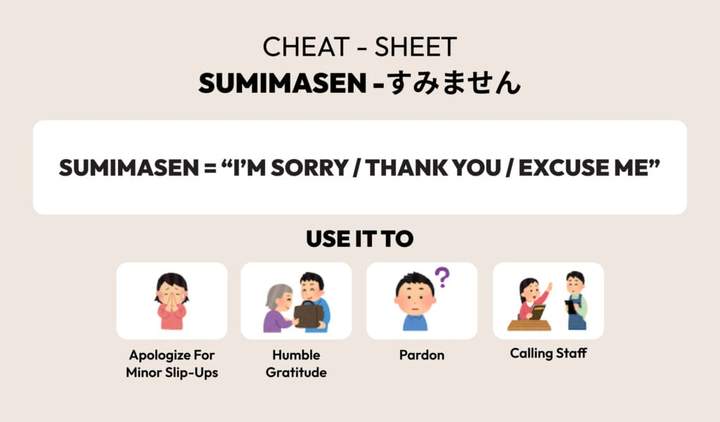
Cheat sheet
Sumimasen = “I’m sorry/thank you/excuse me
Use it to:
- Call staff
- Apologize for minor slip-ups
- Show humble gratitude
- Navigate crowds
- Politely interrupt
Bringing It All Together
Sumimasen is more than just “excuse me.” It is a cultural Swiss-army knife that lets you apologize, appreciate, and make requests in a single, harmony-preserving breath. Remember how you intend to use the word, match it with the right body language, and you will glide through Japanese daily life with newfound confidence. Check out Benkyō Mashou for more Japanese phrases for beginners.
Related JoynTokyo reads

Ultimate Guide to Driving in Japan
A driver spent a week cruising Hokkaido and called it the most relaxing road trip of his life. Another took a mountain route from Kusatsu to Kanazawa and described it as “like being dialled into an F1 race car.” Both were experienced drivers. Both were in Japan. Both are right. Honestly, driving in Japan is

Cash vs Card in Japan: What Should You Use in 2026?
People who went to Japan five years ago will tell you cash is king. People who went last month will tell you they barely touched a note. Both are telling the truth, they just had different trips. The honest answer for 2026 is this: Japan has changed significantly. Most major establishments in cities now accept

Sheila Cliffe on The Kimono Closet and the Stories Kimono Hold
Sheila Cliffe is a longtime kimono researcher and the author of Kimono Style. In her new book, The Kimono Closet, she looks beyond kimono as fashion or art objects and instead explores their deeper place in family life, memory, and identity. She spoke with JoynTokyo to give us an exclusive look at the new book,