
PDA in Japan: What’s Acceptable, What Isn’t, and Why It Matters
Japan doesn’t have laws against public displays of affection — but social norms do the work that laws don’t. If you’re visiting Japan with a partner, or in a relationship with a Japanese person, understanding where the line is drawn will save you from awkward stares, uncomfortable moments, and unintentionally offending the people around you.

Japan doesn’t have laws against public displays of affection — but social norms do the work that laws don’t. If you’re visiting Japan with a partner, or in a relationship with a Japanese person, understanding where the line is drawn will save you from awkward stares, uncomfortable moments, and unintentionally offending the people around you. Here’s exactly what you need to know.
The Quick Answer: What’s Acceptable and What Isn’t
Why Japan Treats PDA Differently
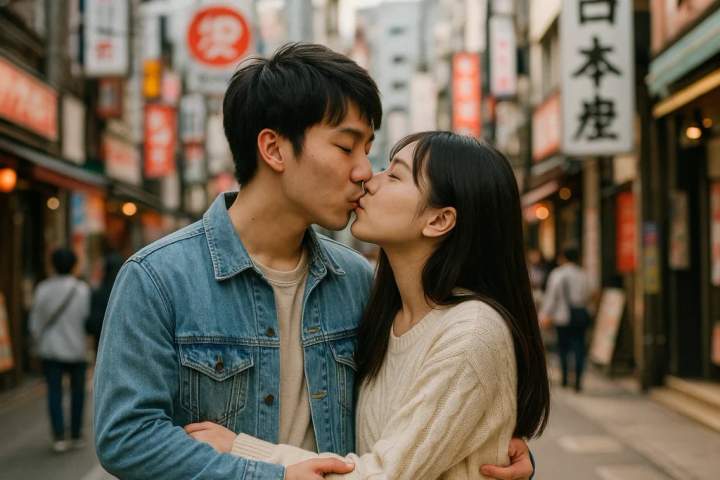
Japan’s relationship with public affection isn’t about prudishness — it’s about ma (間), a cultural concept of space and restraint that permeates social interaction. Emotions, including romantic ones, are generally considered private. Displaying them publicly isn’t a sign of passion; to many Japanese people, it signals a lack of consideration for others sharing the same space.
This is reinforced by the broader cultural value of meiwaku (迷惑) — the idea of causing inconvenience or discomfort to those around you. A couple kissing at a train station isn’t seen as romantic; it’s seen as an imposition on everyone watching. Social disapproval — a cold stare, a deliberate look away — is how Japan enforces this norm rather than formal rules.
That said, Japan is not a monolith. Attitudes vary by generation, city, and context.
What You’ll Actually See in Japan
This might surprise you: Japan isn’t entirely affection-free in public. Couples do hold hands on busy shopping streets in Shibuya and Shinjuku. You’ll see pairs walking arm-in-arm through Harajuku. What you won’t see much of is kissing, and that’s the main line.
Young people in major cities — particularly those in their teens and twenties — are slowly shifting norms. Street interviews with young adults in Shibuya show that some would consider kissing goodbye outside their home, or in a quiet area with few people around. But the consensus remains that passionate kissing near crowds is considered unacceptable.
Rural Japan is more conservative still. Even arm-linking in a small town can attract looks, especially from older residents.
Specific Situations to Know About

On the Train
Trains are the strictest zone. Japan’s trains are packed, shared, and treated almost like a silent social contract. Even talking loudly on the phone is frowned upon. Kissing or physical intimacy here is a firm no — expect visible discomfort from other passengers.
At Restaurants
Sitting close together or a brief hand-hold at the table is generally fine. Kissing across the table or extended cuddling in a booth is not. Restaurants are public spaces where other diners deserve peace.
Parks and Outdoor Spaces
Parks like Yoyogi in Tokyo or Maruyama in Kyoto see couples sitting together, and brief affection is more tolerated here in relaxed, open settings. Still, making out in public view will draw attention.
In Shrines and Temples
Keep all physical affection minimal at religious sites out of respect. A hand-hold is fine; anything more is not.
Same-Sex Couples in Japan
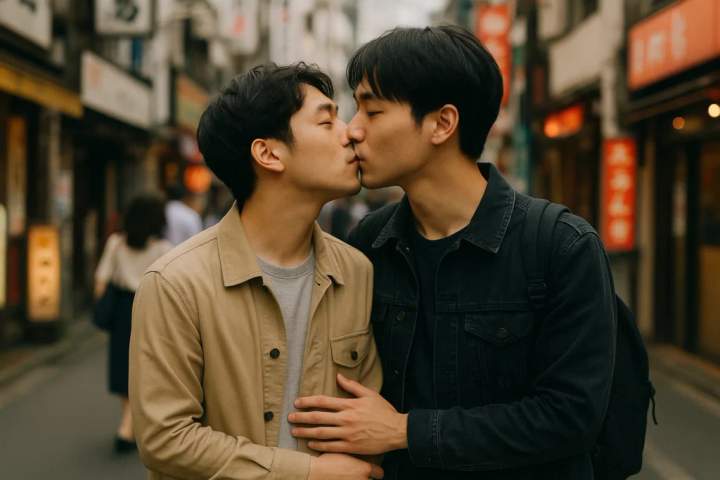
For same-sex couples, the PDA rules are the same as for heterosexual couples — but the social context adds nuance. Japan’s taboo around PDA is broadly cultural rather than specifically anti-LGBTQ+. Holding hands as a same-sex couple in a major city is unlikely to attract hostility, though it may attract curious looks. More physical affection in public carries the same risks as it would for any couple: social discomfort, stares, but no legal consequence.
One unique note: it’s common in Japan for young female friends to hold hands or link arms platonically. If you and your partner are both feminine-presenting, people may simply not read you as a couple at all.
LGBTQ+ travelers generally report Japan’s major cities as safe and welcoming, even if not overtly rainbow-flag-friendly outside of specific neighborhoods like Shinjuku Ni-chōme in Tokyo.
If You’re in a Relationship with a Japanese Person
If your partner is Japanese and you’re from a more openly affectionate culture, PDA differences can be a real friction point — and it’s not about love.
A few things to keep in mind:
It’s cultural, not personal. Your Japanese partner pulling back from a kiss in public isn’t rejecting you. They’re navigating a deeply ingrained social norm, often reinforced across their entire upbringing.
Have the conversation early. Rather than waiting for an awkward moment, talk openly about what each of you finds comfortable. Most intercultural couples find a middle ground — maybe a quick kiss is fine, but no kissing in front of colleagues or family.
Context within Japan matters too. Even Japanese couples follow unspoken hierarchies: less affection around family, almost none around coworkers, slightly more possible among close friends.
Is Japan Changing?
Yes, slowly. Younger Japanese people, especially those in cities, are gradually more comfortable with public affection than previous generations. K-drama and Western media influence is part of it. Dating apps have also shifted how relationships begin and are perceived publicly.
But “slowly” is the key word. The core social norm around restraint in public remains strong, and visitors to Japan are not going to be the ones to change it. The respectful approach is to read the room, dial back physical affection in shared public spaces, and save the romance for private moments.
The Bottom Line
You won’t get arrested for kissing in Japan. But you will make people uncomfortable, and in a culture built around not causing meiwaku, that matters. Hold hands freely. Link arms in the city. Save kisses for private spaces or at least quiet, uncrowded ones.
Respecting this norm isn’t about suppressing your relationship; it’s about being a thoughtful guest in a country that values social harmony above individual expression. Most couples who visit Japan find it doesn’t diminish the romance at all — if anything, a little restraint in public makes the private moments feel more intentional.
Related JoynTokyo reads

Ultimate Guide to Driving in Japan
A driver spent a week cruising Hokkaido and called it the most relaxing road trip of his life. Another took a mountain route from Kusatsu to Kanazawa and described it as “like being dialled into an F1 race car.” Both were experienced drivers. Both were in Japan. Both are right. Honestly, driving in Japan is

Cash vs Card in Japan: What Should You Use in 2026?
People who went to Japan five years ago will tell you cash is king. People who went last month will tell you they barely touched a note. Both are telling the truth, they just had different trips. The honest answer for 2026 is this: Japan has changed significantly. Most major establishments in cities now accept

Sheila Cliffe on The Kimono Closet and the Stories Kimono Hold
Sheila Cliffe is a longtime kimono researcher and the author of Kimono Style. In her new book, The Kimono Closet, she looks beyond kimono as fashion or art objects and instead explores their deeper place in family life, memory, and identity. She spoke with JoynTokyo to give us an exclusive look at the new book,