
Valentine’s Day in Japan: A Complete Guide to Japanese Valentine’s Traditions
Valentine’s Day in Japan offers a fascinating twist on the Western celebration of love. Unlike the mutual gift-giving tradition familiar to many, Japanese Valentine’s Day follows unique customs that might surprise first-time visitors and cultural enthusiasts alike. Is Valentine’s Day Celebrated in Japan? Yes, Valentine’s Day is celebrated in Japan, and it’s actually one of
Valentine’s Day in Japan offers a fascinating twist on the Western celebration of love. Unlike the mutual gift-giving tradition familiar to many, Japanese Valentine’s Day follows unique customs that might surprise first-time visitors and cultural enthusiasts alike.
Is Valentine’s Day Celebrated in Japan?

Yes, Valentine’s Day is celebrated in Japan, and it’s actually one of the biggest commercial holidays of the year. However, the way Valentine’s Day is celebrated in Japan differs significantly from Western traditions, making it a uniquely Japanese cultural phenomenon that generates billions of yen in chocolate sales annually.
When is Valentine’s Day in Japan?
Valentine’s Day in Japan is celebrated on February 14th, the same date as in Western countries. However, the Japanese Valentine’s celebration extends to March 14th with White Day, when men reciprocate the gifts they received. This two-part celebration makes the Valentine’s season in Japan span an entire month.
How is Valentine’s Day Celebrated in Japan?
Valentine’s Day is celebrated in Japan primarily through chocolate gift-giving, but with one significant difference from Western customs: only women give gifts to men on February 14th. This gender-specific tradition has been the norm since the holiday was introduced to Japan in the 1950s by chocolate companies looking to expand their market.
The reciprocal holiday, White Day, occurs exactly one month later on March 14th, when men return the favor by giving gifts to the women who gave them chocolates.
Giri-choco vs Honmei-choco: Understanding Japanese Valentine’s Chocolate
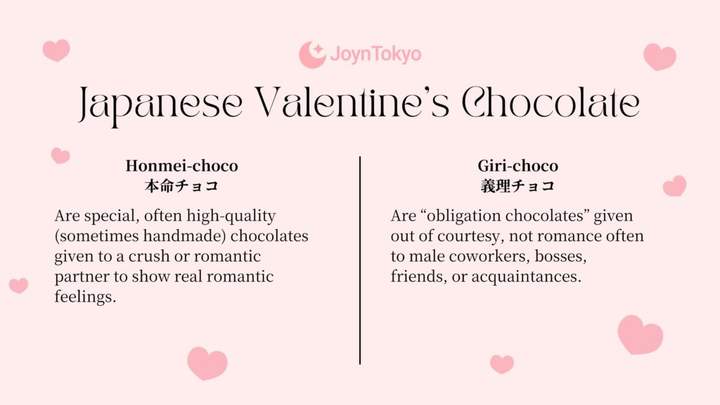
Japanese Valentine’s Day revolves around chocolate, but not all chocolates carry the same meaning. Understanding these distinctions is essential to navigating the holiday in Japan.
Honmei-choco (本命チョコ) translates to “true feeling chocolate” and represents chocolates given to someone special – a romantic partner, crush, or potential love interest. These are typically high-quality, expensive chocolates, often handmade to show extra care and affection.
Giri-choco (義理チョコ) means “obligation chocolate” and refers to chocolates given out of social obligation rather than romantic interest. Women give these to male colleagues, bosses, friends, and acquaintances.
Additional categories have emerged in recent years, including tomo-choco (友チョコ) or “friend chocolate” exchanged between female friends, and jibun-choco (自分チョコ) or “self chocolate” that women buy for themselves as a personal treat, because self love is just as important.
Valentine’s Day Shopping in Japan
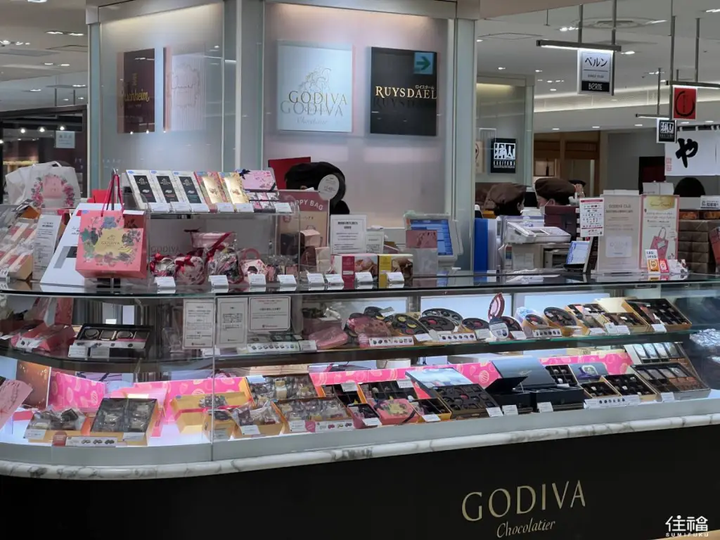
During the weeks leading up to Valentine’s Day in Japan, department stores transform into chocolate wonderlands. Elaborate Valentine’s displays feature both domestic and international chocolatiers, with some stores dedicating entire floors to Valentine’s merchandise.
Popular shopping destinations include major department stores like Isetan, Takashimaya, and Mitsukoshi, which host special Valentine’s fairs featuring luxury chocolate brands from around the world. Many women spend considerable time selecting the perfect chocolates, with prices ranging from a few hundred yen for giri-choco to tens of thousands of yen for premium honmei-choco.
Handmade chocolate has also become increasingly popular, with baking supply stores experiencing a surge in business as women purchase ingredients and molds to create personalized chocolates for their loved ones.
White Day: The Japanese Response to Valentine’s Day
White Day, celebrated on March 14th, completes the Valentine’s Day cycle in Japan. Men who received chocolates on Valentine’s Day are expected to return gifts, typically worth two to three times the value of what they received – a concept known as “sanbai gaeshi” or “triple return.”
Traditional White Day gifts include white chocolate, marshmallows, cookies, and candy, though jewelry, accessories, and other presents have become increasingly common. The color white symbolizes purity and is considered an answer to the sweet gesture received on Valentine’s Day.
Modern Trends and Changes in Japanese Valentine’s Culture
Japanese Valentine’s Day traditions continue to evolve. In recent years, there’s been pushback against mandatory giri-choco in the workplace, with some companies even banning the practice to reduce financial and social pressure on female employees.
The concept of tomo-choco has grown significantly, with female friends exchanging chocolates as a celebration of friendship rather than romance. Self-gifting has also become more accepted, with women treating themselves to luxury chocolates without any social obligation attached.
Premium and artisanal chocolates have gained popularity over mass-produced options, reflecting changing consumer preferences toward quality and craftsmanship. Bean-to-bar chocolate makers and boutique chocolatiers have carved out significant market share in recent years.
Valentine’s Day Dining and Special Events in Japan
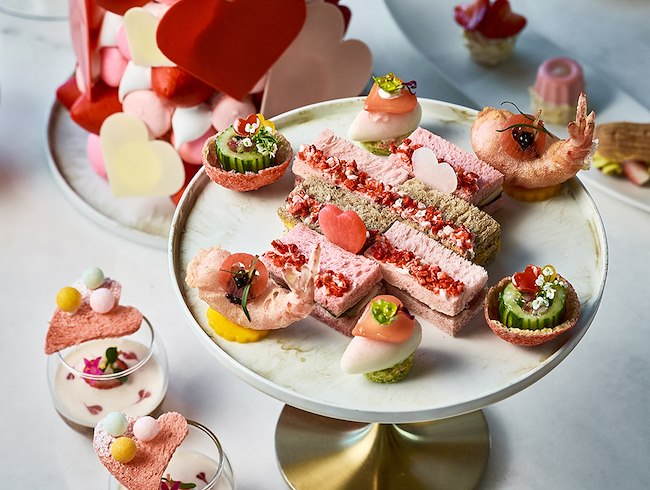
Many restaurants and hotels in Japan offer special Valentine’s Day menus and packages, though these are often targeted at couples celebrating together rather than the traditional one-way gift-giving. Theme parks like Tokyo Disneyland and Universal Studios Japan create Valentine’s themed decorations and limited-edition merchandise.
Romantic spots like Tokyo Tower, Tokyo Skytree, and various observation decks offer special illuminations and couple-friendly experiences during the Valentine’s season.
The Cultural Significance of Valentine’s Day in Japan
Valentine’s Day in Japan reflects important aspects of Japanese culture, including the emphasis on social harmony, gift-giving customs, and gender roles, though these are gradually evolving.
The holiday provides a socially acceptable opportunity for women to express romantic feelings in a culture where direct confession can be challenging. The structured nature of the celebration, with clearly defined roles and expectations, aligns with Japanese preferences for social order and clear communication.
As traditions continue to evolve, Valentine’s Day in Japan remains a fascinating blend of commercial enterprise, social obligation, and genuine expressions of affection.
Related JoynTokyo reads

Ultimate Guide to Driving in Japan
A driver spent a week cruising Hokkaido and called it the most relaxing road trip of his life. Another took a mountain route from Kusatsu to Kanazawa and described it as “like being dialled into an F1 race car.” Both were experienced drivers. Both were in Japan. Both are right. Honestly, driving in Japan is
Cash vs Card in Japan: What Should You Use in 2026?
People who went to Japan five years ago will tell you cash is king. People who went last month will tell you they barely touched a note. Both are telling the truth, they just had different trips. The honest answer for 2026 is this: Japan has changed significantly. Most major establishments in cities now accept
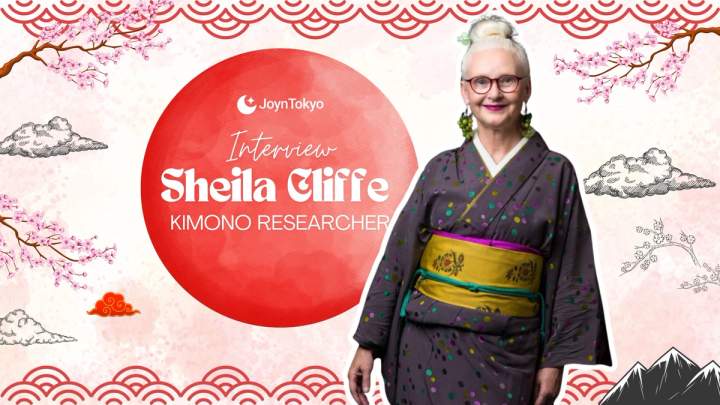
Sheila Cliffe on The Kimono Closet and the Stories Kimono Hold
Sheila Cliffe is a longtime kimono researcher and the author of Kimono Style. In her new book, The Kimono Closet, she looks beyond kimono as fashion or art objects and instead explores their deeper place in family life, memory, and identity. She spoke with JoynTokyo to give us an exclusive look at the new book,