
Hidden Tourist Spots in Japan 2026: For Travellers Who Want More
Most people go to Tokyo. Kyoto. Osaka. That’s fine. Those cities are great. But if you’ve already done that route, or you’re the type who hates crowds, Japan is hiding something from you. Misty gorges. Glowing rice terraces. Rivers so clear they look fake. Towns frozen in the 1800s. And almost nobody is there. This

Most people go to Tokyo. Kyoto. Osaka.
That’s fine. Those cities are great.
But if you’ve already done that route, or you’re the type who hates crowds, Japan is hiding something from you.
Misty gorges. Glowing rice terraces. Rivers so clear they look fake. Towns frozen in the 1800s.
And almost nobody is there.
This is the guide for those places.
14 hidden tourist spots in Japan. What makes each one special, when to go, and exactly how to get there.
Here’s the deal – these places take a little more work to reach. Some need a rental car. Some need perfect timing. All of them are worth it.
That’s the trade. It’s a good one.
What Are the Best Hidden Tourist Spots in Japan Near Tokyo?
Tokyo is one of the best cities on earth.
But 30 minutes outside it? Most travelers have no idea what’s waiting.
Take the train from Ikebukuro.
30 minutes. ¥480.
You’ll step off and feel like you travelled 200 years back.
Kawagoe earned its nickname “Little Edo” honestly. Dark clay storehouses line the streets. Built fireproof after a devastating 1893 blaze. Still standing. Now they sell pottery, sweets, and local crafts.
The Toki no Kanebell tower rings on the hour. It’s been doing that since 1893.
The best part? This isn’t a theme park. People actually live here. Locals shop alongside you. It feels real, because it is.
Is Nikko Worth Visiting?
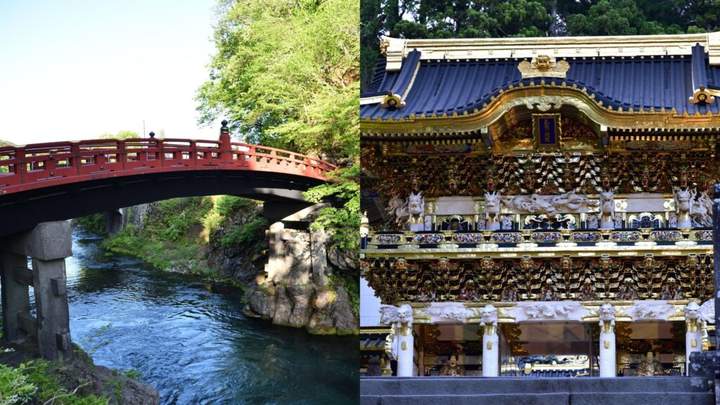
Many people put Nikko on their list.
Not many actually go.
That’s a mistake.
The Toshogu Shrine is possibly one of the most decorated wooden buildings on earth. Gold leaf. Lacquerwork. Intricate carvings. Built by 15,000 craftsmen over two years. The famous “See No Evil” monkeys were carved here. Ancient cedar forest surrounds everything.
Then there’s Kegon Falls, dropping 97 meters into a mist-filled gorge.
And the lake above it. And the mountain road that turns completely orange and red in autumn.
Nikko isn’t a single sight. It’s an entire world.
Heading to Nikko? You’ll pass through Ueno. It’s the gateway. Museums. Parks. The express route north. Read our complete guide to Ueno: museums, parks, and access to Nikko for the full breakdown.
Where Can You See Wisteria Trees in Japan? (This Garden Is Unlike Anything Else.)
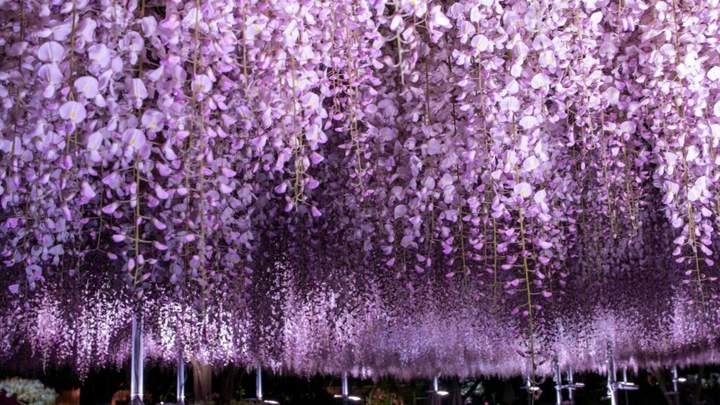
For about three weeks each spring, Ashikaga Flower Park becomes one of the most visually insane places on earth.
Wisteria trees over 150 years old. Trained into canopy tunnels. Thousands of purple flower clusters hanging above your head.
The scale is disorienting. The scent is overwhelming. The light filtering through the petals is the kind of thing cameras struggle to capture.
There’s also an evening illumination. The flowers glow like lanterns, it’s even better than the daytime.
Planning your visit around the cherry blossoms? Timing is everything. Read our complete guide to hanami (cherry blossom viewing) in 2026 for the full breakdown.
What Is the Best Place to See Mount Fuji Off the Beaten Path?
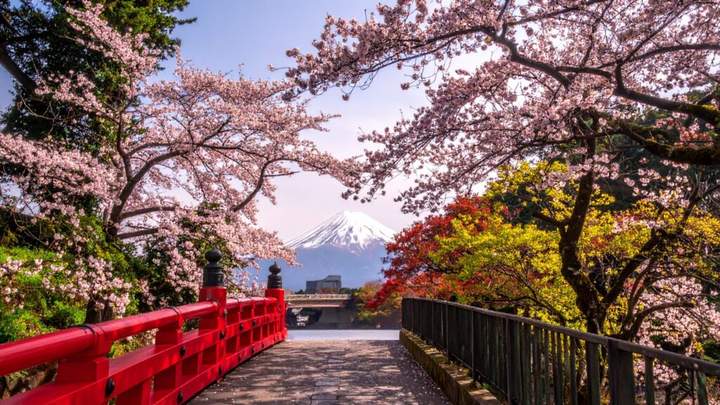
You’ve seen Mount Fuji from every angle.
You haven’t seen it like this.
For six weeks each spring, an enormous field of moss phlox blooms pink and white at the base of the mountain. The flowers carpet the ground. The mountain is still capped with snow. On a clear morning, it looks unreal.
It isn’t.
Mount Fuji loves hiding in clouds. Stay two or three nights near Kawaguchiko. Catch the mountain when it emerges early. That’s when the light is warmest and the crowds haven’t arrived from Tokyo.
What Are the Best Hidden Tourist Spots in Japan’s North?
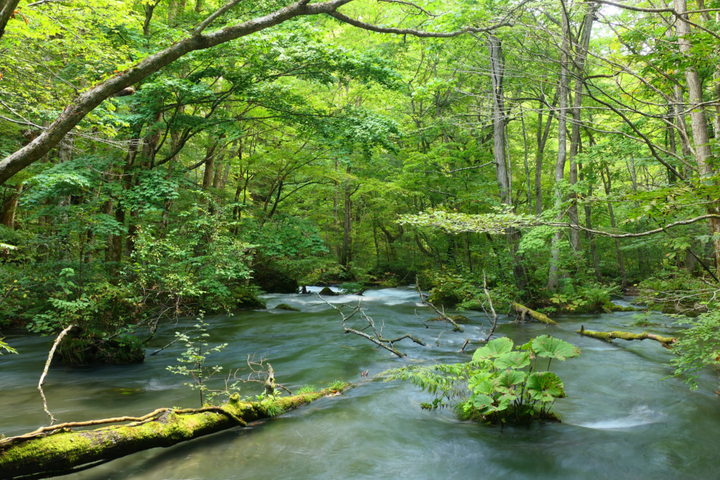
Tohoku is the most underexplored region in Japan.
Mountains. Deep tradition. Almost no international tourists.
Yet, most travelers fly over it on the Shinkansen to Kyoto.
What Is the Most Atmospheric Onsen in Japan?
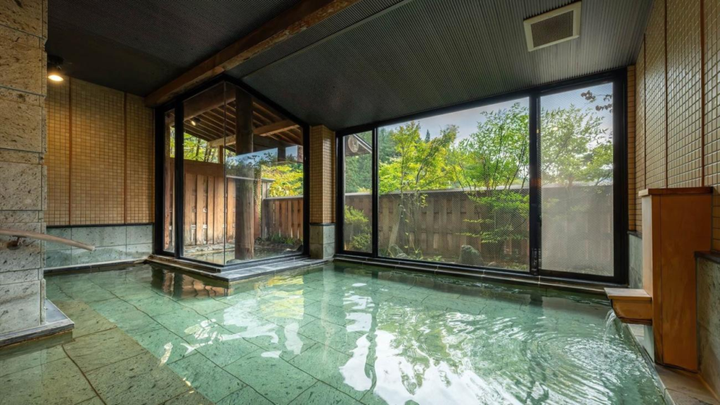
Deep in the Akita mountains. Seven traditional ryokan inns. Each with its own spring.
Some milky white. Some rust-brown. Some clear. Every single one is different.
This cluster of inns is called Nyuto Onsen. The most celebrated one is Tsuru-no-Yu, which has been running since the Edo period. Open-air sulfur pools. Wooden structures. Forest that looks identical in photos from 100 years ago.
In winter, the whole area gets buried in snow. It looks like another world.
Almost no international tourists come here.
While in Tohoku during autumn, be sure to try imoni, the region’s traditional soup, learn more in our guide to Imoni Japan Autumn Soup imoni, the autumn soup tradition of Tohoku.
Where Can You Find the Most Beautiful Forest Walk in Japan?
14 kilometers of ancient forest.
A rushing stream. Waterfalls appear every few hundred meters. Moss so deep it creates a texture on every rock and stone.
Oirase Gorge in Aomori Prefecture offers something genuinely rare: complete sensory immersion in nature, within reach of a Shinkansen station.
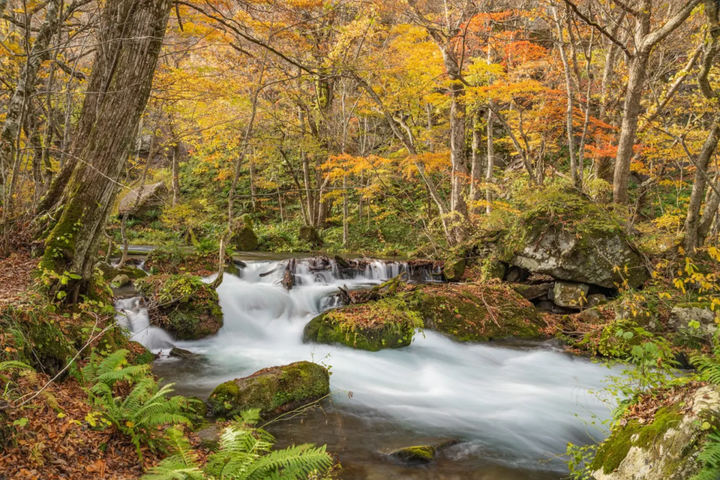
In autumn, beech and maple trees turn gold and copper above the trail. The colors reflect in the dark water below. The forest muffles all sound in a way cities never do.
Photographers and nature travelers consistently call this the best experience in Japan.
Where to See Autumn Leaves in Japan Without the Crowds?
Kyoto in autumn is stunning.
It’s also a queuing exercise.
Naruko Gorge in Miyagi Prefecture gives you the same experience – with a fraction of the visitors. A canyon 100 meters deep. Walls covered in red, orange, and gold each October. Viewing platforms that look straight down into the canyon.
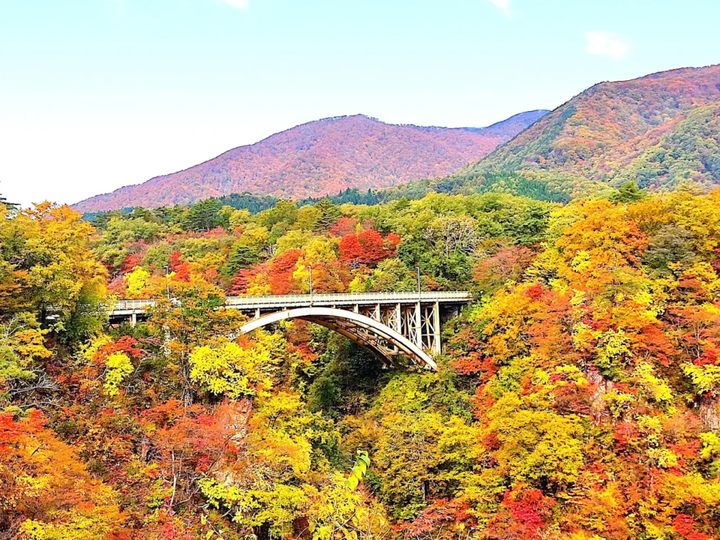
Combine it with a night at one of the local ryokan. The sulfurous onsen water here has been flowing since the 9th century.
New to Japanese hot springs? There’s a specific etiquette involved. Read our complete guide to Japanese onsen rules for first-timers for more information.
What Does Rural Japan Actually Look Like?
Hoshitoge no Tanada in Niigata Prefecture is largely unknown outside Japan.
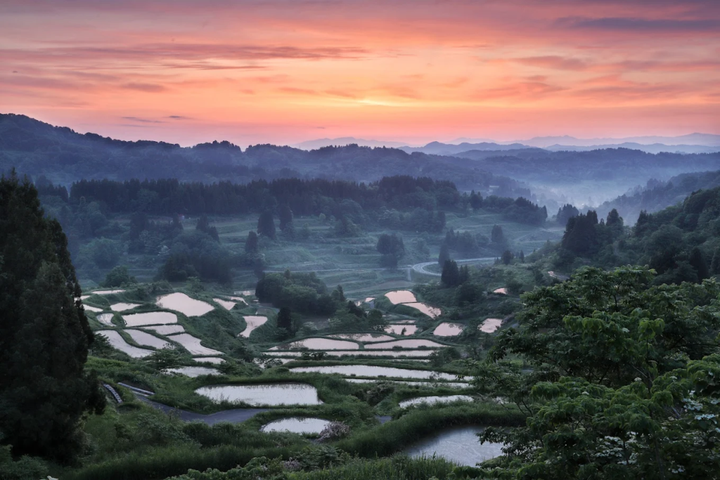
About 200 rice paddies cascade down a hillside in curved, layered formations.
In late spring, before planting, every terrace fills with water. At sunrise, the whole hillside becomes a stack of golden mirrors ascending into low clouds.
There’s no entrance fee. No gift shop. No queue. Just a small car park and a single viewing platform.
Birdsong. Mountain air. Farmers starting their morning work as the light changes.
Getting here requires a car. That’s partly what keeps it this way.
What Is Japan’s Most Underrated Photography Spot?
Mishaka Pond in Nagano Prefecture is permanently set to fine art photography mode.
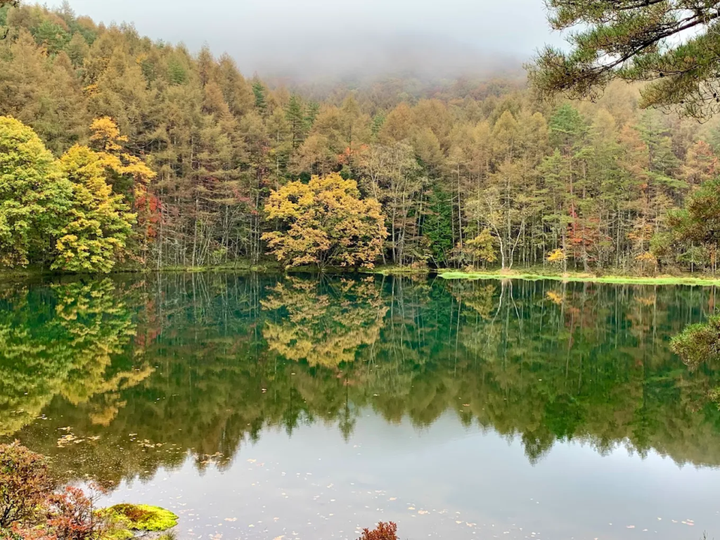
Mountain-spring fed. Sheltered from wind. The reflections are almost sharper than the landscape they mirror.
In spring, new green larch trees reflect with a clarity that looks digitally enhanced. In autumn, orange and amber. Both versions are extraordinary.
Largely undiscovered by international visitors. Even on busy domestic weekends, you can find a quiet moment at the water’s edge.
What Are the Hidden Tourist Spots in Japan’s South and West?
Shikoku and Kyushu. Fewer tourists. Bigger landscapes. A completely different atmosphere from Kansai.
Most international travelers never make it here.
That’s their loss. And your gain.
Where Is the Clearest River in Japan?
Kochi Prefecture, Shikoku.
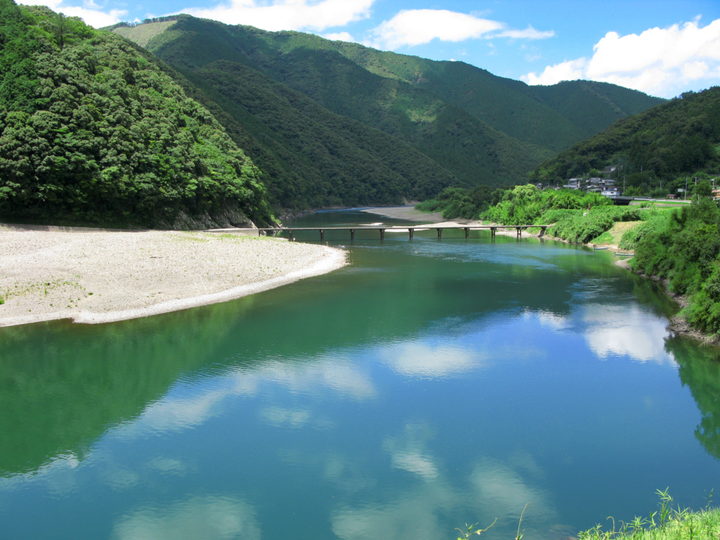
The Niyodo River runs in a shade of blue-green so vivid that photos of it are routinely assumed to be edited.
No agricultural contamination. Mountain springs. The locals call it Niyodo Blue. It’s something you need to see in person to understand.
Don’t treat it as a single sight. Explore the whole river area. Several pools and gorge sections offer the color at different intensities.
A rental car is essential here. There’s no other way to experience the full river.
What Is the Most Cinematic Place in Japan?
Takachiho Gorge in Miyazaki Prefecture. Ancient volcanic basalt columns rising 100 meters. A waterfall dropping directly into the canyon. Rowboats taking you through it all at river level.
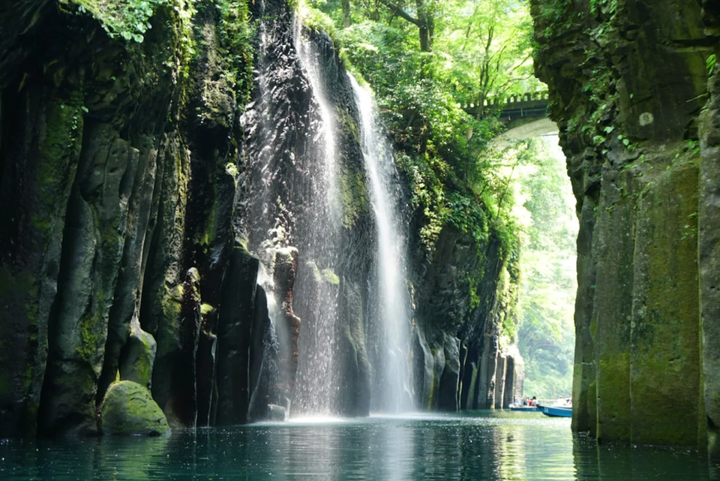
Looking up at the rock walls from a rowboat while mist drifts around you – genuinely cinematic.
But the real hidden gem isn’t the gorge.
It’s what happens after dark.
After the last buses leave, the gorge empties almost completely. The town centers on Takachiho Shrine, where a traditional Yokagura ritual dance performance takes place every single night. Intimate audience. Masked dancers. Musicians. Stories from Japanese mythology — performed essentially unchanged for centuries.
The gorge and the Yokagura together are far greater than the sum of its parts.
What Is Japan’s Best Kept Secret for Art and Nature Combined?
Mifuneyama Rakuen in Saga Prefecture. A 180-year-old garden. A 234-meter rock face as its backdrop.
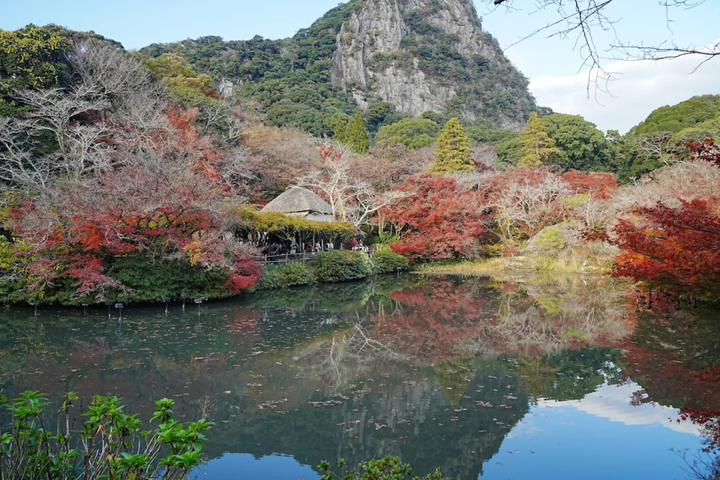
During the day: beautiful. Wisteria, azaleas, maples, dramatic cliffs.
At night during the illumination season: something else entirely.
Art collective teamLab transforms the entire garden. Projections animate the ancient trees. Light flows across the ponds. The rock face becomes a canvas for enormous, slow-moving nature animations.
Unlike teamLab’s Tokyo installations, this doesn’t feel like a tech demo. The old garden and the contemporary light art create something that feels earned. Rare. Real.
And because Saga sits well off most foreign itineraries — it stays accessible. Relatively uncrowded. Completely worth the detour.
Why Should You Stay Overnight on Miyajima?
Yes. You’ve seen the floating torii gate. Here’s the thing: three million people visit Miyajima each year. Almost all of them arrive as day trippers from Hiroshima. They photograph the gate and leave by late afternoon.
By 6pm, the island is transformed.
The deer that roam freely become calmer. The lanes empty. The gate – lit by lanterns reflects in the tidal water with a stillness the daytime photo-rush never allows.
At dawn, if you stay overnight, the island is almost entirely yours.
Beyond the gate, Miyajima has depth that day-trippers never find. Mount Misen, the island’s 535-meter peak, offers views across the Seto Inland Sea on clear days. Its ancient forest contains a temple where a flame lit 1,200 years ago is said to still burn.
Be aware of public holidays that may affect travel, like National Foundation Day, and what it means for travel in Japan.
Planning Your Trip to Hidden Tourist Spots in Japan: What You Actually Need to Know?
Do You Need a Rental Car to Visit Hidden Spots in Japan?
For some of them, yes.
A JR Pass plus regional rail and buses will cover most destinations on this list. But Hoshitoge Rice Terraces, Mishaka Pond, and the Niyodo River genuinely require a car.
The good news: driving in Japan is far less intimidating than its reputation suggests. Roads are excellent. Signage is consistent. Traffic rules are strictly observed. An international driving permit is all you need.
When Is the Best Time to Visit Hidden Tourist Spots in Japan?
Unlike Japan’s major cities — which reward visits year-round — many of these spots have a specific window when they’re at their absolute best.
The wisteria at Ashikaga. The Shibazakura at Fuji. The reflections at Hoshitoge. The foliage at Naruko and Oirase.
All of these are tied to natural calendars that shift slightly each year.
Check official festival websites and regional tourism boards a few weeks before your visit for current predictions.
How Far in Advance Should You Book for Hidden Japan Destinations?
Some places fill up months ahead.
Nyuto Onsen’s Tsuru-no-Yu. Any overnight ryokan on Miyajima. Takachiho accommodation during autumn.
If accommodation is on your must-do list, book it before you book your flights.
Final Thoughts: The Japan That Waits When You Leave the Route
The Golden Route exists because its cities are genuinely world-class.
But the Japan that stays with travelers longest – the places they describe years later, the photos they print and frame is almost always somewhere unexpected.
A misty gorge at dawn. A garden glowing with projected light. A hot spring in a snowfield with no one else in sight. A rice terrace catching the first light of morning in stacked golden mirrors all the way up a mountain.
These hidden tourist spots in Japan are accessible. They don’t require specialist gear or weeks of planning.
They require curiosity. A willingness to go one step beyond the obvious. And occasionally an early alarm call.
The reward is Japan in a register that most visitors never experience.
Quieter. Older. And in many ways, more beautiful than the Japan the guidebooks made famous.
Related JoynTokyo reads

Ultimate Guide to Driving in Japan
A driver spent a week cruising Hokkaido and called it the most relaxing road trip of his life. Another took a mountain route from Kusatsu to Kanazawa and described it as “like being dialled into an F1 race car.” Both were experienced drivers. Both were in Japan. Both are right. Honestly, driving in Japan is

Cash vs Card in Japan: What Should You Use in 2026?
People who went to Japan five years ago will tell you cash is king. People who went last month will tell you they barely touched a note. Both are telling the truth, they just had different trips. The honest answer for 2026 is this: Japan has changed significantly. Most major establishments in cities now accept

Sheila Cliffe on The Kimono Closet and the Stories Kimono Hold
Sheila Cliffe is a longtime kimono researcher and the author of Kimono Style. In her new book, The Kimono Closet, she looks beyond kimono as fashion or art objects and instead explores their deeper place in family life, memory, and identity. She spoke with JoynTokyo to give us an exclusive look at the new book,