
How to Study in Japan – A Complete Guide to Schools, Universities and Visas
Thinking about studying in Japan can feel exciting and overwhelming at the same time. There are language schools, full degree programs, scholarships with long names, and a lot of paperwork that nobody really explains clearly. This guide walks you through the whole journey in a human way, step by step, so you can move from

Thinking about studying in Japan can feel exciting and overwhelming at the same time. There are language schools, full degree programs, scholarships with long names, and a lot of paperwork that nobody really explains clearly.
This guide walks you through the whole journey in a human way, step by step, so you can move from vague dream to actual plane ticket with confidence. We will cover language schools, university programs, vocational schools, visas, scholarships, money, and life after you land in Japan.
If your goal is to study in Japan, keep this open as your roadmap.
Clarify your goals and timeline
Before looking at schools, be very honest about why you want to study in Japan. This sounds simple, but it changes everything about which path makes sense for you.
Ask yourself:
- Do you want to focus on Japanese language first, then move into university or work?
- Are you aiming for a full degree from a Japanese university?
- Do you only want a short experience, like a semester abroad or a summer program?
- How long can you realistically stay, and what budget do you have?
Write down your answers. Your goal plus your timeline will decide whether a Japanese language school, university program, vocational school, or short term program is the best fit.
Main study options in Japan
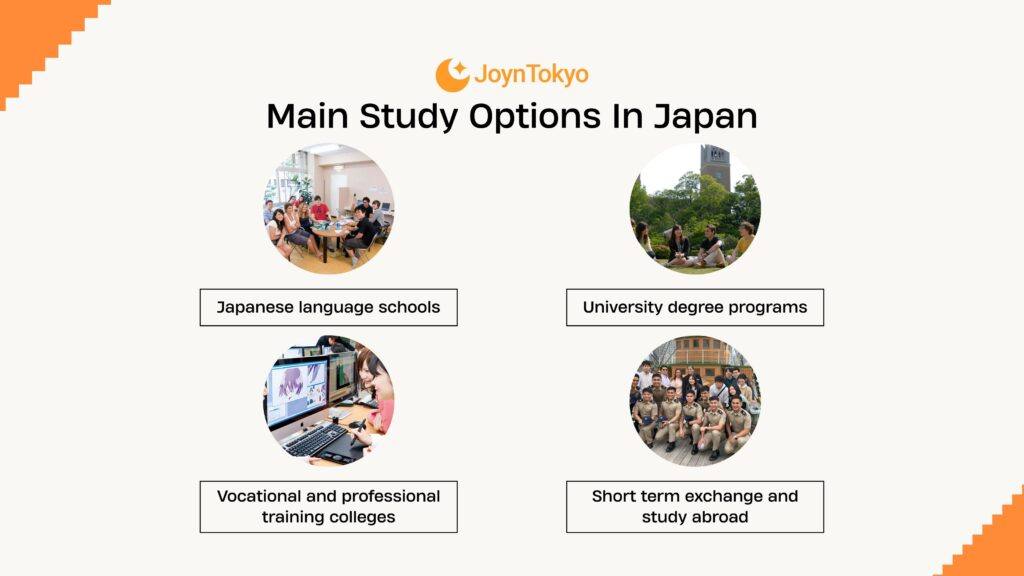
Japan offers several routes for international students. Here are the most common ones and who they suit best.
Japanese language schools
Programs can be short and intensive for just a few weeks, or you might settle into a routine that lasts one or even two years. In the classroom you sit beside classmates from across Asia, Europe and many other regions, so the atmosphere feels international even while you are fully immersed in Japanese.
For a one year long term program, tuition is often in the range of about 850,000 to 980,000 yen, including registration and materials, though exact fees depend on the school and city.
Language schools are perfect if:
- Your Japanese level is beginner or intermediate
- You want time to adjust to life in Japan
- You are not ready to jump straight into a university entrance exam in Japanese
University degree programs
If you already have strong academic records and a clear field of study, you can apply directly to a Japanese university for an undergraduate or graduate degree.
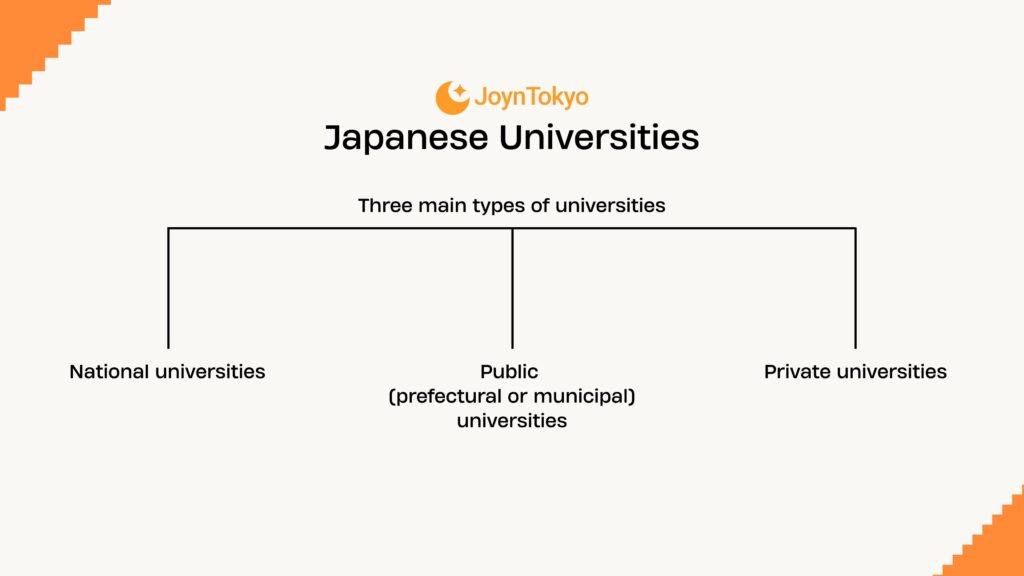
There are three main types of universities:
- National universities
- Public (prefectural or municipal) universities
- Private universities
Average annual tuition at national universities is around 535,800 yen, with an additional admission fee in the first year, although there are ongoing discussions and some plans to raise fees for international students by around twenty percent in the coming years. Private universities can range widely, often up to two million yen per year for some programs.
Many universities now offer a wide range of study options, including programs taught fully in English at both the undergraduate and graduate level, mixed programs that begin in English and gradually transition into Japanese, and international colleges or global tracks that operate within larger universities.
University programs in Japan are a great fit if you are aiming for an internationally recognized degree, have solid grades and test scores, and are ready to commit to a long academic journey. Most bachelor programs require at least four years of study, and master programs typically take two, so this path works best for students who are prepared to settle in, focus deeply on their field, and build a strong academic foundation over time.
Vocational and professional training colleges
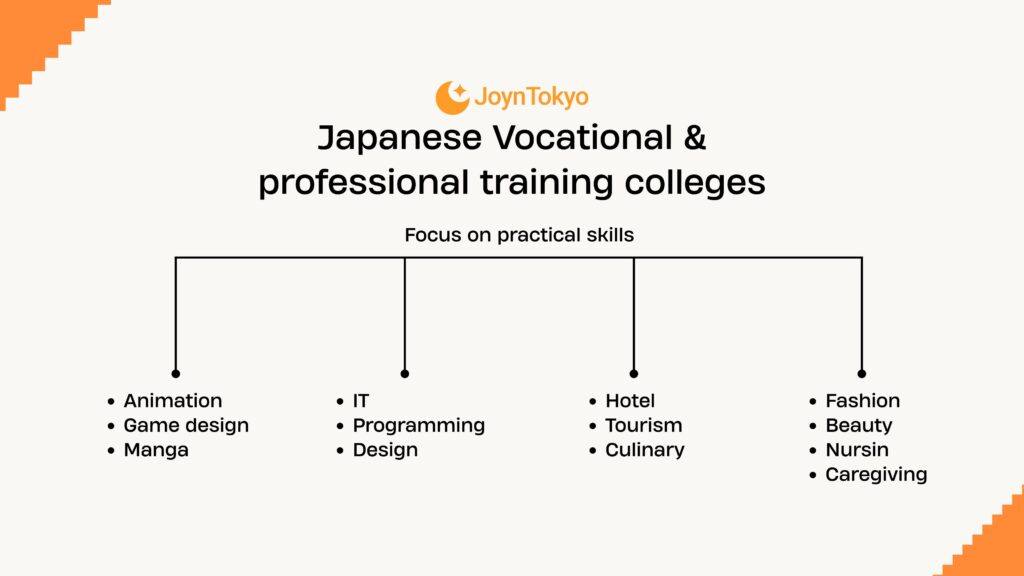
Specialized training colleges (senmon gakkou) focus on practical skills, for example:
- Animation, game design, manga
- IT, programming, design
- Hotel, tourism, culinary
- Fashion, beauty, nursing and caregiving
These programs usually last two to three years and are more hands on than a traditional university. Some schools accept students with intermediate Japanese if you can follow classes, while others require a certain Japanese level or test scores.
This route works well if your goal is to gain concrete job skills and maybe work in Japan in a specific industry later.
Short term exchange and study abroad
If you are already a student at a university in your home country, check if they have an exchange agreement with a Japanese university.
Exchange and study abroad options often include spending one semester or a full year in Japan, paying tuition to your home university while attending classes at the partner institution, taking courses in Japanese, English, or a combination of both, and benefiting from easier credit transfer when you return home.
These programs are ideal if you want deep experience in Japan but need to finish your main degree elsewhere.
Other paths, research, teacher training and more
Japan also offers:
- Research student status at graduate schools, often a stepping stone to a full master or PhD
- Teacher training programs
- Japanese studies programs for one year
- Summer or winter schools focused on language or culture
Many of these are connected to the Japanese Government MEXT Scholarship, which has multiple categories, such as research, undergraduate, teacher training, college of technology, and specialized training college students.
Check basic eligibility and language requirements
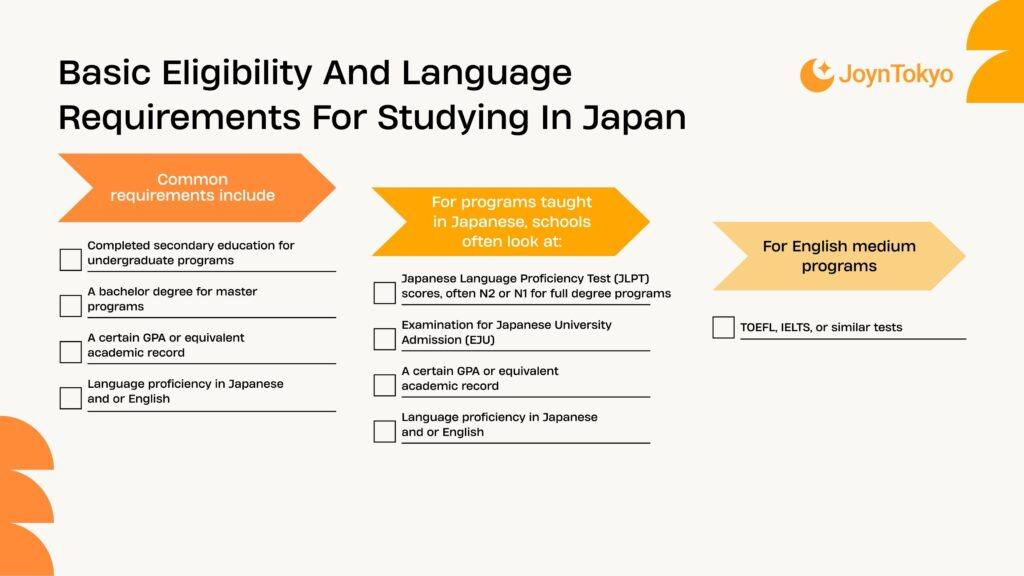
Once you have a rough path, check what each type of school expects from you.
Common requirements include:
- Completed secondary education for undergraduate programs
- A bachelor degree for master programs
- A certain GPA or equivalent academic record
- Language proficiency in Japanese and or English
For programs taught in Japanese, schools often look at:
- Japanese Language Proficiency Test (JLPT) scores, often N2 or N1 for full degree programs
- The Examination for Japanese University Admission for International Students, often called the EJU, used by many universities to judge your Japanese and academic ability for undergraduate study.
For English medium programs, universities may accept:
- TOEFL, IELTS, or similar tests
- In some MEXT scholarship programs, surprisingly, language tests are not always strictly required, though strong language skills still help your application.
Read the official application pages carefully for each school and program. Requirements can differ even within the same university.
Understand EJU, JLPT and other key exams
If you are aiming for a Japanese taught degree program or certain vocational schools, you will often meet two big acronyms: EJU and JLPT.
EJU – Examination for Japanese University Admission
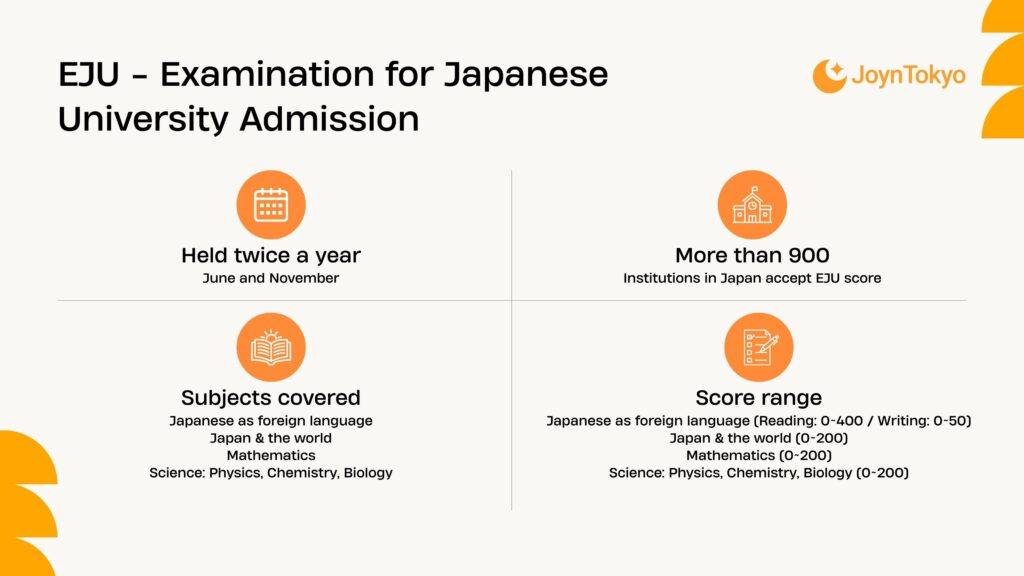
The EJU is held twice a year, usually in June and November, and many students take it more than once since the scores remain valid for two years. The exam covers several subjects, including Japanese as a foreign language, science, Japan and the world, and mathematics, and you select the sections based on your intended major, whether you are aiming for a humanities program or a science focused field.
Some universities require EJU scores; others use them as one of several evaluation tools along with interviews and their own tests.
JLPT – Japanese Language Proficiency Test
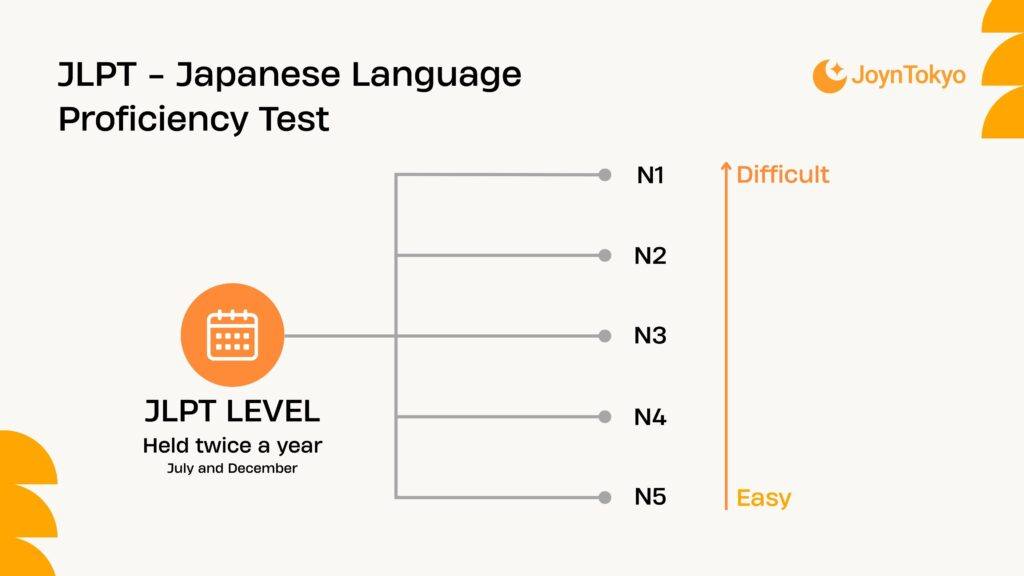
JLPT measures your general Japanese ability and ranges from N5, beginner, to N1, advanced.
Many schools and companies in Japan use JLPT as a convenient benchmark. For example:
- N2 is often the minimum for university courses taught fully in Japanese
- N1 is ideal if you want to attend demanding programs or work in more specialized jobs later
Even if your program is in English, studying for JLPT will make daily life, part time work and future career options much easier.
English Tests and Other Exams
For English medium programs, prepare for tests like:
- IELTS Academic
- TOEFL iBT
Some competitive programs also look at SAT, ACT, GMAT, or GRE scores for specific majors, especially business and international programs.
Calculate a Realistic Budget
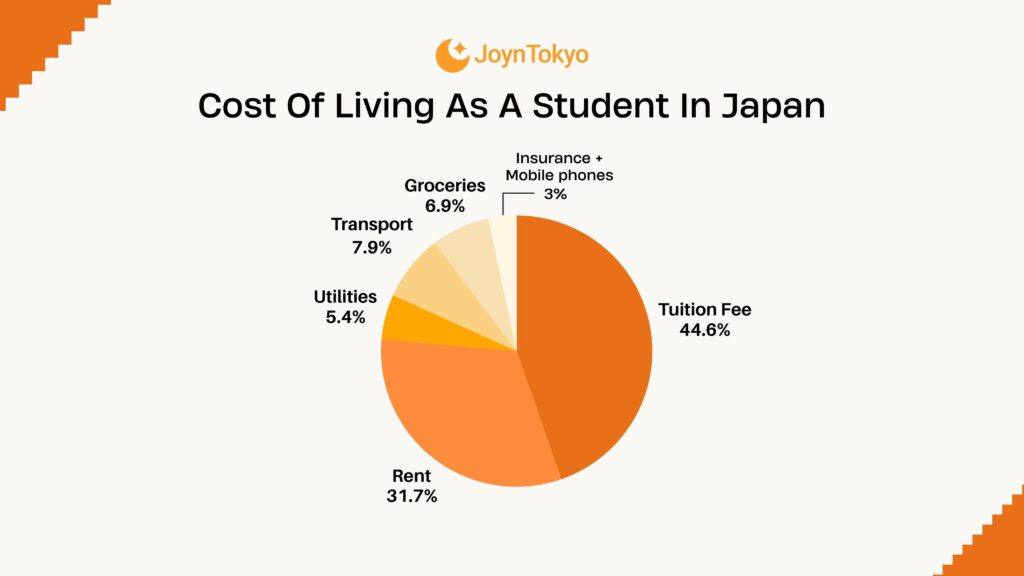
Money is one of the biggest stress points for international students, and planning ahead can make the entire experience feel much more manageable. Costs vary widely depending on the type of school, the city you choose, and your lifestyle, so it helps to start with general estimates and then refine your numbers as you narrow down your options. Thinking slightly pessimistically at this stage gives you a safer cushion later on, especially once you factor in housing, food, and unexpected expenses.
Tuition
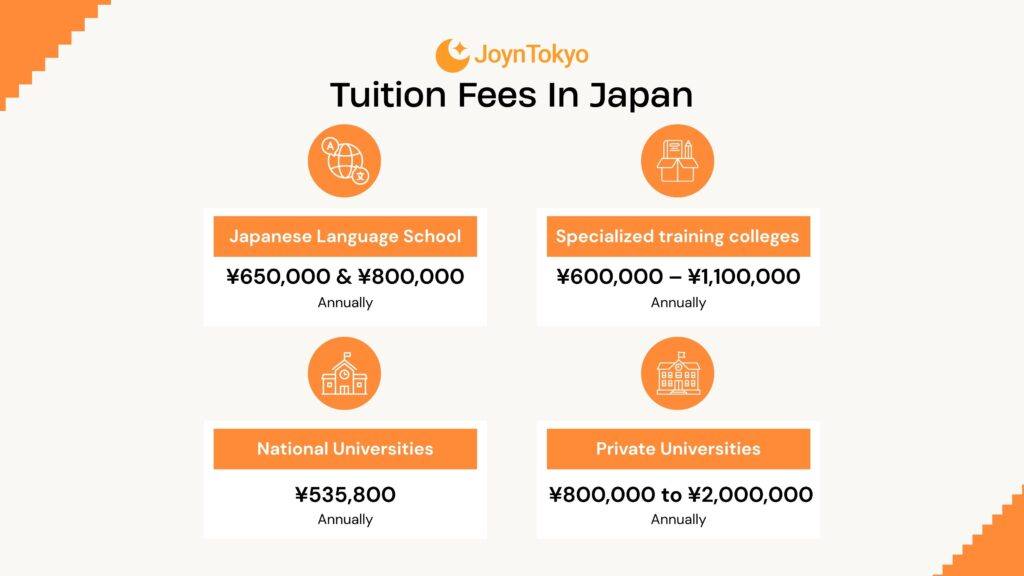
Approximate figures for 2024 and 2025 give a helpful starting point:
Japanese language schools (long term programs):
Tuition often falls somewhere between ¥650,000 and ¥800,000 yen per year, with additional registration or material fees added separately.
National universities:
Annual tuition is typically around ¥535,800, and most students also pay an admission fee of about 280,000 yen during their first year.
Private universities:
Costs vary significantly, but many programs range from ¥800,000 to ¥2,000,000 per year, and specialized fields such as medicine or certain arts programs can be even higher.
These amounts are only averages. Each institution sets its own fees, and some universities have recently announced plans to increase tuition for international students, so double checking the latest official information is always essential.
Living costs
Most guides and official sources suggest that international students should budget somewhere between 90,000 and 150,000 yen per month for living costs including rent, utilities, food, transport, phone and other daily expenses, with Tokyo sitting at the higher end.
If you are very careful, share a room, cook a lot, and live outside central Tokyo, you might manage closer to 80,000 to 100,000 yen per month. If you enjoy going out, live near central stations, or travel often, expect more.
Emergency cushion
Try to have savings that cover at least three to six months of living costs as a safety net. Immigration also expects proof that you can support yourself, sometimes asking for bank statements that show enough funds to cover tuition and living expenses for your period of stay.
Explore scholarships and funding options
Studying in Japan can be surprisingly affordable if you secure scholarships. Here are the main categories to know.
MEXT Scholarship
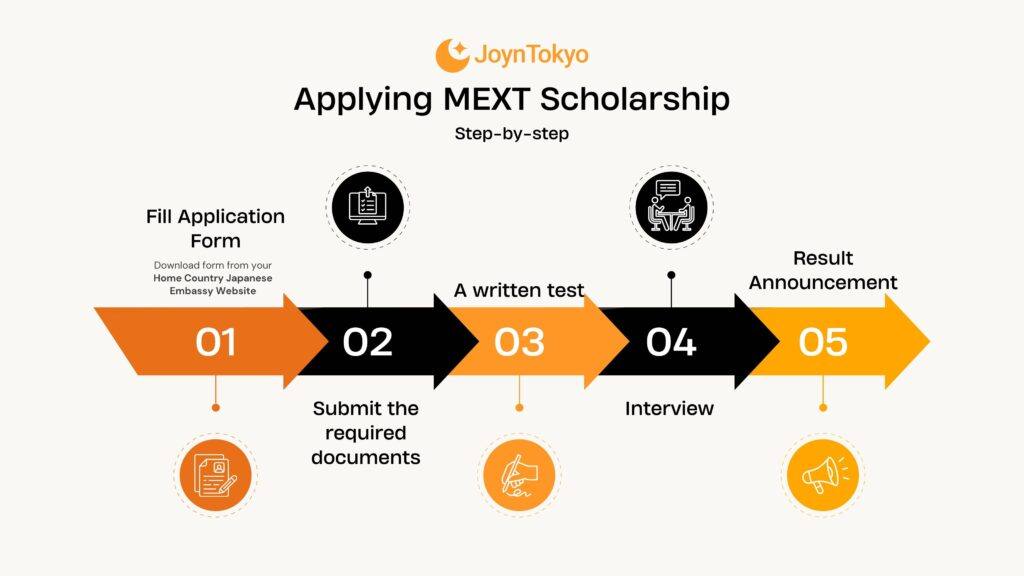
The Japanese Government MEXT Scholarship is one of the most famous funding programs for international students.
The MEXT Scholarship is one of the most generous funding opportunities for international students, offering full coverage of tuition along with a monthly stipend and, in some cases, travel expenses. It includes several categories such as undergraduate study, research programs, teacher training, Japanese studies, and technical or specialized training, each with its own requirements and selection style.
Applicants follow one of two main routes:
- Embassy recommendation, applying through the Japanese embassy or consulate in your country
- University recommendation, applying through a Japanese university that nominates you
Because competition is strong, you need:
- Clear academic or research goals
- Strong grades
- Convincing study or research plan
- Good recommendations
Start reading the latest MEXT guidelines for 2026 as early as possible. Many students begin preparing their documents one year or more in advance.
JASSO scholarships
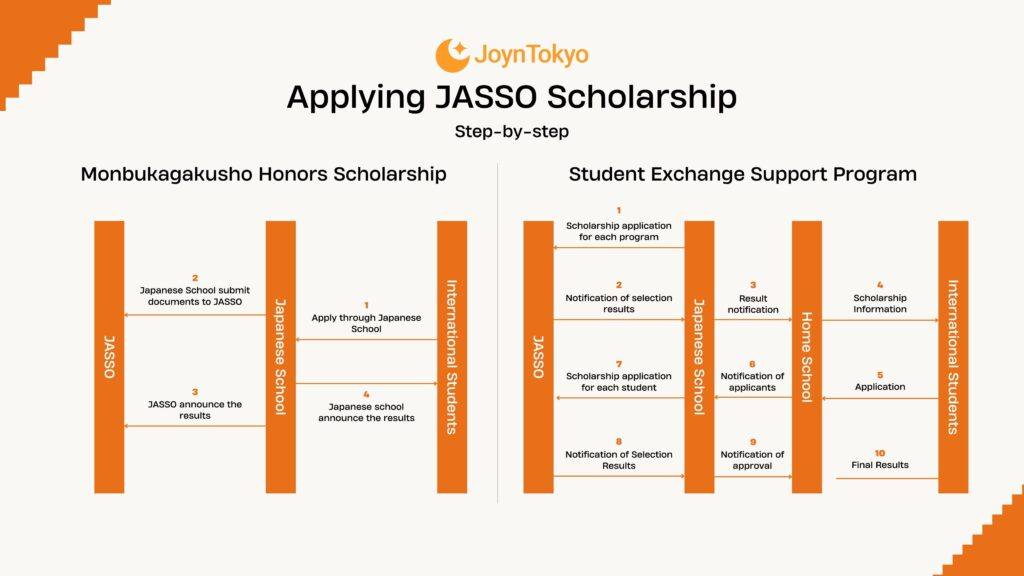
Japan Student Services Organization, JASSO, supports international students with several scholarship programs.
Examples include:
- Monbukagakusho Honors Scholarship for Privately Financed International Students, a monthly stipend to help cover living expenses
- Student Exchange Support Program, for short term exchange students under agreements between universities
Amounts and conditions change, but one common JASSO scholarship offers around ¥80,000 per month for qualified students.
University and local scholarships
Many universities and local governments also provide their own financial support, which can make a noticeable difference in your overall budget. These often come in the form of partial or full tuition waivers, reductions to the initial entrance fees, or small monthly or one time scholarships offered to international students who maintain strong grades or good attendance.
These can be easier to get once you are already in Japan and have shown good performance, so do not stop looking for funding after you arrive.
Home country and private scholarships
It is also worth checking what funding might be available outside Japan, since many students receive support from their own governments, private foundations that promote international study, or company sponsored scholarships tied to specific industries.
Make a simple spreadsheet, list all scholarships with requirements and deadlines, and treat applications like part time work that might pay off very well.
Plan your application timeline
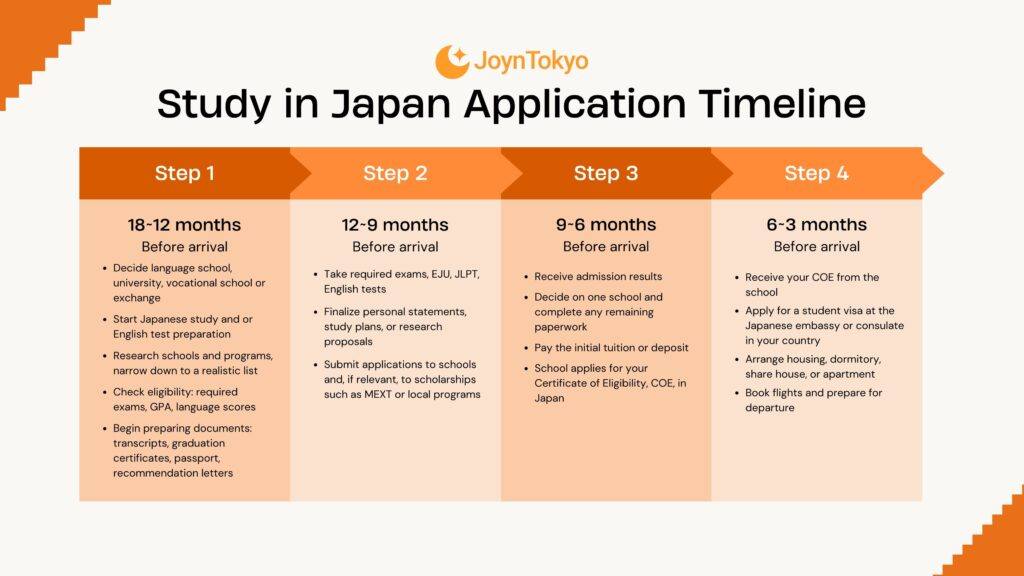
If you want to study in Japan in, say, October 2026, you should start researching seriously in 2025. A rough timeline looks like this, adjust depending on your path and country.
Twelve to eighteen months before arrival
- Decide your main path, language school, university, vocational school or exchange
- Start or intensify Japanese study and or English test preparation
- Research schools and programs, narrow down to a realistic list
- Check eligibility: required exams, GPA, language scores
- Begin preparing documents: transcripts, graduation certificates, passport, recommendation letters
Nine to twelve months before arrival
- Take required exams, EJU, JLPT, English tests
- Finalize personal statements, study plans, or research proposals
- Submit applications to schools and, if relevant, to scholarships such as MEXT or local programs
Six to nine months before arrival
- Receive admission results
- Decide on one school and complete any remaining paperwork
- Pay the initial tuition or deposit
- School applies for your Certificate of Eligibility, COE, in Japan
Three to six months before arrival
- Receive your COE from the school
- Apply for a student visa at the Japanese embassy or consulate in your country
- Arrange housing, dormitory, share house, or apartment
- Book flights and prepare for departure
You will make many small adjustments, but this timeline prevents the main bottleneck, which is usually waiting for the COE and visa.
Understand the student visa process and part time work rules
To study full time in Japan for more than a short period, you will need a Japanese student visa.
Certificate of Eligibility and visa application
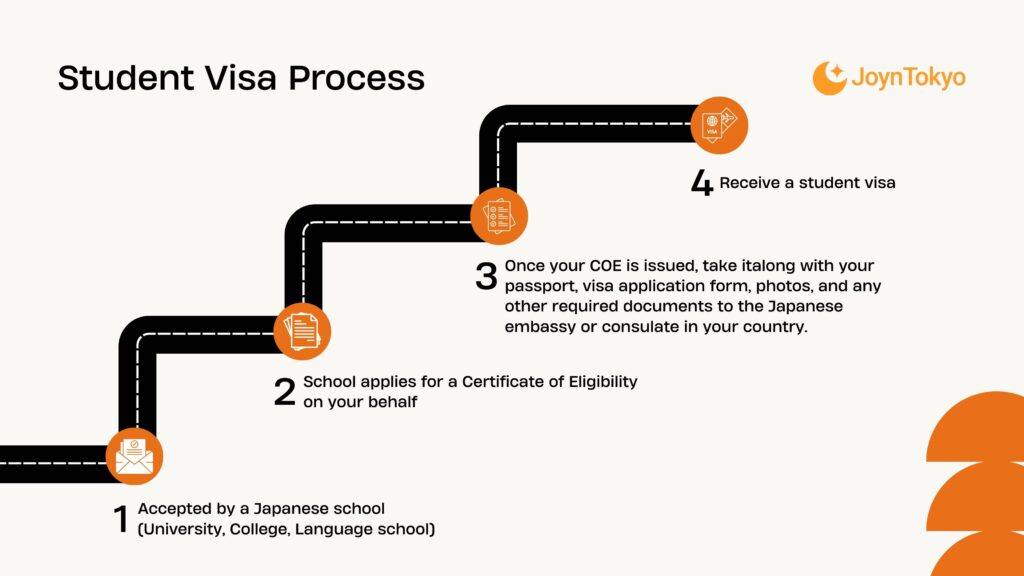
The general flow is:
- You are accepted by a Japanese school.
- The school applies for a Certificate of Eligibility on your behalf at the local immigration office in Japan.
- Once the COE is issued, the school sends it to you.
- You take the COE, your passport, visa application form, photos, and other required documents to the Japanese embassy or consulate in your country.
- If all is fine, you receive a student visa in your passport.
Immigration will check that you have enough funds to support yourself, which is why bank statements and financial sponsor documents are so important.
Working part time on a student visa
International students can work part time in Japan, but there are clear rules.
When you arrive in Japan, you need to apply for Permission to Engage in Activity Other Than That Permitted by the Status of Residence, which is usually done at the airport or later at a local immigration bureau. Once approved, this permission allows you to work up to twenty eight hours per week during the semester and up to eight hours per day during long school breaks, such as summer or winter vacation. There are still restrictions to keep in mind, since certain jobs are off limits, particularly those connected to the adult entertainment industry.
Part time work can help with living costs and improve your Japanese, but it should not be your main source of survival. Working too many hours can hurt your grades and even cause problems with your visa if you exceed the legal limits.
Prepare for life and study culture in Japan
Studying in Japan is not only about classes. Daily culture will shape how you feel and how well you learn.
Classroom expectations
Japanese classrooms may feel different from what you are used to, with a strong emphasis on attendance and punctuality and a steady rhythm of homework and regular quizzes rather than relying only on final exams. There is also an unspoken layer of respect toward teachers and classmates that shows up in small everyday gestures, from how you speak in class to where you choose to sit.
Many Japanese language schools require that you maintain an attendance above a certain percentage, so missing too many classes can not only affect your grades, your scholarship, but even your visa status, so take attendance seriously.
Make a personal study plan and support system
To stay on track, create a simple plan that covers both academics and your life outside class.
Ideas to include:
- Daily Japanese study routine, even if your main program is in English
- Weekly time blocks for assignments and reading
- Specific goals, such as passing JLPT N2 within one or two years, or achieving a certain GPA
- Regular time for rest, exercise, and hobbies so you do not burn out
Also think about support:
- Know where the school counseling or health center is located
- Stay in touch with family or friends back home, but also build a local support circle
- Do not hesitate to talk to teachers or staff if you are struggling; they are used to helping international students adjust
Putting it all together, your study in Japan roadmap
Here is how all the pieces fit into one simple story you can picture.
You clarify why you want to study in Japan and for how long. Based on that, you choose a main path, language school, university, vocational college, exchange, or a mix of these. You check your eligibility, prepare for EJU, JLPT and any English tests you need, and research programs that match your level and budget.
You build a realistic money plan, combining savings, possible family support, part time work within the legal limits, and scholarships like MEXT, JASSO and university specific funding. You apply early, gather documents carefully, and let your chosen school apply for a Certificate of Eligibility so you can get your student visa.
When you arrive, you handle housing, city hall registration, health insurance, bank, and phone, then settle into classes and daily life. Over time, your Japanese improves, your schedule feels more natural, and Japan slowly shifts from being a destination to feeling like a temporary home.
If you move through these steps with patience and a bit of flexibility, studying in Japan is not only possible, it can become one of the most meaningful chapters of your life.
- Sponsored -

Related JoynTokyo reads

Ultimate Guide to Driving in Japan
A driver spent a week cruising Hokkaido and called it the most relaxing road trip of his life. Another took a mountain route from Kusatsu to Kanazawa and described it as “like being dialled into an F1 race car.” Both were experienced drivers. Both were in Japan. Both are right. Honestly, driving in Japan is

Cash vs Card in Japan: What Should You Use in 2026?
People who went to Japan five years ago will tell you cash is king. People who went last month will tell you they barely touched a note. Both are telling the truth, they just had different trips. The honest answer for 2026 is this: Japan has changed significantly. Most major establishments in cities now accept

Sheila Cliffe on The Kimono Closet and the Stories Kimono Hold
Sheila Cliffe is a longtime kimono researcher and the author of Kimono Style. In her new book, The Kimono Closet, she looks beyond kimono as fashion or art objects and instead explores their deeper place in family life, memory, and identity. She spoke with JoynTokyo to give us an exclusive look at the new book,