


May 3 is one of those days in Japan where the trains are packed, the tourist spots are swarming, and your regular convenience store might be operating on a skeleton schedule. If you are living in Japan or planning a trip during late April and early May, you will run directly into Constitution Memorial Day. Most foreigners in Japan know it as part of Golden Week. Far fewer know what it actually commemorates, why it matters, or why it still sparks political debate nearly eighty years after its creation. I’ll walk you through everything – the history, why it still matters today, how it’ll affect your daily routine, and honestly, what’s actually worth doing on May 3rd if you’re here.
What Is Constitution Memorial Day in Japan?
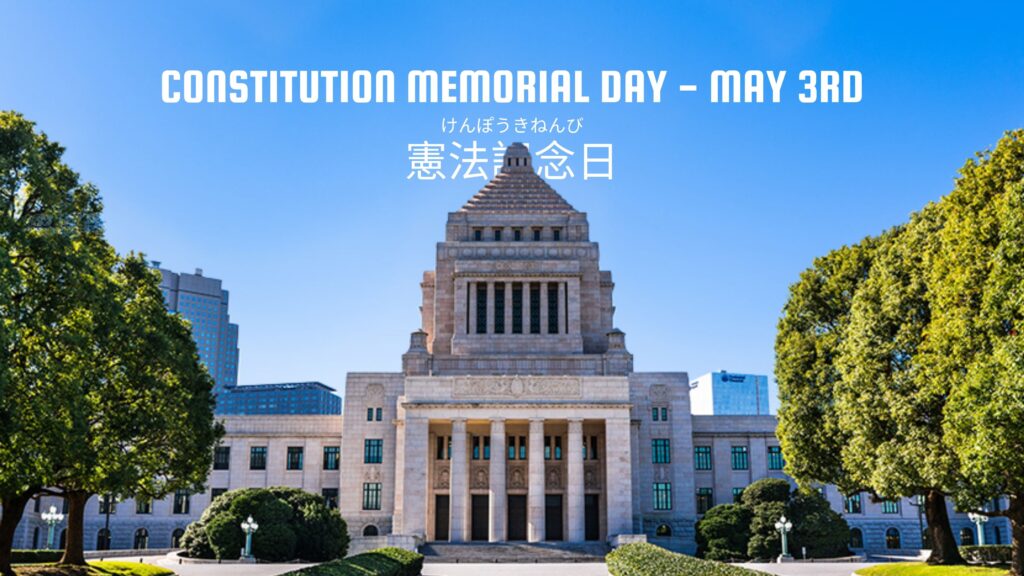
Constitution Memorial Day – 憲法記念日, pronounced Kenpō Kinenbi, is a national public holiday held every year on May 3. It marks the day Japan’s postwar constitution came into force in 1947. The official purpose, as defined under the Public Holiday Law, is to “commemorate the enforcement of the Constitution and wish for the growth of the nation.”
That is the formal definition. In practice, the day carries a lot more weight than the phrase suggests.
What Does Constitution Memorial Day Mean in Japanese?
Breaking down the kanji tells you exactly what this holiday is:
- 憲法 (Kenpō) Constitution
- 記念日 (Kinenbi) Memorial Day / Anniversary
So literally: Constitution Anniversary Day. It is not a celebration in the party-and-fireworks sense. It is a day of remembrance and reflection, one that, depending on who you ask, means very different things to different people in Japan.
Why Is It Called Kenpō Kinenbi?
The name is straightforward in Japanese, but the distinction matters for foreigners: this is specifically about the enforcement of the constitution, not its drafting or announcement. Those happened at different times, and the Japanese government chose to mark the day the document actually took legal effect, May 3, 1947, as the holiday.
Is It a National Holiday in Japan?
Yes, fully. Constitution Memorial Day is one of Japan’s sixteen official national public holidays under the Act on National Holidays. Schools, government offices, and most businesses close. It falls during Golden Week, which means the practical impact on daily life, transport, tourism, and restaurant availability is amplified significantly compared to an isolated public holiday mid-year.
For a complete list of all public holidays in Japan this year, see our Japan Public Holidays 2026 guide.
Why Is Constitution Memorial Day Celebrated on May 3?
May 3 was not an arbitrary choice. The date is tied directly to a specific moment in Japanese legal history, one that marked a fundamental break from the country’s prewar past.
What Happened on May 3, 1947?
That day marked when Japan began living under its fresh postwar charter. Out went the old Meiji rules from 1889, where authority rested heavily with the Emperor, and armed forces moved freely. Instead, power shifted toward elected lawmakers, ordinary citizens gained ultimate say over governance, while a well-known clause – Article 9 – turned away from using warfare to resolve global conflicts.
This wasn’t just paperwork shuffling. Japan basically rebuilt itself from the ground up, legally speaking.
How Is This Different From the Constitution’s Announcement Date?
This is a detail that confuses a lot of people, and it is worth being clear about:
| Event | Date |
| Constitution promulgated (officially announced) | November 3, 1946 |
| Constitution enforced (came into legal effect) | May 3, 1947 |
| Constitution Memorial Day (national holiday) | May 3 (annually) |
| November 3 holiday | Culture Day (別の祝日) |
November 3 is also a public holiday in Japan, but it is called Culture Day (文化の日), and while it coincides with the announcement date of the constitution, it is officially observed for different reasons. The government chose May 3 the enforcement date, as the Constitution’s Memorial Day.
When Did Constitution Memorial Day Become an Official Holiday?
It was formally established in 1948 under the Public Holiday Law (国民の祝日に関する法律), one year after the constitution itself took effect. It has been observed every year since.
Start Your Own Japan Journey With Expert Guidance
Most people never make it to Japan because the start is confusing and tiring. Wrong visa route. Underestimated budget. Months lost to confusion.
Get personalized support for your new life in Japan.
Book Your FREE Consultation✓ 500+ Bookings ✓ English-speaking Relocation Support Experts
History: How Was the Japanese Constitution Created?
Early one morning in February 1946, foreign officers began shaping what would become Japan’s present-day charter. Under watchful eyes from Washington’s appointees, notably those serving General MacArthur, words were stitched into pages across just a few days’ time. Officials from Tokyo added their voice too, yet the speed of it – less than ten sunrises between start and finish – still stirs quiet resistance today. Many citizens wonder whether such a foundational text could truly belong to them if handed down so quickly by outsiders.
The Japanese government revised and negotiated the text before it was formally presented to the Imperial Diet, which approved it in November 1946. It came into effect six months later.
What Changed in Japan After World War II?
Everything, structurally. The key shifts introduced by the new constitution were:
- Popular sovereignty replaced imperial sovereignty, power moved formally from the Emperor to the people
- The Emperor’s role became purely symbolic and ceremonial
- A bicameral parliament (the Diet) became the highest organ of state power
- Fundamental human rights were guaranteed, including freedom of speech, religion, and assembly
- Article 9 renounced war and prohibited Japan from maintaining war potential a clause that remains controversial and debated to this day
Japan went from a militaristic imperial state to a pacifist parliamentary democracy, at least on paper, in the span of about a year.
Why Is This Holiday Important in Modern Japan?
Because the constitution itself is still contested. Japan has never amended its constitution- it is the only major national constitution that has gone entirely unamended since its creation. That is not because everyone agrees with it. It is because the amendment process is deliberately difficult, and because Article 9 in particular divides political opinion sharply.
Every year around May 3, newspapers run editorials, politicians give speeches, civic groups hold events, and the question of constitutional revision surfaces again in public discourse. For many Japanese citizens, Constitution Memorial Day is not a passive commemoration — it is an active conversation about what kind of country Japan wants to be.
For deeper context on the historical forces behind Japan’s postwar transformation and the rebuilding of its social systems, see our Shintoism guide and its role in shaping the nation’s prewar identity.
What Are the Main Principles of the Japanese Constitution?
Japanese sources, textbooks, government publications, civic education materials consistently describe the constitution as resting on three core pillars. Understanding these is a useful context whether you are here long-term or just passing through during Golden Week.
The 3 Core Principles at a Glance
| Principle | Japanese | What It Means |
| Popular Sovereignty | 国民主権 | Political power rests with the people, not the Emperor or the state |
| Respect for Fundamental Human Rights | 基本的人権の尊重 | Individual rights are guaranteed and cannot be easily removed |
| Pacifism | 平和主義 | Japan renounces war; Article 9 prohibits maintaining war potential |
What Is Popular Sovereignty?
Before 1947, Japan was a constitutional monarchy where the Emperor held supreme authority. The postwar constitution reversed this: the Emperor became a symbol of the state with no governmental powers. Sovereignty – the ultimate authority to govern, transferred to the Japanese people. Every subsequent law and policy in Japan derives its legitimacy from this foundation.
What Does Respect for Human Rights Mean in Practice?
Right from the start, Chapter III of Japan’s Constitution lays out core freedoms like belief, expression, and gathering. Instead of calling them gifts from the government, it treats such liberties as belonging to people by nature. Most safeguards hold true even if someone is not a Japanese citizen. Life here includes access to fair court processes, among other key rights. Though written long ago, its reach extends broadly – covering those simply residing in the country, too.
Why Is Pacifism Central to the Constitution?
Article 9 is arguably the most famous and controversial clause in any national constitution in the world. It reads, in part, that “the Japanese people forever renounce war as a sovereign right of the nation.” It also states that “war potential will never be maintained.”
Japan does maintain a Self-Defense Force (自衛隊), which has been a source of ongoing legal and political debate since its establishment in 1954. The question of whether the SDF is constitutional, and whether the constitution should be amended to clarify or change Japan’s defense posture, is a live political debate that surfaces most visibly every year around May 3.
How Is Constitution Memorial Day Related to Golden Week?
This is the practical question most people in Japan actually care about. And the answer has a direct effect on your travel plans, your workday, and your grocery run.
Is Constitution Memorial Day Part of Golden Week?
Yes – it is one of the anchoring holidays of Golden Week (ゴールデンウィーク). Golden Week is not a single holiday but a cluster of national holidays that fall within roughly ten days of each other in late April and early May, creating Japan’s longest stretch of consecutive time off in the year.
The Full Golden Week Holiday Map
| Date | Holiday | Japanese Name |
| April 29 | Showa Day | 昭和の日 |
| May 3 | Constitution Memorial Day | 憲法記念日 |
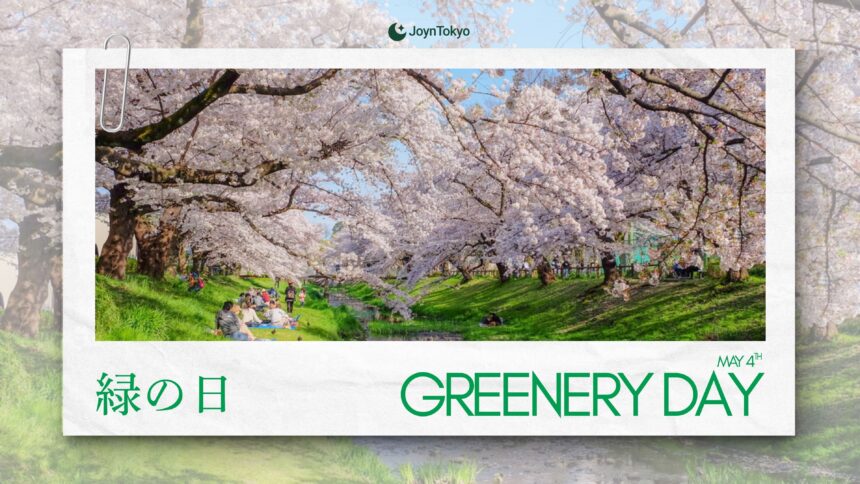
| May 4 | Greenery Day | みどりの日 |
| May 5 | Children’s Day | こどもの日 |
When weekends fall on either side of these dates, which happens most years, many Japanese workers take additional leave between April 29 and May 5, creating a near-continuous holiday window of up to ten days. In 2026, check the exact calendar overlap in our Japan Public Holidays 2026 guide for the specific day-by-day breakdown.
Why Is Golden Week So Important for Travel in Japan?
Golden Week is one of three major domestic travel seasons in Japan (alongside Obon in August and New Year). The numbers are significant:
- Tens of millions of Japanese people travel domestically during Golden Week every year
- Bullet train and express train reservations sell out weeks in advance
- Popular destinations, such as Kyoto, Nikko, Hakone, and coastal areas, become extremely congested
- Hotel prices in tourist areas spike considerably compared to the weeks before and after
For foreigners living in Japan, the Golden Week context is more important than Constitution Memorial Day itself when it comes to planning your life around early May.
What Happens in Japan on Constitution Memorial Day?
Day-to-day life on May 3 looks different depending on where you are and what you are trying to do.
Do Schools and Businesses Close on May 3?
Yes. As a national public holiday:
- All public schools are closed
- Government offices are closed
- Most corporate offices are closed
- Banks are closed
- Post offices are closed (most branches)
- Many smaller local businesses close or run reduced hours
The main exceptions are retail, hospitality, and tourism but even these often operate with fewer staff or modified hours.
If you are planning to travel during the Golden Week travel rush, having a Japanese bank account with a functional debit card makes daily cash management significantly smoother. For a look at providers that offer reliable access during these peak holiday windows, see our best banks in Japan for foreigners guide.
Are Government Offices Open?
Closed. All local and national government offices close for Constitution Memorial Day. When needing services like residency updates or visa documents, schedule ahead. Especially true if new to the country and sorting out permits or moving homes. Planning avoids delays when systems pause. For details on the kind of administrative steps that require a visit to a government hall, see our moving to Japan guide.
Do People Celebrate It in a Special Way?
Not in the way most foreigners would expect. There are no fireworks, no parades, no national ceremonies visible to the general public in the way that exists for some other countries’ national days. What happens instead:
- Civic and political events: organisations on both sides of the constitutional revision debate hold public forums and demonstrations near the National Diet building in Tokyo
- Constitutional Week (憲法週間): the week surrounding May 3 is designated for public education events about the constitution
- Media coverage: newspapers and TV stations typically run features on constitutional issues, interview legal scholars, and platform political commentary
For most ordinary people, Japanese and foreign alike, May 3 is primarily experienced as a travel day and a day off, rather than a moment of national reflection.
What Should Foreigners in Japan Know About Constitution Memorial Day?
If you are an expat or long-term resident, this is the section that actually affects your week.
Will Shops, Banks, and Attractions Be Open?
Here is a quick reference:
| Place | Status on May 3 |
| Supermarkets | Usually open, sometimes reduced hours |
| Convenience stores | Open (7-Eleven, FamilyMart, Lawson — 24/7 as normal) |
| Department stores / malls | Usually open, Golden Week is peak retail season |
| Restaurants | Most open; tourist areas very busy |
| Banks | Closed |
| Post offices | Most closed |
| ATMs | 7-Eleven and convenience store ATMs work normally; bank ATMs vary |
| Hospitals / clinics | Emergency services open; regular clinics closed |
| Museums and attractions | Open- but expect crowds and long queues |
| Government offices | Closed |
| Public transport | Runs on holiday schedule – check your line |
The practical takeaway: you will not go hungry and you will not be stranded. But if you need a bank, a doctor, or a government office, plan ahead.
Is It a Busy Travel Period?
Hard to believe, but the busiest times aren’t actually May 4 – it’s late April plus early May when movement hits maximum. Travelers flood trains leaving around April 29 and coming back by May 3. Try stepping onto a bullet train that day without a seat saved? Nearly impossible. Reserving long ahead makes it doable. Places to stay in high-demand spots follow the same rule.
What Should Expats and Tourists Prepare For?
A few things worth doing before May 3 arrives:
- Book train tickets early. Shinkansen reserved seats for Golden Week often sell out 3–4 weeks before the dates.
- Stock up on any prescriptions or medications. Pharmacies attached to clinics will be closed. Drugstore chains (matsukiyoshi, etc.) usually stay open.
- Complete any government paperwork before Golden Week starts. City halls, immigration offices, and ward offices all close for the full holiday cluster.
- Have cash on hand. Not all ATMs function reliably during peak holiday periods, particularly at smaller banks.
- Check your local area’s specific closures. Regional variation exists – a small town will be quieter and more closed than central Tokyo or Osaka.
How Can You Make the Most of Constitution Memorial Day in Japan?
May 3 is not a day to dread. With some planning, it is genuinely one of the more interesting times to be in Japan.
Is It a Good Time to Travel?
It depends entirely on your tolerance for crowds and your flexibility with timing.
If you enjoy busy, lively atmospheres: Golden Week is when Japan feels electric. Major cities, beach towns, and historical sites are at their most animated. The energy is real.
If you prefer quiet exploration: This is not your window. Popular spots like Kyoto’s Arashiyama, Nikko’s shrines, and Tokyo’s Ueno Park are genuinely difficult to navigate on May 3–5. The experience degrades quickly when you are moving shoulder-to-shoulder through streets that are already narrow.
Skip the usual spots. Try quieter places inside the country during Golden Week instead. Towns like Kanazawa or Matsumoto stay calm while bigger names fill up fast. Fewer people show up in Hirosaki or Beppu. Holiday energy stays strong even when lines vanish. For ideas on where to base yourself longer-term, our best cities to live in Japan guide covers the regional options in detail.
What Are the Best Places to Visit During Golden Week?
A split view on this:
Higher crowd tolerance required:
- Tokyo (Shinjuku, Asakusa, Ueno, Odaiba)
- Kyoto (everywhere, but especially Gion and Arashiyama)
- Osaka (Dotonbori, Osaka Castle)
- Hakone and Nikko (both extremely congested)
Better experience for Golden Week:
- Kanazawa — historically rich, significantly less crowded than Kyoto
- Matsumoto — castle town with beautiful surroundings
- Hiroshima and Miyajima — meaningful context for Constitution Memorial Day given Japan’s WWII history
- Tohoku region — largely overlooked by Golden Week tourists, genuinely rewarding
Instead of battling the swarming crowds in Kyoto and Tokyo, consider exploring some of Japan’s lesser-known destinations. Our Hokkaido winter guide and Shikoku island train guide offer plenty of inspiration for quieter adventures if you are looking to escape the usual tourist tracks.
How Can You Avoid Crowds and Transport Delays?
A few practical rules that residents have refined over years:
- Travel on May 2 or May 6. The days immediately before and after the core Golden Week cluster are noticeably calmer and cheaper.
- Take early morning trains. Before 8am, even popular routes are manageable. By 10am, it changes.
- Use local trains instead of express where possible. Less competition for seats, and you often see better scenery.
- Book accommodation mid-week. May 3 and 4 nights are peak pricing. Staying through the weekend gets cheaper.
What Are Common Questions About Constitution Memorial Day in Japan?
Is Constitution Memorial Day the Same as Constitution Day in Other Countries?
Not directly, though other democracies have similar observances. What makes Japan’s version distinctive is the ongoing political debate around the document being commemorated — Japan’s constitution is uniquely unamended after nearly 80 years, and the question of whether it should change is genuinely unresolved in public opinion.
Is It a Religious Holiday?
No. Constitution Memorial Day has no religious content or association. Japan has religious holidays, Obon is Buddhist in origin, New Year has Shinto elements — but this is a civic and political observance with no spiritual component.
Is It a Day for Protest or Political Discussion?
Sometimes, yes. Near the National Diet building in Tokyo, it is not unusual to see both pro-revision and anti-revision groups demonstrating on May 3. The constitutional revision debate — particularly around Article 9 — tends to surface most visibly on this day each year. For foreigners living in Japan, it is a useful context rather than something that affects daily life directly.
Why Do Some People Say It Is Just Another Golden Week Holiday?
Because for a lot of people, it functionally is. Ask most younger Japanese people what they are doing on May 3 and the answer is usually “traveling” or “going home to see family” — not “reflecting on the 1947 constitution.” The civic dimension of the day exists and matters to many people, particularly older generations and politically engaged citizens. But Golden Week as a cultural phenomenon has largely absorbed Constitution Memorial Day into its orbit, and for the majority of the country, it reads first as a day off and second as anything else.
Why Does This Holiday Matter Beyond Just a Day Off?
Because the document it commemorates is still shaping Japan right now. The debate over constitutional revision – especially Article 9 and Japan’s defense posture– is one of the defining political questions of modern Japanese society. Every year on May 3, that debate gets its most public airing.
If you are planning to live in Japan long-term, developing some understanding of this conversation makes you a more informed resident. Understanding the Japanese salaryman piece and our Japanese work culture guide offers additional context on how civic life and professional life intersect in Japan.
Constitution Memorial Day is one of sixteen national holidays in Japan in 2026. For the full list with dates, Golden Week details, and planning tips, see our complete Japan Public Holidays 2026 guide.
Read More