
Minimum Wage in Japan 2025: How Much You’ll Earn and What’s Changing This Year
The 2025 minimum wage in Japan marks a historic milestone. For the first time, every prefecture will see hourly wages surpass ¥1,000, reflecting both economic pressures and government-led reforms. For foreign residents, this shift directly affects both earnings and daily living expenses, making it essential to understand the latest updates, not just on minimum wages
The 2025 minimum wage in Japan marks a historic milestone. For the first time, every prefecture will see hourly wages surpass ¥1,000, reflecting both economic pressures and government-led reforms. For foreign residents, this shift directly affects both earnings and daily living expenses, making it essential to understand the latest updates, not just on minimum wages but also on average salaries, job types, and pay disparities.
Overview of Minimum Wage 2025: What Has Changed?

In August 2025, Japan’s Central Minimum Wage Council recommended raising the national average minimum wage to ¥1,121 per hour, a record ¥63 (6%) increase from the previous year. This is the largest single-year rise since the current wage system was established. Starting in October 2025, all 47 prefectures will cross the ¥1,000 threshold, narrowing the long-standing wage gap between urban and rural areas.
Minimum Wage in Japan: Regional Variations
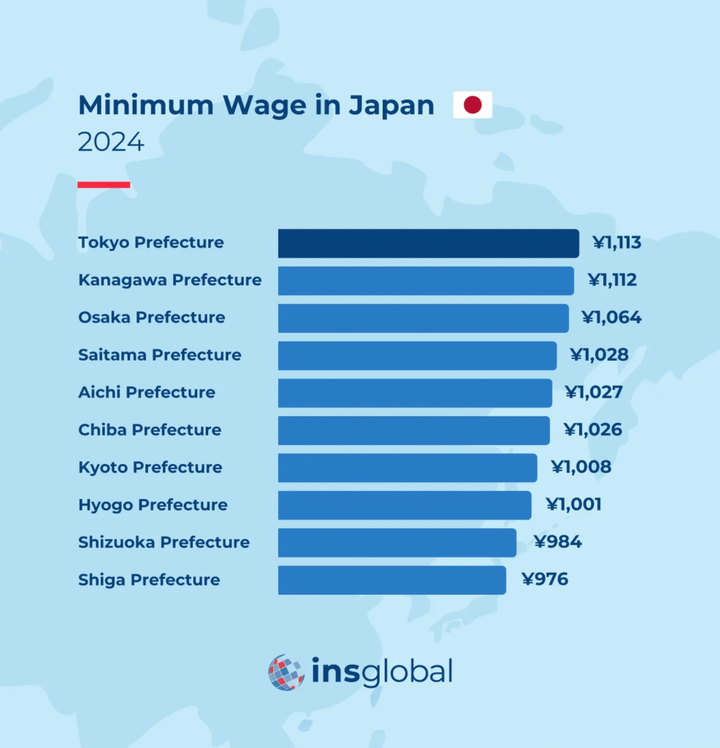
Minimum wages are set by individual prefectures, through the perspective of necessary wages for the prefectural capitals. Our table below highlights key regions and their 2025 minimum wage levels:
These increases illustrate how both major metropolitan areas like Tokyo and Yokohama, as well as regional capitals such as Nagoya, Kobe, and Akita City, are seeing wage growth. Importantly, 2025 marks the first year that every prefecture’s capital will exceed the ¥1,000/hour mark.
Curious about minimum wage vs cost of living in Tokyo?
Minimum Wage in Japan by Job Type
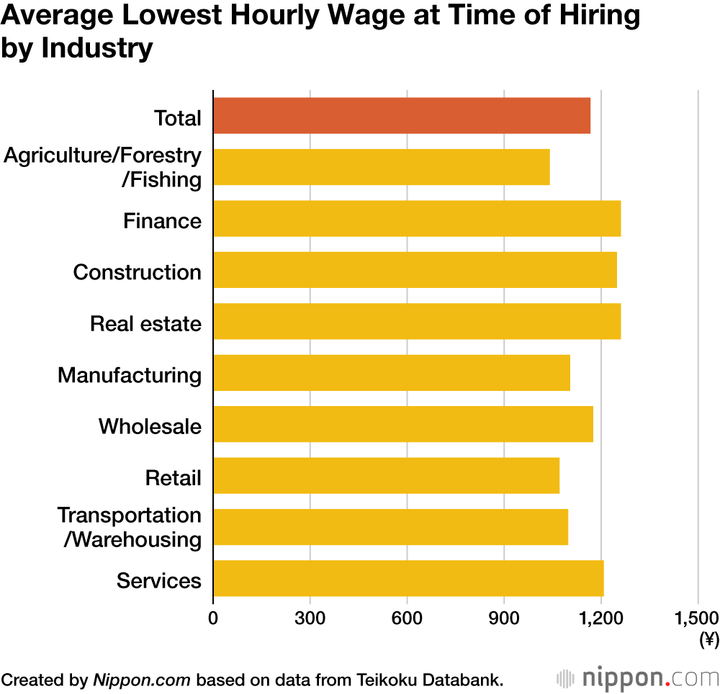
Job type plays a major role in determining whether a worker earns the minimum wage or significantly above it. Service-sector and caregiving jobs often remain at baseline pay levels, even though they are essential and in high demand. Capitalism, baby!
Manufacturing and agricultural roles can provide slightly better compensation, but the most substantial earnings are found in professional fields like IT, engineering, and finance, where salaries are often several times higher than the legal minimum.
Average Salary in Japan 2025
While the minimum wage reflects the legal baseline, Japan’s overall median is much higher. According to recent government data, the average annual salary is around ¥4.9–5.0 million (approx. ¥410,000/month).
However, averages can be misleading: large cities like Tokyo push the mean upward, while many part-time or non-regular workers earn far closer to minimum wage. Professional and managerial roles, by contrast, often earn two to three times more than service-sector jobs.
Want to know everything about salaries in Japan?
Salaries for International Workers
Foreign residents’ salaries in Japan vary widely depending on occupation, Japanese language ability, and visa type.
This shows that while some international professionals can earn competitive salaries, many others — especially students and technical trainees — face earnings close to minimum wage.
Gender Pay Gap in Japan
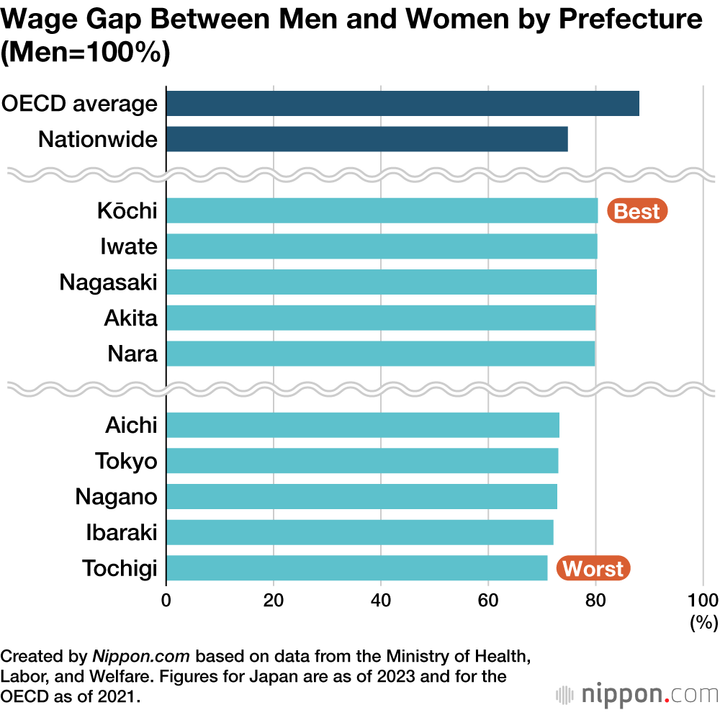
Japan continues to struggle with gender-based wage disparities. As of 2024, the gender pay gap was around 20.7%, which is nearly double the OECD average. Male workers earn an average of approximately ¥5.5–6 million annually, while women’s earnings are significantly lower, averaging ¥3.9–4.2 million.
This difference is largely driven by women’s overrepresentation in non-regular employment and the career interruptions many face due to caregiving responsibilities. For foreign women working in Japan, these structural issues can also influence career progression and salary negotiation, making it important to be aware of these systemic challenges.
Summary of Key Points
- 2025 national average minimum wage: ¥1,118/hour (+6% from 2024).
- All prefectures now exceed ¥1,000/hour, with Tokyo at ¥1,226/hour.
- By job type: Service and caregiving jobs hover at minimum levels, while IT and finance earn far more.
- Average annual salary: Around ¥5 million, though many earn less.
- International workers: Pay ranges from minimum wage for interns and students to high salaries for IT and finance roles.
- Gender gap: Significant at 22%, reflecting structural issues in employment.
Conclusion: Navigating Japan’s Wage Environment in 2025 and Beyond
The 2025 wage reform represents progress, but challenges remain. While every prefecture now exceeds ¥1,000/hour, living costs in urban areas still strain minimum wage workers. For foreign residents, understanding the wage landscape (from legal minimums to average salaries, international worker pay scales, and gender disparities) is essential. By staying informed, budgeting realistically, and leveraging skills and language ability, foreign residents can better navigate Japan’s evolving labor market and improve their quality of life.
Related JoynTokyo reads

Ultimate Guide to Driving in Japan
A driver spent a week cruising Hokkaido and called it the most relaxing road trip of his life. Another took a mountain route from Kusatsu to Kanazawa and described it as “like being dialled into an F1 race car.” Both were experienced drivers. Both were in Japan. Both are right. Honestly, driving in Japan is

Cash vs Card in Japan: What Should You Use in 2026?
People who went to Japan five years ago will tell you cash is king. People who went last month will tell you they barely touched a note. Both are telling the truth, they just had different trips. The honest answer for 2026 is this: Japan has changed significantly. Most major establishments in cities now accept

Sheila Cliffe on The Kimono Closet and the Stories Kimono Hold
Sheila Cliffe is a longtime kimono researcher and the author of Kimono Style. In her new book, The Kimono Closet, she looks beyond kimono as fashion or art objects and instead explores their deeper place in family life, memory, and identity. She spoke with JoynTokyo to give us an exclusive look at the new book,