
Working in Tokyo as a IT Consultant: Keith’s 10+ Year Story
Meet Kieth, a Chinese professional who has lived in Japan for over 10 years and now works as an IT consultant at a consulting firm in Tokyo. From Japanese-style application forms to daily client meetings, this interview shows what jobs in Japan can look like in a high-skill field, and what helped Kieth build a

Meet Kieth, a Chinese professional who has lived in Japan for over 10 years and now works as an IT consultant at a consulting firm in Tokyo. From Japanese-style application forms to daily client meetings, this interview shows what jobs in Japan can look like in a high-skill field, and what helped Kieth build a long-term career here.
In this interview, Kieth shares a “traditional” Japanese job-hunting path through university recruiting, explains what the consulting workday looks like, and gives practical advice for anyone wondering how to get a job in Japan, especially as a foreigner.
1. Can you introduce yourself?

“My name is Kieth, and I’ve been living in Japan for over 10 years.”
2. Could you tell me about your current role in Japan? What do you do, and what does a typical day look like?
“I work in a consulting firm as an IT consultant. My job is to help clients solve problems by implementing IT systems or improving their business flows and operations using systems. It’s not only about technology, I also need to understand the client’s business and what they actually need.”
“A typical day is pretty structured. I work from home, so my work starts at 9:30. I usually spend the first part of the day checking my to-dos and making a plan. Around 11, I have a morning meeting with my manager to confirm what I did yesterday and what I’ll do today. I take lunch around noon for about an hour, then I focus on core work time in the afternoon, with meetings with my team or clients depending on the day. Later, around 4:30 or 5, I have another meeting with my manager to review what I finished and get feedback. I usually wrap up around 5:30.”
3. Why did you want to work in Japan specifically, instead of your home country (or another country)?

“I chose work in Japan mainly for practical reasons. Compared with other options, Japan offered a higher salary and a working environment that felt more stable and manageable for me. I didn’t feel like I needed to compete in an overly aggressive way every day just to survive, but I could still grow professionally.”
“Another reason is long-term lifestyle. I wanted a place where I could build a routine and keep improving step by step. Japan felt like a country where, if you’re consistent and you can adapt, you can create a solid career path. For me, it wasn’t only ‘Japan is interesting’ it was also that the balance of salary, structure, and career opportunity made sense.”
4. How did you go about finding work in Japan?
“I found my job through a traditional route. Because I graduated from a master’s program, there were many recruiting opportunities through school, and I learned about the consulting industry that way.”
“I didn’t use job platforms, recruiters, or headhunters. Instead, I applied directly on company websites. Each company has a recruitment page where you submit your documents and an entry form. If you pass screening, they contact you by email.”
5. What was the application and interview process like for you? Any memorable differences compared to what you expected?

“The application form in Japan was the hardest part. It requires a lot of information about yourself, and it takes a lot of time to write properly. It’s very important because Japanese companies often build their interview questions based on what you wrote in that form.”
“For interviews, I had at least three rounds. The first round was a group discussion, and it felt very competitive because I was competing with Japanese students. If you want to pass, you have to show your best immediately.”
“The second round was with a manager, focused on motivation, why this company, what you want to do, and your future direction. The final round was with someone very senior, like a director or partner. At that stage, it felt like they were confirming personality and fit, but it’s still mentally intense because senior interviewers can read people quickly.”
6. What were the biggest difficulties you encountered in the job search or starting work? How did you overcome them?
“During job hunting, the biggest difficulty was writing the application materials in Japanese. It takes time, and you need to be careful, because what you write will follow you into interviews.”
“After starting work, the biggest difficulty was still language, especially in the first one or two years. In consulting, meetings happen every day, and people use professional terms you’ve never heard before. I had to spend a lot of time researching and studying to understand both the system terms and the client’s business terms.”
“To keep up, I focused on building vocabulary and knowledge fast. If you don’t catch up, you fall behind quickly because the work moves every day.”
7. What have been the best things about working in Japan so far?
“One of the best things is the holiday system. Japan has many public holidays, and in my company we are not expected to work on holidays. That really helps with recovery, because consulting work can be mentally heavy.”
“Another thing I appreciate is that my company doesn’t push extreme overtime as a default. I know some industries in Japan can be very intense, but in my case the workload is generally controlled. And if overtime happens, it’s paid properly. That makes a big difference, because it feels fair, you know your time is respected.”
“I also like the stability of the working environment. The work style is structured: meetings, planning, reporting, and clear processes. Sometimes it feels strict, but it also means you always know what you should be doing and how to communicate progress.”
8. How has working in Japan changed you personally or professionally?
“I grew a lot after working in Japan, especially because consulting requires high-level communication and a lot of document work.”
On the hard-skill side, I became much faster and more confident with practical tools. Making PowerPoint slide quickly became normal, and use Excel and Microsoft Office all the time, and I also gained experience with more specialized tools like process mining.
“My soft skills also improved through communication with clients, managers, and colleagues. I also learned a very Japanese work habit early on: Hou-Ren-Sou 報連相 (reporting, communication, consulting). That mindset helped me work smoothly in a Japanese business environment.”
9. If someone wants to work in Japan, what should they prepare in advance?
“I think the most important thing is knowing yourself. You need to understand what kind of work environment you can handle and what kind of role fits you.”
“For example, can you accept overtime when needed? Are you good at communication and dealing with people, or do you prefer working more deeply with systems and technical work? Knowing your own personality helps you choose the right career path.”
“If you choose the wrong place, you can become miserable every day so preparation is not only resume and language, but also self-understanding.”
10. What practical advice would you give to someone job hunting in Japan right now?
“First, don’t underestimate how much time Japanese job hunting takes. If you want to learn how to find a job in Japan, you have to accept that the preparation stage is heavy, especially the written documents. The entry sheet and application form are not just ‘basic information.’ They often decide whether you even get an interview, and companies will ask questions directly based on what you wrote. So you should start early, take it seriously, and write with a clear story.”
“Second, if you’re applying as a foreigner, you should prepare for Japanese language barriers even if the job itself is technical. In interviews and later at work, people will use professional vocabulary and business terms. The faster you build that vocabulary, the easier everything becomes.”
“Third, choose your industry carefully. Some jobs in Japan are more open to foreigners than others. In general, high-skill fields like IT, consulting, engineering, and data-related roles usually have more flexibility, while many customer-facing roles require strong Japanese. So before applying, be realistic about what level you can handle, and target jobs where your strengths actually match what the company needs.”
11. Any final thoughts you’d like to share about the experience of working in Japan?
“Working in Japan sometimes means you need to act a bit more ‘Japanese’ even if you’re a foreigner. You can’t always rely on being foreign as an excuse.”
“You should show people that you’re trying to understand the culture and work style here. That effort helps colleagues accept you and treat you as part of the team. Being foreign can still be an advantage, and you should use your strengths, but you also need to show you can take responsibility. I think that balance is important if you want to build a long-term career in Japan.”
- Sponsored -

Related JoynTokyo reads

Ultimate Guide to Driving in Japan
A driver spent a week cruising Hokkaido and called it the most relaxing road trip of his life. Another took a mountain route from Kusatsu to Kanazawa and described it as “like being dialled into an F1 race car.” Both were experienced drivers. Both were in Japan. Both are right. Honestly, driving in Japan is
Cash vs Card in Japan: What Should You Use in 2026?
People who went to Japan five years ago will tell you cash is king. People who went last month will tell you they barely touched a note. Both are telling the truth, they just had different trips. The honest answer for 2026 is this: Japan has changed significantly. Most major establishments in cities now accept
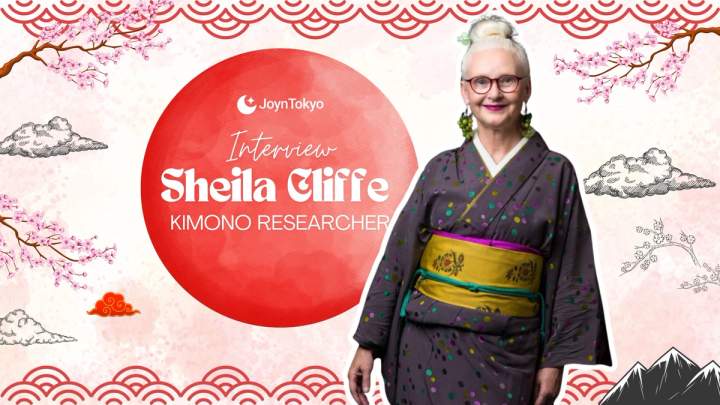
Sheila Cliffe on The Kimono Closet and the Stories Kimono Hold
Sheila Cliffe is a longtime kimono researcher and the author of Kimono Style. In her new book, The Kimono Closet, she looks beyond kimono as fashion or art objects and instead explores their deeper place in family life, memory, and identity. She spoke with JoynTokyo to give us an exclusive look at the new book,