
Exploring Japan is exciting, yet navigating daily situations can feel daunting without some essential Japanese phrases. While English is understood in major cities, having a few expressions at hand helps you order meals, ask for directions, and show respect to locals. This guide introduces the most practical Japanese phrases for travelers, covering greetings, dining, transportation, shopping, and emergencies.
Essential Japanese Greetings and Polite Expressions for Travelers
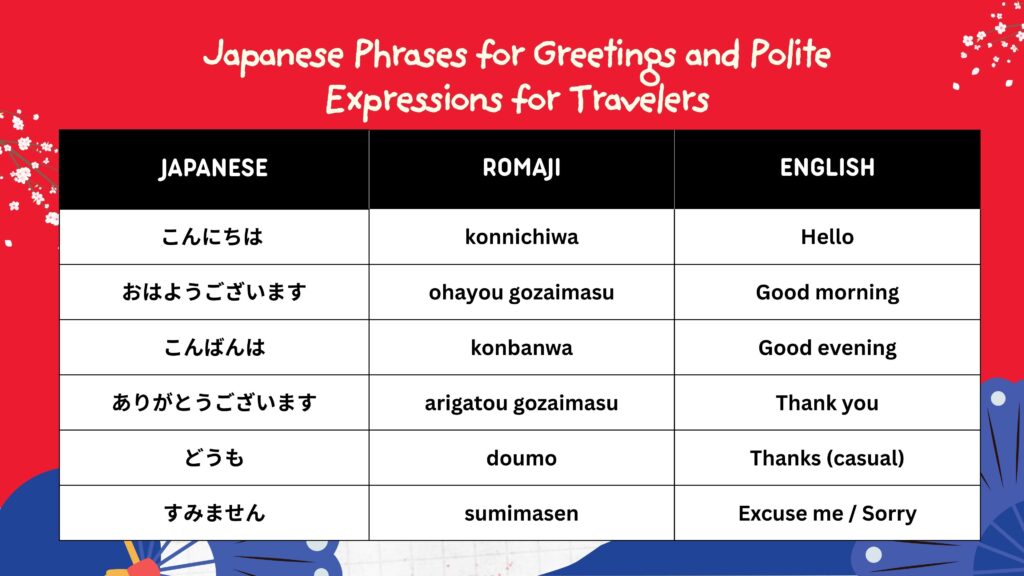
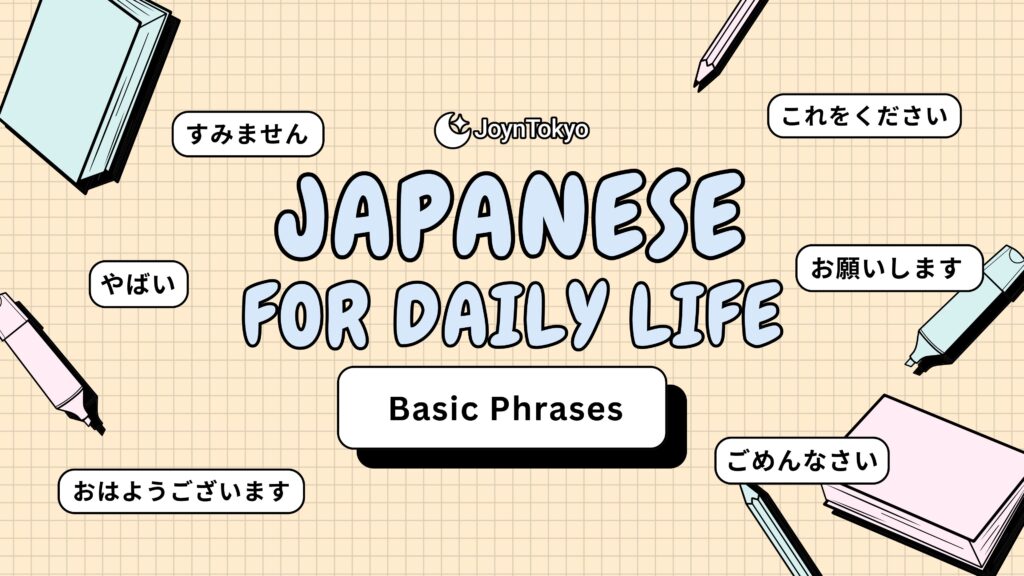
Politeness is central in Japanese culture, and greetings are often the first measure of respect. The most versatile greeting is konnichiwa (こんにちは) which means “hello” or “good afternoon.” In the morning, use ohayou gozaimasu (おはようございます) for “good morning,” while evenings call for konbanwa (こんばんは) or “good evening.”
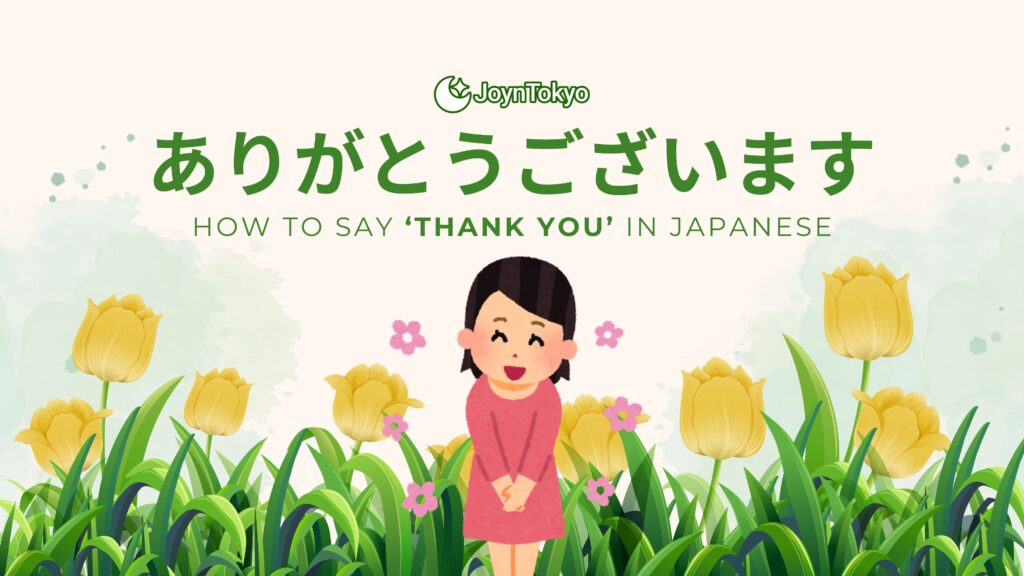
Equally important is saying thank you. Arigatou gozaimasu (ありがとうございます) is the standard polite form, while doumo (どうも) is a more casual option. When you need to apologize or excuse yourself, sumimasen (すみません) works in multiple situations, from bumping into someone to getting a waiter’s attention.
Quick List
- Konnichiwa (こんにちは) — Hello / Good afternoon
- Ohayou gozaimasu (おはようございます) — Good morning
- Konbanwa (こんばんは) — Good evening
- Arigatou gozaimasu (ありがとうございます) — Thank you
- Doumo (どうも) — Thanks (casual)
- Sumimasen (すみません) — Excuse me / Sorry
Read More
Useful Japanese Phrases for Asking Directions
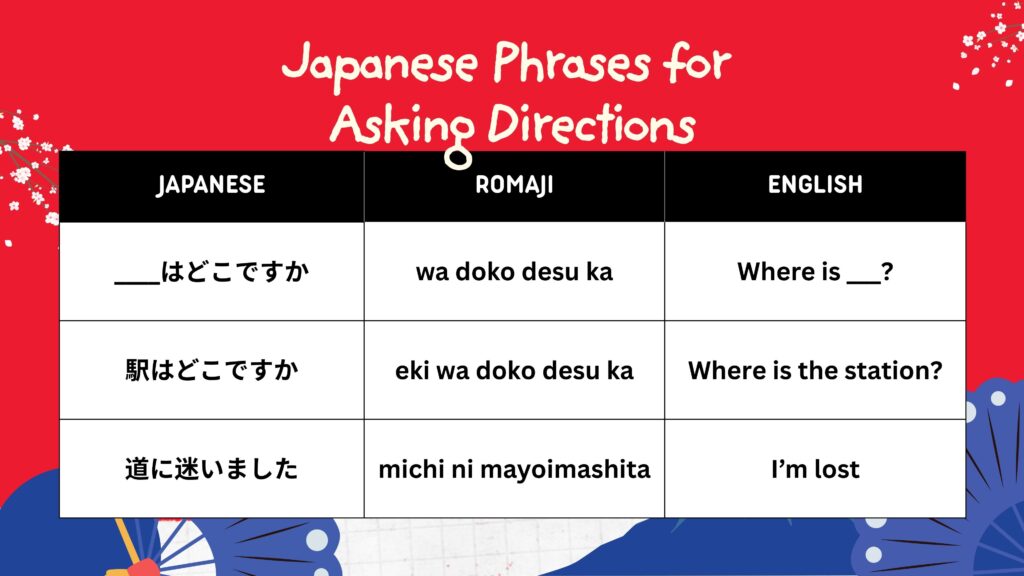
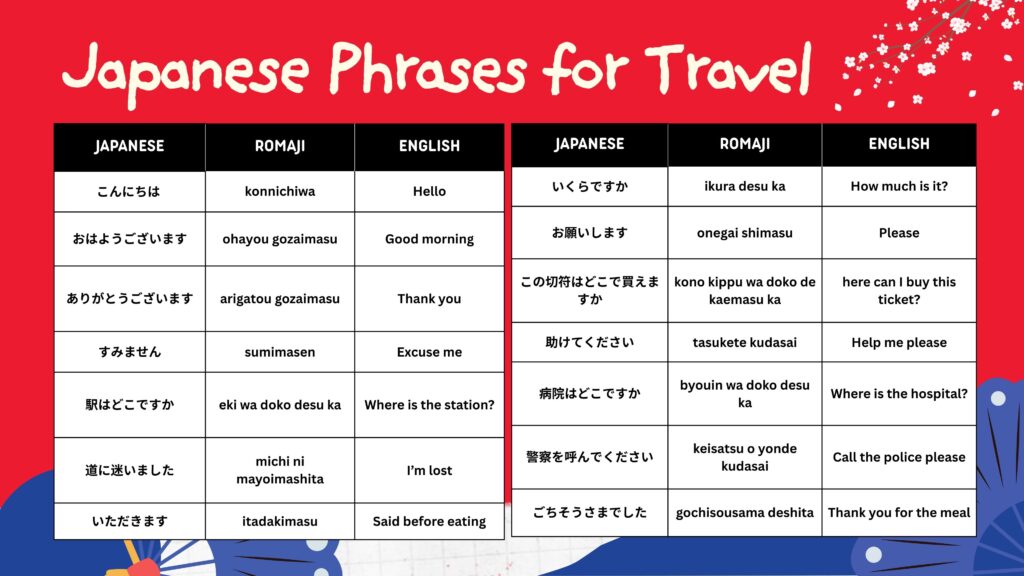
Travelers often rely on signs, yet smaller towns may have limited English guidance. A useful phrase is__ wa doko desu ka (〇〇はどこですか) meaning “Where is ___?” For example, eki wa doko desu ka (駅はどこですか) asks “Where is the station?”
If you get lost, you can also say michi ni mayoimashita (道に迷いました) meaning “I’m lost.” Locals are usually happy to help, and even if communication is limited, they may guide you with gestures or walk you to your destination.
Quick List
- Wa doko desu ka (はどこですか) — Where is ___?
- Eki wa doko desu ka (駅はどこですか) — Where is the station?
- Michi ni mayoimashita (道に迷いました) — I’m lost
Japanese Phrases for Ordering Food in Restaurants
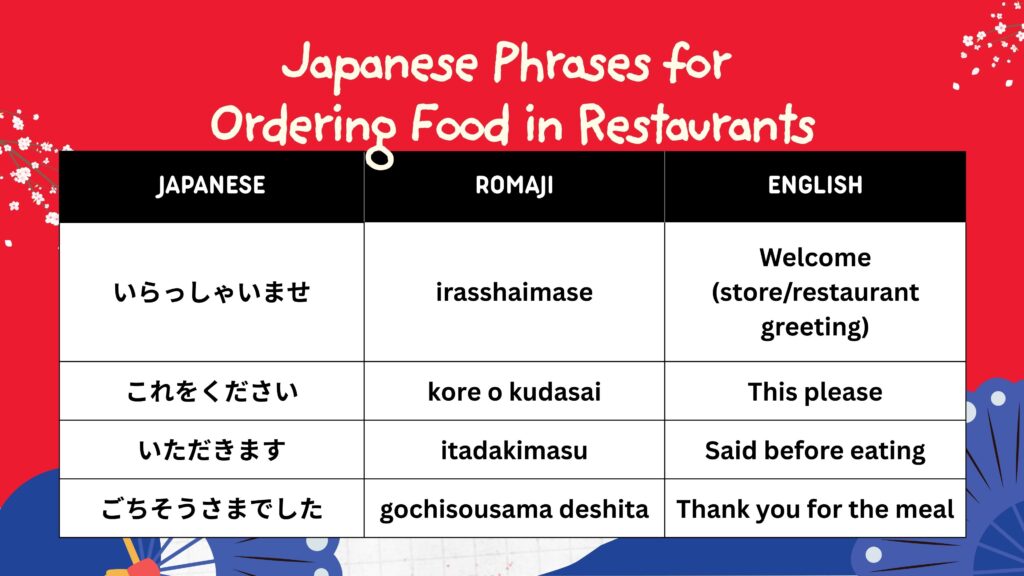
Food experiences are highlights of traveling in Japan, and a few phrases smooth the process. When entering a restaurant, staff will greet you with irasshaimase (いらっしゃいませ). You don’t need to reply, but you can smile or nod.
When ordering, you can say kore o kudasai (これをください) or “I’ll have this, please,” while pointing at the menu. To show appreciation after a meal, say gochisousama deshita (ごちそうさまでした) which conveys gratitude for the food. If you want to thank someone specifically for the meal, the phrase is itadakimasu (いただきます) said before eating.
Quick List
- Irasshaimase (いらっしゃいませ) — Welcome (store/restaurant greeting)
- Kore o kudasai (これをください) — This please
- Itadakimasu (いただきます) — Said before eating
- Gochisousama deshita (ごちそうさまでした) — Thank you for the meal
Read More
Common Japanese Phrases for Shopping
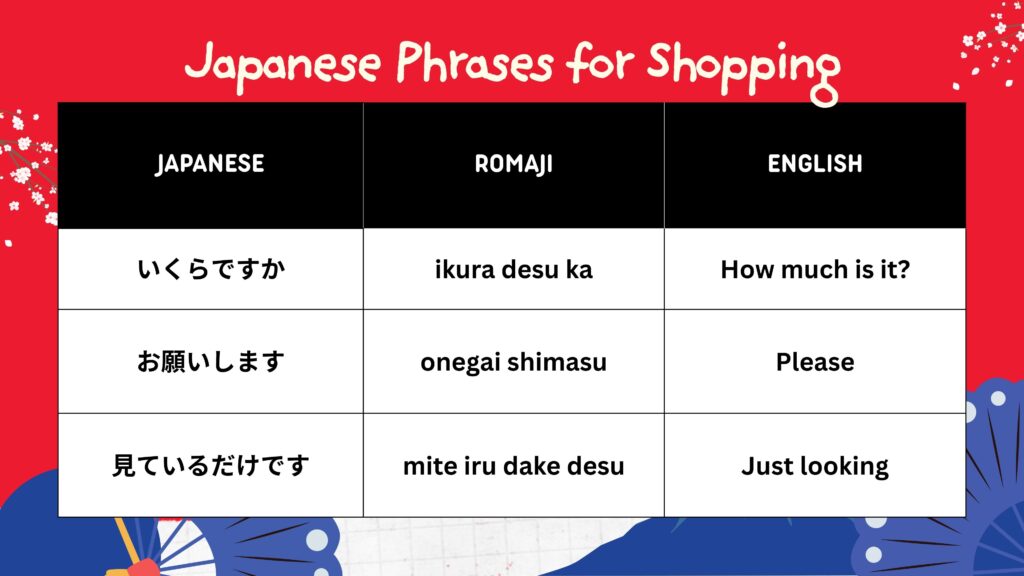
Shopping in Japan can range from convenience stores to high-end boutiques. A simple ikura desu ka (いくらですか) means “How much is it?” If you decide to buy, hand the money with both hands and say onegai shimasu (お願いします) which adds politeness.
When you finish, say arigatou gozaimasu (ありがとうございます) as you receive your purchase. For browsing without commitment, use mite iru dake desu (見ているだけです) meaning “I’m just looking.”
Quick List
- Ikura desu ka (いくらですか) — How much is it?
- Onegai shimasu (お願いします) — Please
- Mite iru dake desu (見ているだけです) — Just looking
Japanese Travel Phrases for Using Trains and Buses
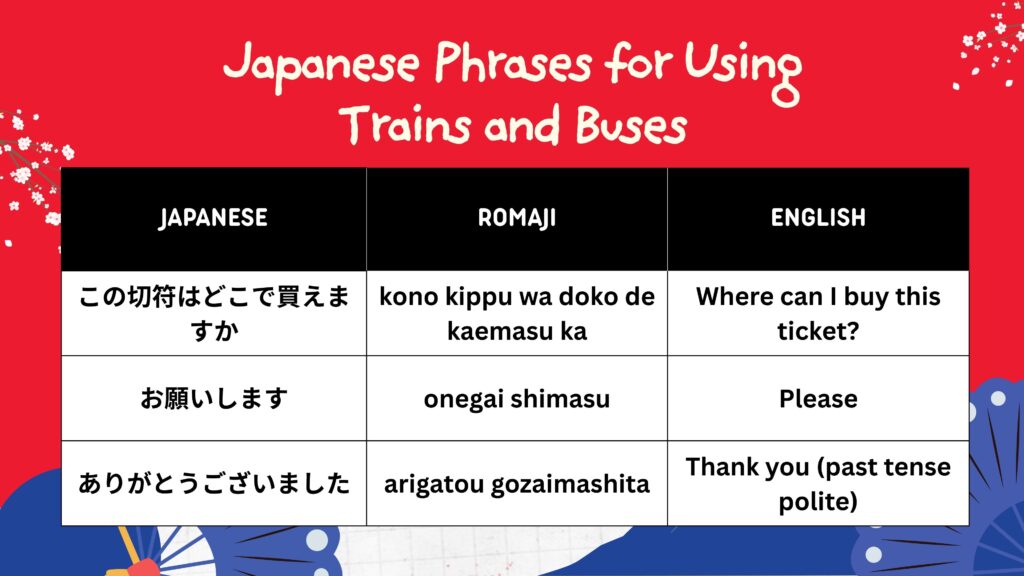
Japan’s train and bus systems are efficient but can be overwhelming for first-timers. If you need help buying a ticket, ask kono kippu wa doko de kaemasu ka (この切符はどこで買えますか) or “Where can I buy this ticket?”
When boarding a bus, greeting the driver with a soft onegai shimasu (お願いします) is polite. Upon leaving, many passengers say arigatou gozaimashita (ありがとうございました) as a sign of respect.
Quick List
- Kono kippu wa doko de kaemasu ka (この切符はどこで買えますか) — Where can I buy this ticket?
- Onegai shimasu (お願いします) — Please (when handing ticket or greeting driver)
- Arigatou gozaimashita (ありがとうございました) — Thank you (past tense polite)
Emergency Japanese Phrases Every Traveler Should Know
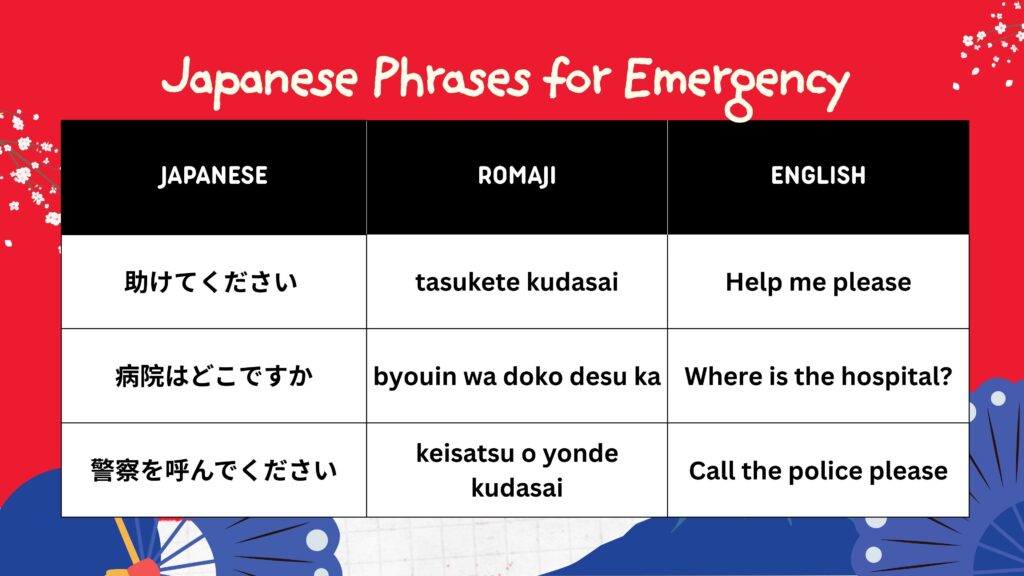
Although Japan is generally safe, emergencies can happen. If you need urgent help, shout tasukete kudasai (助けてください) which means “Please help me!” For medical needs, byouin wa doko desu ka (病院はどこですか) asks “Where is the hospital?”
Police stations are common and safe places to seek assistance. To call for the police, use keisatsu o yonde kudasai (警察を呼んでください) meaning “Please call the police.”
Quick List
- Tasukete kudasai (助けてください) — Help me please
- Byouin wa doko desu ka (病院はどこですか) — Where is the hospital?
- Keisatsu o yonde kudasai (警察を呼んでください) — Call the police please