
The Ultimate Guide to Moving to Japan: Visas, Jobs, and Education
Japan remains one of the most sought-after destinations for expatriates, drawing millions of visitors annually with its rich history, safety, and unique modern culture. While visiting is simple for many nationalities, establishing long-term residency is possible, but requires navigating a complex bureaucratic landscape. Moving to Japan is not a singular process; it is a collection

Japan remains one of the most sought-after destinations for expatriates, drawing millions of visitors annually with its rich history, safety, and unique modern culture. While visiting is simple for many nationalities, establishing long-term residency is possible, but requires navigating a complex bureaucratic landscape.
Moving to Japan is not a singular process; it is a collection of distinct pathways, each with its own set of requirements, costs, and benefits. Understanding the specific visa categories is the first step toward a successful relocation, whether you intend to pursue higher education, master the language, or enter the workforce. This guide details the primary methods for moving to Japan, including educational routes, teaching opportunities, and specialized visa statuses.
Path 1: Studying at Japanese Universities
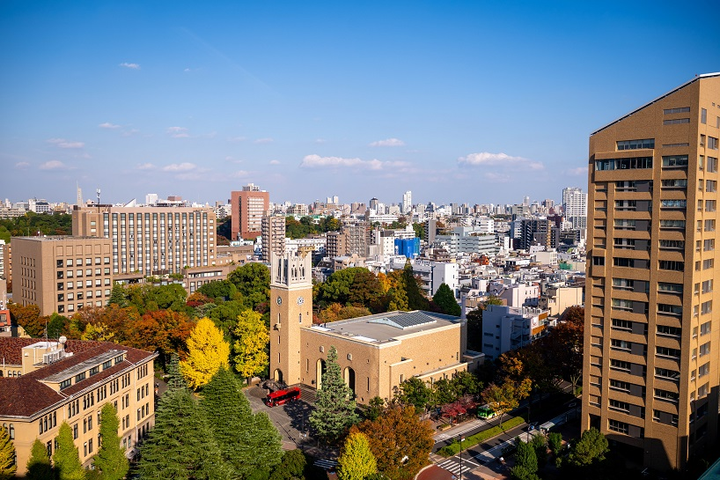
Enrolling in a Japanese university is a direct route to residency for those seeking higher education. Japan is home to world-class institutions, and the government has actively sought to increase international student enrollment through the “Top Global University Project.”
Under the student visa status, individuals can reside in Japan for the duration of their academic program – typically four years for an undergraduate degree. This pathway provides a structured environment for acclimatizing to life in Japan, offering networking opportunities and access to the local job market upon graduation.
It is worth mentioning that some universities in Japan offer transfer credits, so there is an opportunity to study in Japan even if you have already started your program. A member of our team was able to study in Japan through this path, you can check out his journey at Tokyo International University.
FAQ: Japanese Universities
Do Japanese universities require SAT scores?
Requirements vary significantly by institution and the specific program. For traditional programs taught in Japanese, the Examination for Japanese University Admission for International Students (EJU) is the standard requirement rather than the SAT. However, for English-taught degree programs, many universities accept or require standardized test scores such as the SAT, ACT, or IB Diploma to assess academic readiness.
Do Japanese universities teach in English?
Yes. While the majority of coursework in Japan is conducted in Japanese, there has been a significant increase in English-medium undergraduate and graduate programs. Major universities, including the University of Tokyo, Waseda University, and Sophia University, offer full degree programs taught entirely in English, often referred to as “Global” or “International” tracks.
How much does a Japanese university cost?
Tuition in Japan is generally lower than in the United States or the United Kingdom.
- National Universities: Annual tuition is standardized at approximately 535,800 JPY (plus admission fees), totaling around 820,000 JPY for the first year.
- Public Universities: Slightly higher, averaging around 930,000 JPY for the first year.
- Private Universities: These vary widely but typically range from 1,100,000 JPY to 1,600,000 JPY per year for non-medical programs.
Path 2: Enrolling in Language Schools
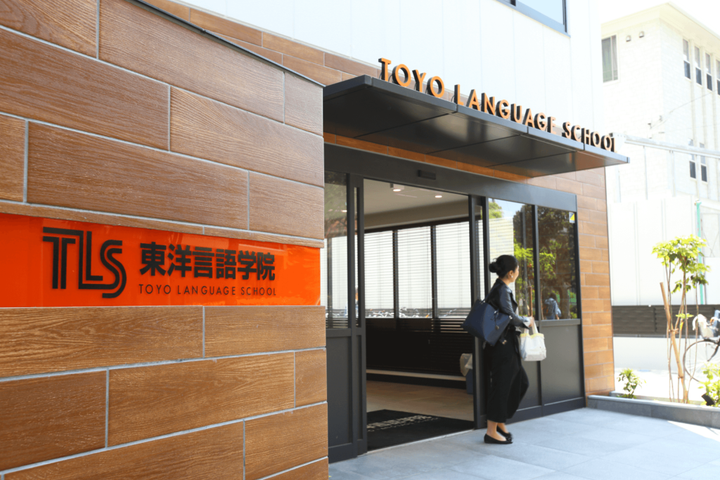
For those who are not yet fluent in Japanese or are not ready for a full university degree, a Japanese Language School (Nihongo Gakko) is a popular entry point. These institutions focus exclusively on language acquisition and cultural adaptation.
Students on this path typically study for six months to two years. The primary goal for many is to reach a proficiency level (usually JLPT N2 or N1) that allows them to enter a Japanese university, vocational college, or the workforce.
FAQ: Language Schools
Can I get a work visa after Japanese language school?
Yes, but attending language school alone does not qualify you for a work visa. To switch from a Student visa to a Work visa, you must secure a job offer from a Japanese company. Crucially, immigration requires that you hold a bachelor’s degree (from any country) or have significant relevant work experience. If you do not have a degree, you generally must proceed to a Japanese university or vocational college after language school to gain the necessary qualifications for employment.
Path 3: Teaching English in Japan
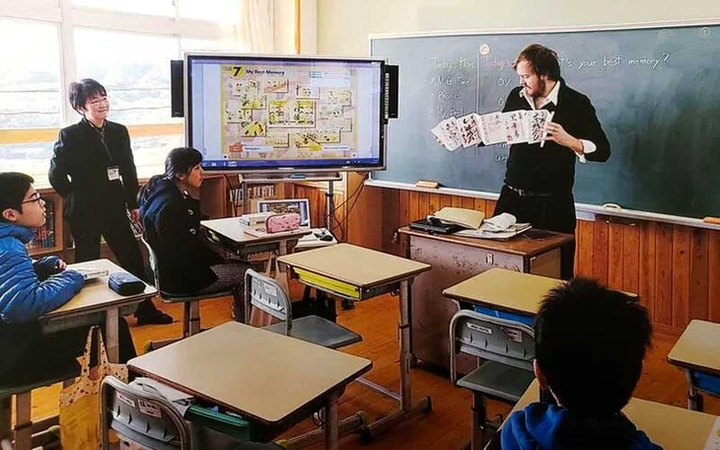
Teaching English is perhaps the most common method for native English speakers to move to Japan. The demand for English instruction remains high, creating a steady stream of opportunities for foreign residents.
There are three primary avenues for teaching English:
- JET Programme: The Japan Exchange and Teaching (JET) Programme is a government-sponsored initiative that places Assistant Language Teachers (ALTs) in public schools across Japan. It is highly competitive but offers excellent support and benefits.
- ALT Dispatch Companies: Private companies (such as Interac or Borderlink) hire teachers to work in public schools as Assistant Language Teachers. The pay is generally lower than JET, but hiring occurs year-round.
- Eikaiwa (Conversation Schools): Private language institutes (like AEON or ECC) offer evening and weekend classes to students of all ages. Teachers usually work shifts rather than standard school hours.
FAQ: Teaching English
Do you need a degree to teach English in Japan?
Yes. To obtain the “Instructor” or “Specialist in Humanities” visa required for teaching, Japanese immigration law mandates a bachelor’s degree in any subject. Alternatively, individuals without a degree may qualify if they have three or more years of documented, full-time teaching experience in ESL, though this route is less common and more scrutinized.
How much does an English teacher make in Japan?
Salaries are relatively standardized across the industry.
- JET Programme: The starting annual remuneration is 3.36 million JPY (approx. 280,000 JPY per month).
- Eikaiwa and Dispatch ALTs: Monthly salaries typically range between 200,000 JPY and 270,000 JPY. While sufficient for daily life, these salaries are often considered entry-level.
Other Pathways to Residency
If education or teaching does not align with your goals, several other visa categories permit residence in Japan.
Standard Work Visa

Professionals with skills in IT, engineering, finance, or marketing can apply for a standard work visa (e.g., “Engineer/Specialist in Humanities/International Services“). This requires a bachelor’s degree (or 10 years of experience) and a confirmed job offer from a company in Japan willing to act as a sponsor.
Requirements Summary
- Education or Experience: You must hold a university degree (bachelor’s or higher) relevant to the job OR document at least 10 years of professional experience in the field.
- Sponsorship: A signed employment contract with a company based in Japan.
- Salary: Compensation must be equal to or greater than what a Japanese national would receive for the same role.
- Clean Record: No criminal history or previous immigration violations in Japan.
Working Holiday Visa

Requirements Summary
- Age: Generally between 18 and 30 at the time of application
- Nationality: Must hold a valid passport from a partner country/region (e.g., Australia, Canada, UK, France, Korea, etc.).
- Financial Proof: Evidence of sufficient funds to support yourself initially (typically ranges from $2,500 to $4,000 USD depending on the country).
- Travel Ticket: A return ticket or sufficient funds to purchase one.
- Health: Good health and usually proof of medical insurance.
Digital Nomad Visa

Officially launched in March 2024, the Digital Nomad Visa (Specified Activities) allows remote workers to live in Japan for up to six months. Unlike tourist visas, this status permits you to legally work remotely for an overseas employer, making it an excellent “test drive” for life in Japan.
It is important to note that this visa is non-renewable. You must leave Japan after six months and cannot reapply until six months after your departure. Furthermore, Digital Nomad Visa holders are not issued a Residence Card (Zairyu Card), which can complicate daily tasks like opening a local bank account or signing long-term contracts.
Requirements Summary
- Income Threshold: Proof of annual income ≥ 10 million JPY (approx. $65,000 USD, subject to exchange rates).
- Employment: Must work remotely for a company/client outside of Japan (or be a freelancer with overseas clients).
- Insurance: Private medical insurance covering injury, illness, and death with coverage of ≥ 10 million JPY.
- Eligibility: Citizen of a country/region with a tax treaty and visa-waiver agreement with Japan.
- Duration: Maximum stay of 6 months (non-renewable).
Startup Visa

To foster innovation, certain municipalities (such as Fukuoka, Kobe, and Tokyo) offer a “Startup Visa.” This allows entrepreneurs to reside in Japan for up to one year to prepare for establishing a business. It effectively lowers the initial hurdles, giving founders time to secure funding and complete registration before switching to a long-term Business Manager visa.
Requirements Summary
- Business Plan: A detailed plan approved by a designated municipality
- Municipality Approval: A Recommendation Letter or Certificate of Confirmation from the local government office.
- Residency: Must reside within the municipality granting the visa.
- Progress Reviews: Regular interviews with municipal officials to ensure the business is moving toward incorporation.
- Transition Plan: A clear path to meeting the full “Business Manager” requirements within the 6-12 month visa period.
Business Manager Visa

This visa is for those starting a company or managing an existing business in Japan. The requirements are stringent: applicants must generally invest at least 5 million JPY into the business, secure a dedicated physical office space, and demonstrate the business’s sustainability.
Requirements Summary
- Capital Investment: Investment of at least 5 million JPY (or employment of two full-time staff who are residents of Japan).
- Physical Office: A dedicated, physical office space in Japan (virtual offices or residential addresses are generally not accepted).
- Business Plan: A robust business plan demonstrating sustainability and stability.
- Management Role: The applicant must have actual authority and involvement in business operations.
Highly Skilled Professional Visa
Japan utilizes a points-based system to attract top-tier talent. Points are awarded for academic background, professional experience, annual salary, and age. Applicants who score 70 points or higher qualify for the “Highly Skilled Professional” visa, which offers preferential treatment such as a five-year stay and a faster track to permanent residency.
Requirements Summary
- Category: The applicant’s intended activity must fit into one of these three categories: Advanced Academic Research, Advanced Specialized/Technical, or Advanced Business Management.
- Point Score: A minimum of 70 points on the Immigration Bureau’s calculation table (based on age, income, education, and Japanese language ability).
- Sponsorship: Must have a sponsoring organization (employer) in Japan.
- Salary: Meeting the minimum annual salary requirement for your specific age group and category.
Cost of Living in Japan: What to Budget For
Understanding your monthly expenses before you move is essential — and Japan’s cost of living is more nuanced than many people expect. Tokyo ranks among the world’s pricier capitals, but cities like Osaka and Fukuoka offer dramatically more affordable lifestyles without sacrificing quality. Here is a realistic breakdown of what you can expect to spend.
Rent
Housing is almost always the largest monthly expense for expats. Costs vary enormously by city, neighborhood, and apartment type. As a general rule, expect to pay between ¥60,000 and ¥120,000 per month for a one-room apartment in a major city.
Important: When signing a new lease in Japan, initial move-in costs typically total four to six months’ rent. This includes a security deposit (usually one to two months), key money (reikin — a non-refundable gift to the landlord, typically one to two months), and agency fees. Budget for this upfront cash requirement before you arrive.
Food
Japan’s grocery culture makes eating relatively affordable if you cook at home and stick to seasonal, locally produced ingredients. International imports and western-style products are noticeably more expensive.
- Home cooking: approximately ¥30,000–¥40,000 per month for one person
- Dining out (budget): a ramen or teishoku lunch set costs ¥600–¥1,200
- Dining out (mid-range): a dinner for two at a sit-down restaurant runs ¥3,000–¥6,000
- Convenience stores (konbini): meals cost ¥400–¥700 and are a staple for many expats
Tip: Most supermarkets heavily discount fresh food, particularly fish, meat, and bento boxes, in the final hours before closing, often by 20–50%.
Transportation
Japan’s public transport network is arguably the best in the world. Most expats in major cities do not own a car, and with good reason — train and subway coverage is comprehensive, punctual, and clean.
Utilities
Standard monthly utility costs for a single-person household run approximately ¥10,000–¥15,000 per month, broken down roughly as electricity (¥7,000), gas (¥3,500), and water (¥2,500). Internet (fiber, 1 Gbps) costs around ¥4,000–¥6,000 per month. A mobile phone plan on an MVNO budget SIM starts from around ¥2,000 per month.
Monthly Budget Summary
Taxes in Japan: What Every Expat Needs to Know
Tax obligations are one of the most frequently overlooked aspects of moving to Japan. Understanding the basics before you arrive, especially if you are a US citizen, can save you from expensive penalties and surprises.
Japan’s Income Tax System
Japan operates a progressive income tax system at the national level, plus a flat local (inhabitant) tax of 10% of annual income. Your tax residency status determines what income Japan can tax.
National Income Tax Brackets (Residents)
In addition to national income tax, residents pay a 10% local inhabitant tax (住民税) plus a 2.1% reconstruction surtax, bringing the effective top marginal rate to approximately 55%. Consumption tax (VAT) stands at 10%, with a reduced 8% rate on food and non-alcoholic drinks.
Japan’s tax year runs January to December, and residents must file by March 15 of the following year.
For US Citizens: The Double-Tax Question
The United States is one of only two countries in the world that taxes its citizens on worldwide income regardless of where they live. This means that as a US citizen residing in Japan, you are required to file a US federal tax return every year — even if you owe nothing.
The good news is that the US and Japan have a bilateral tax treaty, and the IRS provides two key tools to prevent double taxation:
- Foreign Earned Income Exclusion (FEIE, Form 2555): Allows you to exclude up to $130,000 of foreign-earned income from US taxation for the 2025 tax year. To qualify, you must meet either the Bona Fide Residence Test (resident of Japan for a full calendar year) or the Physical Presence Test (present outside the US for at least 330 days in a 12-month period).
- Foreign Tax Credit (FTC, Form 1116): Allows you to offset your US tax bill dollar-for-dollar by the amount of tax you paid to Japan. Because Japan’s income tax rates are generally higher than US equivalents, most American expats find the Foreign Tax Credit more advantageous — and it can reduce their US tax liability to zero.
- FBAR (FinCEN 114): If you hold more than $10,000 in foreign bank accounts at any point during the year, you must file an FBAR. The deadline is October 15.
- FATCA (Form 8938): Required if your foreign financial assets exceed $200,000 (or $400,000 filing jointly) on the last day of the tax year.
The US-Japan Totalization Agreement also ensures you are not subject to social security contributions in both countries simultaneously. If you work for a Japanese employer, you contribute to Japan’s social security system. If you are sent to Japan by a US employer for five years or less, you continue contributing to the US Social Security system.
Key US filing deadlines for expats: April 15 (standard), with an automatic extension to June 15 for those living abroad. A further extension to October 15 is available upon request. Note that any tax owed is still due by April 15 — the extension applies to filing, not payment.
Tax law is complex and changes regularly. We strongly recommend consulting a qualified expat tax professional, particularly for your first year of residence in Japan.
Moving to Japan: Your Complete Checklist
Moving to Japan involves dozens of moving parts across months of preparation. This checklist covers the critical milestones, from applying for your visa to getting fully settled.
3–6 Months Before Departure
- Determine which visa category applies to your situation and confirm your eligibility
- Gather all required documents (degree certificates, employment records, criminal background checks, apostilles as needed)
- Begin the visa application process — allow extra time if your visa requires a Certificate of Eligibility (COE), which the Immigration Services Agency processes in Japan
- Research and shortlist neighborhoods and cities — factor in commute, international schools if relevant, and proximity to your employer
- Start saving for initial move-in costs (four to six months’ rent is typical for deposit and key money)
- Begin or intensify Japanese language study
- Research international movers and get quotes for shipping personal belongings
- Notify your current bank; consider opening an account with low overseas transaction fees
1–3 Months Before Departure
- Receive your visa or COE and book flights
- Arrange initial temporary housing (guesthouses, monthly apartments, or Leo Palace are popular for the first month while apartment hunting)
- Confirm your Japanese SIM card or pocket WiFi plan for arrival
- Sort health insurance: if your employer provides Shakai Hoken, confirm the enrollment date; otherwise plan to enroll in NHI at the ward office
- If applicable, notify tax authorities in your home country of your move
- Prepare certified Japanese translations of any foreign documents you will need
First 14 Days After Arrival
- Receive your Residence Card (Zairyu Card): Issued at the airport immigration counter upon entry for stays over 90 days. This is your primary ID — carry it at all times.
- Register your address at the ward or city office: Must be done within 14 days of moving into a permanent address. Bring your passport and Residence Card.
- Enroll in National Health Insurance (NHI): If not on an employer plan, enroll at the same ward office visit. Late enrollment results in retroactive back-billing.
- Get a Japanese phone number: Required for most subsequent steps. Budget MVNOs (IIJmio, Rakuten Mobile, LINEMO) offer plans from ¥2,000/month and have more foreigner-friendly sign-up processes.
- Open a Japanese bank account: Japan Post Bank and Shinsei Bank are generally the most accessible for new residents. You will need your Residence Card, registered address, and a phone number.
First 1–3 Months After Arrival
- Apply for your My Number Card at the ward office (bring your notification slip and passport)
- Register your My Number Card as your health insurance card at a medical facility or via Mynaportal
- Set up automatic payments for NHI premiums and utilities via bank transfer
- Find a permanent apartment if you are in temporary housing — April to June and October to December offer more negotiating room than peak rental season (January to March)
- Register with your country’s embassy for emergency notification services
- Locate your nearest English-speaking clinic or hospital for non-emergency care
- Connect with local expat communities — Facebook groups, Meetup, and Internations are active in most major Japanese cities
Choosing Where to Live: Japan’s Best Cities for Expats
Japan is not just Tokyo. While the capital draws the largest expat community, cities like Osaka, Kyoto, and Fukuoka offer compelling alternatives. With lower costs, distinct cultures, and in some cases a better quality of life for foreign residents.
Tokyo — Maximum Opportunity, Maximum Intensity
Tokyo is home to an estimated 600,000+ foreign residents and offers an unmatched concentration of international employers, English-language services, international schools, and global culture. If your primary goal is career advancement or access to the widest possible professional network, Tokyo is hard to beat.
- Best for: career-focused professionals, those with employer sponsorship, families requiring international schools
- Rent: ¥100,000–¥150,000/month for a one-bedroom in central wards (Minato, Shibuya, Shinjuku); ¥60,000–¥90,000 in outer wards
- Popular expat neighborhoods: Azabu-Juban, Hiroo, Nakameguro, Kichijoji
- Trade-offs: Highest cost of living in Japan; crowded; apartment sizes are small; pace of life is relentless
Osaka — Affordable, Energetic, and Welcoming
Osaka is Japan’s second-largest economic hub and has a well-earned reputation for some of the country’s most outgoing and friendly residents. Living costs run roughly 25–30% lower than Tokyo across the board, making it a popular choice for those who want urban energy without Tokyo’s price tag.
- Best for: food enthusiasts, those seeking affordability, creatives, expats in the Kansai region
- Rent: ¥70,000–¥100,000/month near Namba or Umeda; ¥40,000–¥65,000 in suburban areas
- Popular expat neighborhoods: Namba, Umeda, Tennoji, Nishi-Ku
- Bonus: Kyoto is 15 minutes away by train, and Kobe is 30 minutes — you get access to the entire Kansai region
- Trade-offs: Fewer multinational headquarters than Tokyo; English less prevalent than in central Tokyo
Kyoto — Cultural Immersion and a Slower Pace
Japan’s former imperial capital is unlike anywhere else in the country — ancient temples, bamboo forests, and a deeply preserved traditional culture. It appeals most to those who want to genuinely immerse themselves in Japan rather than live a largely Western lifestyle.
- Best for: teachers, remote workers, artists, cultural enthusiasts, those studying Japanese
- Rent: ¥70,000–¥120,000/month in central areas; ¥50,000–¥70,000 outside tourist-heavy districts
- Lifestyle: Cycling is the dominant mode of transport; the city is compact, walkable, and extraordinarily safe
- Trade-offs: Limited job market outside teaching and tourism; tourist crowds in central areas can be overwhelming during peak seasons
Fukuoka — The Expat Underdog with a Growing Reputation
Fukuoka, on the southern island of Kyushu, is quickly becoming one of the most recommended destinations for expats — particularly entrepreneurs, digital nomads, and younger professionals. The city was designated Japan’s first National Strategic Special Zone for startups in 2014, offering a streamlined Startup Visa process. Living costs run 25–30% below Tokyo.
- Best for: entrepreneurs, startups, digital nomads, families seeking affordability
- Rent: ¥60,000–¥95,000/month in Tenjin and Hakata; ¥40,000–¥60,000 in suburban wards
- Transport: The airport is just two subway stops from the city center — under 10 minutes
- Startup advantage: Fukuoka’s Startup Visa, Fukuoka Growth Next incubator, and favorable tax rates attract founders from around the world
- Trade-offs: Fewer large multinationals than Tokyo or Osaka; smaller expat community; more limited international flights
Quick Comparison
Bringing Your Spouse or Children to Japan: The Dependent Visa
If you are moving to Japan on a long-term visa, your spouse and dependent children can accompany you under the Family Stay visa (在留資格「家族滞在」).
Who Qualifies?
The Family Stay visa is available to the legally married spouse and unmarried children (typically under 18) of a foreign national residing in Japan on a qualifying long-term visa. Important limits:
- Only legal spouses qualify. Japan does not currently recognize common-law partnerships or de facto relationships for visa purposes. If you are not legally married, your partner must pursue an independent visa pathway.
- Parents, siblings, and extended family do not qualify under the Family Stay category.
- Language school students cannot sponsor dependents. Only those enrolled in higher education institutions (universities, graduate schools) are eligible.
Which Primary Visa Holders Can Sponsor Dependents?
- Work visas (Engineer/Specialist in Humanities, Highly Skilled Professional, Intra-Company Transferee, etc.)
- Student visa (university or graduate level only — not language school)
- Business Manager visa
- Specified Skilled Worker No.2 (expanded from 2024)
What Dependent Visa Holders Can and Cannot Do
- Can do: attend school, enroll in language courses, access public healthcare, and reside in Japan for the validity period of the sponsor’s visa.
- Cannot do: work — unless they separately apply for a Permission to Engage in Activity Other Than That Permitted (資格外活動許可). With this permission, part-time work of up to 28 hours per week is allowed.
The Application Process
- Your sponsor (you, already in Japan) applies for a Certificate of Eligibility (COE) at the regional Immigration Services Bureau on behalf of each dependent. Required documents include proof of relationship (marriage certificate, birth certificates) with certified Japanese translations, your Residence Card and employment certificate, and income documentation.
- Processing typically takes one to three months. There is no fixed income threshold, but immigration must be satisfied that your income covers the family’s living expenses.
- When the COE is approved, your family members apply for their visas at the Japanese embassy or consulate in their home country using the COE.
- Upon arrival in Japan, dependents receive a Residence Card and must register their address at the ward office within 14 days.
The dependent visa’s validity period mirrors the sponsor’s visa. If your work visa is renewed, each dependent must also renew their status of residence at the same time.
Spouse of a Japanese National — A Different Category
If your spouse is a Japanese national or permanent resident, the applicable visa is not the Family Stay but the Spouse or Child of a Japanese National visa. This category grants full working rights without needing a separate activity permit and provides a faster path to permanent residency.
Life After Landing: Essential Next Steps
Receiving your visa is a significant milestone, but the first few weeks in Japan involve a series of administrative steps that must be completed in roughly the right order. Missing or delaying these steps can mean retroactive fines, no health coverage, or difficulty accessing basic services.
Step 1: Your Residence Card (Zairyu Card)
For long-term visa holders arriving at one of Japan’s major international airports (Narita, Haneda, Kansai, Chubu, Fukuoka, Chitose, or Hiroshima), your Residence Card is issued at the immigration counter upon arrival. It is your primary form of identification in Japan — carry it at all times, as you are legally required to present it on request. The back of the card will initially be blank; your registered address is printed there at the ward office step below.
Step 2: Register Your Address at the Ward or City Office
Within 14 days of moving into a permanent address, you must visit your local ward or city office to register your address. This updates the back of your Resident Card and enrolls you in the pension and health insurance systems if applicable.
Step 3: Enroll in National Health Insurance (NHI)
If you are not covered by an employer’s health insurance plan (Shakai Hoken), you are legally required to enroll in National Health Insurance (国民健康保険) within 14 days of registering your address. This typically happens at the same ward office visit.
- Coverage: NHI covers most medically necessary care. You pay a 30% copayment at the point of service; NHI covers the remaining 70%.
- Premiums: Calculated annually based on the previous year’s income. New arrivals with no prior Japanese income often qualify for significant premium reductions in their first year — ask the clerk about the reduction application (免除申請).
- Important (2025 update): Physical NHI cards are no longer issued. Your My Number Card functions as your health insurance card at all medical facilities. If you do not yet have a My Number Card, the ward office will issue an Eligibility Confirmation Certificate (資格確認書) as a temporary measure.
- Warning: If you enroll late, premiums are charged retroactively. From 2027, unpaid NHI premiums can affect visa renewals and permanent residency applications.
Step 4: Get Your My Number
Japan’s My Number (マイナンバー) is a 12-digit national identification number. You do not apply for it directly — a notification slip is automatically mailed to your registered address within approximately two to three weeks of your ward office registration.
Once you receive the notification, apply for the My Number Card (マイナンバーカード) at the ward office or online. Processing takes two to four weeks. The card functions as your primary ID for government services, your health insurance card at all medical facilities, and a key for filing taxes online and accessing Mynaportal. Applying promptly is strongly recommended — it simplifies nearly every administrative interaction going forward.
Step 5: Get a Japanese Phone Number
A Japanese phone number is a prerequisite for opening a bank account and signing utility contracts. Budget carriers (MVNOs) offer SIM-only plans from around ¥2,000 per month with accessible sign-up processes for new residents. IIJmio, Rakuten Mobile, LINEMO, and Mineo are well-regarded options with English-language support.
Step 6: Open a Japanese Bank Account
A Japanese bank account is essential for receiving salary, paying rent, and automatic utility payments. The most consistently accessible options for new residents are:
- Japan Post Bank (ゆうちょ銀行): Post offices are ubiquitous, English support is available, and requirements for new residents are relatively straightforward.
- Shinsei Bank: Fully English-friendly digital bank with no minimum balance requirement, widely recommended by the expat community.
- Rakuten Bank: App-based and fully digital, popular with younger expats comfortable managing everything online.
You will typically need your Residence Card, a registered address, a Japanese phone number, and your My Number. Some banks require you to have been registered in Japan for a minimum of three to six months, another reason to complete address registration immediately upon arrival.
Step 7: Register for the National Pension
All residents between ages 20 and 59 who are not covered by an employer’s corporate pension plan must contribute to the National Pension (国民年金). Enrollment is handled at the ward office. The monthly contribution in 2025 is approximately ¥16,980. Many new arrivals on modest incomes qualify for full or partial exemptions — ask about the reduction application when you enroll.
Step 8: Set Up Utilities
Set up automatic bank transfer (口座振替) for all utility bills as soon as your bank account is active — Japan’s billing system is primarily paper-slip and bank transfer based, not card-based. Convenience stores (7-Eleven, Lawson, FamilyMart) accept most paper bills if you need to pay manually before bank transfer is set up.
Choosing the Right Path
Moving to Japan requires careful planning and a clear understanding of eligibility requirements. Whether through the structured environment of a university, the cultural immersion of the JET Programme, or the entrepreneurial challenge of a Business Manager visa, each path offers a distinct experience. Prospective residents should review the specific criteria for their chosen route on the Ministry of Foreign Affairs website to ensure they have the most current information before applying.
Related JoynTokyo reads

Ultimate Guide to Driving in Japan
A driver spent a week cruising Hokkaido and called it the most relaxing road trip of his life. Another took a mountain route from Kusatsu to Kanazawa and described it as “like being dialled into an F1 race car.” Both were experienced drivers. Both were in Japan. Both are right. Honestly, driving in Japan is
Cash vs Card in Japan: What Should You Use in 2026?
People who went to Japan five years ago will tell you cash is king. People who went last month will tell you they barely touched a note. Both are telling the truth, they just had different trips. The honest answer for 2026 is this: Japan has changed significantly. Most major establishments in cities now accept

Sheila Cliffe on The Kimono Closet and the Stories Kimono Hold
Sheila Cliffe is a longtime kimono researcher and the author of Kimono Style. In her new book, The Kimono Closet, she looks beyond kimono as fashion or art objects and instead explores their deeper place in family life, memory, and identity. She spoke with JoynTokyo to give us an exclusive look at the new book,