


Meet Will Bennett, originally from Sydney, Australia, who has been living in Japan since August 2024. Will works in Tokyo in digital marketing as a videographer and video editor, creating content and appearing on camera as talent.
This work interview is for anyone searching work in Japan or jobs in Japan and wondering what it actually takes to get hired as a foreigner, especially if the goal isn’t the typical route like English teaching jobs in Japan. Will shares how he found his role, what the interview process felt like, why job hunting took longer than expected, and what he thinks people should prepare if they want to find a job in Japan without being fluent in Japanese.
Will’s Job in Japan, How He Got Hired, and What Work Life in Tokyo Is Like
1. Can you introduce yourself?
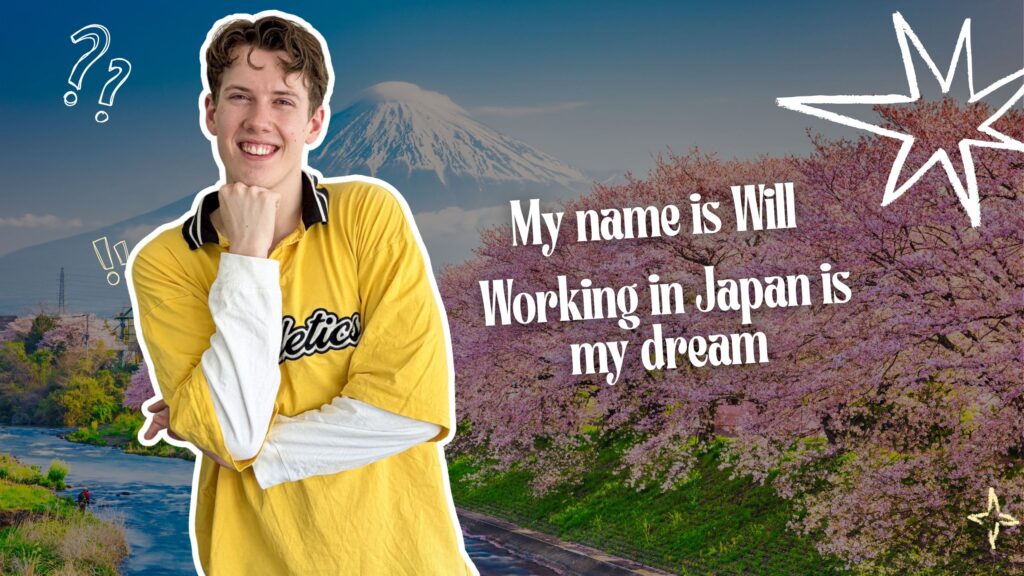
“My name is Will Bennett. I’m from originally Sydney, Australia. And I have been in Japan since August of 2024.”
2. What do you do in Japan now, and what does a typical day look like?
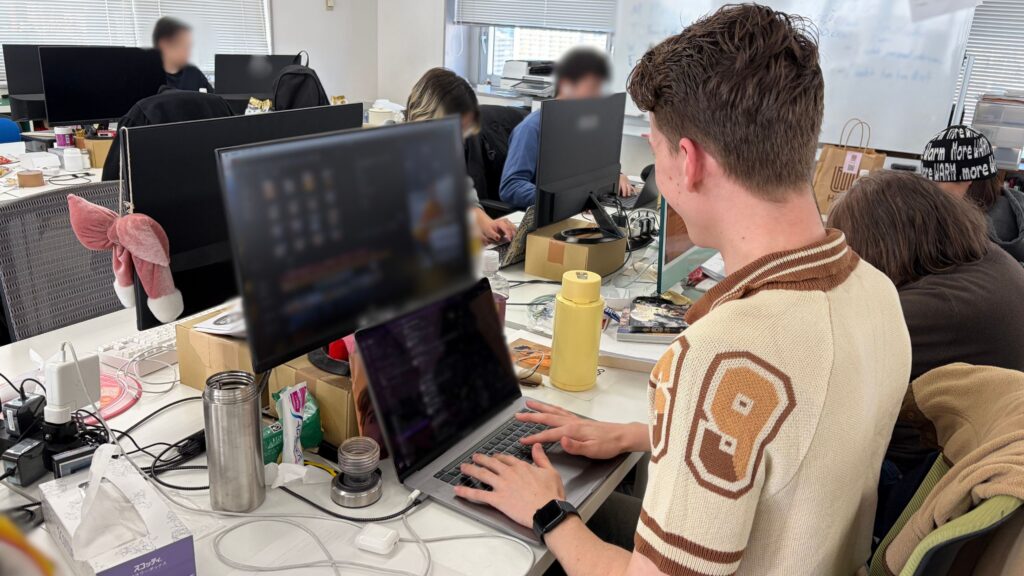
“Currently, I work in digital marketing in Tokyo. My main role is as a video editor and videographer for a company to advertise their bars in Ni-chome. I also work as talent. I’m also on the camera at the same time, conducting interviews, being fun, being sassy, and being gay.”
“A typical day is I come into work and finish off any task I needed to do before the day ended yesterday. Usually my coworker will be writing a script, and then we take that script and go out and film it in Ni-chome. After we film, we come back to the office, and I spend the day editing that and uploading it to Instagram the same day.”
3. Why did you want to work in Japan instead of staying in Australia?
“To be honest, Australia has better working conditions, a better work-life balance. In terms of work culture, Australia has probably one of the best work cultures in the world. But Australia is also boring as a country. There’s nothing really to do.”
“I always thought I wanted to come and live in Japan because I’ve been enamored by Japanese culture and the language my entire life. I wanted to do it while I was young because I didn’t want to mess up my career. It’s better to do Japan while you’re young, because it’s not going to damage your career.”
“For my own personal career, Japan has more people and more things oriented to what I like and what I want to do. There’s like 20 million people in Australia. There’s nobody. How are you supposed to become famous?”
4. How did you find work in Japan?
“I found my company on Indeed. I think the only jobs that ever really actually got back to me were on Indeed, funnily enough.”
“I did use everything. Every single possible job hunting website in Japan, and nothing really worked out. But Indeed is where I found this job.”
“I would always try and find jobs orientated to foreigners, because I knew that I wouldn’t get hired otherwise. So I did LinkedIn, Indeed, all that, but foreigner-oriented websites.”
5. What was the application and interview process like?
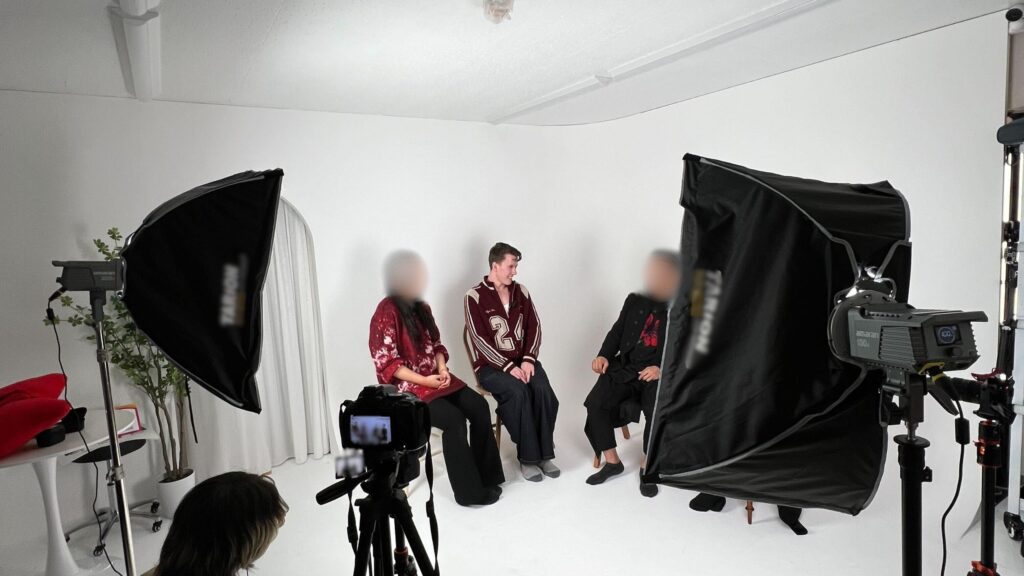
“Most of the time it would be online interviews, and there would be around three to five. And at probably the second or third one, that’s it, most of the time. Like, I would end up getting dropped.”
“For this job, I literally came in for a physical interview and then got the job the next day. So it was like hi, and then I got the job.”
“That’s not very Japanese, I think. But that’s how I got my job in Australia as well.”
6. What were the biggest difficulties in job hunting or starting work in Japan?
“Job search, it was just being able to find a job. It was impossible. Like, there were no jobs for foreigners. There was nothing out there. It was so much less than I thought it would be.”
“And at the same time, I also wanted to continue my own career. So it was even worse, because nobody’s doing digital marketing in Japan as a foreigner. That’s not really something Japan has gotten around to yet. They’re also quite behind when it comes to digital marketing and marketing in general.”
“After I got my job, the biggest hardship is work expectations. I find it really strict. The expectation is work on top of work, on top of work.”
“If somebody doesn’t show up, all of their work gets put on everybody else. That never happens in Australia. If somebody’s left, they’ve left. We just don’t do their job.”
“And the working hours. Nine to six is really weird. I don’t know why we don’t get our lunch break paid for. In Australia it’s nine to five, and you’re supposed to get paid for your break.”
7. What have been the best things about working in Japan so far?
“Being able to practice Japanese every day is fun, even though we don’t speak that much, but we do get to practice every day.”
“And doing this job, I feel like I give back to the community a little bit. Because it’s gay-orientated, we’re actually doing something positive for society.”
“So while I’m improving and getting money and doing what I’ve always wanted to do, at the same time I can also give back. I don’t feel selfish.”
8. How has working in Japan changed you personally or professionally?
“I thought Australia was really multicultural and I knew a lot about different cultures, but working here has made me realize that the world is even bigger than it was.”
“I’ve gotten better at a work ethic. Because we’ve had such intense working conditions, I’ve become mature in a work context. Which is good for my career in general.”
9. Can you get a job in Japan without knowing Japanese?

“If you want to do what you want to do in your home country, or what you’ve been doing in your home country, it’s very hard.”
“If you’re able to be like, okay, I’m going to do English teaching, I’m going to do something in tourism, I’m going to try and find a company—then maybe.”
“You either have to be really high-skilled so they don’t care that you can’t speak Japanese, or you have to do something really low-skilled that Japan doesn’t have enough people to do.”
“This kind of job in the middle, where you’re doing your job in Japan, is really hard to find. It’s not impossible because I did it, but it is very hard. You have to be okay with being jobless for a long period of time.”
10. What practical advice would you give to someone job hunting in Japan right now?
“Don’t underestimate how long it’ll take. If you’re trying to get something you really want and not just do something because you just want to live here, expect it to take a long time.”
“Continuously try really hard. Don’t let it get you down, because you’re not the problem. Japan is the problem a lot of the time.”
Start Your Own Japan Journey With Expert Guidance
Just like the person you read about above, you can successfully move to Japan. Get personalized support for work, study, or life in Japan.
Book Your FREE Consultation✓500+ Bookings ✓ English-speaking Relocation Support Experts
11. Final thoughts on working in Japan?
“Overall, I realized the other day that I am the happiest I’ve probably ever been in my whole life.”
“Because I have achieved dreams and goals that I never, ever thought I was actually going to be able to do. And I feel closer to my next steps and my next dreams than I ever thought I could.”
“So I think working in Japan, albeit very hard, forces you to try so hard and grow up a little bit and achieve what you want to achieve.”
Read More