
Japanese Job Interview – Most Common Questions to Prepare For & Tips
If you are preparing for a job interview in Japan, these are the questions you are almost guaranteed to hear. Japanese interviews are structured, predictable, and heavily focused on how well you can explain yourself clearly and politely. This article lists the most common Japanese job interview questions by category, so you know exactly what
If you are preparing for a job interview in Japan, these are the questions you are almost guaranteed to hear. Japanese interviews are structured, predictable, and heavily focused on how well you can explain yourself clearly and politely. This article lists the most common Japanese job interview questions by category, so you know exactly what to prepare, how they are asked, and what they sound like in real interviews.
Introduction questions
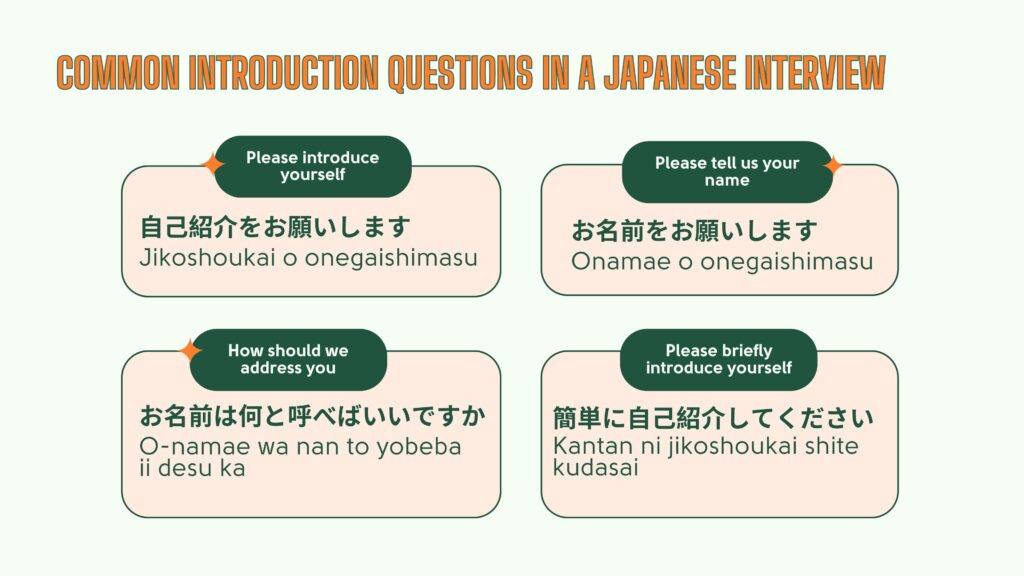
Interviewers almost always begin with simple self introduction questions. They are not trying to trick you here. They want to check your communication style, politeness, and whether you can introduce yourself calmly under pressure. Even fluent speakers sometimes stumble here because nerves kick in.
How to answer and structure your response
Keep your self introduction short, controlled, and factual. A safe structure is name, current role or background, core experience, and a polite closing line. Aim for thirty to forty seconds unless asked otherwise. Practice until it sounds steady rather than memorized.
Background and experience questions
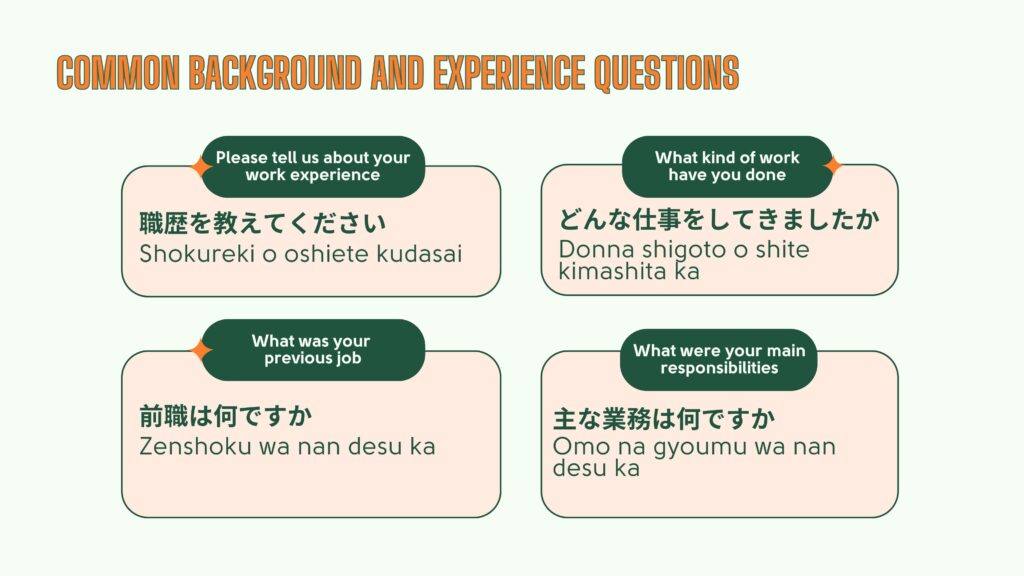
These questions confirm your resume and help the interviewer understand your career story. Japanese interviewers value consistency, so your answers should match your resume closely. Sudden career jumps or unclear timelines usually lead to follow up questions.
How to answer and structure your response
Follow a chronological structure. State your most recent role first, then briefly explain past roles if relevant. Focus on responsibilities rather than achievements at this stage. Numbers and concrete tasks are more effective than abstract descriptions.
Do not criticize former employers or explain job changes emotionally. Neutral and factual language is preferred.
Skills and strengths questions
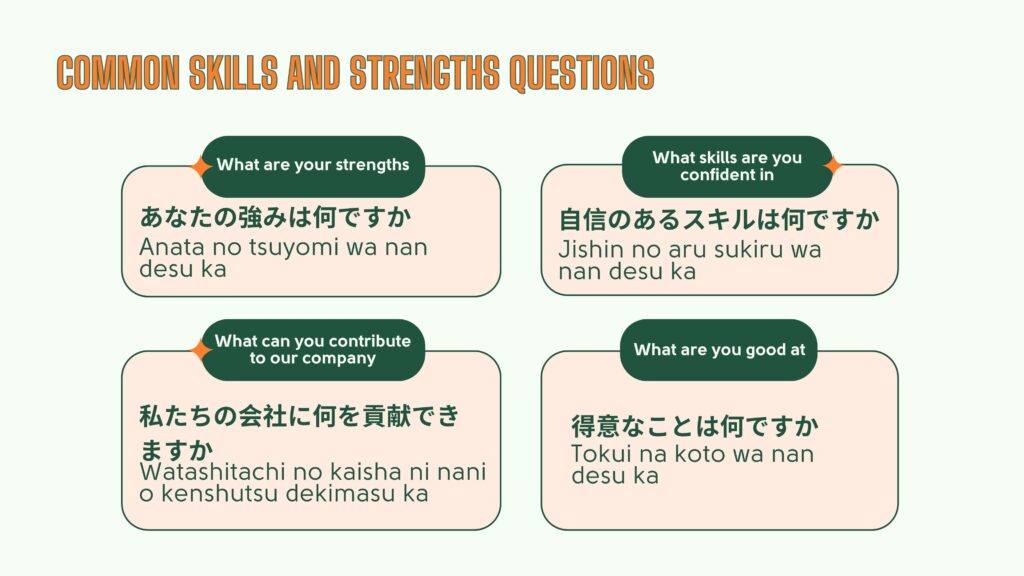
This is where you are expected to explain your value clearly, without sounding arrogant. In Japan, confidence is shown through clarity and examples, not exaggeration. Short explanations followed by a concrete example work best.
How to answer and structure your response
Choose one or two strengths only, name the skill, explain how you use it at work, and give a short example. Keep the explanation practical and tied to the role you are applying for.
Avoid listing too many strengths or using vague terms like hardworking without context.
Motivation and company interest questions
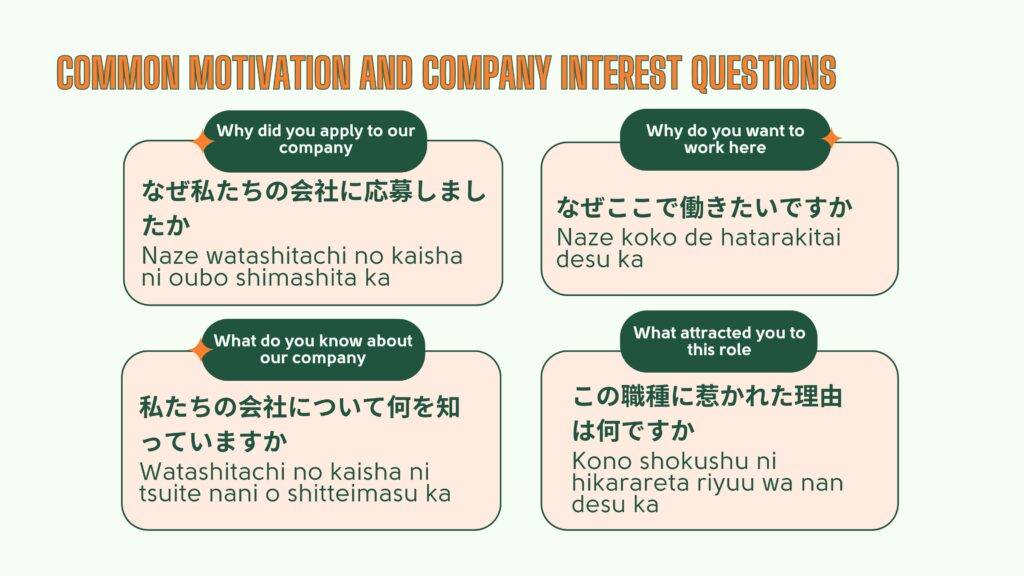
These are some of the most important questions in Japanese interviews. Interviewers want to know that you researched the company and that your motivation is specific. Generic answers are easy to spot and usually hurt your evaluation.
How to answer and structure your response
Connect your motivation to the company specifically by mentioning a product, service, business philosophy, or recent initiative. Then explain how it aligns with your experience or goals. Specific details signal sincerity.
Work style and teamwork questions
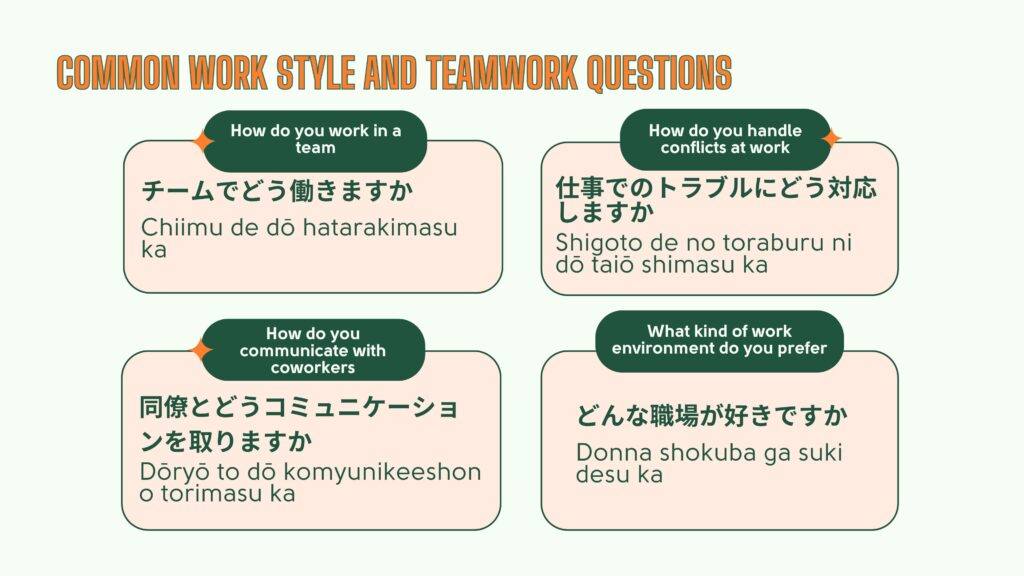
Japanese companies care deeply about teamwork, communication, and how you handle conflict. These questions are designed to see how well you fit into group oriented workplaces rather than how individually impressive you are.
How to answer and structure your response
Emphasize listening, reporting, and collaboration. Describe how you share information, ask for clarification, and support team goals. Concrete examples help, especially those involving coordination rather than leadership dominance.
Closing and availability questions
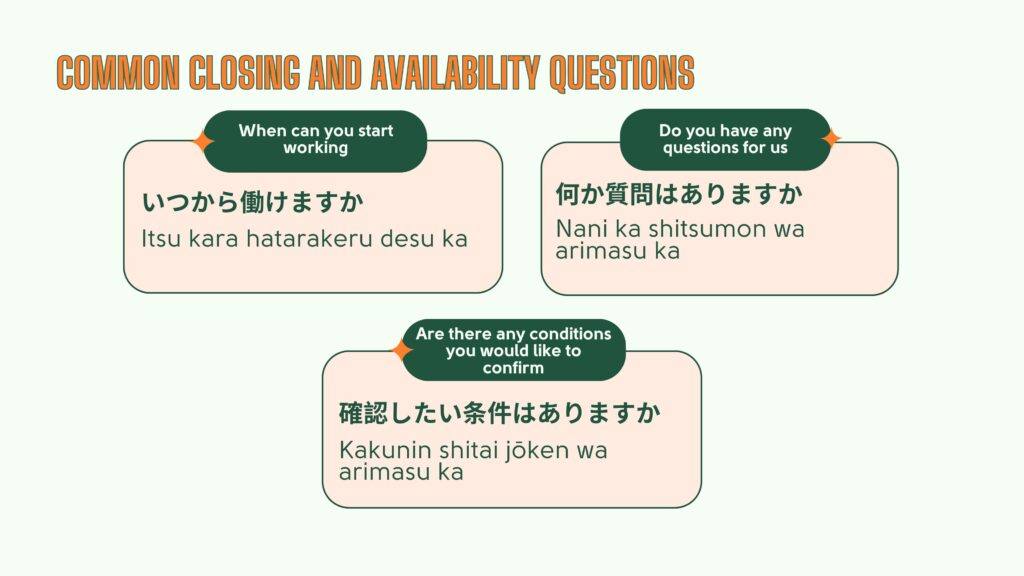
These questions signal that the interview is ending. They often cover practical matters like start dates and give you a chance to ask questions. Having at least one thoughtful question ready is strongly recommended.
Preparing clear answers to these questions will cover the majority of Japanese job interviews. Once you are comfortable responding to them calmly and politely, interviews in Japan become far more predictable and manageable.
How to answer and structure your response
Answer availability questions clearly and honestly. When asked if you have questions, prepare at least one thoughtful, work focused question about training, team structure, or role expectations.
Video Interviews With Japanese Companies
Many companies in Japan now use online meetings for first or second interviews. The expectations are mostly the same, but there are a few small adjustments.
A neutral background and a stable internet connection are important. Keeping your camera at eye level helps you appear more engaged. And because people cannot always read micro expressions through a screen, speaking just a touch more clearly than usual helps keep things smooth.
The level of politeness in Japanese interviews can feel unusually high. You are not expected to speak perfect keigo, but trying to avoid casual expressions helps. Even simple phrases like “hai” and using “masu” form show that you care and are trying.
Read More
Business Japanese for Work in Japan: Essential Keigo and Workplace Phrases for Foreign Professionals
While it is impossible to cover every question an interviewer might ask, having these fundamentals prepared gives you a far stronger foundation, helping you respond with confidence, stay composed, and greatly improve your chances in a Japanese job interview.
Related JoynTokyo reads

Ultimate Guide to Driving in Japan
A driver spent a week cruising Hokkaido and called it the most relaxing road trip of his life. Another took a mountain route from Kusatsu to Kanazawa and described it as “like being dialled into an F1 race car.” Both were experienced drivers. Both were in Japan. Both are right. Honestly, driving in Japan is

Cash vs Card in Japan: What Should You Use in 2026?
People who went to Japan five years ago will tell you cash is king. People who went last month will tell you they barely touched a note. Both are telling the truth, they just had different trips. The honest answer for 2026 is this: Japan has changed significantly. Most major establishments in cities now accept

Sheila Cliffe on The Kimono Closet and the Stories Kimono Hold
Sheila Cliffe is a longtime kimono researcher and the author of Kimono Style. In her new book, The Kimono Closet, she looks beyond kimono as fashion or art objects and instead explores their deeper place in family life, memory, and identity. She spoke with JoynTokyo to give us an exclusive look at the new book,