
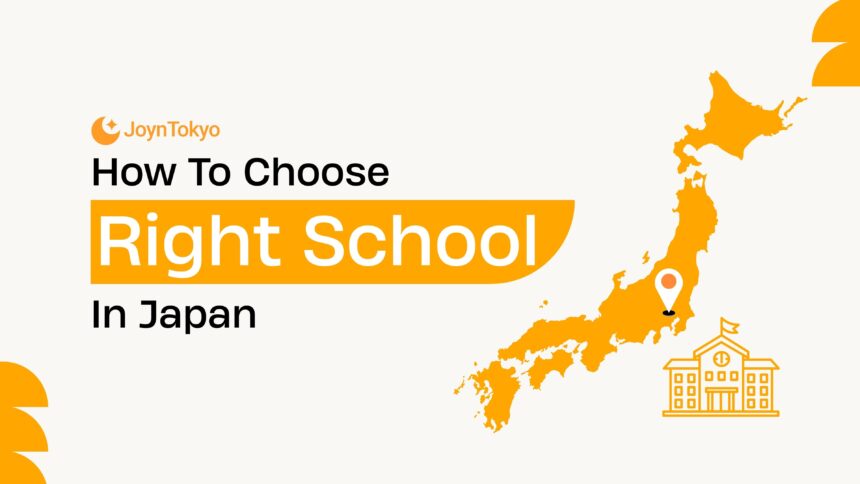


Choosing where and what to study is the point where most people pause, overthink, then pause again. Japan has a wide mix of institutions and programs, and on the surface many of them look similar. The key is understanding how each option fits your goals, language ability, budget, and long term plans. Once those pieces line up, the decision becomes much clearer.
Types of Schools You Can Study at in Japan
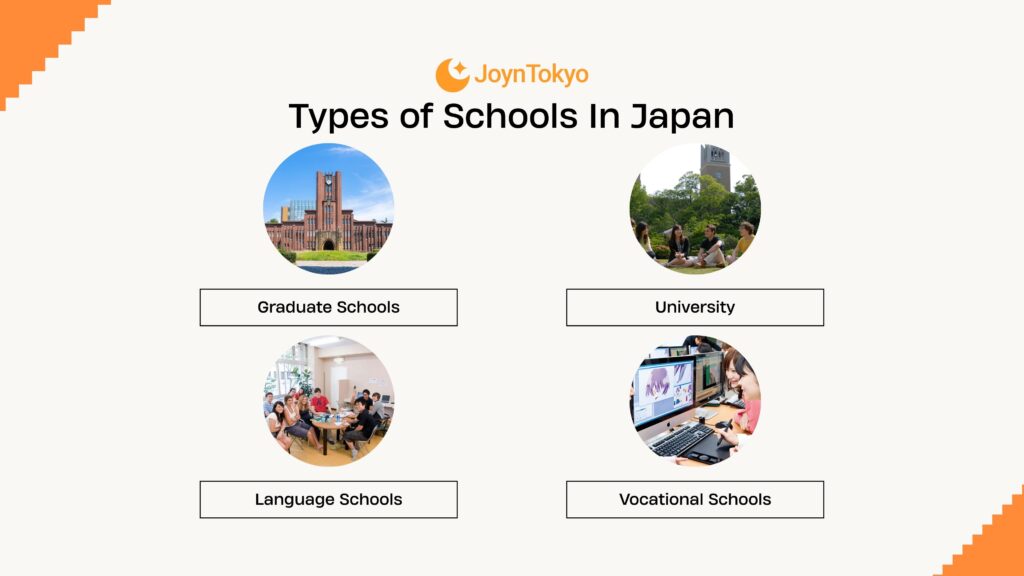
Japan does not have a one size fits all higher education system. International students typically choose from four main options, each with a very different purpose.
Universities
Universities are the most common choice for degree seekers. These include national, public, and private universities offering undergraduate and postgraduate programs. They are best suited for students who want a recognized academic qualification and a structured campus experience.
Language Schools
Language schools focus almost entirely on Japanese language study. Many students use them as a pathway into universities or vocational schools, while others attend to improve language skills for work or daily life. These programs are intensive and often act as a soft landing into Japan.
Vocational Schools
Vocational schools, known as senmon gakko, specialize in practical skills like IT, design, hospitality, fashion, or automotive studies. They are career focused and often overlooked, but can be a strong option for students who want job ready skills.
Graduate Schools
Graduate schools are for advanced academic or research focused students. These programs usually require clearer goals, stronger academic backgrounds, and sometimes direct contact with professors before applying.
Top Universities in Tokyo
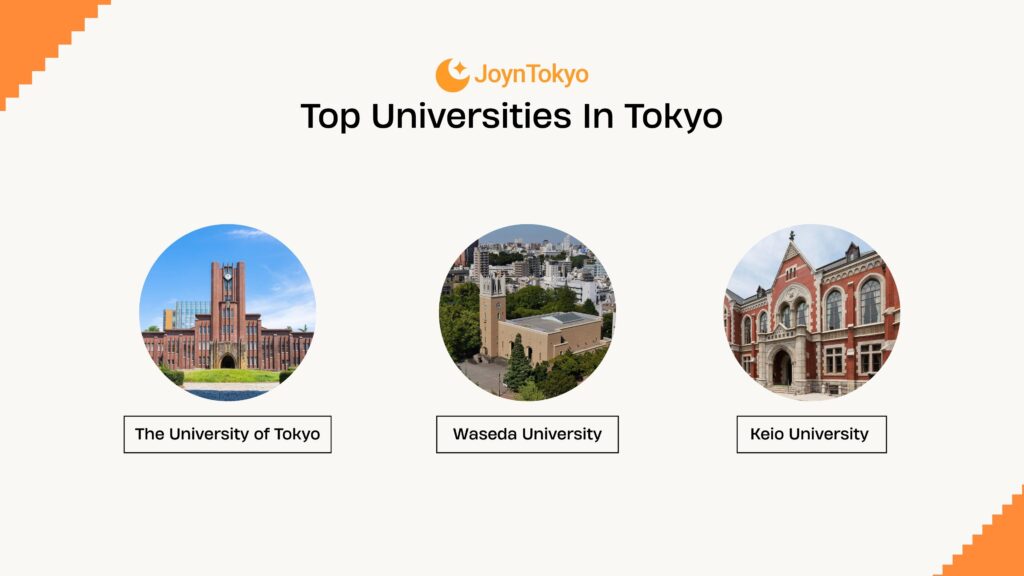
The University of Tokyo is the kind of school that carries instant weight in Japan, and honestly, abroad too. It is a great fit if you have strong grades, a clear academic direction, and you are comfortable in a competitive environment. Many programs are Japanese taught, so language planning matters, even if you start in an English friendly track. If you are aiming at research, top graduate programs, or highly selective career paths, this is often the benchmark people compare everything else to.
Waseda University is a popular choice because it balances prestige with variety and a more international campus feel. You will find a wide range of majors, solid support structures for foreign students, and plenty of student life if you want a lively experience. It is also a practical pick if you want options, because Waseda tends to have more program diversity than many elite schools. If you want strong academics but also want your life outside class to feel full, Waseda is a safe bet.
Keio University is well known for producing grads who end up in influential companies, especially in business, economics, and related fields. It feels polished and career aware, and it often attracts students who already have an eye on what comes after graduation. Keio can be a great fit if you want strong industry connections and a brand name that plays well in Japanese job hunting.
Turn Your Education Plans into a Real Path to Study in Japan!
Our consultants can guide you through school options, applications, and visas so you can focus on preparing for life and learning abroad.
Book Your FREE Consultation✓ 500+ Bookings as of 2026-04-04 ✓ English-speaking support
Top Language Schools in Tokyo
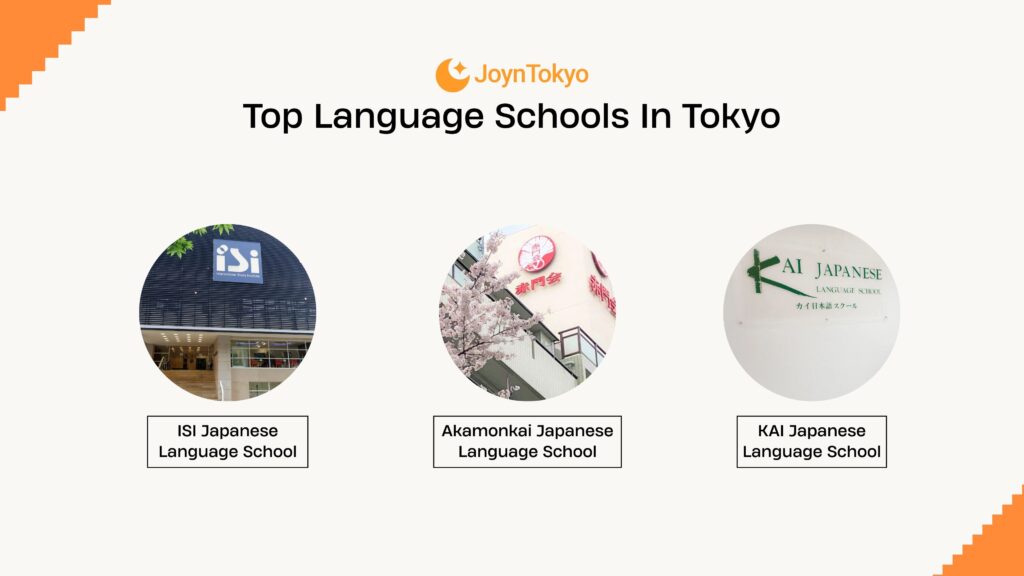
ISI Japanese Language School is a big name in Tokyo, and that scale can be a real advantage. It is structured, organized, and tends to attract students who are serious about leveling up quickly, especially for university entry or career goals. Because there are many students, you usually get a wide mix of nationalities and motivations, which keeps classes interesting. If you like clear systems and measurable progress, ISI is an easy one to shortlist.
Akamonkai Japanese Language School is often recommended for students who want an academic route, not just casual conversation skills. It is known for strong university prep support and for guiding students who need a clear track and steady expectations. The vibe can feel focused, which is great if you are trying to hit a JLPT target or prepare for entrance requirements. If you want a school that treats Japanese study like serious training, Akamonkai fits that mindset.
KAI Japanese Language School is a good match if you want modern teaching approaches and a very international classroom environment. It is based in Shinjuku, which is convenient and also means you are surrounded by daily Japanese practice the second class ends. Students often like KAI for its communication focused style and its more contemporary materials. If you get bored by old school textbook energy, KAI tends to feel fresher.
Top Vocational School in Tokyo
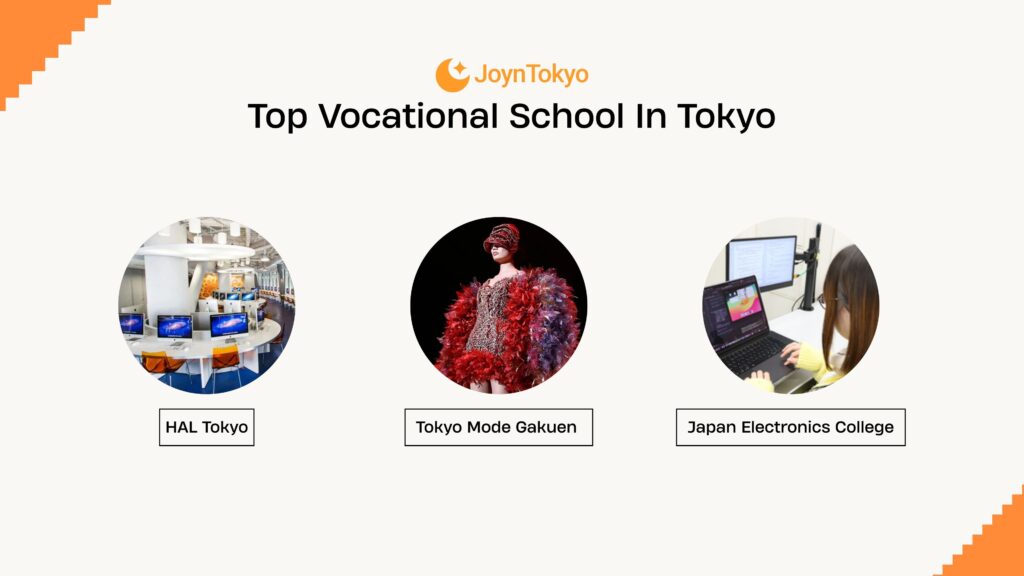
HAL Tokyo is one of the most recognized vocational schools for tech, design, and creative career tracks. It is built around practical skills and portfolio style outcomes, which is exactly what you want if your goal is employment and not academic theory. The facilities and branding are a big part of the appeal, and it can feel very industry facing. If you are aiming for fields like IT, CG, game related work, or design, HAL is frequently on the first page of serious options.
Tokyo Mode Gakuen is a standout choice for fashion, beauty, and design paths, and it is widely known inside Japan. It is a place where presentation matters, effort shows, and you are pushed to create work you can actually show people, not just talk about. Many students choose it because it has a strong reputation and a clear identity, which helps when you are trying to build a creative career story. If you are looking for something visually driven and skills first, it is one of the safest names to mention.
Japan Electronics College is a respected option for students who want technical skills that map directly to jobs, especially in IT, gaming, CG, and electronics. The appeal is straightforward, you learn concrete things and you build proof of what you can do. It is also a common pick for international students who want a more career direct route without the slower pace of a traditional university. If you like the idea of graduating with practical abilities and a clear target role, this one is worth serious consideration.
Public vs Private Universities
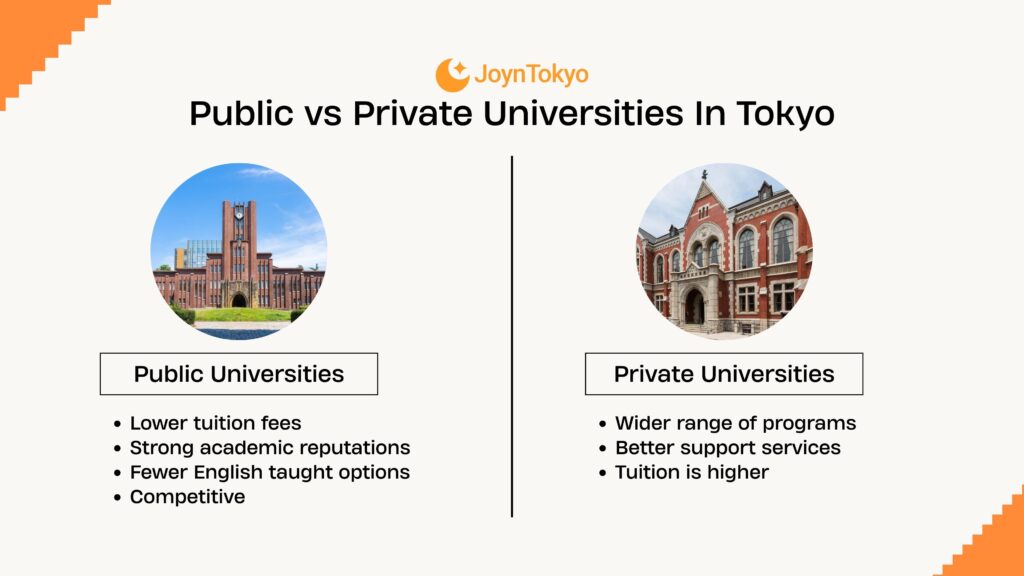
Public universities, including national and prefectural schools, generally have lower tuition fees and strong academic reputations. Admission can be more competitive and programs may have fewer English taught options.
Private universities offer more flexibility, a wider range of programs, and often better support services for international students. Tuition is higher, but acceptance rates are often more forgiving, especially for international applicants.
Neither option is universally better. The right choice depends on your budget, academic background, and preferred learning environment.
English Taught Programs vs Japanese Taught Programs
Not all programs in Japan require Japanese fluency, but the distinction matters more than many expect.
English taught programs allow students to study without high level Japanese ability, especially at the undergraduate and masters level. However, daily life outside the classroom still requires basic Japanese, and program availability is limited.
Japanese taught programs offer more choices, better integration, and stronger career opportunities inside Japan. They also require language preparation, usually proven through JLPT scores or equivalent testing.
Some students combine both approaches, starting in English and transitioning into Japanese taught courses later.
Choosing a Field of Study That Makes Sense in Japan
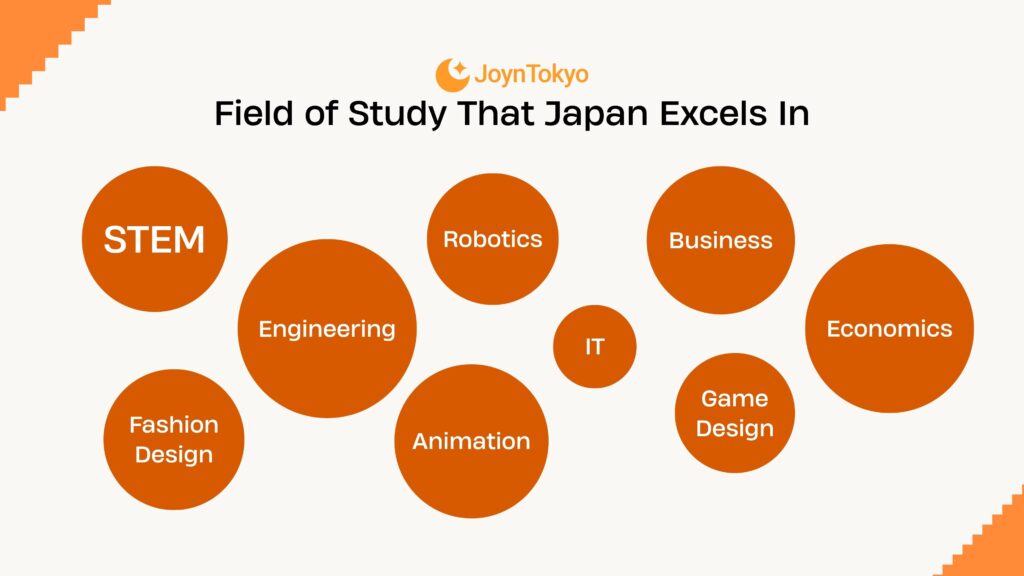
Japan excels in certain academic and professional fields.
STEM, engineering, robotics, and information technology programs are highly regarded and well connected to industry. Business, economics, and international studies are popular but vary widely in quality by institution.
Creative fields like animation, game design, and fashion are often better served through vocational schools rather than traditional universities. The format matters just as much as the subject.
Before choosing a program, it helps to research how graduates typically use that qualification, especially if you plan to work in Japan afterward.
How to Narrow Down Your Options
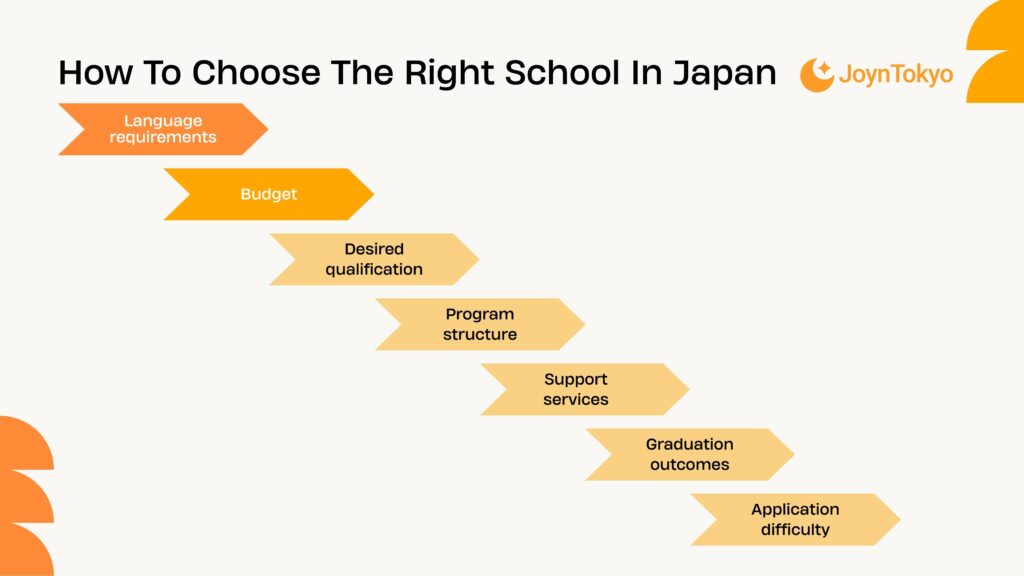
Start by filtering schools based on language requirements, budget, and desired qualification. Then look at program structure, support services for international students, graduation outcomes, and application difficulty.
If a school is unclear about outcomes, support, or expectations, that is usually a signal to keep looking.
Whats Next
Once you have a clear idea of the school type, program, and location that fits you best, the next step is understanding how to actually get in. The following article breaks down the full application process and admission requirements, so you know exactly what to prepare and when to start.
Read More