
Remote Work in Japan: The Ultimate Guide for Foreigners
If you’ve been searching for a clear, honest breakdown of how remote work actually functions in Japan as a foreigner, the visas, the job types, the taxes, the lifestyle trade-offs, you’ve landed in the right place. Japan has quietly become one of the most desirable countries in the world for remote workers, offering safety, world-class
If you’ve been searching for a clear, honest breakdown of how remote work actually functions in Japan as a foreigner, the visas, the job types, the taxes, the lifestyle trade-offs, you’ve landed in the right place. Japan has quietly become one of the most desirable countries in the world for remote workers, offering safety, world-class infrastructure, cultural richness, and a quality of life that’s hard to match. But it is not a free-for-all digital nomad paradise, and the rules matter more here than almost anywhere else. This guide walks you through everything: what remote work in Japan looks like on the ground, which legal paths actually work, which jobs are realistically fully remote, where to live, how to find those roles, and what to do once you arrive. Whether you’re planning your move from abroad or already living here and looking to shift into a remote career, this is the roadmap.
What Does Remote Work Really Mean in Japan?
Remote work in Japan is not a new concept, but the way it operates here is distinctly Japanese and understanding that distinction is the first step to managing it successfully.
Definition and Variants: Fully Remote, Hybrid, and Satellite Office
Remote work in Japan is most commonly referred to as telework (テレワーク), and the terms are used almost interchangeably. At its core, telework describes any working arrangement where an employee performs their duties outside the traditional office, whether from home, a co-working space, a satellite office, or even a café. The COVID-19 pandemic turbocharged adoption: telework rates nationwide jumped from roughly 20% before 2020 to nearly 50% at the height of the pandemic. By 2024, the national average had settled back down to around 24–25%, with Tokyo and the wider metropolitan area holding steadier at approximately 37–40%.
Understanding the remote work models in Japan is crucial for lifestyle and visa planning. The three primary models you will encounter are:
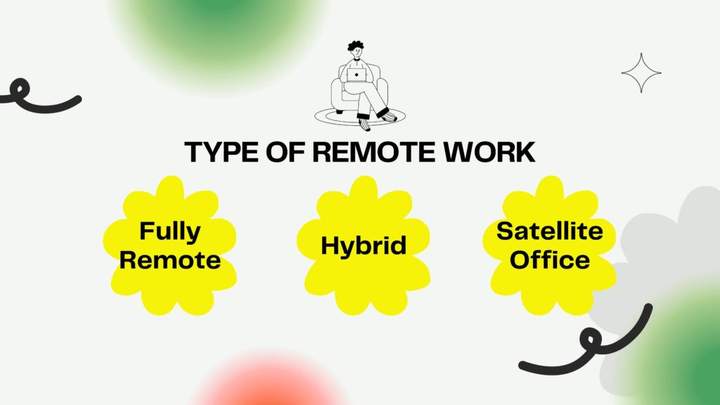
- Fully Remote (完全在宅勤務, Kanzen zaitaku kinmu): This means zero required office attendance. While these roles exist, they are less common than in Western countries.
- Hybrid (ハイブリッド勤務, Haiburiddo kinmu): The dominant post-pandemic model, this typically involves working two to three days per week in the office, with the remainder at home.
- Satellite Office Work: Employees work from a company-managed location closer to their home rather than the main headquarters. This is a common setup for larger.
How Japan’s Remote Model Differs from Western Models
The single biggest cultural difference foreigners notice is that remote work in Japan is often a matter of internal company policy rather than a publicly advertised job feature. In the US or Europe, a job listing will typically say “Remote” or “Hybrid” upfront. For remote work in Japan, many roles that are functionally remote are not labeled that way. Real-world accounts from foreigners working in Japan confirm this consistently. Multiple people have reported that recruiters said nothing about remote work, only for it to be revealed at the first interview, or that the policy emerged organically after trust was built with management. This means that searching exclusively for jobs tagged as “remote” in Japan will cause you to miss a significant portion of genuinely flexible opportunities.
The other major difference is the cultural baseline. Japanese corporate culture has historically associated productivity with physical presence — the idea that being seen working signals effort and dedication, known as presenteeism. While this is shifting, especially in tech and digital industries, it has not disappeared. For foreigners, this means that even in remote-friendly companies, building trust and demonstrating output quality are non-negotiable foundations before expecting full schedule flexibility.
What Visas and Legal Checks Must Foreigners Consider Before Working Remotely in Japan?
This is the section that can make or break your entire plan, so read it carefully. Japan’s immigration system does not make automatic exceptions for remote workers, regardless of where your employer is based. If you are physically living in Japan, your work activity must be legally covered by your residence status, full stop.
Visa Categories That Allow Paid Work
For a detailed breakdown of the work visa categories, make sure to check out our article work visas in Japan.
Legal Risks of Working on a Tourist Visa
The tourist visa (短期滞在, “short-term stay,” up to 90 days) does not authorize you to work, even for overseas employers.
- The Problem: The legal interpretation is ambiguous, and while some sources suggest it’s permissible, Japan has not officially legalized remote work on a tourist visa.
- The Risk: Visa violations can result in deportation, bans on re-entry, and serious damage to future immigration plans. Do not use the tourist visa as a foundation for long-term work.
How to Confirm Work Authorization
The most reliable way to ensure compliance is:
- Consult Experts: Contact the Immigration Services Agency of Japan (出入国在留管理庁) or a certified immigration lawyer (行政書士 or 弁護士).
- Employer Statement: Request a written statement from your sponsored employer clarifying the scope of authorized work.
- Supplementary Work Permit: If you have a primary work visa and wish to take on additional freelance or overseas remote work, you must file for a Permission to Engage in Activity Other than That Permitted under the Status of Residence Previously Granted (資格外活動許可). This is essential for full legal protection.
How Does Taxation and Social Insurance Work for Remote Workers Living in Japan?
Taxes are where many foreign remote workers get caught off guard. Japan’s system is residency-based, not employer-location-based, meaning where your paycheck comes from is far less relevant than where you are physically living.
Residency Rules and Global Income Taxation

If you have been living in Japan for more than one year, or if Japan is your primary base of life, you are classified as a resident taxpayer (居住者). As a resident taxpayer, Japan taxes your worldwide income, not just income earned from Japanese sources. This means your salary from a US company, freelance payments from European clients, and investment income from abroad are all potentially taxable in Japan. If you have been in Japan for less than five years and are a non-permanent resident (非永住者), only income remitted to Japan or earned from domestic sources is taxed, which can be advantageous for newer arrivals. Once you cross the five-year residency threshold, however, full global taxation applies regardless of where the money lands. Consulting a tax accountant (税理士) who handles international cases is strongly recommended for anyone in this situation.
Social Insurance Obligations for Residents
Japan’s social insurance system, which covers health insurance (健康保険) and pension (年金), is mandatory for residents. If you live in Japan long-term, you are required to enroll.
Enrollment Method:
- Employed by a Japanese company: You will typically be enrolled in the corporate health and pension scheme (社会保険).
- Self-employed or remote worker for an overseas employer: You must enroll in the National Health Insurance (国民健康保険) and the National Pension (国民年金) through your local municipal office.
Key Points:
- Contributions are calculated based on your prior year’s income.
- Foreign benefits are not an exemption: Many foreigners mistakenly believe their overseas employer’s benefits package exempts them from Japanese social insurance; it does not.
- Consequences of Non-Enrollment: Failure to enroll can lead to back-payment demands plus penalties.
Double-Taxation Treaties and Action Steps

Japan has tax treaties with many countries (including the US, UK, Australia, Canada, Germany, France, and dozens of others) to prevent the same income from being taxed twice.
How Treaties Work:
- Generally, you can apply a foreign tax credit in one country for taxes paid in the other, avoiding paying full rates in both places.
- Important: You are still required to file actively in Japan, and often in your home country as well.
- The exact mechanics depend on the specific treaty and your income situation, making professional advice highly valuable.
Key Action Steps to Avoid Surprises:
- Register your residence at your local ward office (区役所) upon arrival.
- Get a My Number (マイナンバー).
- Open a Japanese bank account.
- Consult a tax professional with international experience before your first fiscal year ends in Japan.
Top 12 Remote-Friendly Job Types in Japan (Which Roles Are Realistically Fully Remote?)
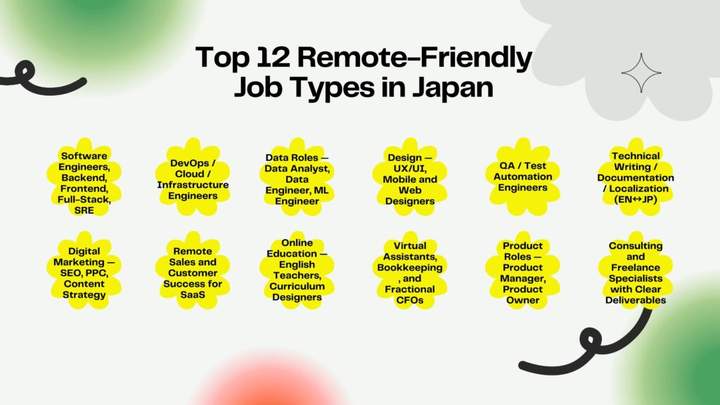
When people ask about remote work in Japan, the answer “IT jobs” is technically correct but frustratingly vague. The reality, based on real accounts from foreigners working in Japan’s remote market, is that the range of roles is much broader and more specific than that catch-all suggests. Here are the twelve job types that are most realistically compatible with fully remote or near-fully remote work in Japan.
- Software Engineers, Backend, Frontend, Full-Stack, SRE
Software engineering remains the gold standard for remote work in Japan. Backend, frontend, and full-stack engineers — particularly those working in JavaScript, Python, Go, Rust, or Java — are consistently in demand at Japanese tech companies and international firms with Japan operations. Site Reliability Engineers (SREs) are especially valuable given Japan’s growing cloud adoption. Multiple foreigners working in this space report zero required office days, particularly at companies that have adopted remote-first policies company-wide. These roles are the most likely to come with English-friendly environments, though Japanese proficiency still strengthens your candidacy significantly.
- DevOps / Cloud / Infrastructure Engineers
DevOps engineers and cloud specialists — particularly those with AWS, GCP, or Azure certifications — occupy a strong position in Japan’s remote job market. Japan’s DX push has created real and growing demand for cloud migration expertise, and much of this work is inherently remote-compatible. Occasional on-site requirements exist (typically for security audits, data center access, or compliance reviews), making this more of a near-fully-remote category than a purely zero-office one.
- Data Roles — Data Analyst, Data Engineer, ML Engineer
Data-focused roles have grown considerably as Japanese companies invest in analytics infrastructure. Data analysts, data engineers, and machine learning engineers typically work in output-based ways that align well with remote arrangements. The ability to communicate findings clearly — ideally in both English and Japanese — adds significant value. Companies ranging from e-commerce platforms to financial institutions actively seek this expertise, and many allow fully remote work once onboarding is complete.
- Product Roles — Product Manager, Product Owner
Product managers and product owners often operate in hybrid-leaning but functionally remote arrangements. While they require more real-time collaboration than pure engineering roles, much of their work — roadmap planning, backlog management, stakeholder communication, documentation — can be done asynchronously. Real-world reports from Japan confirm that product owners have been among the roles working fully remotely at Japanese tech firms. Fluency in Japanese is a stronger asset here than in purely technical roles, as product work involves significant cross-functional communication.
- Design — UX/UI, Mobile and Web Designers
Design is a portfolio-driven field, and this works in foreigners’ favor. Strong UX/UI and web designers can demonstrate their value visually, which partially compensates for language limitations. Japanese companies increasingly value design thinking and user experience, particularly in consumer-facing tech. These roles are typically remote-compatible after portfolio review, and several job platforms that cater to the Japanese market now specifically support design portfolio integration.
- QA / Test Automation Engineers
Quality assurance engineers — especially those working in automated testing using tools like Selenium, Cypress, or Playwright — are well-suited to remote work because their core contribution is measurable output: test coverage, bug reports, and release readiness. QA engineers have been specifically cited in real accounts as among the roles working fully remotely at Japanese companies. This is an often overlooked entry point for foreigners building a Japan-based tech career.
- Technical Writing / Documentation / Localization (EN↔JP)
Technical writers and EN↔JP localization specialists occupy a genuinely niche and valuable position in Japan’s remote job market. With Japan’s ongoing effort to make software, products, and services accessible internationally, the demand for professionals who can bridge English and Japanese — whether writing developer documentation, localizing software interfaces, or translating technical manuals — is consistent and growing. These roles are almost entirely output-driven and carry some of the lowest office-attendance requirements of any category.
- Digital Marketing — SEO, PPC, Content Strategy
Digital marketing roles, particularly SEO specialists, paid media managers, and content strategists, are highly compatible with remote work because performance is directly measurable. Companies operating in or expanding into the Japanese market need marketing professionals who understand both the platform landscape (LINE, Yahoo Japan, Google Japan) and the cultural nuances of the audience. English-language content roles are particularly accessible to foreigners, with many operating in fully remote capacities for both Japanese and international clients.
- Remote Sales and Customer Success for SaaS
B2B SaaS sales and customer success roles are increasingly available in Japan as the SaaS ecosystem grows. These roles are often hybrid or involve occasional travel for client meetings or trade events, but the daily work — demos, onboarding calls, account check-ins — is conducted online. Foreigners with SaaS sales backgrounds and some Japanese ability are genuinely competitive in this space, particularly at international software companies with Japan offices.
- Online Education — English Teachers, Curriculum Designers
Online English teaching and curriculum design remain among the most accessible roles for native English speakers in Japan. While in-person ALT (Assistant Language Teacher) positions require physical presence, online English instruction through platforms or direct contracts can be entirely remote. Curriculum designers and e-learning content creators, particularly for language learning or professional development platforms, also work in consistently remote arrangements. Check our guide on how to land an English teaching job in Japan.
- Virtual Assistants, Bookkeeping, and Fractional CFOs
Freelance-friendly roles such as virtual assistants, bookkeepers, and fractional CFO services are viable for foreigners in Japan, particularly those working for overseas clients. These roles require careful visa management — you’ll need an appropriate status to legally conduct paid work — but operationally they function as fully remote engagements. The key consideration here is ensuring your residence status supports independent service work.
- Consulting and Freelance Specialists with Clear Deliverables
Experienced consultants in areas like management consulting, HR strategy, supply chain, or cross-cultural business facilitation can build fully remote or largely remote practices in Japan, particularly if serving international clients or Japanese companies with foreign operations. The common thread across all the most successful remote arrangements in Japan is deliverable clarity: roles where output is unambiguous are the ones that earn and keep remote flexibility.
Where Should Foreigners Live in Japan for the Best Remote-Work Lifestyle?
One of the most liberating aspects of remote work is the ability to choose where you live based on your lifestyle priorities rather than your commute. Japan’s excellent infrastructure — high-speed internet is widely available, Shinkansen connects cities efficiently, and co-working spaces have multiplied nationwide, making this choice genuinely meaningful.
Tokyo: Pros and Cons for Networking and Infrastructure

Tokyo is the undeniable center of Japan’s professional ecosystem, and for remote workers who want access to the largest international community, the most English-friendly services, and the densest concentration of co-working spaces and networking events, it remains hard to beat. The trade-off is cost. Central Tokyo apartments run from ¥120,000 to well over ¥250,000 per month, and the city’s notoriously compact living spaces can make a comfortable home office setup challenging. That said, Tokyo’s co-working infrastructure is exceptional, spaces like WeWork, Fabbit, and hundreds of independent operators provide professional environments at reasonable daily or monthly rates. For foreigners new to Japan, Tokyo offers the softest landing in terms of English accessibility, international community depth, and professional opportunity proximity.
Regional Cities: Fukuoka, Sapporo, Kyoto, Nagoya
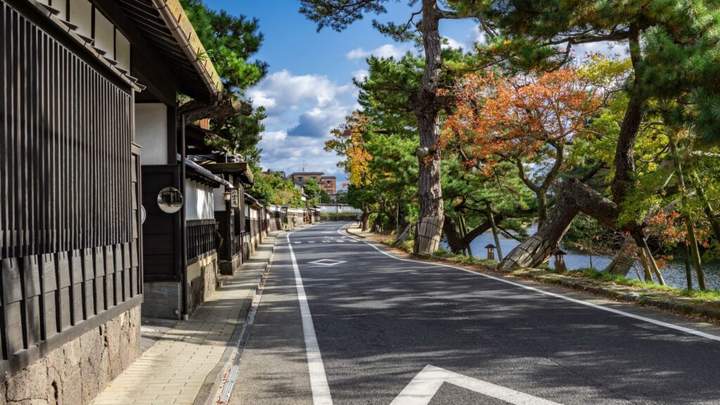
Japan’s regional cities offer a compelling alternative that remote work makes genuinely viable. Fukuoka on Kyushu has positioned itself aggressively as a startup hub and foreigner-friendly city, with lower rents (often ¥60,000–¥100,000 for decent apartments), strong internet infrastructure, a growing international community, and a relaxed coastal lifestyle that stands in striking contrast to Tokyo’s intensity. Sapporo offers dramatic seasonal lifestyle, affordable housing, and a quieter pace. Kyoto, while more expensive than Fukuoka or Sapporo, offers extraordinary cultural depth and has become popular among foreign remote workers who value that environment. Nagoya is Japan’s third-largest city with strong industrial and manufacturing ties, lower costs than Tokyo, and good connectivity. The honest trade-off with regional cities is that English accessibility decreases, professional networking opportunities are narrower, and for roles requiring occasional Tokyo office visits, travel costs and time add up.
Rural and Regional Relocation
Japan’s national government has actively encouraged urban-to-rural migration, including through subsidy programs and the establishment of remote work hubs in smaller towns and villages. Some rural municipalities offer relocation support specifically targeted at remote workers. The lifestyle appeal is real: stunning natural environments, dramatically lower housing costs (sometimes as low as ¥30,000–¥50,000 per month), and a genuine immersion in traditional Japanese life. The practical challenges are equally real: limited English support, smaller or absent foreigner communities, more demanding Japanese language requirements for daily life, and potential internet reliability issues in more remote areas. Rural relocation is a great fit for foreigners who are already confident in Japanese, have stable remote employment secured, and are drawn to a quieter, nature-connected lifestyle — but it’s a challenging starting point for someone new to Japan.
What Are the Best Job Platforms and Search Strategies to Find Remote Roles in Japan?
Finding remote work in Japan requires a slightly different strategy than what you might be used to in Western markets. The platforms matter, but the approach matters just as much.
Portfolio-Driven Platforms:
- Findy and Lapras quantify GitHub activity to match candidates to engineering roles based on technical footprint.
- Note: Both platforms are typically Tokyo-heavy and tend to favor candidates with N2 or higher Japanese proficiency.
- Startup-Focused:
Wantedly is popular with startups and companies with younger, more flexible cultures where remote arrangements are often more common.
Global Remote Boards to Combine with Japan Search
- Globally Distributed Roles: Platforms like Remote.co , WeWorkRemotely.com , and Toptal list roles that may allow work from Japan for overseas employers. This can be a viable path depending on your visa status.
- Targeted Outreach: LinkedIn is useful for identifying companies with Japan operations and messaging hiring managers directly.
- Key Insight: For best results, always combine these global platforms with Japan-specific ones.
The Hidden-Job Strategy: Targeting Companies, Using Recruiters, Negotiating Remote After Offer
- Direct Company Targeting: Since many remote jobs aren’t advertised as such, identify companies known for flexible or remote-friendly cultures (e.g., via Glassdoor Japan, Openwork, LinkedIn) and apply directly, even if the specific role doesn’t mention “remote.”
- Leverage Specialist Recruiters: Firms focused on foreign talent in Japan (Robert Half Japan, Michael Page Japan, JAC Recruitment, Tech Japan) have direct insight into genuinely remote-supportive companies and can advocate for you.
- Negotiate Remote After Offer: Remote policy is a legitimate and professional negotiation point in Japan today. Many candidates successfully establish remote arrangements after receiving an offer by framing the request around productivity and commitment to output, rather than as a lifestyle preference.
How Should Foreigners Prepare Their Profile and Application to Win Remote Roles?
The bar for landing a remote role in Japan is higher than for standard office roles, and your application needs to reflect that clearly. Hiring managers for remote positions are making a bet on your independence, communication, and self-management — your application needs to make that case before the interview.
Building a Public Technical Footprint: GitHub, Portfolio, and Case Studies
For engineering, design, and digital marketing roles, a visible public portfolio is essential. It is the expectation.
- Engineering: An active GitHub profile is critical. Meaningful contributions—open source work or clearly documented professional projects—carry significant weight on Japanese platforms like Findy and Lapras, which score candidates based on GitHub activity.
- Designers: Maintain a Behance or personal portfolio site. Case studies should explain not just what was built, but what problem was solved and what the outcome was.
- Marketers: Benefit enormously from documented results, such as traffic growth charts, conversion data, or campaign performance snapshots.
The Principle: Across all disciplines, make your impact visible before anyone meets you. In a remote hiring context, your digital presence is your first impression.
English/Japanese Resume and Interview Preparation
Japan often uses different résumé conventions than Western countries.
- Résumé Format: While international companies accept standard CVs, many Japanese firms appreciate a format closer to Japanese norms: clear employment chronology, explicit statement of role/responsibilities, and concise language.
- Language Versions: Having both an English and a Japanese version of your résumé is a meaningful signal of seriousness.
- Interviews: Japanese hiring managers value structured, specific answers over general assertions. The STAR method (Situation, Task, Action, Result) translates well. Demonstrating awareness of Japanese work culture builds significant trust.
Negotiation Points: Remote Policy, Office Frequency, and Written Agreement
Specificity is key when negotiating remote arrangements.
- Be Concrete: Instead of a broad question, come prepared with a concrete proposal: “I’d like to confirm a fully remote arrangement with a monthly team visit,” or “I’m happy to be in the office for quarterly planning cycles.”
- Focus on Accountability: Frame remote work around output—explaining how you’ll communicate, report progress, and stay aligned. This addresses the core concern of most Japanese managers.
- Get it in Writing: Critically, get any remote agreement documented. This protects both parties if personnel changes, management shifts, or company policy evolves. A written remote work policy or clause in your employment contract is your safety net.
How to Handle Onboarding, Communication, and Performance Remotely in Japanese Teams?
Working remotely within a Japanese team requires both the right tools and genuine cultural intelligence. The technical side is straightforward; the cultural side takes more deliberate attention.
Tools, Rhythms: Async-First, Core Hours, Meeting Etiquette
Most Japanese companies that support remote work use a combination of Slack or Microsoft Teams for messaging, Zoom or Google Meet for video calls, and project management tools like Backlog (popular in Japan), Jira, or Notion for task tracking.
The important behavioral norm to establish early is clarity around core hours (コアタイム) — the window during which you are expected to be actively reachable, typically 10am–3pm or 10am–4pm in flex-hour arrangements. Being visibly responsive during core hours builds the trust that earns you flexibility outside of them.
Async communication, writing clear, self-contained Slack messages that don’t require immediate back-and-forth, is increasingly valued and should be practiced deliberately.
Cultural Tips for Unwritten Japanese Communication and Nuance
- Understand Kuuki wo Yomu (Reading the Air): Be mindful that perceiving unspoken cues and group sentiment is harder in text.
- Use Polite Language (Keigo) if in Japanese: Always use appropriate polite language forms in written communication, especially with senior colleagues.
- Avoid Blunt Refusals: Soften disagreements or negative feedback with indirect phrasing (e.g., “that is an interesting direction, could we also consider…”).
- Proactive Communication: Check in or provide updates proactively; don’t wait for colleagues to ask.
- Communicate More: When uncertain, more communication is generally safer and better than less.
Measuring Output vs Visibility: KPIs and Reporting Templates
One of the structural shifts remote work demands in Japanese companies is a move from time-based evaluation to output-based evaluation — and this transition is still incomplete. You can support this shift by proactively establishing clear KPIs with your manager at the start of each quarter or project cycle, providing regular written progress updates (a brief weekly summary email or Slack message goes a long way), and framing your contributions in concrete terms: “completed X, unblocked Y, on track for Z by [date].” This kind of structured self-reporting is not something many Japanese companies have formally implemented yet, which means doing it voluntarily makes you stand out as exactly the kind of independent, reliable professional that remote arrangements depend on.
What Are the Everyday Logistics Remote Foreigners Must Solve?
Beyond the career side, living as a remote worker in Japan involves solving a set of practical logistics that can either smooth your daily life or create persistent friction if left unaddressed.
Housing: Contracts, Guarantor Issues, and Space for a Home Office
Renting an apartment in Japan as a foreigner presents genuine challenges.
- Guarantor Requirement: Most private rental contracts require a guarantor (保証人). While historically a Japanese national, guarantor companies (保証会社) are now widely accepted substitutes for most landlords.
- Upfront Costs: Initial fees are substantial, typically equivalent to four to six months’ rent, covering:
Deposit (敷金) - Key money (礼金)
- Agency fee
- First month’s rent
Remote Work Space: Apartment sizes in Tokyo are compact, requiring intentional planning to dedicate even a corner of a studio to a proper desk setup.
Short-Term Solutions: Serviced apartments and monthly mansions (マンスリーマンション) are excellent for the short term and do not require a guarantor.
Essential Services: Banking, Mobile, and Reliable Internet
- Banking: Opening a Japanese bank account can be frustrating. Japan Post Bank (ゆうちょ銀行) is often more accessible, especially after registering your residence (住民登録). Wise and Revolut are useful for international money management while you set up local accounts. Check our comparison of the best banks in Japan for foreigners for more details.
- Mobile Plans: SIM-only plans from MVNOs (e.g., IIJmio, Mineo, Rakuten Mobile) offer reliable, cost-effective data essential for remote work.
- Home Internet: Japan’s fiber infrastructure is excellent. NTT’s Hikari service and its partners offer gigabit connections at competitive prices in urban areas.
- Backup Connectivity: A mobile WiFi device (pocket WiFi) is a practical investment for video call stability or during home internet downtime.
Administrative and Health Requirements
- Residence Registration: Your first administrative task is to register your residence at the local ward or city office (市区町村役場) upon arrival with a long-term visa. This is crucial as it activates access to the National Health Insurance, the My Number system, and local government services.
- Healthcare Access: Japan’s system is high quality and comparatively affordable. Once enrolled in National Health Insurance, you access care at 30% of the actual cost.
- Language and Care: Clinics in major cities often have English-speaking staff or medical translation apps, though Japanese ability significantly smooths interactions.
- Emergency Setup: Establish an emergency contact list early, including:
Your ward office number - Your nearest hospital’s emergency line
- Your embassy’s emergency contact
- Your insurance card details
What are the common remote work in Japan Pitfalls and How Can Foreigners Mitigate Them?

Even the most well-prepared remote workers in Japan run into problems. Knowing the most common ones in advance is your best defense.
Visa Mismatches and Legal Exposure
The most serious risk is working in a way that exceeds or contradicts your visa category. This can happen innocently — for example, picking up a small freelance project while on a company-sponsored work visa without obtaining the necessary supplementary work permit.
Mitigation: The legal exposure ranges from a warning to visa revocation to deportation, and it can permanently affect your immigration record in Japan. Before taking on any paid work, confirm it is covered by your current residence status. If you’re unsure, consult an immigration professional rather than guessing.
Isolation and Networking – Building Local and Expat Communities
Complete remote work is genuinely isolating in a country where you don’t share a native language with most of your neighbors. Japan’s culture is warm but not naturally initiating toward strangers, which means social connection requires active effort rather than passive osmosis.
Community-Building Strategies:
- Expat Meetups: Attend events found on platforms like Meetup.com, which has an active Japan community.
- Language Exchange: Use online tools like HelloTalk and Tandem, and participate in local in-person events.
- Co-working Spaces: Use these not just for work but for the social environment.
- Local Neighborhood Activities: Participate in these (even if Japanese-language heavy) to build the kind of community that makes daily life genuinely rich.
The foreigners who thrive long-term in Japan’s remote work landscape almost universally invest early in building both Japanese and international social networks.
Time Zone Problems When Working for Overseas Employers
If you are working for a US, European, or Australian employer while living in Japan, time zone differences are significant: Japan Standard Time is UTC+9. A standard US East Coast workday (9am–5pm EST) corresponds to 11pm–7am in Japan.
Working for an overseas employer from Japan requires:
- Accepting genuinely unsociable hours.
- Negotiating async-first workflows that minimize real-time overlap requirements.
- Finding employers with distributed teams already accustomed to asynchronous collaboration.
This is worth negotiating explicitly before accepting any overseas remote role, a company that requires you to be on calls at midnight Japan time is not sustainably compatible with a life in Japan.
What Salary Ranges and Cost-of-Living Scenarios Should Remote Foreigners Expect?
Typical Annual Salaries in Japan‘s Tech Market:
- Software Engineers: ¥5 million to ¥12 million, with senior roles at international firms or high-growth startups often exceeding this range.
- Product Managers: ¥6 million to ¥10 million.
- UX/UI Designers: ¥4 million to ¥8 million (dependent on seniority and portfolio).
- QA Engineers and Data Analysts: ¥4 million to ¥8 million.
- Digital Marketing Specialists: ¥3.5 million to ¥7 million.
- Remote English Teachers (Online): Considerably less, typically ¥2 million to ¥3.5 million, unless supplemented by curriculum design or management duties.
- Freelancers/Consultants: Income can exceed these bands based on specialization and client mix, but is less predictable, and social insurance contributions are entirely self-funded.
Tokyo vs. Regional Take-Home Pay and Budgeting
- Net Income Example: A gross annual salary of ¥6 million typically nets approximately ¥4.3 million to ¥4.6 million after income tax and social insurance.
- Tokyo Monthly Budget (Single Professional):
Rent: ¥130,000 - Food and Daily Expenses: ¥80,000
- Utilities and Internet: ¥20,000
- Health Insurance: ¥25,000
- Transport: ¥10,000
- Discretionary Spending: ¥50,000
- Total Monthly: Roughly ¥315,000 (¥3.78 million annually).
- Conclusion: A ¥6 million salary leaves modest savings in central Tokyo.
- Regional Advantage (e.g., Fukuoka): The same ¥6 million salary in a regional city, with rent at ¥70,000 and lower overall costs, allows for significantly better financial breathing room. The break-even analysis strongly favors regional cities if a Tokyo presence is not required for work.
Example Scenarios and Financial Advice
- High Overseas Salary (e.g., USD $80,000/¥12 million): Living in Japan is genuinely comfortable almost anywhere, assuming proper tax and visa compliance. This income bracket also meets the reported threshold for Japan’s digital nomad visa.
- Entry-Level Japanese Company Salary (¥4 million to ¥5 million): Tokyo is tight but manageable with discipline; regional cities offer a genuine quality of life.
Before moving, calculate your net income after Japanese taxes and insurance, subtract a realistic monthly budget for your target city, and ensure the remainder allows you not just to survive, but to enjoy the quality of life that made Japan appealing.
FAQs Foreigners Ask About Remote Work in Japan
These are the questions that come up most consistently, with direct answers based on the legal and practical realities covered in this guide.
Can I Work for a Foreign Company While on a company-sponsored work Visa?
On a company-sponsored work visa: generally no, without a supplementary work permit (資格外活動許可), unless the work falls within the same activity type as your primary visa. On a spouse visa or permanent residency: yes, with no restrictions. On a student visa: limited to 28 hours per week with a work permit, and the activity must be appropriate to your status. On a tourist or short-term stay visa: legally ambiguous at best, risky at worst — do not rely on this for anything longer than a brief visit.
Do I Have to Join Japanese Social Insurance?
If you work for a Japanese employer at sufficient hours and income: yes, you will be automatically enrolled in their scheme. If you are self-employed or working for an overseas employer as a resident: you must enroll in National Health Insurance and National Pension through your ward office. If you are on the digital nomad visa: you are required to hold private health insurance and are generally not eligible for the national scheme during that visa period. There are no blanket exemptions for residents — social insurance is a residency obligation, not an employment one.
How Often Will I Realistically Be Called Into the Office?
In tech and software at companies with established remote cultures: often zero to once per month, with some roles requiring no office attendance at all. In digital marketing and design at hybrid companies, typically one to three days per week. In product management and consulting: varies widely by company and project cycle, but quarterly in-person planning sessions are common even in otherwise remote roles. In more traditional Japanese industries — finance, manufacturing, retail, and office attendance expectations remain higher, and fully remote arrangements are rarer. The honest answer is that office frequency in Japan depends enormously on your specific company, manager, and the trust you build over time more than on any industry-wide standard.
Your Next Move
Remote work in Japan is genuinely achievable, it rewards preparation, legal clarity, and cultural honesty over wishful thinking and improvisation. The foreigners who build successful, sustainable remote careers here are the ones who arrived with their paperwork in order, their skills clearly demonstrated, and their expectations calibrated to Japan’s actual working culture rather than a projected fantasy of it. If you’re not there yet, that’s exactly what JoynTokyo is here to help you build toward, one step at a time.
Related JoynTokyo reads

Ultimate Guide to Driving in Japan
A driver spent a week cruising Hokkaido and called it the most relaxing road trip of his life. Another took a mountain route from Kusatsu to Kanazawa and described it as “like being dialled into an F1 race car.” Both were experienced drivers. Both were in Japan. Both are right. Honestly, driving in Japan is

Cash vs Card in Japan: What Should You Use in 2026?
People who went to Japan five years ago will tell you cash is king. People who went last month will tell you they barely touched a note. Both are telling the truth, they just had different trips. The honest answer for 2026 is this: Japan has changed significantly. Most major establishments in cities now accept

Sheila Cliffe on The Kimono Closet and the Stories Kimono Hold
Sheila Cliffe is a longtime kimono researcher and the author of Kimono Style. In her new book, The Kimono Closet, she looks beyond kimono as fashion or art objects and instead explores their deeper place in family life, memory, and identity. She spoke with JoynTokyo to give us an exclusive look at the new book,